
Vanuatu national heroes are the pivotal figures who orchestrated the nation’s transition from the Anglo-French Condominium to an independent republic in 1980. These leaders, including Father Walter Lini and traditional chiefs, united the diverse archipelago under a common Ni-Vanuatu identity, championed indigenous land rights, and established the country’s sovereign political and cultural foundations.
Who is the Father of Independence in Vanuatu?
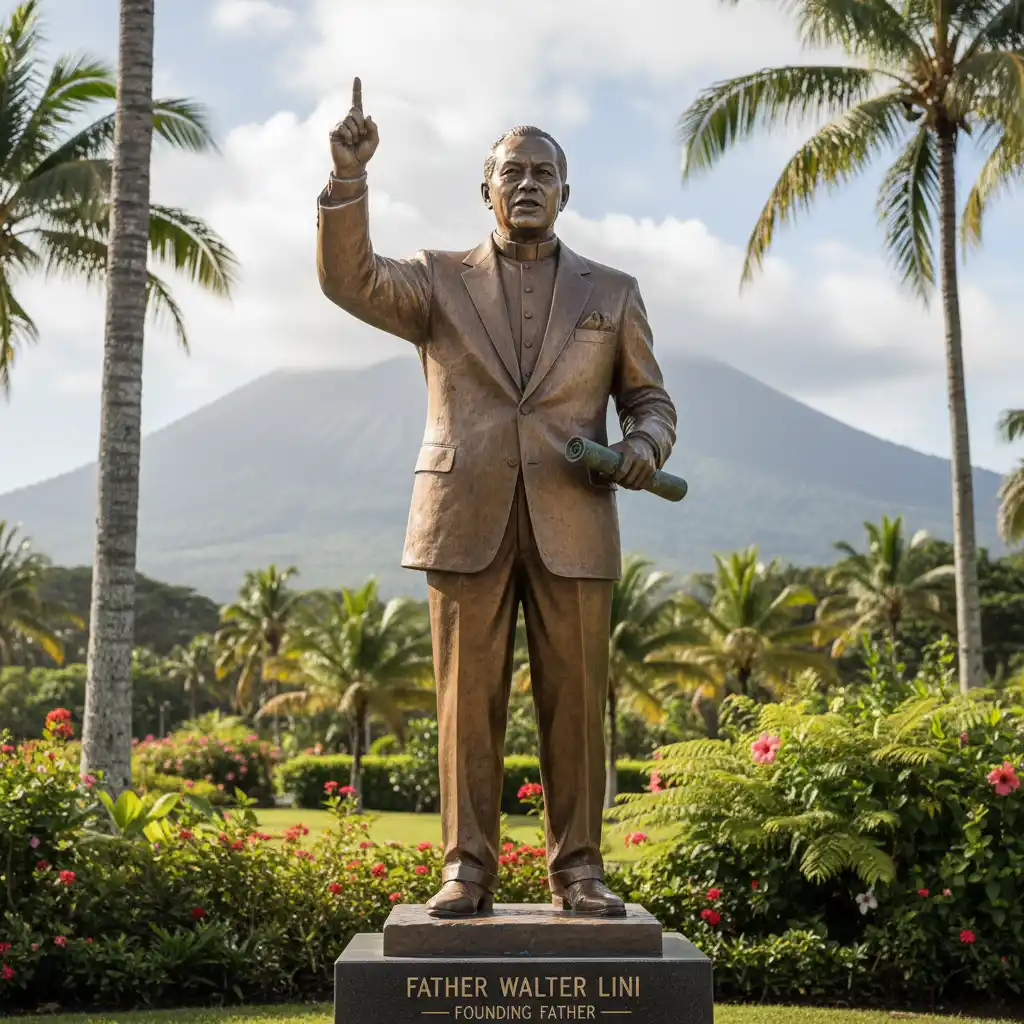
Father Walter Lini is universally recognized as the “Father of Independence” in Vanuatu. An Anglican priest turned politician, Lini was the driving force behind the New Hebrides National Party, which later became the Vanua’aku Pati. His leadership was instrumental in ending the unique and often chaotic colonial administration known as the Anglo-French Condominium.
Born on Pentecost Island in 1942, Lini’s theological background heavily influenced his political ideology. He championed a philosophy known as “Melanesian Socialism.” Unlike Western socialism, this concept was rooted in indigenous communal values, emphasizing the collective ownership of land, the preservation of kastom (traditional culture), and the rejection of colonial capitalism that had alienated Ni-Vanuatu from their resources.
Lini served as the first Prime Minister of Vanuatu from independence in 1980 until 1991. His tenure was marked by a bold, non-aligned foreign policy. He famously stated that Vanuatu would not be fully free until all colonized peoples in the Pacific were free, actively supporting independence movements in West Papua and New Caledonia. His legacy is enshrined in the 1980 Constitution, particularly in the articles that returned all land to the indigenous custom owners, a radical move that reversed decades of colonial land alienation.
The Doctrine of Melanesian Socialism
Lini’s political philosophy combined Christian ethics with traditional Melanesian communalism. He believed that the strength of the nation lay in its villages and custom chiefs rather than in centralized urban power. This ideology helped bridge the gap between the modern state and the traditional societies scattered across the 83 islands of the archipelago. By integrating the church and the village meeting house (nakamal), Lini created a unified national consciousness that had not existed prior to the 1970s.
Who was Jimmy Stevens and what was the Nagriamel Movement?
While Walter Lini represents the centralized state and modern independence, Jimmy Stevens represents a complex, alternative vision of Vanuatu’s future. Known affectionately as “Moses,” Stevens was the charismatic leader of the Nagriamel movement, based primarily on the island of Espiritu Santo. His legacy is controversial, often labeled a rebel, yet he remains a significant figure in the nation’s history.
Founded in the mid-1960s, Nagriamel was initially a land rights movement dedicated to preventing the alienation of indigenous land to foreign settlers. Stevens argued that the “Dark Bush” (undeveloped land) belonged to the custom owners and should not be sold. However, as the push for independence accelerated, Stevens feared that a central government in Port Vila, dominated by Lini’s Vanua’aku Pati, would ignore the specific needs of the northern islands and Santo.
The Coconut War
This ideological rift culminated in the “Coconut War” of 1980. Just weeks before independence, Stevens declared the independence of the “State of Vemarana” on Espiritu Santo. The rebellion was supported by French settlers who feared losing their land and, bizarrely, by the Phoenix Foundation, a libertarian group from the United States hoping to establish a tax haven. The rebellion was eventually quelled by Papua New Guinean troops called in by Walter Lini. Stevens was arrested and imprisoned, but his movement highlighted the deep fragility of unifying a tribal nation.
What role do Prominent Chiefs play in Vanuatu’s history?
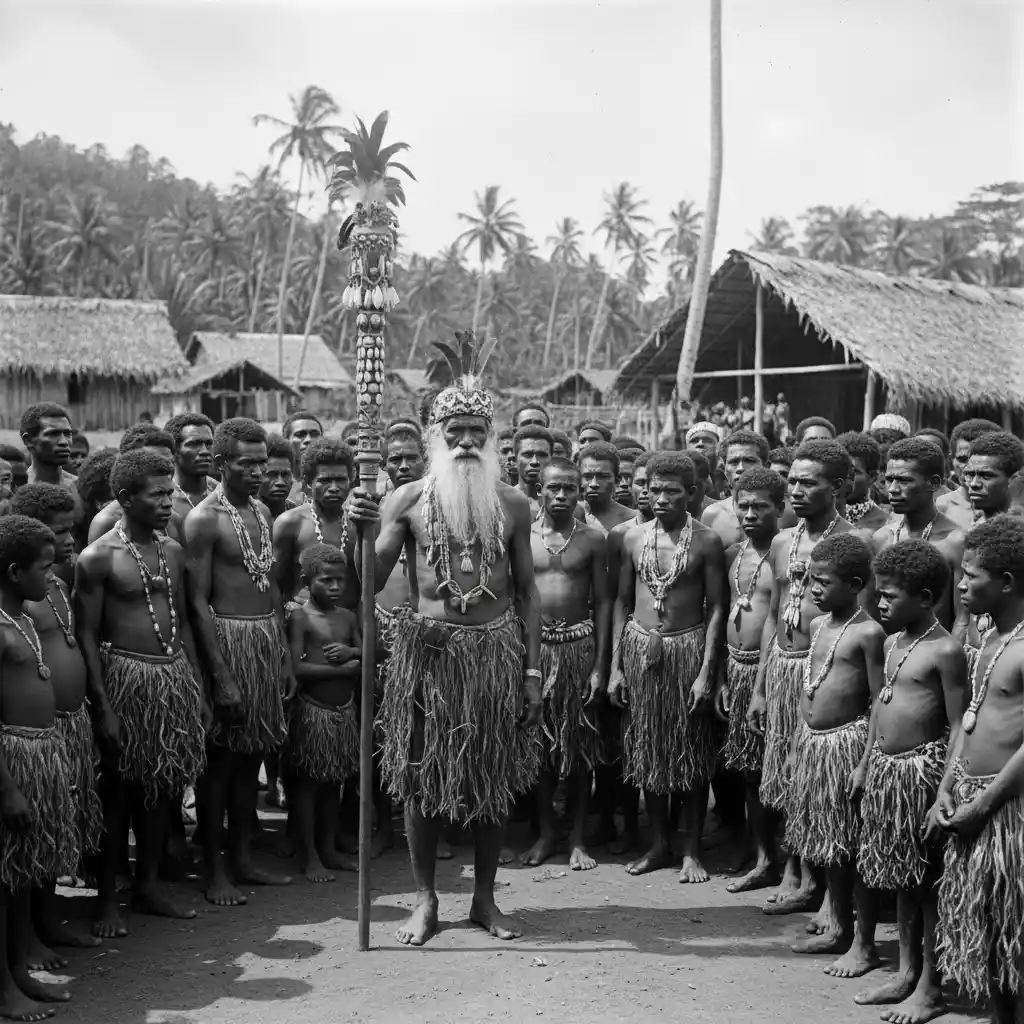
In Vanuatu, “heroism” is not limited to politicians; it is deeply embedded in the traditional chiefly system. Chiefs are the custodians of kastom, maintaining peace, order, and cultural continuity for centuries before European arrival. The preamble of the Vanuatu Constitution explicitly declares that the nation is founded on “traditional Melanesian values, faith in God, and Christian principles,” thereby elevating chiefs to a constitutional status.
The Malvatumauri Council of Chiefs is a national body that advises the government on matters of culture and language. Throughout the struggle for independence, high-ranking chiefs played a critical role in mobilizing rural populations. They acted as intermediaries between the political elites in Port Vila and the villagers who lived according to ancient laws. Without the endorsement of the chiefs, the unification of Vanuatu would likely have been impossible.
Chiefs as Peacemakers
Historically, chiefs were the diplomats of the archipelago. Through complex grade-taking ceremonies (such as the Nimangki in the north), men ascended hierarchies by demonstrating wealth (usually in pigs) and ritual knowledge. These chiefs forged alliances across islands, creating trade networks that predated colonial borders. Figures who attained high rank were seen as possessing mana (spiritual power) and were responsible for settling land disputes—a role they continue to play today, often relieving the burden on the formal court system.
Who was the legendary Chief Roymata?
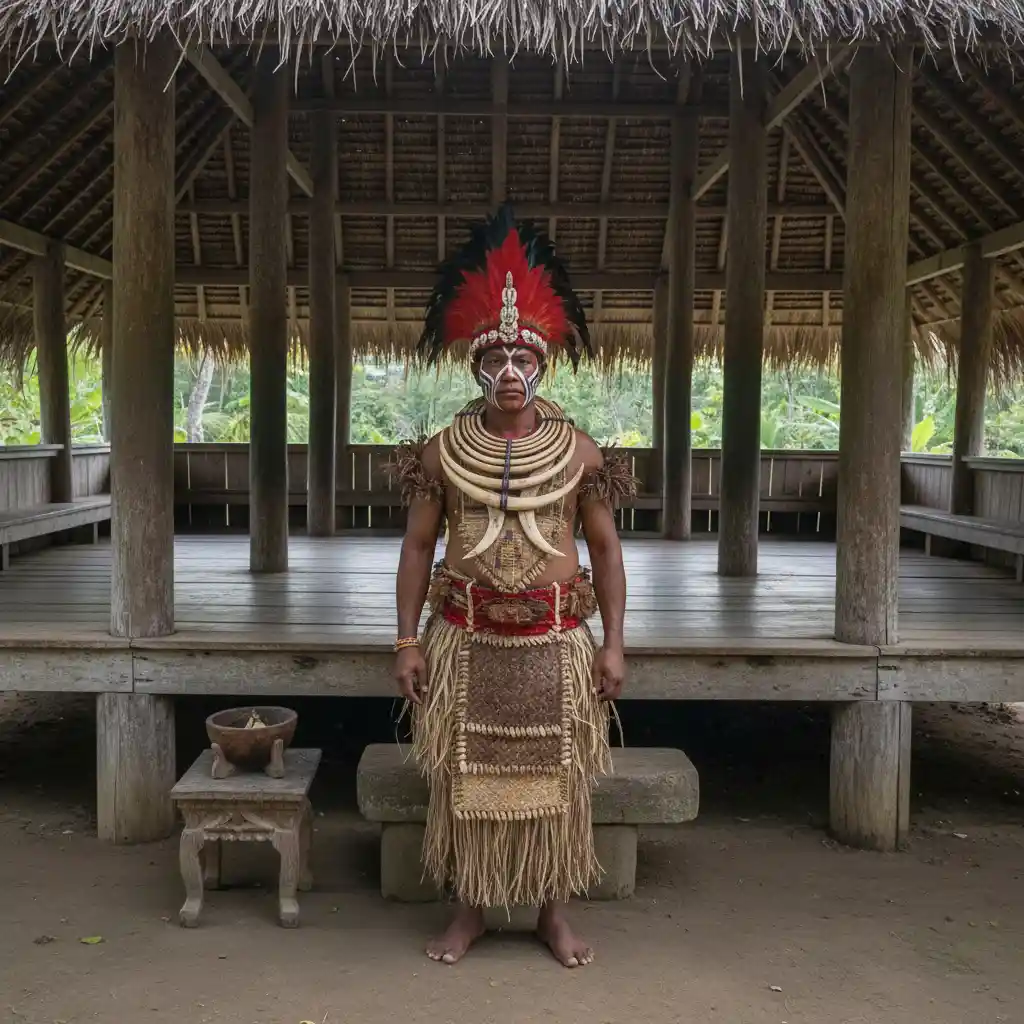
Looking further back into history, Chief Roymata is perhaps the most famous historical figure from the pre-colonial era. Living in the early 17th century (though some oral histories suggest earlier), Roymata was a powerful paramount chief in the Efate region who is credited with ending a prolonged period of tribal warfare. He instituted a system of peace feasts and totemic laws that unified the warring factions of central Vanuatu.
His legacy is so profound that his burial site on Artok Island (Hat Island) was declared a UNESCO World Heritage site in 2008—the first in Vanuatu. The site contains the remains of Roymata and over 25 members of his retinue who were buried with him, a testament to his immense status. Roymata represents the archetype of the “Good Chief,” a unifier and peacemaker, serving as a historical parallel to the modern unification efforts of leaders like Lini.
Who are the Pioneering Women of Vanuatu?
The narrative of Vanuatu’s history often focuses on male politicians and chiefs, but pioneering women were essential to the nation’s development. Women played crucial roles in the grassroots organization of the independence movement, often managing the logistics of the Vanua’aku Pati while men were on the front lines of negotiation.
Grace Mera Molisa
Grace Mera Molisa is a towering figure in Vanuatu’s intellectual and political history. A poet, academic, and politician, she was one of the few women to hold high office in the early years of independence. Molisa served as a secretary to Prime Minister Walter Lini and was a fierce advocate for women’s rights within the context of Melanesian culture.
Her poetry, particularly in the collection Black Stone, offers a biting critique of the patriarchal nature of both the colonial administration and the post-colonial government. She famously described the dual oppression of Ni-Vanuatu women by colonial masters and their own traditional men. Molisa is remembered not just as a politician, but as the conscience of the nation, constantly reminding the leadership that independence must include equality for women.
Hilda Lini
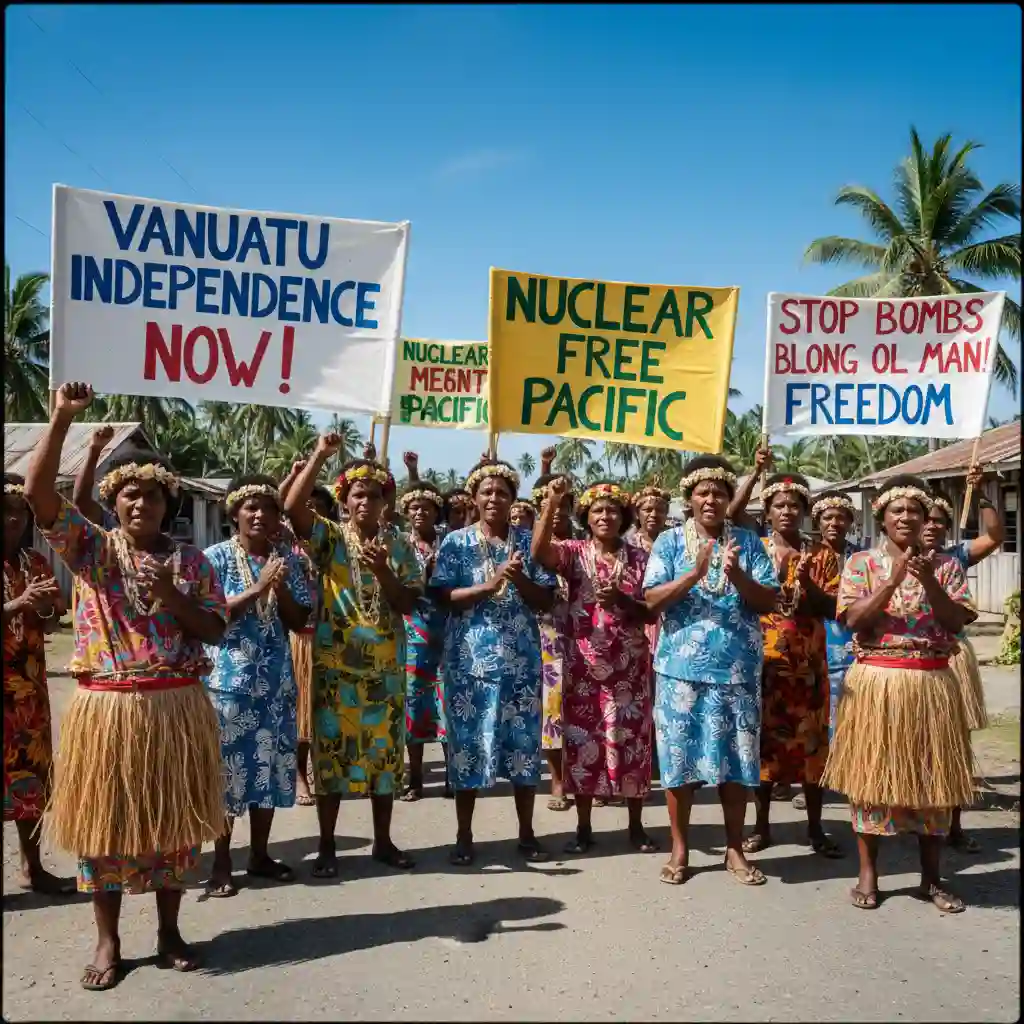
Hilda Lini, the sister of Walter Lini, made history in 1987 by becoming the first woman elected to the Parliament of Vanuatu. A journalist and activist, she was instrumental in the Nuclear Free and Independent Pacific movement. Her election paved the way for future generations of women in Ni-Vanuatu politics, proving that leadership roles were not the exclusive domain of men.
How did the Condominium Era shape these leaders?
To truly understand the heroism of figures like Walter Lini and Jimmy Stevens, one must understand the absurdity of the system they fought against. From 1906 to 1980, the New Hebrides (now Vanuatu) was governed as an Anglo-French Condominium. This meant there were two colonial powers governing one territory simultaneously.
There were two police forces, two prison systems, two currencies, two education systems, and two hospitals. A citizen had to choose whether to be governed by British law or French law. This system, often derided as the “Pandemonium,” created deep divisions in society. Anglophones (educated in British schools like Lini) and Francophones often found themselves on opposing sides of political debates.
The National Heroes of Vanuatu are defined by their ability to transcend this colonial schizophrenia. They had to construct a national identity out of a population that had been systematically divided by language and religion. The achievement of independence in 1980 was not merely a political transfer of power; it was a miraculous act of unification against a colonial structure designed to foster division.
People Also Ask
When did Vanuatu gain independence?
Vanuatu officially gained independence from the United Kingdom and France on July 30, 1980. This date is celebrated annually as Independence Day, the most significant public holiday in the nation.
Who was the first Prime Minister of Vanuatu?
Father Walter Lini served as the first Prime Minister of Vanuatu. He held the office from 1980 until 1991 and is widely regarded as the father of the nation.
What was the Coconut War?
The Coconut War was a brief rebellion in 1980 on the island of Espiritu Santo, led by Jimmy Stevens and the Nagriamel movement. It was an attempt to secede from the newly independent Vanuatu, but was quelled by government forces.
What is the Malvatumauri Council of Chiefs?
The Malvatumauri is the National Council of Chiefs in Vanuatu. It is a constitutional body composed of custom chiefs elected by their peers, responsible for advising the government on matters regarding custom, culture, and language.
Who is Grace Molisa?
Grace Mera Molisa was a prominent Ni-Vanuatu politician, poet, and women’s rights activist. She was a key figure in the independence movement and served as a high-ranking advisor in the early government, advocating for gender equality.
Why was Vanuatu called the New Hebrides?
The islands were named the “New Hebrides” by Captain James Cook in 1774 because the rugged terrain reminded him of the Hebrides islands off the coast of Scotland. The name remained until independence in 1980.