
Bislama is the national language of Vanuatu, an English-based creole that serves as the primary lingua franca across the archipelago’s 83 islands. Developed during the 19th century, it combines English vocabulary with Melanesian grammar, allowing speakers of over 110 distinct vernacular languages to communicate effectively in business, government, and daily life.
Vanuatu is widely recognized by linguists and anthropologists as having the highest density of languages per capita in the world. For a visitor, a business investor, or a cultural enthusiast, navigating this linguistic landscape begins with understanding the Bislama language of Vanuatu. While English and French are also official languages, Bislama is the heartbeat of the nation—the voice of the marketplace, the parliament, and the village nakamal.
Unlike many pidgins that remain rudimentary, Bislama has evolved into a fully developed creole with a standardized orthography, a dictionary, and a distinct cultural identity. It is the language that unites a geographically fragmented nation. Understanding Bislama is not merely about learning vocabulary; it is about unlocking the humor, warmth, and social structure of the Ni-Vanuatu people.
What is the Bislama Language? History and Origins
To truly grasp the Bislama language of Vanuatu, one must look back to the 19th century. The name “Bislama” itself is derived from the word “Beach-la-Mar” (bêche-de-mer), referring to the sea cucumbers that were harvested and traded extensively in the Pacific during the 1800s. Traders needed a way to communicate with local populations, and a rudimentary trade pidgin began to form.
However, the language solidified during the “Blackbirding” era, a dark chapter in Pacific history where thousands of Ni-Vanuatu were taken—often by force or coercion—to work on sugar plantations in Queensland, Australia, and Fiji. On these plantations, laborers from different islands who spoke mutually unintelligible vernaculars were thrown together. They developed a common tongue based on English vocabulary but structured with the grammatical logic of their native Melanesian languages.
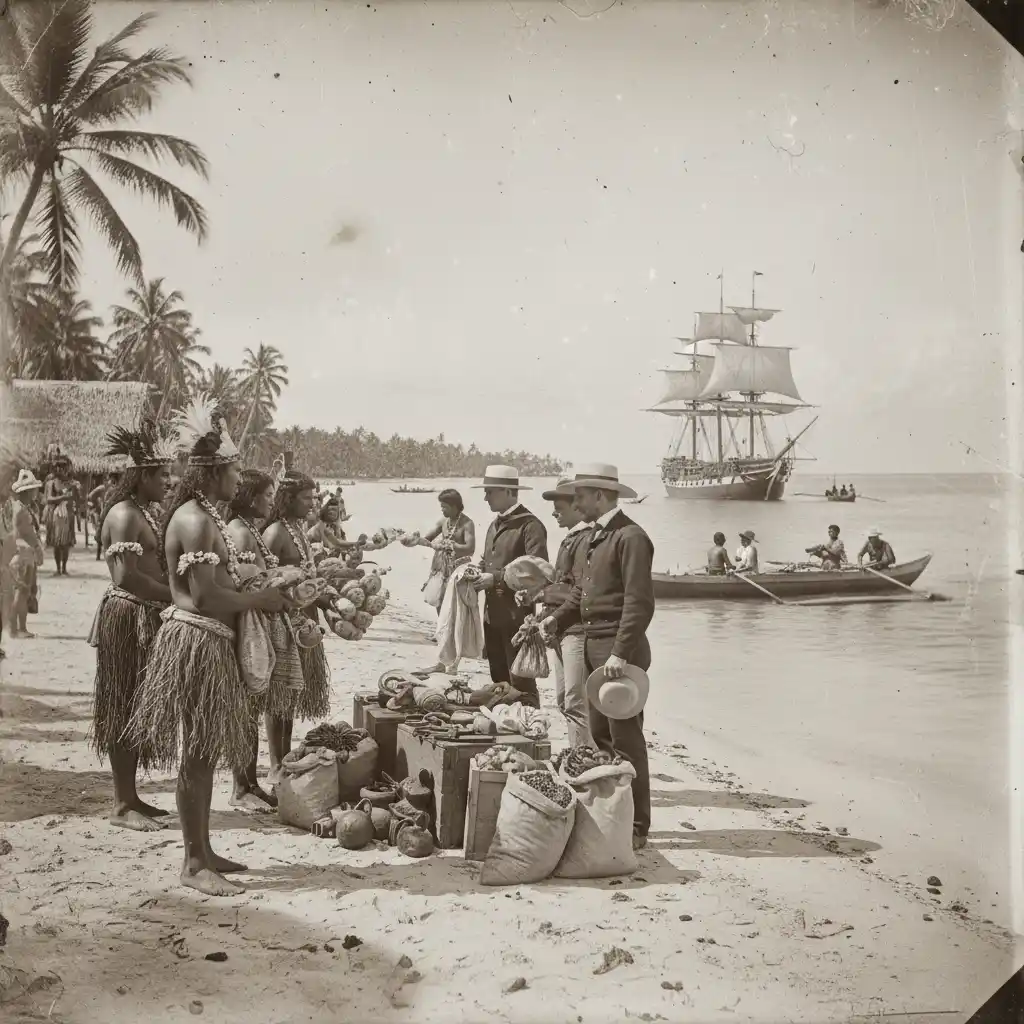
When these laborers returned to Vanuatu (then the New Hebrides), they brought this new language with them. It spread rapidly, becoming the essential bridge between tribes and islands. Today, Bislama is the mother tongue for many urban Ni-Vanuatu in Port Vila and Luganville, and the second language for almost everyone else in the country.
Essential Bislama Phrases for Travelers
One of the joys of visiting Vanuatu is how accessible the language feels to English speakers. Approximately 90-95% of the vocabulary is English-derived. However, the spelling is phonetic, and the meanings can sometimes shift. Learning a few key phrases demonstrates respect and will earn you warm smiles from the locals.
Greetings and Introductions
- Halo: Hello.
- Gud moning: Good morning.
- Gud naet: Good night.
- Olsem wanem? (Literally: All the same what?) How are you?
- Mi gud nomo. I am just fine.
- Nem blong yu wanem? What is your name?
- Nem blong mi [Name]. My name is [Name].
- Tata / Lukim yu: Goodbye / See you later.
Common Courtesies and Questions
- Tangkyu tumas: Thank you very much.
- Plis: Please.
- Sori tumas: I am very sorry.
- Mi no save. (Pronounced ‘sah-veh’) I don’t know / I don’t understand.
- Yu save helpem mi? Can you help me?
- Hamas long hem? How much is this?
- Wetem: With (e.g., Kopi wetem mil: Coffee with milk).
Pro Tip for Pronunciation: Vowels in Bislama are generally pronounced as they are in Spanish or Italian (A, E, I, O, U). The letter “G” is usually hard, and the “R” is often rolled slightly.
Mastering Grammar: It’s More Than Broken English
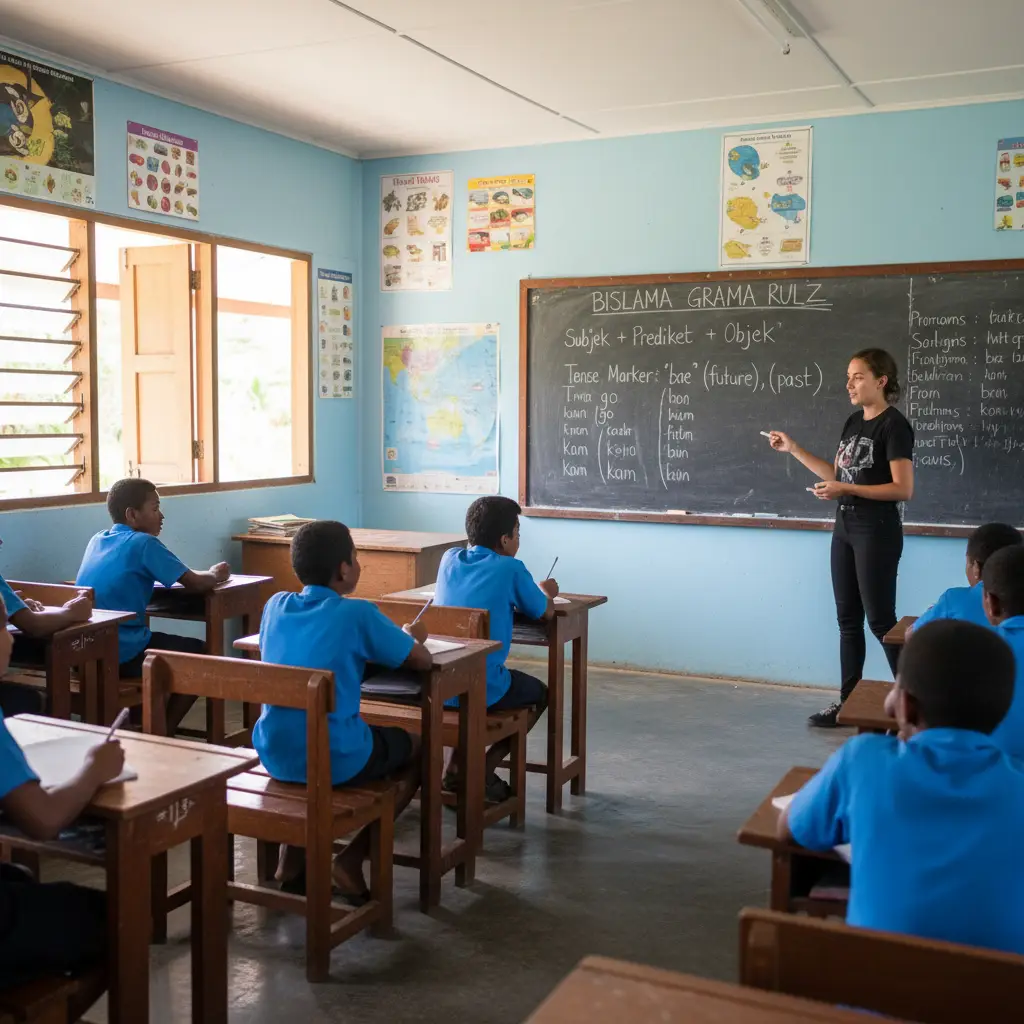
A common misconception among tourists is that Bislama is simply “broken English” or “baby talk.” This is linguistically incorrect and culturally insensitive. Bislama has a rigid grammatical structure that differs significantly from English. If you simply speak English with a heavy accent, you are not speaking Bislama.
The Power of “Blong”
The word “blong” (from “belong”) is the cornerstone of possession and relationship in Bislama. It replaces the English apostrophe-s (‘s) and the word “of”.
- Haos blong mi: My house.
- Wota blong dring: Water for drinking.
- Man blong Ostrelia: A man from Australia.
The Transitive Suffix “-em”
Verbs in Bislama often carry a suffix to indicate that there is a direct object. This suffix is usually written as “-em”, “-im”, or “-um”.
- Kuk: To cook (intransitive). Mi laekem blong kuk. (I like to cook).
- Kukum: To cook something (transitive). Mi kukum raes. (I cook the rice).
- Dring: To drink.
- Dringim: To drink something specific. Yu dringim kava? (Did you drink kava?)
The Complex Pronoun System
Perhaps the most fascinating aspect of Bislama grammar is its pronoun system, which is far more precise than English. In English, “we” can mean “you and I” or “me and them (but not you).” Bislama makes this distinction clear, preventing ambiguity.
- Yumi: We (inclusive – me and you).
- Mifala: We (exclusive – me and them, but NOT you).
Furthermore, Bislama distinguishes between the number of people involved:
- Mitufala: Us two (exclusive).
- Yumitufala: Us two (inclusive).
- Mitrifala: Us three (exclusive).
- Yufala: You all (plural, more than three).
This precision reflects the communal nature of Melanesian society, where defining exactly who is included in a group is socially vital.
The Role of Bislama in Modern Ni-Vanuatu Society
In the Republic of Vanuatu, Bislama is more than a communication tool; it is a symbol of national identity. Upon gaining independence in 1980, the constitution designated Bislama as the national language, while English and French remained official languages for education and commerce. This was a strategic move to unify a nation divided by colonial history (the Anglo-French Condominium).
Today, Bislama is the language of:
- Politics: Parliamentary debates are largely conducted in Bislama to ensure transparency for all citizens.
- Media: The national radio station, heavily listened to in the outer islands, broadcasts primarily in Bislama.
- Religion: While early missionaries used local vernaculars, the Bislama Bible is now standard in many churches.
- Music: Contemporary Vanuatu reggae and string band music often feature Bislama lyrics, exporting the language across the Pacific.

Interestingly, the language is evolving. “Town Bislama” (spoken in Port Vila) is incorporating more English loanwords and moving at a faster pace than “Island Bislama,” which retains more traditional structures and archaic vocabulary. This linguistic drift is a subject of study for academics and a point of pride for urban youth.
Beyond Bislama: The Vernaculars and Colonial Languages
While the Bislama language of Vanuatu takes center stage, the linguistic backdrop of the archipelago is staggering. Vanuatu is home to over 110 indigenous languages for a population of roughly 300,000 people. This density is due to thousands of years of isolation between islands and even between valleys on the same island.
The Vernaculars
These indigenous languages belong to the Austronesian family. On the island of Malekula alone, over 30 distinct languages are spoken. A villager might speak their village language, the language of a neighboring village (due to marriage), Bislama, and likely English or French. These vernaculars are the languages of “kastom” (custom), used for traditional ceremonies, land disputes, and intimate family life.
English and French
The legacy of the Condominium—where Britain and France jointly ruled—left a unique educational divide. Schools are still generally divided into Anglophone and Francophone institutions. While Bislama bridges the gap socially, the “language of education” determines a citizen’s path in higher education and often their political alignment.
Communication Etiquette and Cultural Nuances
Speaking the language is only half the battle; understanding the non-verbal cues and etiquette is equally important in Vanuatu.
The Eyebrow Flash
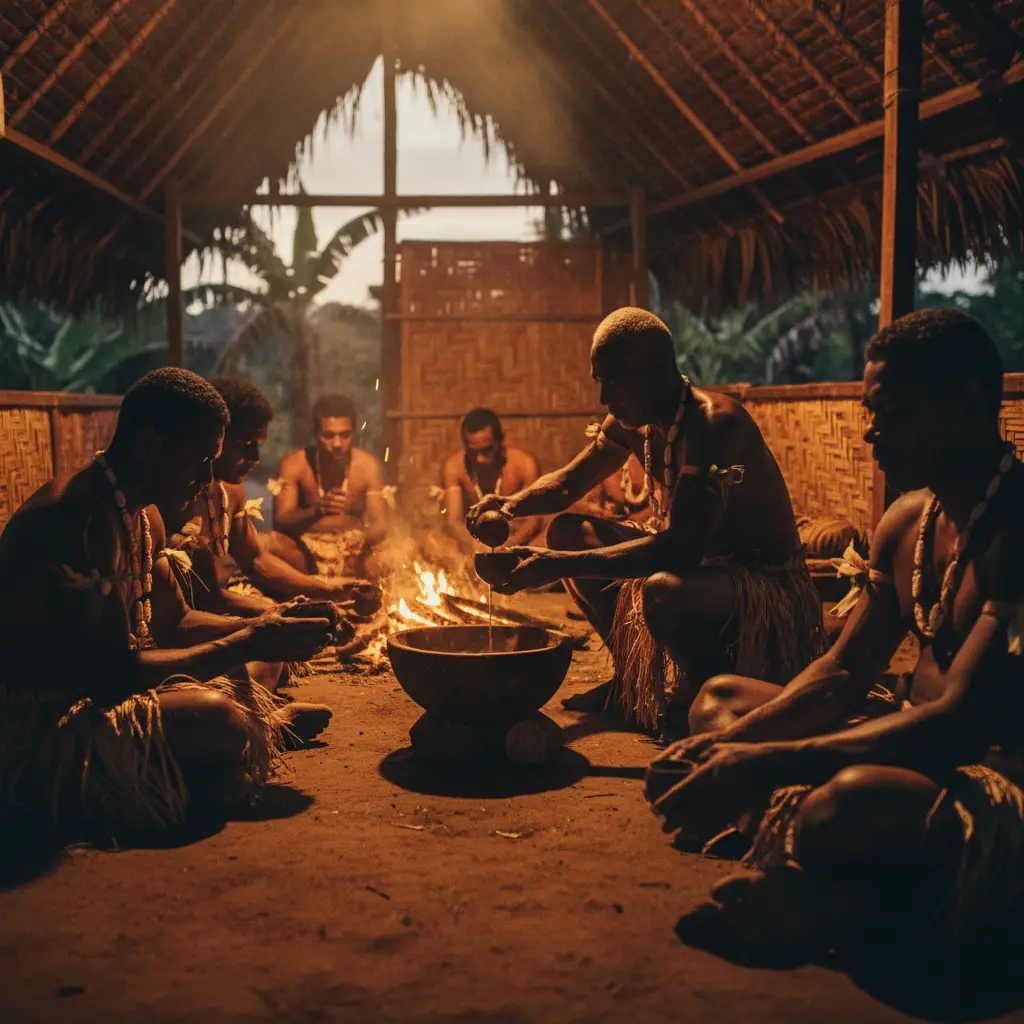
If you ask a question and a local raises their eyebrows, they aren’t surprised—they are saying “Yes.” This is a universal non-verbal agreement in Vanuatu. Conversely, a slight hiss or intake of breath can signal agreement or sympathy.
Silence is Golden
In Western cultures, silence in a conversation can feel awkward. In Vanuatu, silence is a natural part of communication. It gives speakers time to think and reflects a relaxed approach to time. Do not feel the need to fill every pause with chatter.
Respect and Hierarchy
When addressing chiefs or elders, tone matters. Bislama can be spoken casually or formally. Using “Plis” and “Tangkyu” serves you well, but physical posture—lowering oneself physically when passing in front of seated elders—speaks louder than words. Additionally, avoid direct, prolonged eye contact with people of the opposite sex or higher status, as it can be interpreted as aggressive or flirtatious depending on the context.
Calling Out
To get someone’s attention, you might hear a sharp “Ss-ss!” sound. While this is considered rude in many Western countries, it is standard and acceptable in Vanuatu to catch someone’s eye across a street or market.
People Also Ask
Is Bislama difficult for English speakers to learn?
No, Bislama is generally considered one of the easiest languages for English speakers to learn. Since approximately 90% of the vocabulary is derived from English, the learning curve is primarily about mastering the phonetic spelling, the distinct pronunciation, and the Melanesian grammar rules. Most travelers can pick up basic survival phrases within a few days.
Do people in Vanuatu speak English?
Yes, English is one of the three official languages of Vanuatu, alongside Bislama and French. It is widely spoken in urban areas like Port Vila and Luganville and in tourist-centric locations. However, in remote villages, older generations or those with less formal education may rely entirely on Bislama and their local vernacular.
What is the difference between Bislama and Tok Pisin?
Bislama (Vanuatu) and Tok Pisin (Papua New Guinea) are both Melanesian Pidgin English varieties and are mutually intelligible to a high degree. However, they have distinct differences in vocabulary and pronunciation. Bislama has more French influence due to Vanuatu’s colonial history, whereas Tok Pisin has more German and indigenous influences from PNG.
How do you say “Thank You” in Bislama?
“Thank you” in Bislama is “Tangkyu.” To express more gratitude, such as “Thank you very much,” you would say “Tangkyu tumas” (derived from ‘thank you too much’).
Why is it called Bislama?
The word “Bislama” comes from the French word “bêche-de-mer” (sea cucumber). In the 1800s, the trade of sea cucumbers was a primary economic activity, and the pidgin language that developed between traders and locals became known as the “Beach-la-Mar” language, eventually evolving into “Bislama.”
Is Bislama a written language?
Yes, Bislama is a written language with a standardized orthography, although spelling can sometimes vary in informal contexts like social media. There are Bislama dictionaries, a translation of the Bible, and it is used in local newspapers and official government documents.