
Vanuatu native languages represent the highest linguistic density on Earth, with over 138 distinct vernaculars spoken across an archipelago of just 300,000 people. These indigenous Oceanic languages, belonging to the Austronesian family, are crucial to local identity, encompassing complex systems of kinship, land rights, and traditional ecological knowledge distinct from the national creole, Bislama.
Vanuatu is often cited by linguists as the “Galapagos of Language.” Situated in the South Pacific, this Y-shaped archipelago comprises 83 islands, yet it hosts a diversity of speech forms that baffles the modern mind. For the cultural traveler or the linguistic enthusiast, understanding this complex web of communication is key to unlocking the true spirit of the nation. Unlike homogeneous nations where one language binds the populace, Vanuatu is a mosaic where a village on one side of a river may speak a completely different tongue than the village on the other side.
Why is Vanuatu the Most Linguistically Dense Country?
The sheer number of Vanuatu native languages relative to its population size is a global anomaly. To put it in perspective, if the United States had the same language density as Vanuatu, there would be vastly more distinct languages spoken within its borders than exist in the entire world today. But what drove this extreme diversification?
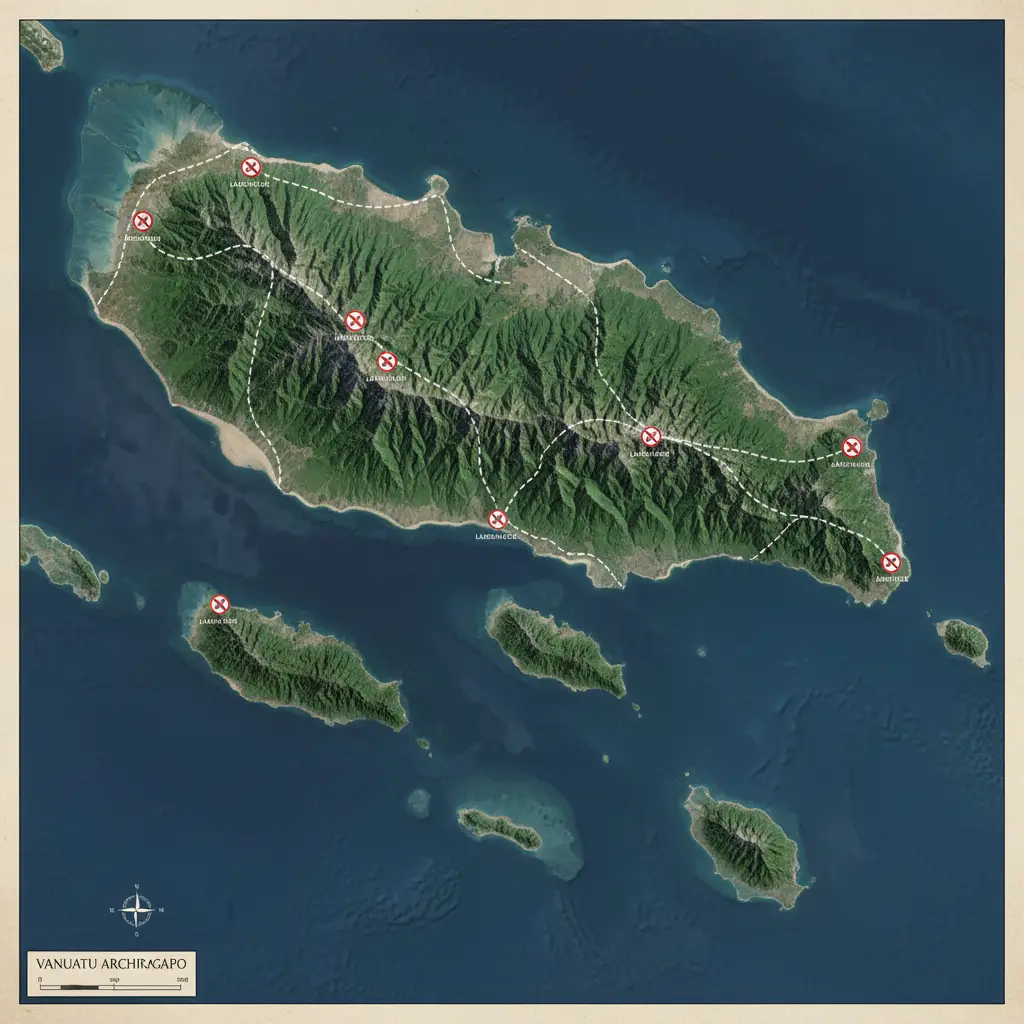
Geographical Isolation and Terrain
The primary driver is geography. Vanuatu’s islands are volcanic and rugged, characterized by dense jungles, steep ravines, and high mountains. Historically, these physical barriers limited interaction between communities. A tribe living in a coastal valley might rarely interact with a tribe living just five kilometers away over a mountain ridge. Over roughly 3,000 years, since the arrival of the Lapita people, these isolated communities allowed their shared proto-language to fracture and evolve into distinct, mutually unintelligible languages.
Social Structure and “Namangi”
Beyond geography, social structures played a pivotal role. In traditional Melanesian society, differentiation is a marker of identity. Language serves as a boundary marker for land rights and kinship. Distinct languages were often maintained intentionally to distinguish “us” from “them,” reinforcing clan sovereignty. The Namangi (grade-taking systems) and chieftaincies often operated within specific linguistic boundaries, further cementing the divide.
Classification and Structure of Indigenous Languages
All indigenous languages of Vanuatu belong to the Oceanic branch of the Austronesian language family. This connects them distantly to languages spoken in Madagascar, the Philippines, and New Zealand (Māori). However, the languages in Vanuatu have developed unique characteristics that set them apart from their Polynesian cousins.
Grammatical Complexity
One of the most fascinating aspects of Vanuatu native languages is their grammatical precision, particularly regarding pronouns. While English relies on singular and plural (I vs. We), many Vanuatu languages utilize four grammatical numbers:
- Singular: One person.
- Dual: Exactly two people.
- Paucal (or Trial): A small number of people (usually three to a few).
- Plural: Many people.
Furthermore, they distinguish between inclusive and exclusive “we.” If a speaker says “we are going to the beach,” the grammar clarifies whether the listener is invited (inclusive) or if the speaker and others are going without the listener (exclusive). This precision reflects the communal nature of Ni-Vanuatu society, where social relationships are constantly defined and redefined through speech.
Possession Classes
Another distinct feature is the system of possession. In many of these languages, how you say “my” changes depending on the nature of the object. There is often a distinction between alienable possession (things you can give away, like a basket or a pig) and inalienable possession (things that are part of you, like your head, your father, or your ancestral land). This linguistic feature underscores the deep, unbreakable connection indigenous people have with their heritage and kin.
Key Examples of Vanuatu Native Languages
While it is impossible to list all 100+ languages here, certain regions are famous for their linguistic tapestry. The island of Malekula alone is home to over 30 distinct languages, making it one of the most linguistically diverse islands in the world.
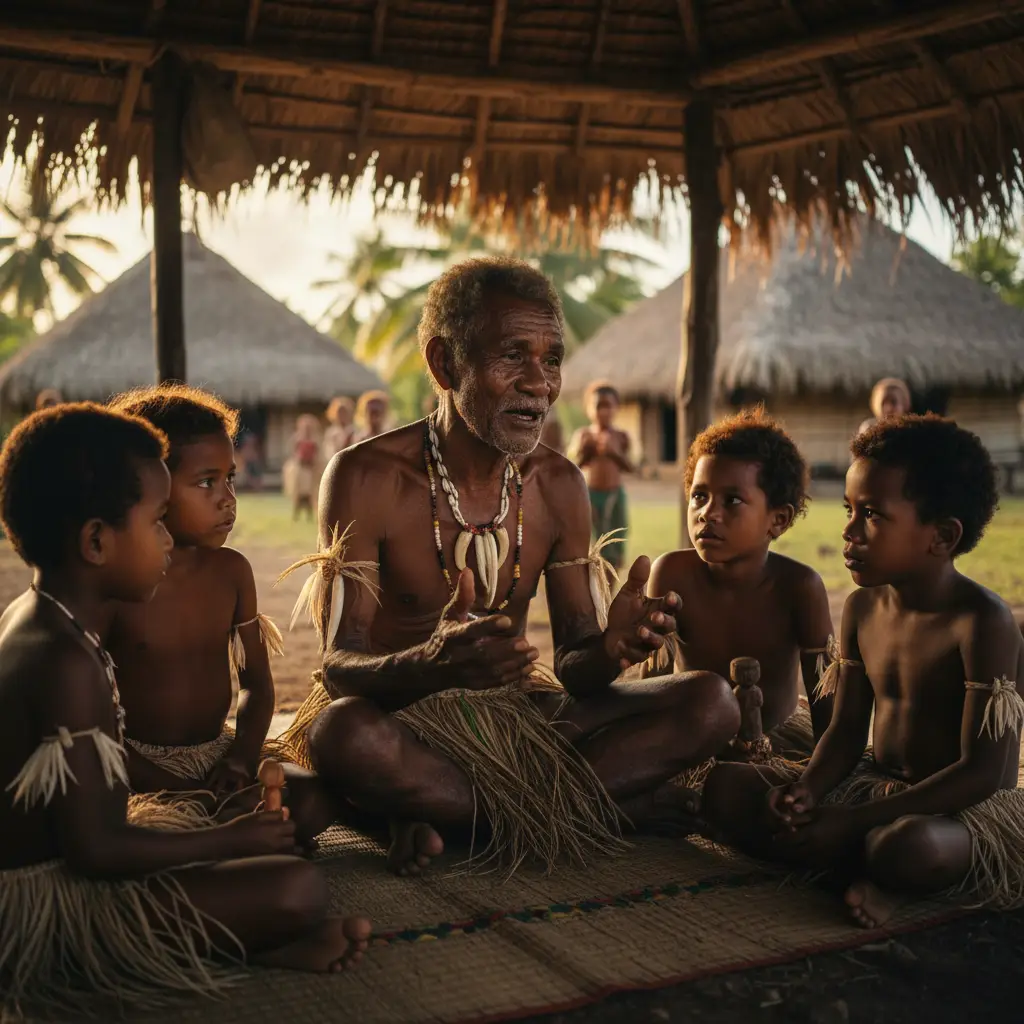
The Languages of Malekula
Malekula is a linguistic hotspot. Languages here include Nese, V’ënen Taut, and Nati. The diversity is so extreme that historically, coastal people and interior people (the Big Nambas and Small Nambas tribes) had entirely different linguistic roots despite sharing the same landmass.
Languages of the South (Tanna and Erromango)
In the southern islands, the languages are distinct from the north. On Tanna, famous for Mount Yasur volcano, the major languages include Lenakel, Kwamera, and White Sands. These languages have more speakers on average than those in the north, largely due to Tanna’s larger population density.
Erromango, once known as “Martyr’s Isle,” suffered massive depopulation in the 19th century due to disease. Consequently, several languages there, such as Sorung, have gone extinct, while Sie (Sye) remains the dominant surviving vernacular.
The Role of Bislama vs. Vernaculars
To understand the linguistic landscape, one must distinguish between the vernaculars (indigenous languages) and Bislama. Bislama is the national language and an English-based creole. It developed during the “blackbirding” era of the 19th century as a means of communication between plantation workers from different islands and European overseers.
Today, Bislama acts as the glue holding the nation together. It is the language of commerce, politics, and inter-island communication. However, for most Ni-Vanuatu, Bislama is a second language. Their “mother tongue” is their village vernacular. A common pattern is for a child to speak their native language at home, learn Bislama on the playground, and learn English or French in school. This makes the average citizen of Vanuatu trilingual by default.
What Threats Do These Languages Face?
Despite the current vibrancy, Vanuatu native languages are under significant threat. Linguists classify many of them as “endangered” or “moribund.” The threats are multifaceted and accelerating.

Urbanization and Migration
As young people migrate from remote villages to the capital, Port Vila, or the town of Luganville for work, they often marry partners from different islands. The common language in these households becomes Bislama. Consequently, their children grow up speaking Bislama as their first language, often losing fluency in their ancestral tongues. This shift is creating a generation of “urban Ni-Vanuatu” disconnected from their linguistic heritage.
Educational Policy
Vanuatu’s education system is a legacy of the Anglo-French condominium. Schools teach in either English or French. While there have been pilot programs to introduce vernacular education in early years, the lack of standardized orthographies (writing systems) for over 100 languages makes producing textbooks a logistical nightmare. When education is prestigious and associated with foreign languages, indigenous tongues can be devalued as “village talk.”
Climate Change
Vanuatu is on the front lines of climate change. Rising sea levels and increasingly severe cyclones force communities to relocate. When a village is displaced and merged with another community, the minority language often succumbs to the dominant one. Language is tied to the land; when the land is lost, the language often follows.
Preservation Efforts and Cultural Resilience
Fortunately, there is a robust movement to document and save these languages. The preservation of Vanuatu native languages is seen not just as an academic exercise, but as a matter of cultural survival.
The Vanuatu Cultural Centre (Vanuatu Kaljoral Senta)
The VKS is the heart of preservation efforts. They operate a unique “Fieldworker Program,” where volunteers from local villages are trained to document their own traditions, stories, and languages. This grassroots approach ensures that the recording is done by the community, for the community, rather than by foreign academics extracting data.
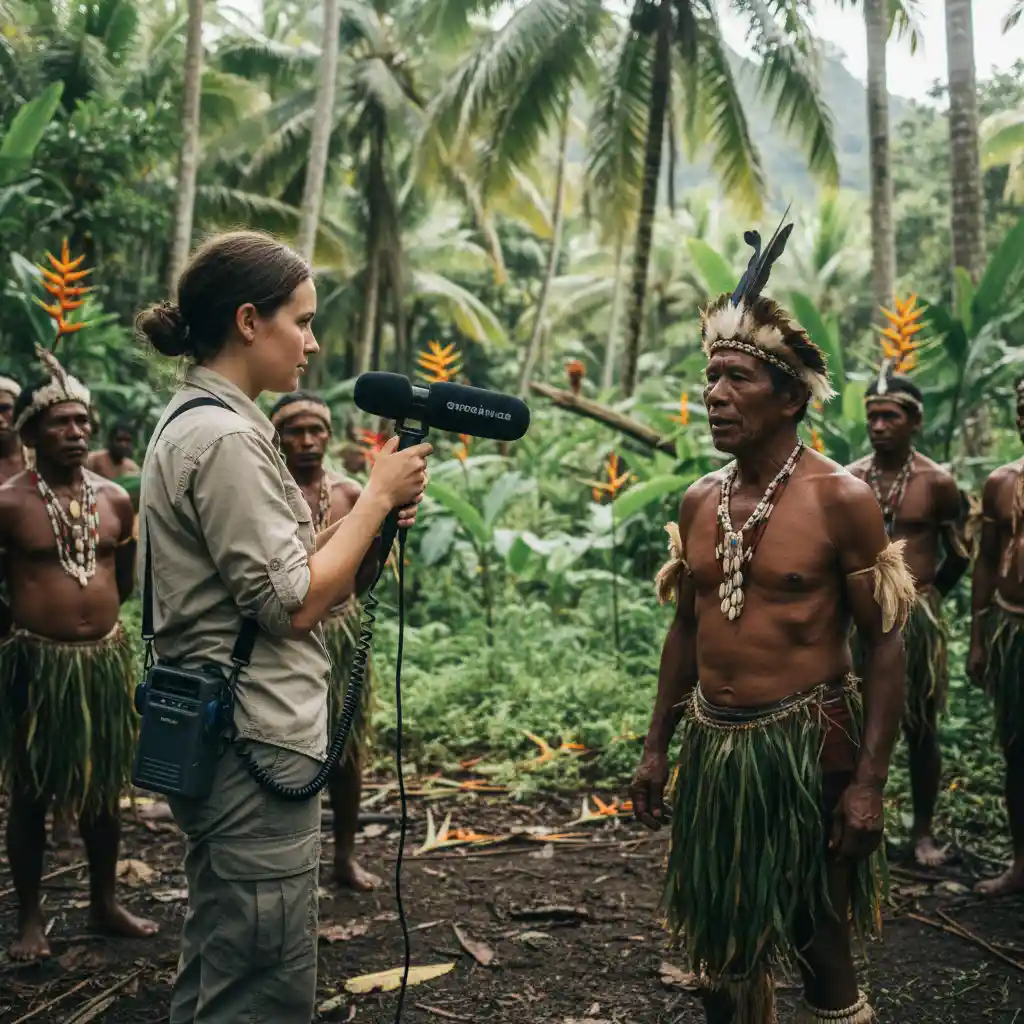
Linguistic Documentation Projects
International linguists, often in partnership with the Max Planck Institute or Australian universities, are racing to create dictionaries and grammar guides for the most endangered languages. These projects often result in the first-ever written records of languages that have been purely oral for millennia. Literacy workshops are then held to teach speakers how to read and write in their own mother tongue.
Linguistic Etiquette for Travelers
For the visitor, acknowledging the existence of local languages is a sign of immense respect. While you are not expected to learn the vernacular of every village you visit, understanding the distinction between Bislama and the local language is appreciated.
When visiting a village:
- Ask for the local greeting: Ask your guide, “How do you say hello in the local language here?” (It will likely be different from the Bislama “Halo”).
- Listen actively: Notice the change in sound when locals switch from talking to you (in English/Bislama) to talking to each other.
- Show value: Compliment the complexity of their language. It validates their culture in a world that often pushes for homogenization.
Vanuatu’s languages are more than just words; they are libraries of botanical knowledge, navigation skills, and spiritual history. To lose one is to burn a library. By learning about them, we contribute to the recognition of their value and their continued survival in the modern world.
What is the most widely spoken native language in Vanuatu?
Excluding Bislama (the creole lingua franca), the indigenous language with the most speakers is generally considered to be Lenakel, spoken on the island of Tanna, though exact census numbers fluctuate. However, no single indigenous language dominates the entire country.
How many languages are spoken in Vanuatu?
There are approximately 138 distinct indigenous languages spoken in Vanuatu. When including Bislama, English, and French, the count increases. This gives Vanuatu the highest density of languages per capita in the world.
Is Bislama a native language of Vanuatu?
Bislama is one of the official languages and the national language, but it is a creole that developed in the 19th century. While it is the “native” first language for some urban children today, it is distinct from the ancient, indigenous vernaculars of the islands.
Are Vanuatu languages written down?
Most Vanuatu native languages were traditionally oral. While linguists and missionaries have developed writing systems for some (like Lenakel, Raga, and Mota), many remain unwritten or lack a standardized orthography.
Why are there so many languages in Vanuatu?
The high density is due to 3,000 years of isolation caused by rugged volcanic terrain and ocean barriers, combined with cultural practices where distinct languages served as markers of tribal identity and land ownership.
Can tourists get by with just English in Vanuatu?
Yes, tourists can generally get by with English, as it is an official language and widely taught in schools. However, knowing some Bislama phrases is very helpful, and learning local vernacular greetings is considered a polite gesture.