
A comprehensive Vanuatu packing list prioritizes lightweight, breathable fabrics like linen and cotton to handle the tropical humidity, alongside high-SPF reef-safe sunscreen and strong insect repellent containing DEET or Picaridin. Essential gear includes sturdy reef shoes for coral protection, a waterproof dry bag for island hopping, and an Australian/NZ Type I power adapter.
Preparing for a journey to the archipelago of Vanuatu requires more than just throwing a swimsuit into a carry-on. As a premier destination in the South Pacific, Vanuatu offers a diverse landscape ranging from pristine white sand beaches to active volcanoes and dense rainforests. To navigate this terrain comfortably while respecting local customs and environmental regulations, a strategic approach to packing is essential.
Whether you are planning to lounge by the pool in Port Vila, dive the SS President Coolidge in Santo, or hike Mount Yasur in Tanna, having the right gear will define the quality of your experience. This guide serves as the definitive encyclopedia for travelers, ensuring you are equipped for the climate, culture, and adventures that await.
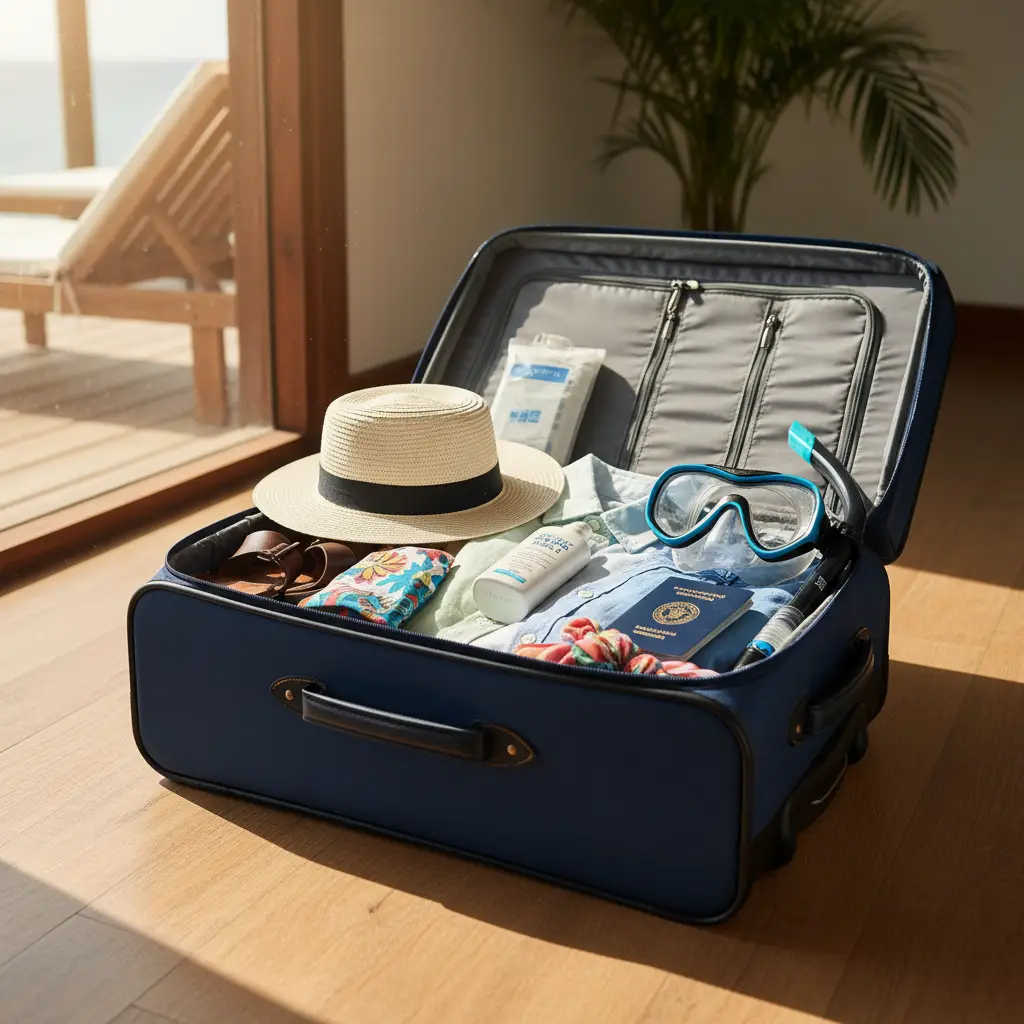
What Clothing Should I Pack for Vanuatu?
Vatuatu enjoys a tropical climate, meaning it is warm and humid year-round. However, the packing strategy must balance comfort with cultural sensitivity. The “island casual” aesthetic dominates, but visitors must be mindful of modesty when leaving resort boundaries.
Fabrics for High Humidity
The humidity in Vanuatu can average between 75% and 85%. Synthetic fabrics like heavy polyester or denim will trap heat and moisture against the skin, leading to discomfort and potential skin irritation. Instead, prioritize natural fibers.
- Cotton and Linen: Pack loose-fitting shirts, dresses, and trousers made from 100% cotton or linen. These materials breathe well and dry relatively quickly.
- Moisture-Wicking Synthetics: For hiking or active days, lightweight athletic gear that wicks sweat away from the body is acceptable.
- Avoid Jeans: Denim is generally too hot for the climate and takes days to dry if it gets wet.
Cultural Modesty and Village Attire
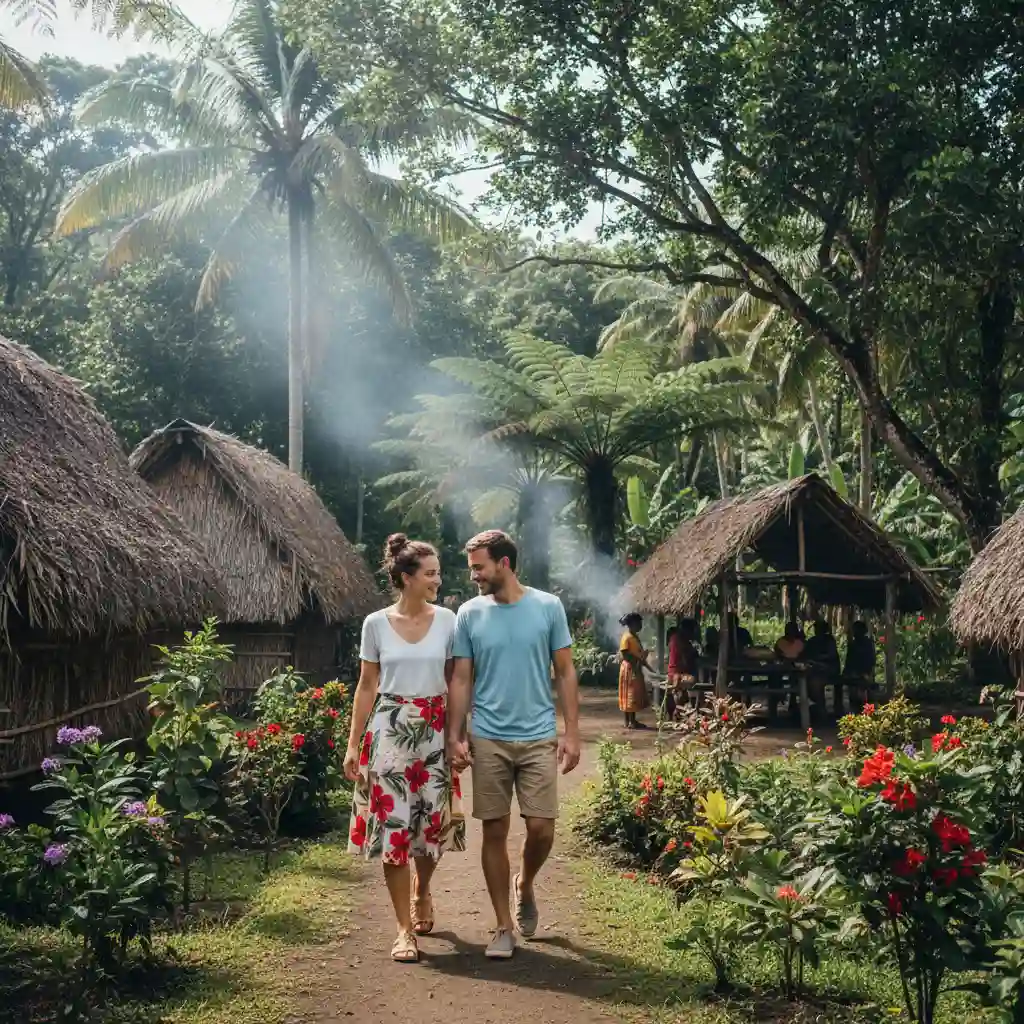
While swimwear and skimpy clothing are perfectly acceptable within the confines of your hotel or resort, Vanuatu is a conservative Christian nation with strong traditional customs (Kastom). When visiting local markets in Port Vila, traveling to outer islands, or entering a village, modesty is required.
- For Women: Pack sarongs (lavalavas) or skirts that cover the knees. Sleeveless tops are generally okay, but avoid deep plunging necklines or midriff-baring tops in villages. A lightweight scarf is a versatile tool to cover shoulders when needed.
- For Men: Board shorts are for the beach. When in town or villages, wear a T-shirt and shorts of a respectable length. Walking around shirtless in town is considered disrespectful.
Rain Gear and Light Layers
Despite the heat, thermal regulation is necessary. Tropical downpours can occur suddenly, and evenings can feel cool, especially if you are near the ocean or at higher altitudes like Tanna.
- Lightweight Rain Jacket: A breathable, packable rain shell is essential. Ponchos are a good backup but can be sweaty.
- Light Sweater or Cardigan: Air conditioning on planes, ferries, and in hotel rooms can be cold. Furthermore, evening temperatures in the winter months (June to August) can drop to around 18°C (64°F).
What Footwear is Best for Coral and Volcanoes?
Your choice of footwear can save you from injury. The terrain in Vanuatu varies from sharp coral reefs to slippery waterfalls and ash plains. Flip-flops (thongs) are useful, but they cannot be your only option.
The Importance of Reef Shoes
One of the most critical items on your Vanuatu packing list is a high-quality pair of reef shoes (aqua boots). The marine environment is beautiful but hazardous to bare feet.
- Coral Cuts: Coral is razor-sharp and cuts can easily become infected in the tropics.
- Marine Life: Stonefish and sea urchins are present in the waters. Thick-soled reef shoes provide a necessary barrier against spines and camouflage predators.
- Wet Landings: Many boat tours involve “wet landings” where you jump from a boat into shallow water. Reef shoes protect your feet from hidden rocks during these transfers.
Hiking Footwear
If your itinerary includes the Millennium Cave tour in Santo or Mount Yasur in Tanna, flip-flops will not suffice.
- Hiking Sandals: Sturdy sandals with straps (like Tevas or Chacos) are excellent for waterfall hikes where your feet will be submerged but need traction.
- Closed-Toe Shoes/Sneakers: For the volcano ash plains, closed shoes are best to keep the grit out. While heavy hiking boots are usually overkill (and too hot), a sturdy pair of trail runners is ideal.
How Do I Protect Against Sun and Insects?
The tropical environment presents specific health challenges. Being proactive with your packing can prevent sunburn, dehydration, and vector-borne diseases.
Reef-Safe Sun Protection
The UV index in Vanuatu is extreme. Burn times can be as short as 10-15 minutes for unprotected skin.
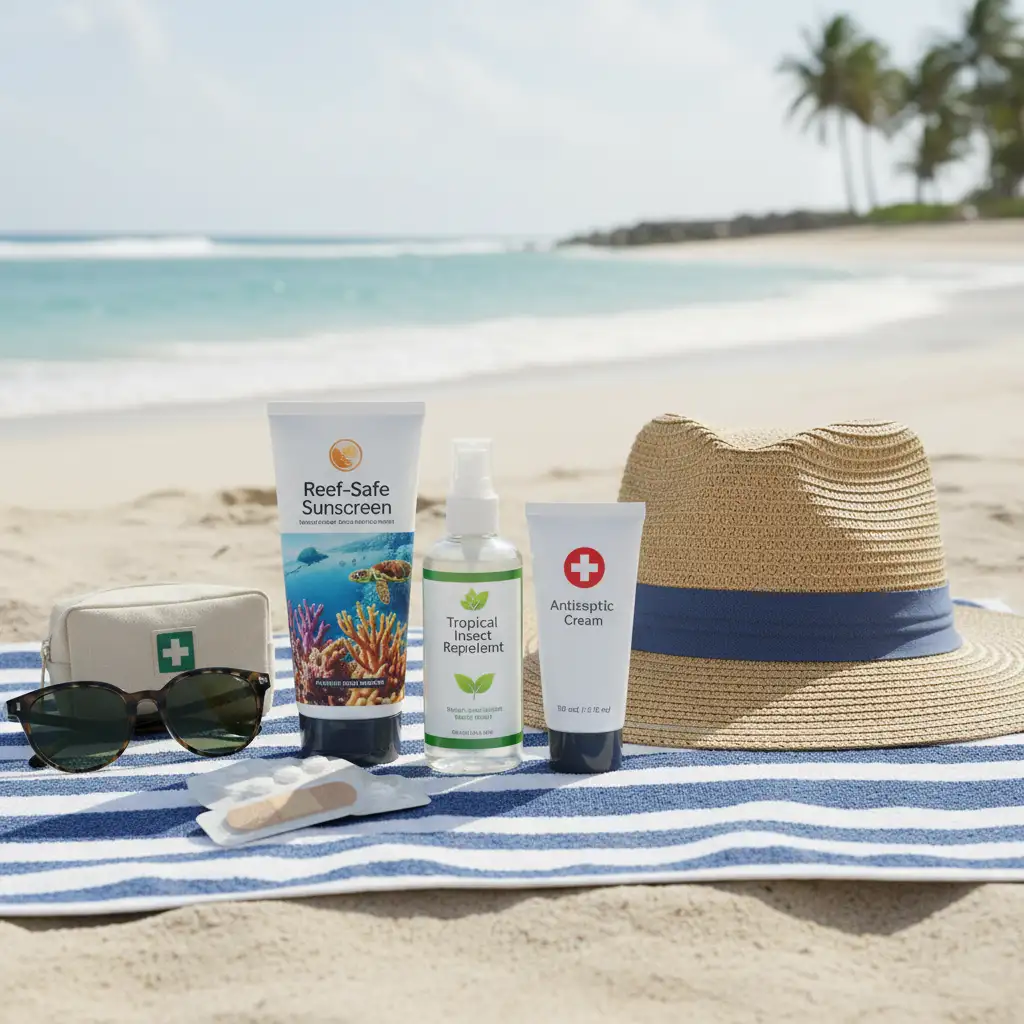
- Reef-Safe Sunscreen: Standard sunscreens often contain oxybenzone and octinoxate, chemicals that bleach coral and kill marine life. Ensure your sunscreen is labeled “Reef Safe” (usually zinc or titanium-based). You will need more than you think; pack at least one large bottle per person per week.
- Rash Guards: For snorkeling, a UV-protective rash guard (swim shirt) is superior to sunscreen. It provides 100% coverage, doesn’t wash off, and protects against jellyfish stings.
- Hat and Sunglasses: A wide-brimmed hat is non-negotiable. Polarized sunglasses will not only protect your eyes but also allow you to see through the water surface to spot turtles and reefs.
Insect Repellent and First Aid
Mosquitoes in Vanuatu can carry Malaria (specifically in outer islands) and Dengue Fever. Prevention is the primary defense.
- Strong Repellent: Bring repellent containing DEET (at least 40%) or Picaridin. Natural remedies like citronella are generally ineffective against tropical mosquitoes.
- First Aid Kit: Medical facilities in Port Vila are adequate for minor issues, but pharmacies on outer islands are scarce. Pack a kit containing:
- Antiseptic cream (Betadine) for coral cuts.
- Waterproof bandages.
- Antihistamines for bites or reactions.
- Pain relief (Paracetamol/Ibuprofen).
- Motion sickness tablets (for inter-island ferries).
- Anti-diarrheal medication (Imodium).
Should I Bring My Own Snorkeling Gear?
While larger resorts offer complimentary snorkel gear hire, avid snorkelers should strongly consider bringing their own equipment.
Hygiene and Fit
Rental masks often leak or fog up, and snorkels have been in hundreds of other mouths. Bringing your own mask and snorkel ensures a perfect fit and proper hygiene. If you are short on space, leave the fins at home and just pack the mask and snorkel tube; fins are bulky and easier to rent.
Underwater Photography
Vanuatu possesses some of the clearest water in the world. To capture memories of the vibrant coral gardens or the underwater post office at Hideaway Island:
- Waterproof Phone Pouch: A budget-friendly option, but test it before you travel.
- Action Camera: A GoPro or similar device with a floating handle is ideal.
- Dry Bag: A 10L or 20L waterproof dry bag is essential for keeping your camera, phone, and towel dry while on boat excursions.
What Electronics and Adapters Do I Need?
Staying charged and connected in Vanuatu requires specific hardware, especially if you are traveling from outside the Australia/New Zealand region.
Power Plugs and Voltage
Vanuatu uses Type I power outlets, the same as Australia and New Zealand (angled two or three pins). The standard voltage is 220-240V.
- Travel Adapter: If you are coming from the US, UK, or Europe, you will need a Type I adapter.
- Voltage Converter: Most modern phone and laptop chargers are dual voltage (110-240V). However, if you bring hair straighteners or shavers from the US (110V), check if they support 240V. If not, you risk blowing the fuse or destroying the device.
- Power Bank: Electricity on outer islands can be intermittent or solar-powered. A high-capacity power bank (10,000mAh+) ensures your phone stays charged during long days out.
Essential Documents and Currency Management
Vanuatu is a cash-centric society once you leave the major resorts. Preparation is key to avoiding logistical headaches.
Currency: The Vatu
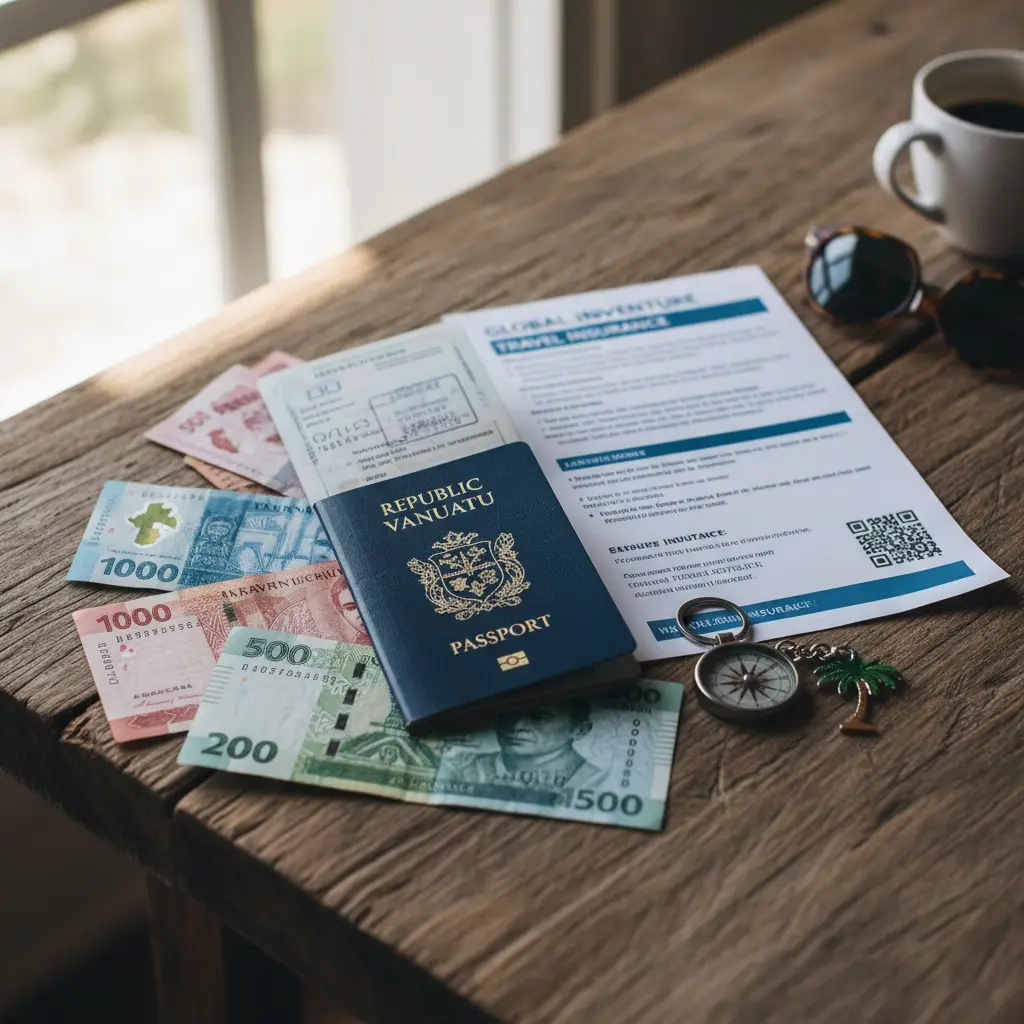
The local currency is the Vatu (VUV). While credit cards are accepted at major hotels and supermarkets in Port Vila and Luganville, they are virtually useless in villages, markets, and for local transport (buses/taxis).
- Cash Strategy: Bring Australian Dollars (AUD) to exchange upon arrival, or use ATMs in Port Vila. Stock up on small denomination coins and notes (100, 200, 500, and 1000 Vatu) for market purchases.
Travel Insurance
Do not travel to Vanuatu without comprehensive travel insurance. Medical evacuations from outer islands to Port Vila, or from Vanuatu to Australia/NZ for serious conditions, can cost tens of thousands of dollars. Ensure your policy covers adventure activities like scuba diving, horse riding, or volcano hiking if you plan to do them.
What Items Are Prohibited in Vanuatu?
To be a responsible traveler, you must be aware of what to leave behind. Vanuatu has implemented strict environmental laws to preserve its beauty.
The Single-Use Plastic Ban
Vanuatu has one of the strictest bans on single-use plastics in the world. It is illegal to import or use:
- Single-use plastic shopping bags.
- Plastic straws.
- Polystyrene takeaway boxes.
Do not pack your shoes or dirty laundry in plastic grocery bags. Use reusable packing cubes or cloth bags instead. Customs officers may confiscate prohibited plastics upon arrival.
Camouflage Clothing
Avoid packing camouflage clothing. In many Pacific nations, camouflage is reserved strictly for military personnel, and wearing it can be seen as disrespectful or cause confusion.
People Also Ask
Do I need a power adapter for Vanuatu?
Yes, if your devices do not use the Type I plug (Australia/New Zealand standard). Vanuatu operates on 230V supply voltage and 50Hz. Travelers from the US, UK, and Europe will need a plug adapter, and potentially a voltage converter if their appliances are not dual-voltage.
Can I wear a bikini in Vanuatu?
You can wear a bikini at resorts, hotels, and tourist beaches. However, when visiting villages, markets, or public areas in town, you should cover up with a sarong, shorts, and a t-shirt out of respect for the conservative local culture.
Is it necessary to bring malaria tablets to Vanuatu?
It depends on which islands you visit. Port Vila is generally considered low risk, but malaria is present in the outer islands of Vanuatu. It is highly recommended to consult a travel doctor before your trip to discuss prophylaxis medication and to bring strong insect repellent.
What is the best luggage to take to Vanuatu?
A soft-shell suitcase or a travel backpack is best. If you are island hopping on small planes (like Air Vanuatu domestic flights), there are strict weight limits (often 10kg-15kg) and rigid hard-shell cases can be difficult to fit in the small cargo holds.
Can I drink the tap water in Vanuatu?
It is generally recommended that tourists do not drink tap water in Vanuatu to avoid stomach upsets. In Port Vila, the water is treated, but pipes can be old. Stick to bottled water or, better yet, bring a reusable water bottle with a built-in filter to reduce plastic waste.
Do I need reef shoes for Vanuatu?
Yes, reef shoes are highly recommended. Many beaches have coral fragments, sharp rocks, or stonefish hidden in the sand. Reef shoes protect your feet from cuts and infections, allowing you to explore the water safely.