
Espiritu Santo travel offers a diverse blend of world-class wreck diving, pristine white sand beaches, and crystal-clear freshwater blue holes. As the largest island in Vanuatu, it features major attractions like the SS President Coolidge, Champagne Beach, and the bustling town of Luganville, making it a premier destination for adventure seekers and relaxation enthusiasts alike.
Why Visit Espiritu Santo?
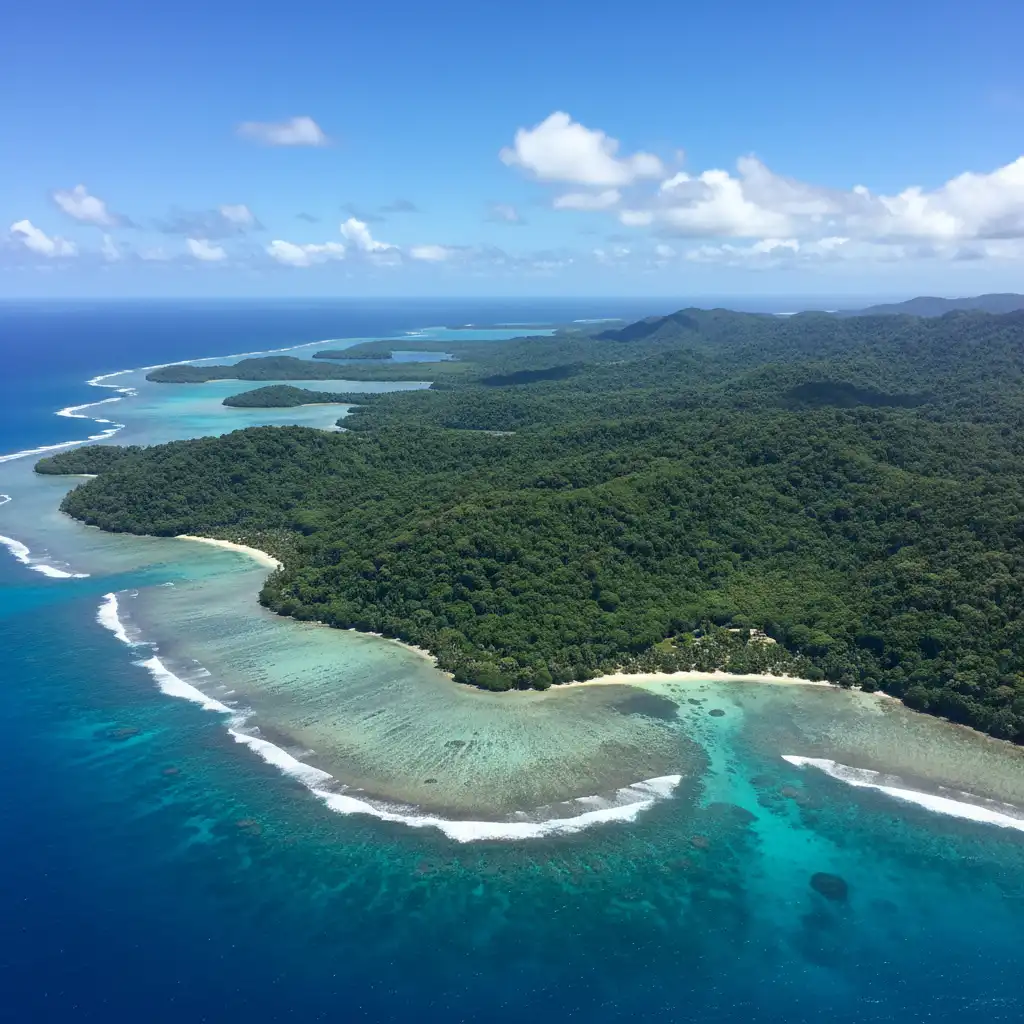
Espiritu Santo, affectionately known as ‘Santo’ by locals and frequent travelers, stands as the crown jewel of Vanuatu’s northern islands. Unlike the bustle of Port Vila on Efate, Santo offers a rugged, raw beauty that appeals to the intrepid traveler while maintaining enough infrastructure to ensure a comfortable stay. It is an island of contrasts: from the deep, dark history of WWII relics resting on the ocean floor to the blindingly bright sands of its northern coast.
For the digital encyclopedia of Vanuatu, Santo represents the intersection of history and geology. The island is geologically older than many of its neighbors, resulting in the formation of spectacular limestone caves and the famous freshwater blue holes. Culturally, it is a hub of diversity, where custom villages still practice ancient traditions just miles away from the modern port of Luganville.
What Makes the SS President Coolidge a World-Class Dive?
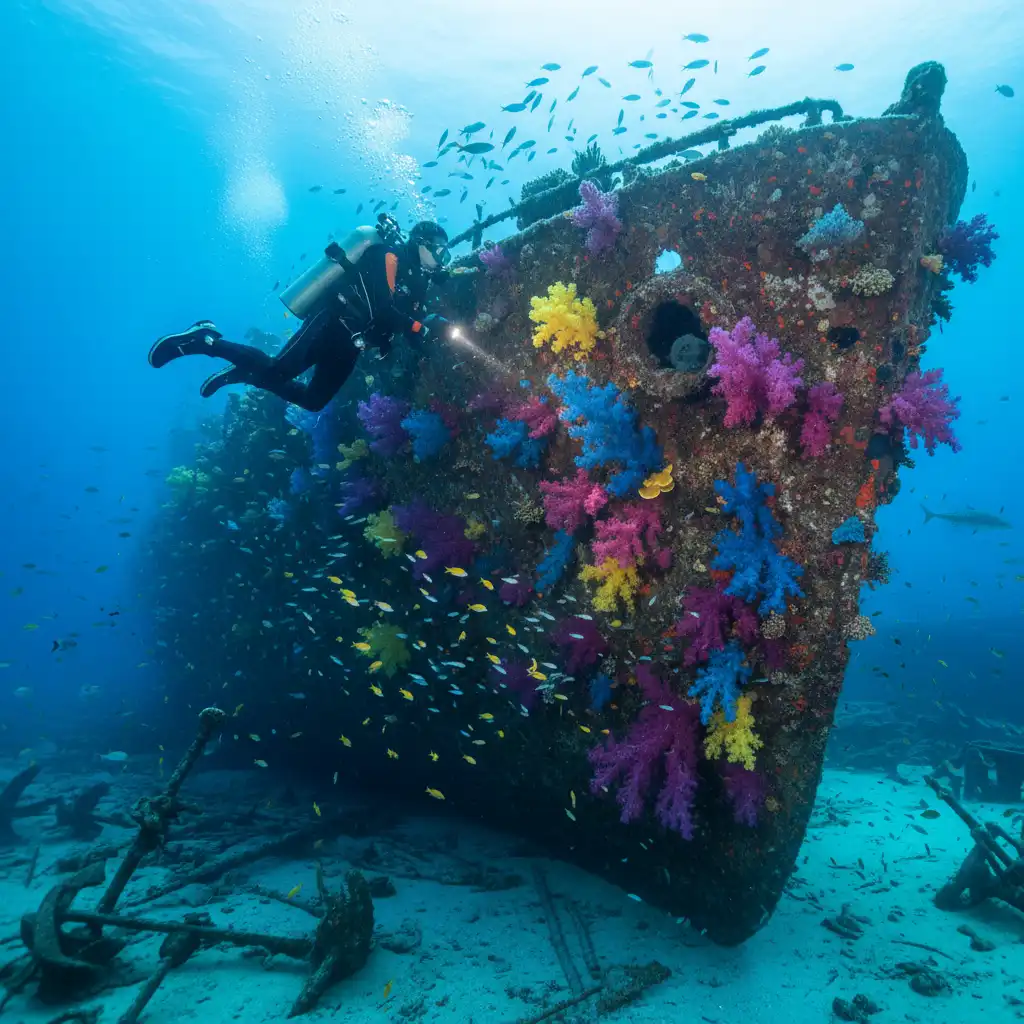
The SS President Coolidge is not merely a shipwreck; it is an underwater metropolis. Sunk in 1942 after striking friendly mines, this luxury-liner-turned-troop-ship is widely regarded as the largest and most accessible shore dive in the world. Resting between 20 and 70 meters deep, the sheer scale of the vessel requires multiple dives to appreciate fully.
The Lady and The Stern
Divers typically begin their exploration at the bow, which is the shallowest point. However, the true icons of the Coolidge lie deeper. ‘The Lady,’ a porcelain relief of a woman riding a unicorn, remains intact in the first-class dining saloon. Seeing her requires a descent to approximately 40 meters, a depth that demands respect and proper certification. The stern holds the galley supplies, where divers can still see rows of medicine bottles, jeeps, and weaponry, frozen in time since the Second World War.
Million Dollar Point
Adjacent to the Coolidge dive site lies Million Dollar Point. Following the war, the US military, unable to sell their surplus equipment to the local condominium government at a reasonable price, opted to bulldoze millions of dollars worth of tanks, bulldozers, and trucks into the ocean. Today, this site offers a surreal snorkeling and diving experience where machinery lies piled atop one another, now encrusted with coral and teeming with fish life. It serves as a stark reminder of the scale of the Pacific Theater operations.
Is Champagne Beach the Best Beach in the South Pacific?
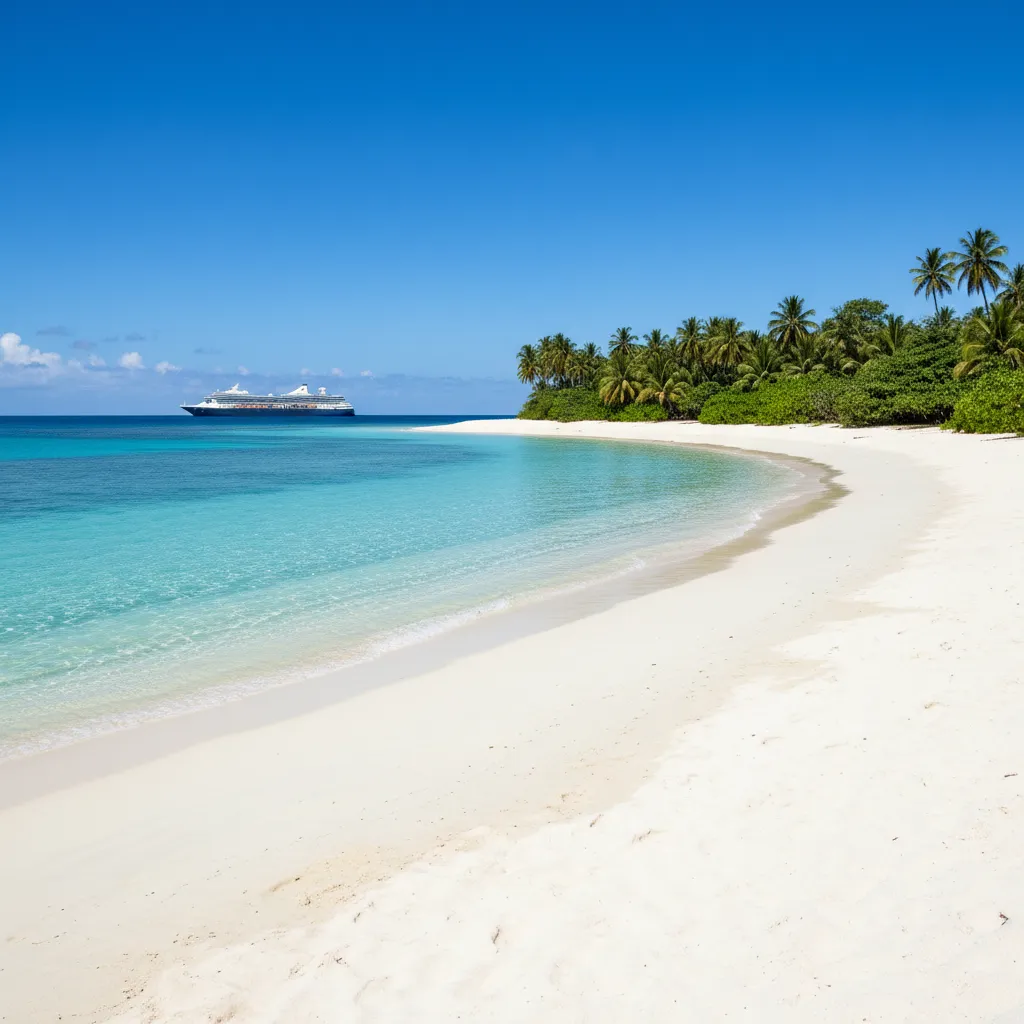
Located on the northeast coast of Santo, Champagne Beach frequently tops lists of the world’s best beaches. Its name derives from a unique volcanic phenomenon: at low tide, freshwater springs bubble up through the sand into the lagoon, creating a sensation similar to swimming in champagne.
The Geography of Paradise
The geography of Champagne Beach creates a perfect crescent of powdery white sand, framed by ancient tamanu trees and backed by dense rainforest. The water is an electric blue, protected by a reef that ensures calm swimming conditions year-round. Unlike many tourist beaches, there is no heavy development here. A few local stalls selling fresh coconut crab or sarongs are the only commercial elements, preserving the pristine atmosphere.
Port Olry: The Hidden Gem
While Champagne Beach garners the fame, the nearby village of Port Olry offers an equally stunning experience with more amenities. A former francophone mission, Port Olry features beach bungalows right on the sand. Visitors can dine on fresh lobster at local restaurants with their feet in the water. It is renowned for its laid-back atmosphere and the opportunity to paddle an outrigger canoe to nearby islets.
How to Explore Matevulu and the Blue Holes
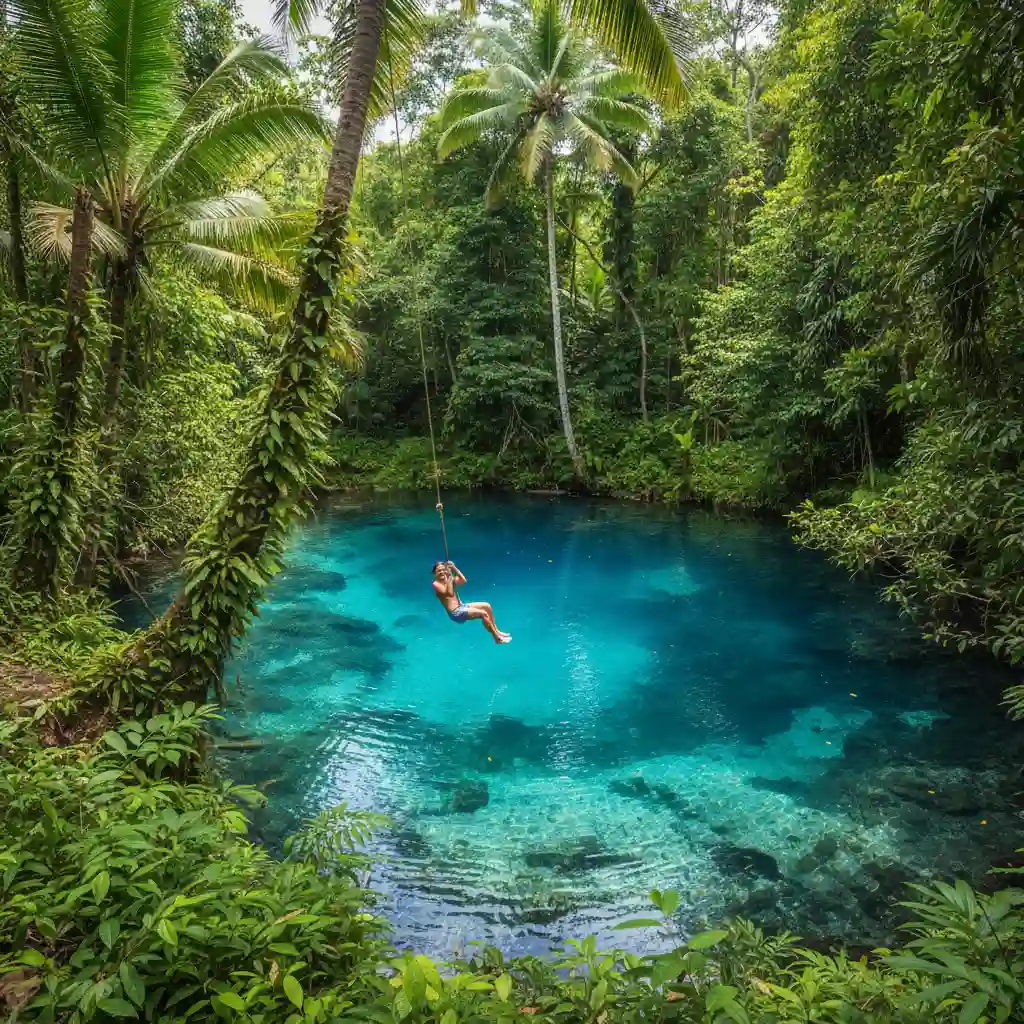
Espiritu Santo is famous for its ‘Blue Holes’—natural freshwater swimming pools formed by water filtering through limestone layers underground and resurfacing in crystal-clear springs. The water is incredibly pure and a vibrant sapphire blue due to the depth and the calcium carbonate content.
Matevulu Blue Hole
The Matevulu Blue Hole is perhaps the most iconic. Accessing it is an adventure in itself; many travelers choose to kayak up the crystal river for 30 minutes, gliding past overhanging banyan trees and jungle vines, before arriving at the main pool. A large banyan tree with a rope swing serves as the focal point, allowing adventurous swimmers to launch themselves into the deep blue water.
Riri and Nanda Blue Holes
While Matevulu is wild and expansive, Nanda Blue Hole is manicured and offers excellent visibility for snorkeling, often compared to an aquarium. Riri Blue Hole is known for its serene setting, often accessed via a traditional dugout canoe ride, providing a peaceful immersion into the island’s river ecosystem.
Luganville Attractions: More Than Just a Base
Luganville is the second-largest city in Vanuatu and serves as the commercial and logistical hub of Espiritu Santo. While it lacks the polish of a resort town, it possesses a gritty charm and significant historical importance.
The Mama’s Market
The heartbeat of Luganville is the central market. Open 24 hours a day (except Sundays), this is where villagers from across the island come to sell their produce. It is a kaleidoscope of colors: piles of taro, yams, island cabbage, and exotic fruits like nangai nuts and soursop. For the traveler, it is the best place to buy cheap, organic food and engage with the local Ni-Vanuatu women, known as ‘Mamas,’ who run the stalls.
WWII History and Architecture
During WWII, Luganville was a massive US military base, housing over 100,000 troops. Evidence of this era remains in the Quonset huts that have been repurposed as homes and sheds throughout the town. The wide main street was originally designed to allow four tanks to drive abreast. History buffs can visit the South Pacific WWII Museum, which is currently in development but offers fascinating insights into the impact of the war on the local population.
Practical Espiritu Santo Travel Logistics
Planning a trip to Santo requires some knowledge of local operations to ensure a smooth experience.
Getting There and Around
Air Vanuatu operates daily flights from Port Vila to Pekoa International Airport (SON) in Luganville. Direct flights from Brisbane, Australia, are also available on specific days. Once on the island, taxis and buses (marked with a ‘B’ on the license plate) are plentiful in Luganville. For exploring up the east coast to Champagne Beach or Port Olry, hiring a private driver for the day or renting a car is recommended, though road conditions can be variable.
Accommodation Options
Accommodation in Santo ranges from high-end private island resorts like Ratua and Aore Island Resort to simple backpacker bungalows in Luganville. For divers, staying near the Segond Channel is convenient, while honeymooners often prefer the seclusion of the east coast resorts.
People Also Ask
What is the best time to visit Espiritu Santo?
The best time to visit is during the dry season, from May to October. The weather is warm but less humid, and the trade winds provide a cooling breeze. This is also the best time for visibility when diving the Coolidge.
Do I need a visa for Vanuatu?
Most visitors, including citizens of the Commonwealth, EU, and USA, are granted a visitor visa on arrival for stays of up to 30 days. However, you must have a return ticket and a passport valid for at least six months.
Is Espiritu Santo safe for tourists?
Yes, Santo is generally very safe. The crime rate is low, and the locals are known for their friendliness. However, basic precautions regarding personal belongings should be taken, as in any travel destination.
Can you swim at Champagne Beach for free?
No, Champagne Beach is privately owned by the local indigenous community. There is an entrance fee (usually around 2000 Vatu per vehicle) which goes towards maintaining the area and supporting the village.
How many days do you need in Espiritu Santo?
A minimum of 5 to 7 days is recommended. This allows enough time to dive the Coolidge (which often takes 2-3 days for serious divers), visit the Blue Holes, and spend a day relaxing at Champagne Beach or Port Olry.
Is the water in the Blue Holes salty?
No, the Blue Holes are freshwater springs. The water is cool, refreshing, and completely non-saline, offering a distinct experience from swimming in the ocean.