
Kastom in Vanuatu represents the deeply rooted traditional laws, customs, and spiritual beliefs that form the bedrock of Ni-Vanuatu society. It is a dynamic, living heritage, encompassing everything from land ownership and social hierarchy to ceremonial practices, art, and daily etiquette. Kastom provides a foundational framework for governance, community cohesion, and cultural identity across the diverse islands of the archipelago.
What is Kastom in Vanuatu? Defining the Living Heritage
Kastom is a pidgin English term derived from the word ‘custom,’ but its meaning in the context of Vanuatu far surpasses a simple translation. It embodies the complex, indigenous system of beliefs, practices, laws, and social structures that have governed the lives of the Ni-Vanuatu people for millennia. Far from being static, kastom is a living, evolving heritage, continually interpreted and adapted by communities while maintaining its fundamental principles. It is the invisible thread that weaves together the social fabric of the nation, providing a sense of identity, belonging, and continuity for its inhabitants. Understanding kastom is paramount to grasping the essence of Vanuatu, as it permeates every aspect of society, from grand ceremonial events to the minutiae of daily interactions and the very concept of justice and property.
The Etymology and Scope of Kastom
The term ‘kastom’ itself is a testament to Vanuatu’s colonial past, evolving from the English ‘custom’ but adopted into Bislama, the national lingua franca, to describe something uniquely Melanesian. Unlike the Western notion of ‘custom’ as merely a tradition or habit, kastom in Vanuatu is an entire worldview, a comprehensive legal and ethical framework. It encompasses a vast array of elements, including:
- Customary Law: Rules governing land ownership, marriage, inheritance, and conflict resolution.
- Spiritual Beliefs: Connections to ancestors, nature spirits, and the sacred.
- Rituals and Ceremonies: Initiations, feasts, dances, and agricultural rites.
- Social Structures: Chiefly systems, age grades, gender roles, and kinship ties.
- Material Culture: Traditional arts, crafts, music, and architecture.
- Ethical Principles: Concepts of respect, reciprocity, community obligation, and dispute settlement.
Essentially, kastom is the sum total of Vanuatu’s cultural inheritance, passed down through generations orally and through practice. It dictates appropriate behaviour, defines individual and community rights and responsibilities, and provides a moral compass for the Ni-Vanuatu people. Its comprehensive nature means that it functions as a societal operating system, distinct yet often coexisting with modern governmental structures.
Kastom as a Legal and Social Framework
Within Vanuatu, kastom operates as a powerful and respected legal and social framework, often running parallel to, and sometimes integrating with, the formal state legal system. In many rural areas, kastom chiefs and elders hold significant authority, mediating disputes and enforcing traditional laws. These laws are not codified in written form but are understood through oral tradition, precedent, and community consensus. Decisions made under kastom law are often restorative, aiming to repair relationships and re-establish harmony within the community rather than solely punishing offenders. This approach reflects a deep-seated belief in the interconnectedness of individuals within their communal groups.
For instance, land ownership, a critically important issue in an agrarian society, is almost entirely governed by kastom. Traditional land tenure systems are complex, involving ancestral claims, specific usage rights, and communal responsibilities that cannot be easily understood or replicated by Western property laws. Similarly, marriage ceremonies, often involving elaborate exchanges of traditional wealth (such as pigs, shell money, or mats), are deeply rooted in kastom, signifying the forging of alliances between families and communities rather than merely a contract between two individuals.
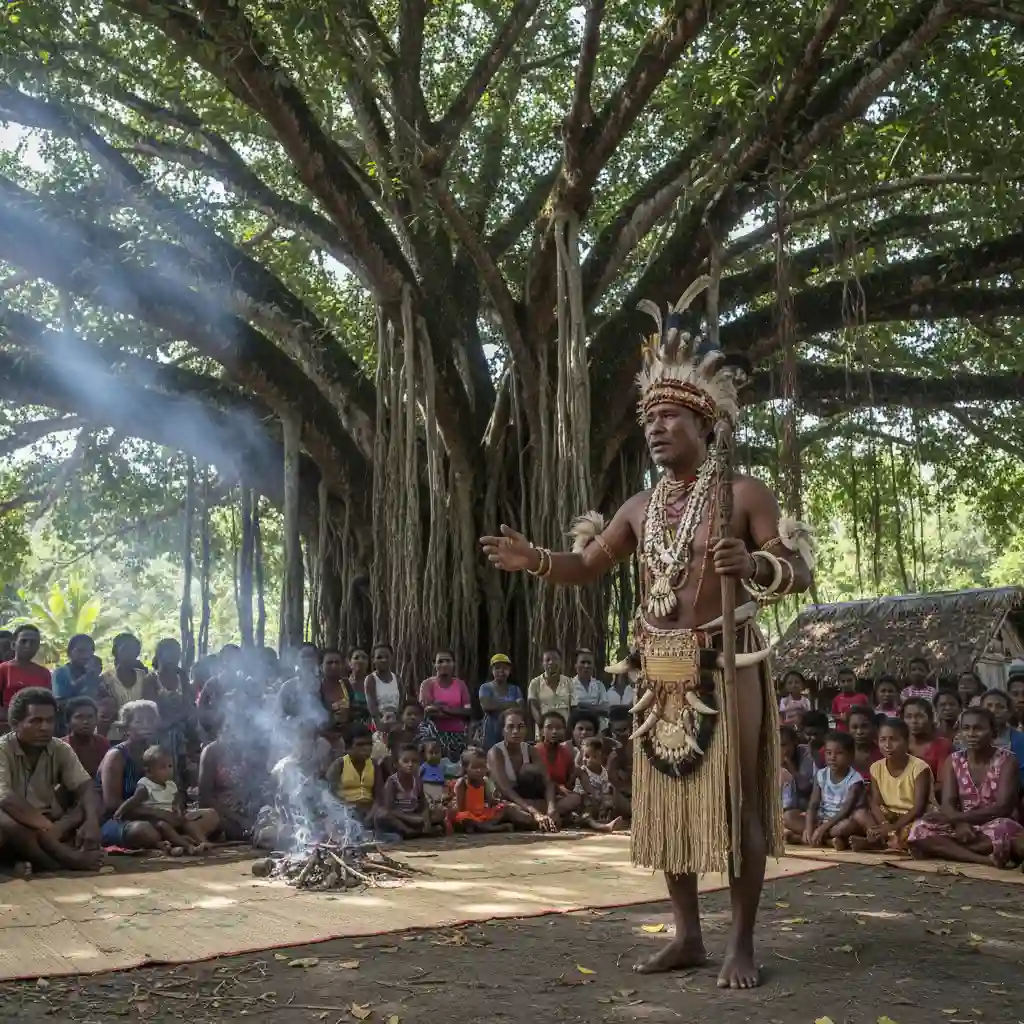
Why is Kastom So Important to Vanuatu’s Identity? Upholding Tradition
The importance of kastom to Vanuatu’s national identity cannot be overstated. It is not merely a collection of quaint practices but the very essence of what it means to be Ni-Vanuatu. In a nation comprising over 80 inhabited islands, each with its own distinct languages and cultural nuances, kastom serves as a unifying force, providing a shared foundational heritage. It is the repository of history, wisdom, and moral principles that have guided the people through centuries. Through kastom, individuals connect with their ancestors, their land, and their community, fostering a strong sense of belonging and collective responsibility. Without kastom, Vanuatu would lose its unique cultural anchor, risking the erosion of traditions that define its people and distinguish it on the global stage.
Preserving Social Harmony and Governance
One of the most crucial roles of kastom is its function in maintaining social harmony and providing a resilient system of governance at the local level. In many villages, particularly those far from administrative centers, chiefs (known as ‘nakamals’ or ‘nakamal chiefs’ in some areas) are the primary arbitrators of disputes, ranging from land conflicts to domestic issues. Their authority is not derived from state appointment but from their knowledge of kastom, their lineage, and the respect they command within the community. These kastom systems often prioritise reconciliation and restoration over punitive justice, aiming to resolve conflicts in a way that allows all parties to continue coexisting peacefully. This restorative justice approach helps prevent prolonged feuds and strengthens community bonds, proving remarkably effective in a society where interdependency is highly valued.
The council of chiefs, the National Council of Chiefs (Malvatumauri), is enshrined in Vanuatu’s constitution, signifying the state’s recognition of kastom’s vital role. This body advises the government on matters concerning kastom and culture, acting as a crucial bridge between traditional governance and modern democracy. This dual system acknowledges that traditional structures are often best equipped to handle local issues and cultural nuances, allowing for a more responsive and culturally appropriate form of governance.
Land Tenure and Resource Management through Kastom
Land is not merely property in Vanuatu; it is identity, history, and life itself. Kastom governs nearly all aspects of land tenure and resource management. Unlike Western concepts of individual ownership, kastom land tenure is often communal, with rights tied to specific clans or family groups, and stewardship passed down through generations. These rights are complex, involving not just ownership but also usage rights, access to resources (like water, specific trees, or fishing grounds), and responsibilities towards the land.
Understanding kastom land laws is critical for any development project or even tourist interaction. Misunderstandings can lead to significant disputes and social unrest. Chiefs and elders are the custodians of this intricate knowledge, knowing the history of each parcel of land, its boundaries, and the families associated with it. This traditional system ensures sustainable resource management, as communities have a vested interest in preserving their land and its bounty for future generations. The principles of reciprocity and respect for the land and its spirits are integral to kastom-based resource practices, promoting a harmonious relationship between people and their environment.
Spiritual Significance and Ancestral Connection
At the heart of kastom lies a profound spiritual dimension, connecting the living with their ancestors and the natural world. Ancestor worship and respect for the spirits of the land, sea, and sky are central to many kastom practices. Through rituals, ceremonies, and oral traditions, the Ni-Vanuatu maintain a continuous dialogue with their past, drawing strength and guidance from those who came before. These spiritual beliefs are interwoven with daily life, influencing decisions, social interactions, and responses to natural phenomena.
Sacred sites, often specific trees, rocks, or areas of land, hold immense spiritual power and are treated with deep reverence. Taboos, or ‘tapu,’ are often based on kastom and ensure that certain places, objects, or actions are avoided to maintain spiritual balance and respect for ancestral spirits. This spiritual framework provides a moral compass, encouraging ethical behaviour and reinforcing community values. It’s a worldview where the visible and invisible realms are constantly interacting, and human actions have consequences that extend beyond the immediate material world.

How Does Kastom Influence Modern Vanuatu? Bridging Past and Present
Vanuatu stands as a testament to the dynamic interplay between tradition and modernity. Unlike many nations where indigenous cultures have been marginalized, kastom in Vanuatu has maintained a robust presence, actively shaping and influencing the nation’s contemporary landscape. It is not merely a relic of the past but a living, breathing force that continues to adapt and assert itself within the framework of a modern state. From legislative decisions to educational curricula and economic development strategies, kastom provides a unique filter through which modern challenges are addressed, ensuring that progress aligns with deeply held cultural values. This constant negotiation between the ancestral ways and contemporary global influences defines much of Vanuatu’s unique national character.
The Dual System: Kastom and State Law
One of the most striking aspects of modern Vanuatu is its constitutional recognition of a dual legal system: kastom law alongside the introduced common law. This means that while there are national courts and statutes, many disputes, particularly in rural areas, are still resolved through kastom tribunals led by chiefs and elders. The legal system allows for cases to be referred between kastom courts and the formal judiciary, demonstrating a practical integration of both systems. For instance, while serious criminal offences fall under state law, matters like land disputes, minor civil disagreements, and family issues are frequently settled through kastom, which emphasizes mediation and restitution rather than adversarial proceedings.
This dual approach reflects a pragmatic understanding that kastom often provides a more accessible, culturally sensitive, and efficient means of justice for local communities. It allows for solutions that are rooted in local values and knowledge, fostering stronger community buy-in and compliance. The coexistence of these systems is a continuous process of negotiation and adaptation, ensuring that kastom remains relevant while the nation engages with the broader international legal framework.
Kastom’s Role in Sustainable Tourism
In a burgeoning tourism market like Vanuatu, kastom plays a pivotal role, not just as an attraction but as a foundation for sustainable development. Tourists are increasingly seeking authentic cultural experiences, and kastom offers just that. Village tours, kastom dances, demonstrations of traditional crafts, and visits to sacred sites provide invaluable insights into Ni-Vanuatu life. However, these interactions are carefully managed by local communities using kastom principles to ensure that cultural practices are respected, commodification is controlled, and benefits are distributed equitably.
Many kastom villages offer community-run bungalows or guesthouses, providing income directly to the villagers. These initiatives are often guided by kastom chiefs and elders, who ensure that tourism development respects local customs, protects sacred spaces, and minimizes negative cultural impacts. This approach allows Vanuatu to leverage its unique heritage for economic gain while simultaneously preserving and strengthening it. It’s a model of tourism that prioritizes cultural integrity and community empowerment, aligning with Vanuatu’s commitment to protecting its living heritage.
Navigating Modernity: Challenges and Resilience
The integration of kastom into modern Vanuatu is not without its challenges. Globalization, Western education, economic pressures, and the influence of new technologies all present complexities. Young Ni-Vanuatu often face a balancing act between traditional expectations and the pull of modern opportunities. The erosion of kastom knowledge among younger generations, the impact of consumerism, and the potential for cultural misrepresentation in a globalized world are constant concerns.
However, kastom has proven remarkably resilient. Initiatives by the National Council of Chiefs, cultural festivals, kastom schools, and community-led efforts are actively working to preserve and promote kastom knowledge. Elders are crucial in this, passing on oral histories, traditional skills, and spiritual understanding. Vanuatu’s commitment to self-determination and its deep pride in its unique culture provide a strong foundation for kastom to continue adapting and thriving, ensuring it remains a cornerstone of national identity well into the future, bridging the wisdom of the past with the demands of the present.

Exploring Vanuatu’s Cultural Diversity Through Kastom
Vanuatu is renowned for being one of the most culturally diverse nations on Earth, boasting over 130 distinct languages and countless unique kastom practices across its approximately 83 islands. This incredible mosaic of cultures is not a simple variation but a deeply ingrained aspect of kastom itself. Each island, and often each region within an island, possesses its own specific kastom, reflecting different histories, ecological environments, and ancestral legacies. Understanding kastom in Vanuatu necessitates appreciating this profound diversity, moving beyond a monolithic view to explore the intricate tapestry of traditions that define each community. It is in this vibrant pluralism that the true richness of Vanuatu’s living heritage becomes apparent, a testament to centuries of distinct cultural evolution.
Island-Specific Kastom Practices
The variations in kastom across Vanuatu’s islands are fascinating. What is customary on one island may be entirely different, or even unknown, on another. For example:
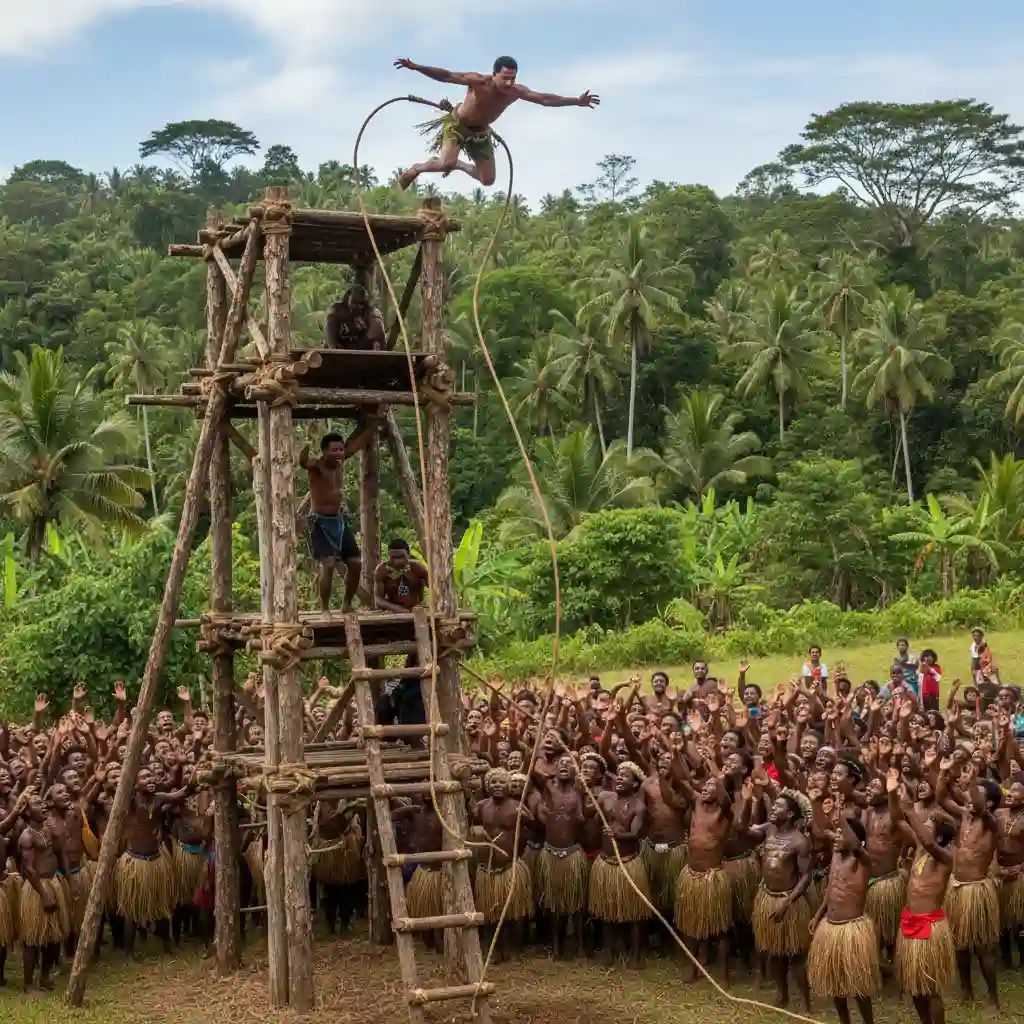
- Pentecost Island’s Land Diving (Nagol): Perhaps the most famous kastom, this ancient ritual involves men jumping from tall wooden towers with vines tied to their ankles. It is an annual yam harvest ritual, performed to ensure a bountiful crop and as a demonstration of courage and fertility. This practice is unique to Pentecost and is believed to have inspired modern bungee jumping.
- Malekula Island’s ‘Namba’ Societies: Malekula is known for its complex grade-taking ceremonies and secret societies (Small Nambas and Big Nambas, named after the size of their penis sheaths). These rituals involve elaborate dances, pig sacrifices, and the acquisition of status and spiritual power, shaping social hierarchy and individual prestige.
- Santo Island’s Pig-Killing Ceremonies (Graded Society): Similar to Malekula, Santo features elaborate graded societies where men progress through ranks by sacrificing pigs, particularly those with curved tusks (boars), which are highly valued and signify wealth and status.
- Tanna Island’s John Frum Movement: A unique kastom religion, the John Frum movement is a cargo cult that emerged in the 20th century, involving the belief in a mythical American figure who will bring wealth and prosperity. Followers observe specific rituals, including parades and the display of American flags, demonstrating an adaptation of kastom in response to external influences.
These examples merely scratch the surface of the myriad kastom practices found throughout the archipelago, each a profound expression of local identity and ancestral connection.
The Rich Tapestry of Languages and Traditions
The linguistic diversity of Vanuatu is directly intertwined with its kastom. Each language carries within it specific vocabulary, metaphors, and narratives that express the nuances of that community’s kastom. Oral traditions, myths, legends, and historical accounts are passed down through these languages, ensuring the continuity of kastom knowledge. This linguistic richness means that specific rituals, traditional songs, and the intricate details of social protocols can vary dramatically from one village to the next, even within the same island.
This diversity also fosters a strong sense of local identity and pride. While Bislama serves as a crucial unifying language for communication across the islands, the persistence of local languages ensures that the depth and complexity of individual kastom traditions are preserved. Efforts are continuously made to document and revitalize endangered languages, recognizing that each language is a unique vessel for kastom knowledge.
Ceremonies and Rituals: Windows into Kastom
Ceremonies and rituals are the most visible expressions of kastom in Vanuatu. These events, whether they are initiation rites, marriage ceremonies, funeral rites, or agricultural feasts, are not merely performances but deeply sacred and significant events that reinforce community bonds, transmit knowledge, and maintain spiritual balance. They are often accompanied by traditional music, dances, specific costumes, and symbolic exchanges of goods.
Participation in these ceremonies is a fundamental aspect of Ni-Vanuatu life, marking transitions, confirming status, and celebrating collective achievements. For visitors, observing or, where appropriate, participating in kastom ceremonies offers a profound insight into the values and beliefs that underpin Vanuatu society. However, it requires a high degree of respect and cultural sensitivity, often guided by local chiefs and elders, to ensure that these sacred practices are experienced in an appropriate and respectful manner.
How Does Kastom Shape Daily Life in Vanuatu? A Continuous Presence
Kastom in Vanuatu is not relegated to ceremonial occasions or historical archives; it is a vibrant, continuous presence that profoundly shapes the daily lives of the Ni-Vanuatu people. From the way families interact to the organization of community tasks, the preparation of food, and the creation of art, kastom provides a blueprint for living. It dictates social norms, ethical conduct, and the underlying principles that govern interpersonal relationships. This pervasive influence ensures that every individual, whether consciously or unconsciously, navigates their world through a kastom lens, making it an integral part of their identity and everyday existence. Even in urban centers, where modern influences are more pronounced, the principles of kastom continue to guide interactions and decisions, forming an unbreakable bond with ancestral ways.
Community Governance and Leadership
At the grassroots level, kastom dictates community governance. Villages are typically led by a council of chiefs and elders, whose authority is derived from their knowledge of kastom, their lineage, and their wisdom. These leaders are responsible for maintaining peace, arbitrating disputes, organizing communal work (like clearing land or building a new nakamal), and ensuring that traditional protocols are followed during ceremonies and daily interactions. Their role extends to guiding moral conduct and ensuring the well-being of the entire community.
This traditional leadership structure operates on principles of consensus, respect for elders, and a deep understanding of local history and customs. It emphasizes collective responsibility and the importance of maintaining social harmony. Even when national government structures exist, the kastom leadership often holds greater sway in everyday village life, demonstrating the enduring power and relevance of traditional systems in managing local affairs effectively.
Daily Rituals and Social Norms
Many daily activities are subtly or overtly shaped by kastom. Simple greetings, the way food is prepared and shared, how visitors are received, and even seating arrangements during gatherings often follow kastom protocols. Respect for elders is paramount, manifesting in specific forms of address, deferential behaviour, and the prioritization of their opinions. Gender roles, while evolving, historically played a significant role in dictating daily tasks, responsibilities, and social interactions, with kastom defining appropriate behaviour for men and women.
Food preparation, for example, is often intertwined with kastom, particularly the cooking of laplap (a traditional dish made from grated root crops and coconut cream, cooked in an earth oven). The sharing of food is a deeply communal act, reinforcing social bonds and demonstrating hospitality, all guided by customary practices. These daily rituals, often unspoken and instinctively followed, reinforce the values and structures of kastom, ensuring its continuity through habitual practice.
Kastom in Arts, Crafts, and Sustenance
Kastom is also profoundly expressed in the arts, crafts, and traditional subsistence practices that sustain Ni-Vanuatu communities. Traditional weaving of mats, baskets, and clothing, wood carving (especially of ceremonial objects and masks), sand drawing (a UNESCO Intangible Cultural Heritage), and shell money are all intricate forms of expression deeply rooted in kastom. Each pattern, symbol, and design often carries specific meanings, histories, or spiritual significance, conveying stories and knowledge across generations.
Even the methods of gardening, fishing, and hunting adhere to kastom principles, emphasizing sustainable practices that respect the environment and ensure resources for the future. Traditional knowledge of plants for medicine or construction, fishing techniques that align with lunar cycles, and agricultural methods that maintain soil fertility are all components of kastom-based sustenance. These practices demonstrate a holistic worldview where daily survival, artistic expression, and cultural identity are inextricably linked through the enduring wisdom of kastom.
Conclusion: The Enduring Legacy of Kastom
Kastom is far more than mere tradition; it is the living heart of Vanuatu, an intricate and robust system that defines identity, governs society, and connects the people to their ancestral past and the natural world. From the comprehensive legal and social frameworks it provides to its profound spiritual dimensions and its influence on daily life, kastom permeates every aspect of Ni-Vanuatu existence. While engaging with the complexities of modernity, Vanuatu has, with remarkable resilience and cultural pride, ensured that kastom remains a powerful and guiding force. Its recognition within the national constitution and its active role in community governance, sustainable tourism, and cultural preservation initiatives stand as a testament to its enduring significance. For anyone seeking to truly understand Vanuatu, an appreciation for kastom is not just recommended, but essential—it is the lens through which the vibrant soul of this extraordinary nation is best perceived, a testament to a living heritage that continues to shape its future.
People Also Ask About Vanuatu Kastom
What is the meaning of Kastom in Bislama?
In Bislama, ‘Kastom’ refers to the comprehensive system of traditional laws, customs, beliefs, and practices that form the indigenous cultural heritage and social structure of the Ni-Vanuatu people.
How does kastom affect land ownership in Vanuatu?
Kastom primarily governs land ownership in Vanuatu, establishing complex traditional land tenure systems based on ancestral claims, clan rights, and usage rules rather than Western-style individual deeds, with chiefs overseeing disputes.
Is kastom recognized by the Vanuatu government?
Yes, kastom is recognized by the Vanuatu government. The nation’s constitution acknowledges the importance of kastom, and the National Council of Chiefs (Malvatumauri) advises the government on customary matters.
What are some famous kastom ceremonies in Vanuatu?
Famous kastom ceremonies include the Nagol (land diving) on Pentecost Island, various pig-killing ceremonies for status advancement (e.g., on Santo and Malekula), and elaborate grade-taking rituals in different communities.
How can tourists experience kastom respectfully in Vanuatu?
Tourists can experience kastom by visiting kastom villages and cultural centers, participating in guided tours, observing traditional ceremonies (with permission), and always showing respect for local customs, guided by local hosts or chiefs.
What role do chiefs play in Vanuatu’s kastom system?
Chiefs play a crucial role as custodians of kastom, responsible for interpreting and upholding traditional laws, mediating disputes, maintaining community harmony, and preserving cultural knowledge and practices within their villages and regions.