
Vanuatu’s public transport system offers a vibrant mix of local buses, readily available taxis, and essential inter-island ferries, providing diverse options for navigating this stunning archipelago. For travelers from New Zealand, understanding these modes ensures a seamless and authentic experience, whether exploring bustling Port Vila or venturing to remote islands, making every journey part of the adventure.
Vanuatu, a captivating island nation in the South Pacific, offers an array of unique experiences, from its pristine beaches to its vibrant cultural sites. For any visitor, particularly those from New Zealand planning their South Pacific adventure, understanding the local transport options is paramount to a smooth and enjoyable trip. This comprehensive guide delves into the intricacies of local transport in Vanuatu, covering everything from the distinctive Port Vila buses to the essential inter-island ferries, along with insights into taxi services, car rentals, and motorbike hire.
Port Vila Buses: Navigating the Capital
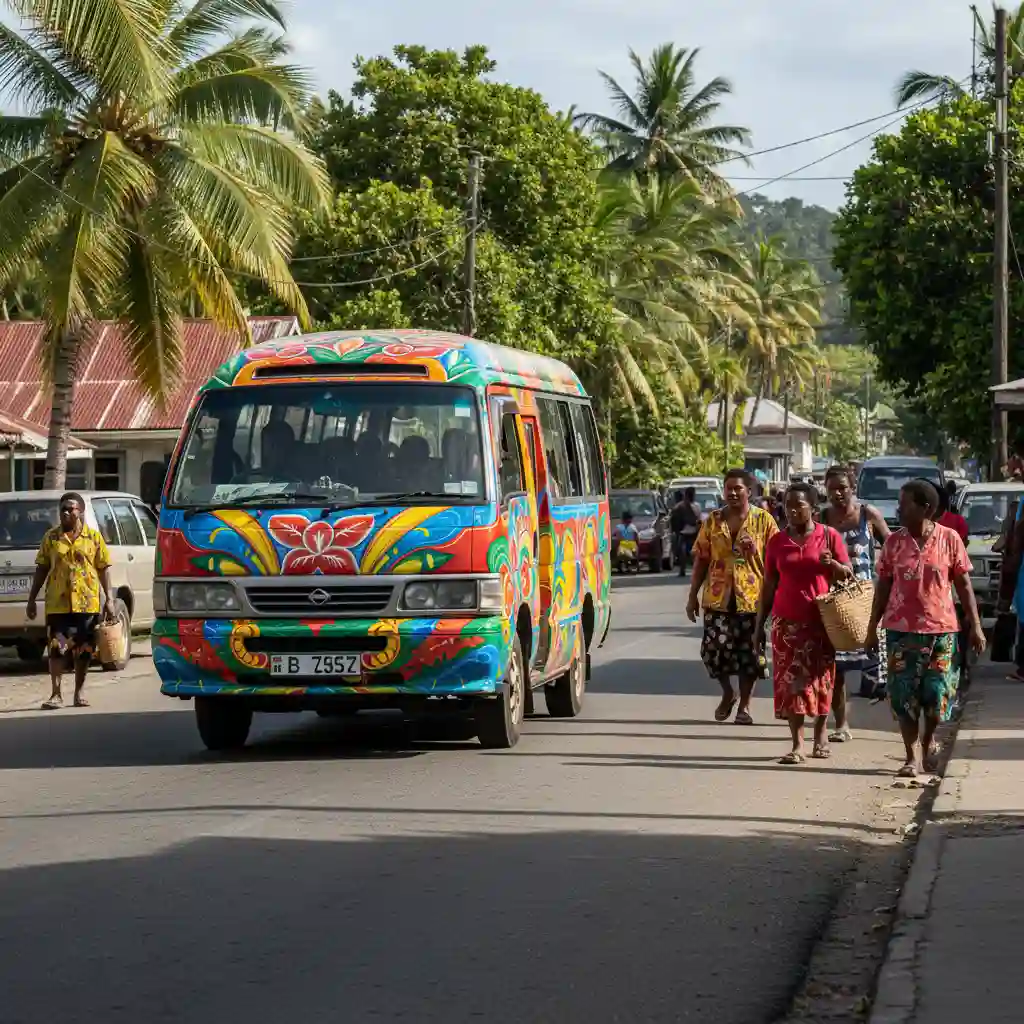
The capital city, Port Vila on Efate island, offers a unique and informal bus system that is both cost-effective and an experience in itself. Unlike conventional public transport with fixed routes and schedules, Vanuatu’s buses are typically privately owned minivans or minibuses, easily identifiable by the letter ‘B’ on their license plates (often red or blue). These buses are the lifeblood of local commuting for many ni-Vanuatu and an adventurous option for visitors.
What Are the Buses Like in Port Vila?
Port Vila’s bus system operates on a flexible, demand-driven model rather than strict timetables or designated stops. These minivans traverse common routes around the city and its outskirts, picking up and dropping off passengers as needed. To catch a bus, simply stand on the side of the road and wave one down. If there’s space and the driver is heading in your general direction, they’ll pull over. It’s common to share rides, and the minivan might make several detours to accommodate other passengers’ destinations. This informal nature means journeys can be less direct but offer a genuine insight into local life. Always confirm your destination with the driver before boarding, especially if you’re not familiar with the area. Expect a friendly atmosphere, and don’t be surprised if the bus is packed, adding to the authentic Pacific travel experience.
How Do You Pay for Buses in Port Vila?
Payment for Port Vila buses is straightforward and almost exclusively in cash, using the local currency, Vanuatu Vatu (VT). The fares are incredibly affordable, typically ranging from VT 150 to VT 200 for most short to medium trips within Port Vila and its immediate surrounding areas. For longer distances, such as to popular attractions like the Blue Lagoon or Mele Cascades, the fare might be slightly higher, often around VT 300-500. It’s always best to have small denominations of Vatu on hand, as drivers may not always have change for large notes. You usually pay the driver upon alighting. While the fare system is generally consistent, it’s wise to clarify the cost with the driver before you set off, especially if your destination is outside the main city loop, to avoid any misunderstandings. This small interaction can also be a great way to practice a few words of Bislama!
Key Tips for Using Port Vila Buses
- **Signal Clearly:** Wave your hand to indicate you want a bus to stop.
- **Confirm Destination:** Always tell the driver where you’re going before getting in.
- **Carry Small Change:** Fares are low (VT 150-200), so small Vatu notes are essential.
- **Flexibility is Key:** Be prepared for indirect routes as drivers pick up other passengers.
- **Safety:** Buses generally operate during daylight hours. At night, taxis are usually preferred.
- **Popular Routes:** Buses frequently run along the main roads, connecting the city centre, markets, major hotels, and nearby villages.
Taxi Fares Vanuatu: Understanding Costs and Services
Taxis in Vanuatu, particularly in urban centres like Port Vila and Luganville, offer a more direct and comfortable mode of transport compared to buses, albeit at a higher cost. They are easily identifiable by a ‘T’ on their license plates (usually red or white) and can be found at designated taxi stands, outside major hotels, or hailed on the street. For travelers seeking convenience or travelling with luggage, taxis are an excellent choice. However, understanding how fares are determined is crucial, as meters are a rarity.
How Much Do Taxis Cost in Vanuatu?
Taxi fares in Vanuatu are generally not metered, which means negotiation is often part of the process, particularly for tourists. A typical short trip within Port Vila might cost anywhere from VT 500 to VT 1,000. For longer distances, such as from Port Vila Airport (Bauerfield) to the city centre, expect to pay around VT 1,000 to VT 1,500. Trips to popular out-of-town attractions like the Blue Lagoon or Mele Cascades could range from VT 2,000 to VT 4,000 or more, depending on the distance and whether the driver waits for you. It’s imperative to agree on the fare with the driver before you start your journey. This upfront agreement prevents potential disputes and ensures transparency. Some hotels might have pre-arranged fixed fares with certain taxi drivers, which can offer peace of mind. Always inquire about the total cost for your group, not per person, unless specified.

Is it Better to Negotiate Taxi Fares in Vanuatu?
Yes, it is almost always better to negotiate taxi fares in Vanuatu, especially if you are a tourist. Since most taxis do not operate with meters, the initial price offered by a driver might be higher than a fair market rate. Be polite but firm in your negotiation. A good strategy is to have an idea of the approximate fare for your destination by asking hotel staff or locals, or by checking online travel forums. If you’re struggling to get a reasonable price, it’s perfectly acceptable to decline and wait for another taxi. Sometimes, drivers may offer a ‘tour rate’ which is inflated; don’t be afraid to counter-offer. For longer excursions or if you plan to hire a taxi for several hours (e.g., for a half-day tour), negotiating a fixed hourly or daily rate can be more economical. Always confirm if the agreed price includes return journeys or waiting time if applicable.
Reliable Taxi Services in Port Vila and Luganville
While taxis are generally safe, opting for well-regarded services can enhance your experience. In Port Vila, taxis are plentiful around the central market, major hotels, and the waterfront. Many hotels have preferred taxi drivers they work with, which can provide an added layer of reliability. For airport transfers, pre-booking through your accommodation or a reputable local tour operator can guarantee a smooth arrival and often a fixed, transparent fare. In Luganville, Santo, taxis are also available, though less numerous than in Port Vila. Asking hotel staff for recommendations is a good approach in both cities. Always look for the ‘T’ on the license plate to ensure it’s a legitimate taxi. At night, it’s particularly advisable to use taxis from official stands or arranged by your hotel rather than hailing an unmarked vehicle.
Inter-Island Ferries: Connecting Vanuatu’s Archipelago
Vanuatu is an archipelago of 83 islands, and while domestic flights connect many of the larger ones, inter-island ferries and cargo ships are the lifeline for transport between them, especially for those seeking an authentic and budget-friendly travel experience. These vessels carry not only passengers but also essential goods, linking communities and providing a unique perspective on the island nation.
What Are the Options for Inter-Island Travel in Vanuatu?
Inter-island travel in Vanuatu primarily relies on a network of small passenger and cargo ships. These vessels range from government-subsidized ferries to privately owned cargo boats that take on passengers. The main routes typically connect Efate (Port Vila) with Santo (Luganville), Malekula, Pentecost, Tanna, and other smaller islands. Services are not always frequent and schedules can be highly unpredictable, often changing at short notice due to weather conditions, cargo loads, or mechanical issues. While some larger vessels offer basic amenities, many are simple transport, providing an unvarnished local experience. Domestic flights, operated by Air Vanuatu, offer a faster, though more expensive, alternative for specific routes, usually between Efate, Santo, Tanna, and Pentecost. However, for a true island-hopping adventure and to experience the rhythm of local life, the ferries are unparalleled.

How Do I Book an Inter-Island Ferry in Vanuatu?
Booking inter-island ferries in Vanuatu is less formal than booking international travel. There isn’t a central online booking system for most local vessels. The best approach is to inquire directly at the main wharf in Port Vila, ask at your accommodation, or consult with local tour operators. Some of the more established ferry services, like those connecting Efate and Santo, might have a small office in Port Vila where you can purchase tickets in advance. However, for many routes, especially to less-frequented islands, you might simply turn up at the wharf on the day of departure and negotiate your fare directly with the captain or crew. It’s highly recommended to do this a day or two in advance if possible to confirm schedules and availability, as last-minute changes are common. Be prepared for a rustic experience, and always pack essentials like water, snacks, and sun protection for your journey.
Important Considerations for Ferry Travel
- **Flexibility:** Schedules are highly variable. Allow ample buffer time in your itinerary.
- **Conditions:** Be prepared for basic facilities and potentially rough seas. Anti-seasickness medication is advisable.
- **Safety:** While generally safe, these are not luxury cruises. Life jackets should be available.
- **Cost:** Fares are significantly cheaper than flights, ranging from VT 3,000 to VT 10,000+ depending on distance.
- **Luggage:** Space is often limited, so pack light or be prepared for your bags to be stowed creatively.
- **Local Experience:** This is an unparalleled way to interact with locals and see more of Vanuatu’s diverse islands.
Car Rental Vanuatu: Freedom and Flexibility
For those who prefer complete independence and the freedom to explore at their own pace, car rental in Vanuatu offers a compelling option. While public transport effectively covers major routes, a rental car allows you to venture off the beaten path, discover secluded beaches, and explore rural landscapes that might be inaccessible otherwise. This is particularly appealing on Efate and Santo, which have the most developed road networks.
Should I Rent a Car in Vanuatu?
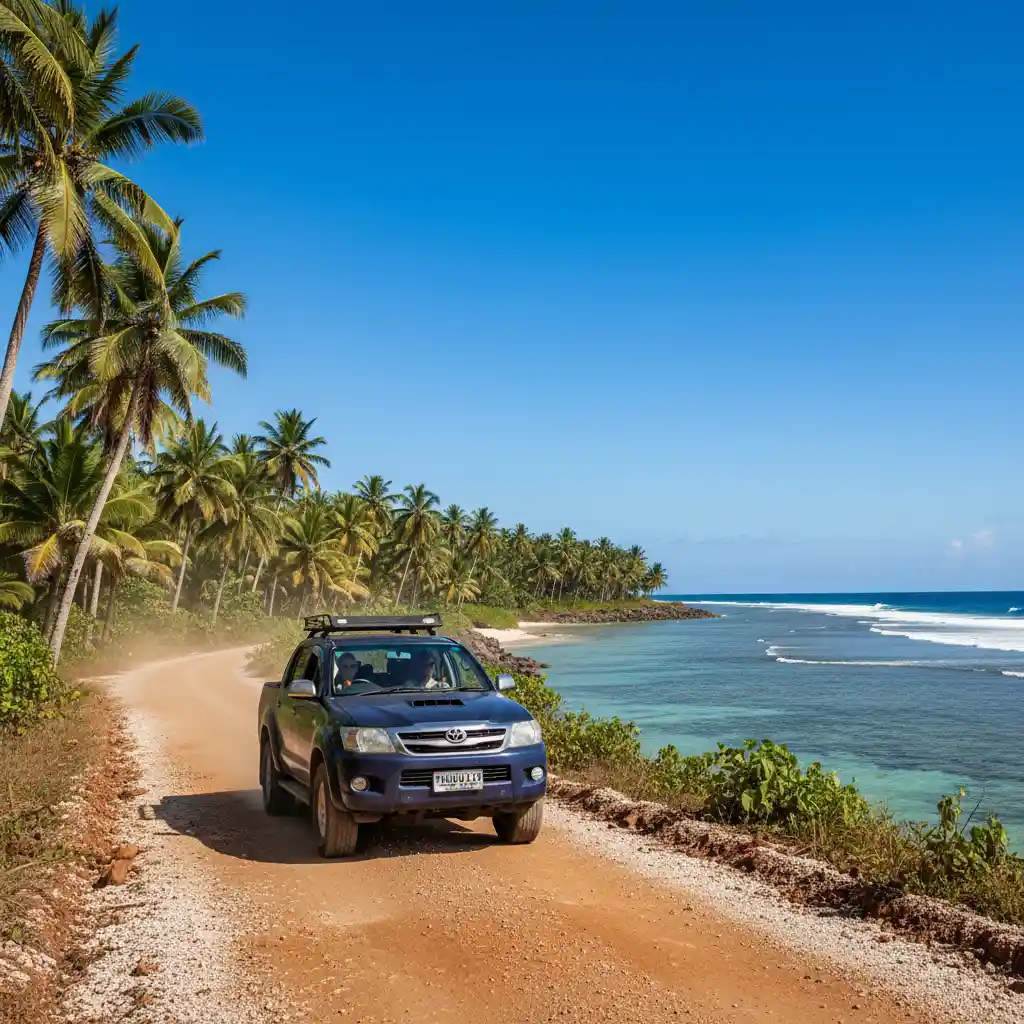
Renting a car in Vanuatu is a decision that depends on your travel style and desired itinerary. If you plan to stick to Port Vila’s immediate surroundings or solely visit accessible tourist spots, buses and taxis are sufficient. However, if you wish to circumnavigate Efate, explore the ‘Coconut Road’ on Santo, or visit attractions like the Blue Lagoon at your leisure, a rental car provides unmatched flexibility. It allows for spontaneous stops, carrying more gear (like snorkeling equipment), and avoiding the sometimes-unpredictable schedules of public transport. Keep in mind that while the main roads around Port Vila and Luganville are generally paved, many roads leading to villages and natural attractions can be unsealed, potholed, and challenging, especially during the rainy season. A 4WD vehicle is often recommended, particularly for adventurous exploration beyond the main arteries, offering better ground clearance and traction.
What Are the Requirements for Car Rental in Vanuatu?
To rent a car in Vanuatu, most rental agencies will require you to be at least 21 years old (some require 25), possess a valid driver’s license from your home country, and an International Driving Permit (IDP). While some smaller local operators might accept a foreign license alone for short periods, an IDP is strongly recommended to ensure compliance with local regulations and for insurance purposes, especially for travelers from New Zealand. You’ll also need a credit card for the security deposit. Rental costs vary widely based on the vehicle type (sedan vs. 4WD), rental duration, and the agency. Expect to pay anywhere from VT 5,000 to VT 15,000+ per day. It’s always advisable to book in advance, especially during peak season, and to clarify what is included in the rental agreement, such as insurance coverage, mileage limits, and fuel policy. Thoroughly inspect the vehicle for existing damage before driving off.
Tips for Driving Safely in Vanuatu
- **Drive on the Right:** Vanuatu drives on the right-hand side of the road, which can be a change for NZ drivers.
- **Road Conditions:** Expect varying road quality; some main roads are paved, but many are unsealed and can be challenging. Drive cautiously.
- **Animals and Pedestrians:** Be vigilant for people, children, and livestock (pigs, chickens) on roads, especially in rural areas.
- **Speed Limits:** Observe posted speed limits, which are generally lower than in NZ.
- **Fuel:** Fuel stations are primarily in Port Vila and Luganville; plan longer trips accordingly.
- **Night Driving:** Avoid driving long distances at night, as roads are poorly lit and hazards are harder to spot.
- **Insurance:** Understand your rental car’s insurance coverage thoroughly.
Motorbike Hire: Exploring Off the Beaten Path
For the adventurous traveler looking for a more intimate connection with Vanuatu’s landscapes and a sense of ultimate freedom, motorbike hire presents an exciting option. While less common than car rentals, motorbikes and scooters can be found, particularly in Port Vila and Luganville, offering a unique way to explore certain areas, especially on islands with fewer public transport options or challenging terrain where a nimble two-wheeler can excel.
Is Motorbike Hire a Good Option in Vanuatu?
Motorbike hire in Vanuatu is an excellent choice for experienced riders who are comfortable with varying road conditions and want to reach places not easily accessible by car or bus. It allows for a greater sense of adventure and flexibility, making it ideal for exploring scenic coastal roads, remote villages, or simply enjoying the tropical breeze. However, it’s crucial to acknowledge the inherent risks. Vanuatu’s roads, particularly outside the main towns, can be rough, unpaved, and poorly maintained. Potholes, gravel, and unexpected obstacles are common. For this reason, motorbike hire is generally recommended for confident riders with prior experience, and definitely not for novices. Always assess your riding skills and comfort level before opting for a motorbike. It’s particularly popular on islands like Santo, where a scenic loop road allows for comprehensive exploration of the island’s natural beauty, including blue holes and Champagne Beach.
Safety Precautions for Motorbike Riding in Vanuatu
Safety should be your paramount concern when hiring a motorbike in Vanuatu. Always wear a helmet, which reputable rental agencies should provide. Inspect the bike thoroughly before hire, checking tires, brakes, and lights. Drive defensively and be extra vigilant for pedestrians, children, and animals on the road. The ‘drive on the right’ rule applies, which requires constant attention if you’re accustomed to left-hand traffic. Avoid riding at night due to poor lighting and increased hazards. Consider wearing long sleeves and trousers for sun protection and against scrapes in case of a fall. Ensure you have appropriate travel insurance that covers motorbike accidents. Your home country’s driver’s license must have a valid motorcycle endorsement, and an International Driving Permit specifically for motorcycles is highly recommended to avoid any legal or insurance complications.
Where Can I Hire a Motorbike in Vanuatu?
Motorbike and scooter hire options are more limited than car rentals but can typically be found in Port Vila, Efate, and Luganville, Santo. Ask at your accommodation or check with local tour operators for recommendations. There are a few small local businesses that offer bikes, ranging from basic scooters to dirt bikes suitable for more rugged terrain. Prices can range from VT 3,000 to VT 8,000 per day, depending on the bike type and rental duration. Always compare prices and ensure the rental includes a helmet and basic insurance. Some agencies might offer guided scooter tours, which can be a safer option for less experienced riders or those unfamiliar with the local roads. As with all transport in Vanuatu, cash is often preferred for payment, and a security deposit is usually required. Always clarify the rental terms and conditions before committing.
General Vanuatu Transport Tips for NZ Travellers
To ensure a smooth and enjoyable travel experience in Vanuatu, especially for visitors from New Zealand, here are some overarching tips regarding local transport:
- **Currency and Payment:** The local currency is the Vanuatu Vatu (VT). While some larger establishments accept credit cards, cash is king for most local transport (buses, taxis, smaller ferries). Always carry small denominations for convenience.
- **Language Barrier:** English and French are official languages, but Bislama is the national language. Learning a few basic Bislama phrases like ‘Halo’ (Hello), ‘Tank yu’ (Thank you), and ‘Wanem nem blong yu?’ (What is your name?) can greatly enhance interactions with local drivers and operators. Most people in the tourism sector will speak English.
- **Local Etiquette:** The ni-Vanuatu people are known for their friendliness and hospitality. Always be polite, respectful, and patient. A warm smile and a ‘Halo’ can go a long way when interacting with drivers or negotiating fares.
- **Safety and Awareness:** While Vanuatu is generally safe, always exercise common sense. Keep valuables out of sight, especially on crowded buses. If travelling at night, opt for reputable taxis arranged by your hotel.
- **Planning and Flexibility:** Embrace the ‘island time’ mentality. Schedules for ferries and even local buses can be fluid. Building flexibility into your itinerary will reduce stress and allow for unexpected adventures. Always confirm travel details the day before or morning of travel.
- **Sun Protection:** Whether on a bus, ferry, or motorbike, the tropical sun is intense. Always use high-SPF sunscreen, wear a hat, and stay hydrated.
People Also Ask
Is there public transport in Vanuatu?
Yes, Vanuatu has public transport, primarily consisting of a unique system of privately-owned minivans (buses) in urban areas like Port Vila, readily available taxis, and inter-island ferries and cargo ships connecting the archipelago. Domestic flights are also available between major islands.
How much is a taxi from Port Vila Airport to city centre?
A taxi from Port Vila’s Bauerfield International Airport (VLI) to the city centre typically costs between VT 1,000 to VT 1,500. It’s always advisable to confirm and agree on the fare with the driver before beginning your journey, as meters are rarely used.
How do the local buses work in Port Vila?
Port Vila’s local buses are minivans identified by a ‘B’ on their license plates. They operate without fixed routes or schedules. You wave one down on the street, tell the driver your destination, and if they’re going your way, you hop in. Fares are usually VT 150-200, paid in cash upon alighting.
Can I rent a car in Vanuatu with an NZ driver’s license?
While some local rental agencies might accept an NZ driver’s license for short periods, it is highly recommended and often required by reputable rental companies to also have an International Driving Permit (IDP) to legally rent and drive a car in Vanuatu.
How do I travel between islands in Vanuatu?
Travel between Vanuatu’s islands can be done via domestic flights operated by Air Vanuatu for major routes, or by inter-island ferries and cargo ships. Ferries are slower and less predictable but more economical, offering an authentic local experience.
Is it safe to ride a motorbike in Vanuatu?
Riding a motorbike in Vanuatu offers adventure but carries risks due to varying road conditions, which can be poor outside main towns. It is only recommended for experienced riders who are comfortable with challenging terrain, and always with a helmet and appropriate licensing (motorcycle endorsement and IDP).