
Bislama, one of Vanuatu’s official languages, is an essential tool for tourists, especially Kiwis, to connect with locals and enrich their travel experience. Learning basic Bislama phrases fosters respect, opens doors to authentic interactions, and significantly enhances navigation and cultural immersion in the stunning Vanuatu archipelago.
For New Zealanders planning a vibrant escape to the idyllic islands of Vanuatu, understanding a few fundamental Bislama phrases can transform a good trip into an extraordinary cultural immersion. While English and French are also official languages, Bislama serves as the crucial lingua franca, uniting over 100 distinct linguistic groups across the archipelago. Engaging with locals in their national language is not merely a courtesy; it’s an act of respect that fosters genuine connections, unlocks richer experiences, and provides a deeper insight into the unique Melanesian culture.
This comprehensive guide is tailored specifically for Kiwi travelers, providing the essential Bislama vocabulary and cultural context needed to navigate markets, share a friendly greeting, ask for directions, and truly connect with the warmth and hospitality of the ni-Vanuatu people. From simple ‘Halo’ to understanding local customs, we’ll equip you with the linguistic tools to make your Vanuatu adventure unforgettable.
What is Bislama and Why is it Important for Kiwis?
Bislama is a creole language, a vibrant blend primarily derived from English, with influences from French and numerous indigenous Vanuatu languages. It serves as Vanuatu’s national language and is the most widely spoken language across its 83 islands. For Kiwis, Bislama acts as a bridge, making communication accessible and meaningful, even if you only learn a handful of words. Its simplified grammar and often phonetic spelling make it relatively easy for English speakers to pick up basic phrases.
The importance of Bislama for tourists, particularly those from New Zealand, extends beyond mere transactional communication. When you make an effort to speak Bislama, even imperfectly, it signals respect for the local culture and appreciation for the ni-Vanuatu way of life. This can lead to warmer interactions, more authentic experiences, and even better deals in local markets. It demonstrates that you are not just a visitor passing through, but someone genuinely interested in connecting with the heart of Vanuatu.
For example, while many in tourism-heavy areas may speak English, venturing even slightly off the beaten path or engaging with older generations will quickly highlight the utility of Bislama. It’s the language of daily life, of the markets, the villages, and the shared national identity. Mastering a few phrases can transform a simple exchange into a memorable cultural moment, enriching your journey far beyond what guidebooks might describe.
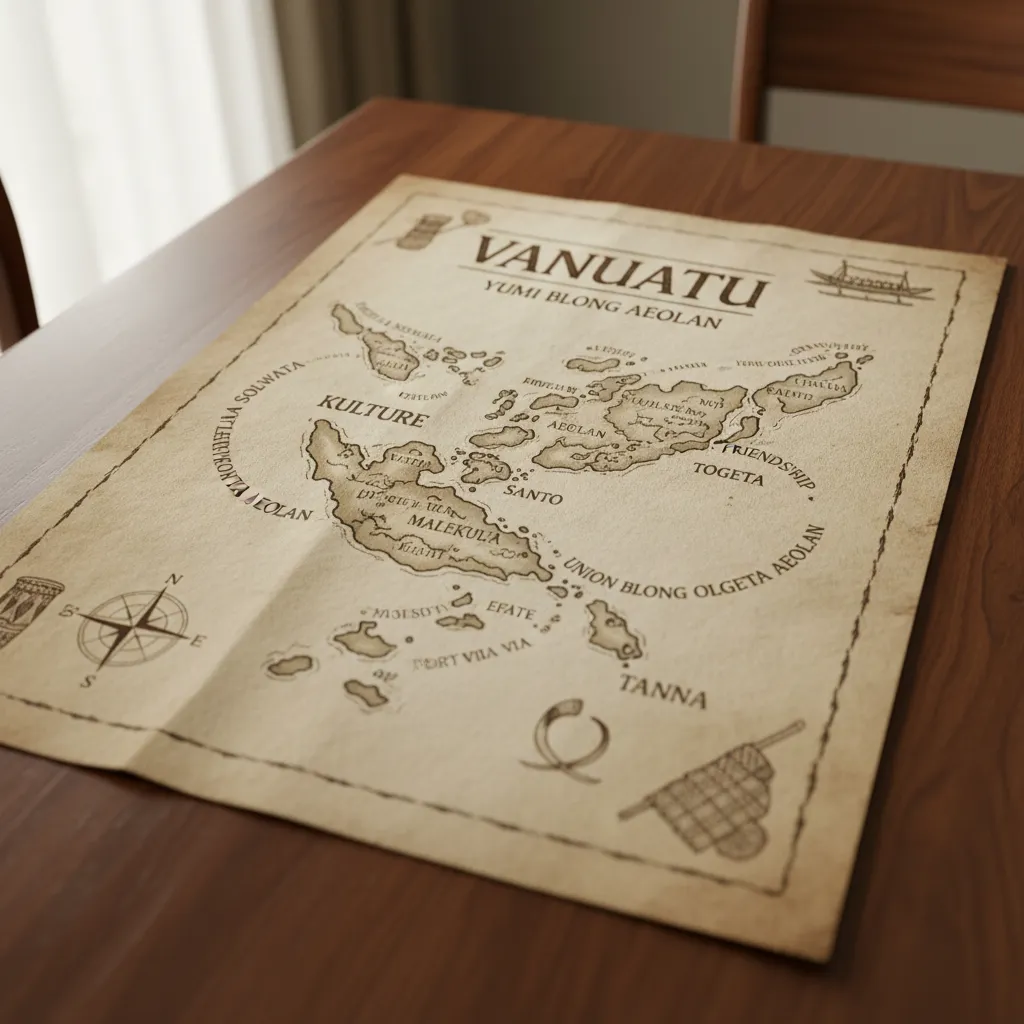
Essential Bislama Greetings for a Warm Welcome
Greeting people appropriately in Bislama is perhaps the most crucial and rewarding aspect of learning the language. A simple ‘Halo’ or ‘Gudmoning’ can instantly break down barriers and elicit a warm, welcoming smile from locals. Ni-Vanuatu people are renowned for their friendliness, and reciprocating this with a few well-placed Bislama greetings will make a significant positive impression, setting a respectful and engaging tone for any interaction.
Basic Introductions and Polite Expressions
Starting any conversation with a polite greeting is fundamental in Vanuatu’s culture. These phrases are your entry point to friendly engagement and respectful communication, showing that you value their customs and language. Remember to always offer a greeting when approaching someone, even if you intend to switch to English afterwards.
- Halo: Hello (The most common and versatile greeting, usable at any time of day.)
- Gudmoning: Good morning (Used before midday.)
- Gudaptenun: Good afternoon (Used from midday to evening.)
- Gudnaet: Good night (Used in the evening or when departing for the night.)
- Tank yu (tumas): Thank you (very much) (A highly appreciated phrase. Adding ‘tumas’ emphasizes sincerity.)
- Plis: Please (Use this generously when making requests.)
- Sori: Sorry / Excuse me (Used for apologies or to get someone’s attention.)
- Yu orait?: Are you okay? / How are you? (A common, friendly inquiry.)
- Mi orait, tank yu: I am fine, thank you (The standard reply to ‘Yu orait?’).
- Nem blong yu hu?: What is your name? (A good way to introduce yourself.)
- Nem blong mi [Your Name]: My name is [Your Name] (Follow up after asking their name.)
Using these basic greetings consistently shows an immediate effort and respect. For instance, when entering a shop or approaching a stall at the market, a simple ‘Halo’ or ‘Gudmoning’ addressed to the vendor before browsing can instantly make you a more welcome customer.
Navigating Vanuatu: Key Travel Phrases
Moving around the islands, interacting with transport providers, shopping, and dining will be significantly smoother and more enjoyable with a few essential Bislama travel phrases. These phrases empower you to ask for assistance, understand prices, and express your needs effectively, enhancing your independence and confidence as you explore Vanuatu’s stunning landscapes and vibrant communities.
Getting Around and Asking for Directions
Whether you’re hailing a bus, asking for directions to a specific attraction, or simply inquiring about transport options, these phrases will be invaluable. Remember that ‘bus’ often refers to shared taxis or minivans, identifiable by a ‘B’ on their license plate.
- Ware yu go?: Where are you going? (Often asked by a bus driver to ascertain your destination.)
- Mi go long [Place Name]: I am going to [Place Name] (Your reply to the above.)
- Ware [Place Name] i stap?: Where is [Place Name]? (Asking for directions to a specific location.)
- Left: Left (When giving or receiving directions.)
- Raet: Right (When giving or receiving directions.)
- Stret (forward): Straight (ahead) (For continuing straight.)
- Klosta (long): Near (to) (e.g., ‘I stap klosta long maket’ – It’s near the market.)
- Longwe (long): Far (from) (e.g., ‘I stap longwe long taon’ – It’s far from town.)
- Hao mas?: How much? (Crucial for understanding fares and prices.)
Shopping and Bargaining Basics
Vanuatu’s markets are a feast for the senses, offering fresh produce, local crafts, and unique souvenirs. While fixed prices are common in stores, local markets might offer a little room for friendly negotiation, especially if you’re buying multiple items. Using Bislama here can foster a more personable exchange.
- Mi wantem [Item]: I want [Item] (Polite way to indicate what you’d like to buy.)
- Bae mi pem: I will buy it (Indicating your intention to purchase.)
- Hem i dipren gud: It’s very good (Complimenting an item, building rapport.)
- Hem i tu mas: It’s too expensive (A gentle way to suggest the price is high.)
- Can yu givim mi wan gud praes?: Can you give me a good price? (For friendly bargaining.)
Eating and Drinking
Food is a central part of Vanuatu’s culture, from fresh seafood to traditional laplap. Being able to communicate your basic needs in Bislama will enhance your dining experiences, whether in a restaurant or at a local food stall.
- Kakai: Food (General term for food.)
- Wota: Water (Essential, especially in the tropical climate.)
- Mi hanggri: I am hungry.
- Mi wantem drink wota: I want to drink water.
- Hem i swit tumas: It is very delicious! (A highly appreciated compliment for food.)
- Kofee: Coffee
- Ti: Tea
Emergency Phrases
While we hope you won’t need these, knowing a few emergency phrases can provide peace of mind and assist in critical situations. Vanuatu is generally safe, but being prepared is always wise.
- Help!: Help! (Universally understood, but good to know.)
- Mi sik: I am sick.
- Dokta: Doctor
- Hospitel: Hospital
- Pulis: Police
- Lus: Lost (e.g., ‘Mi lus’ – I am lost.)
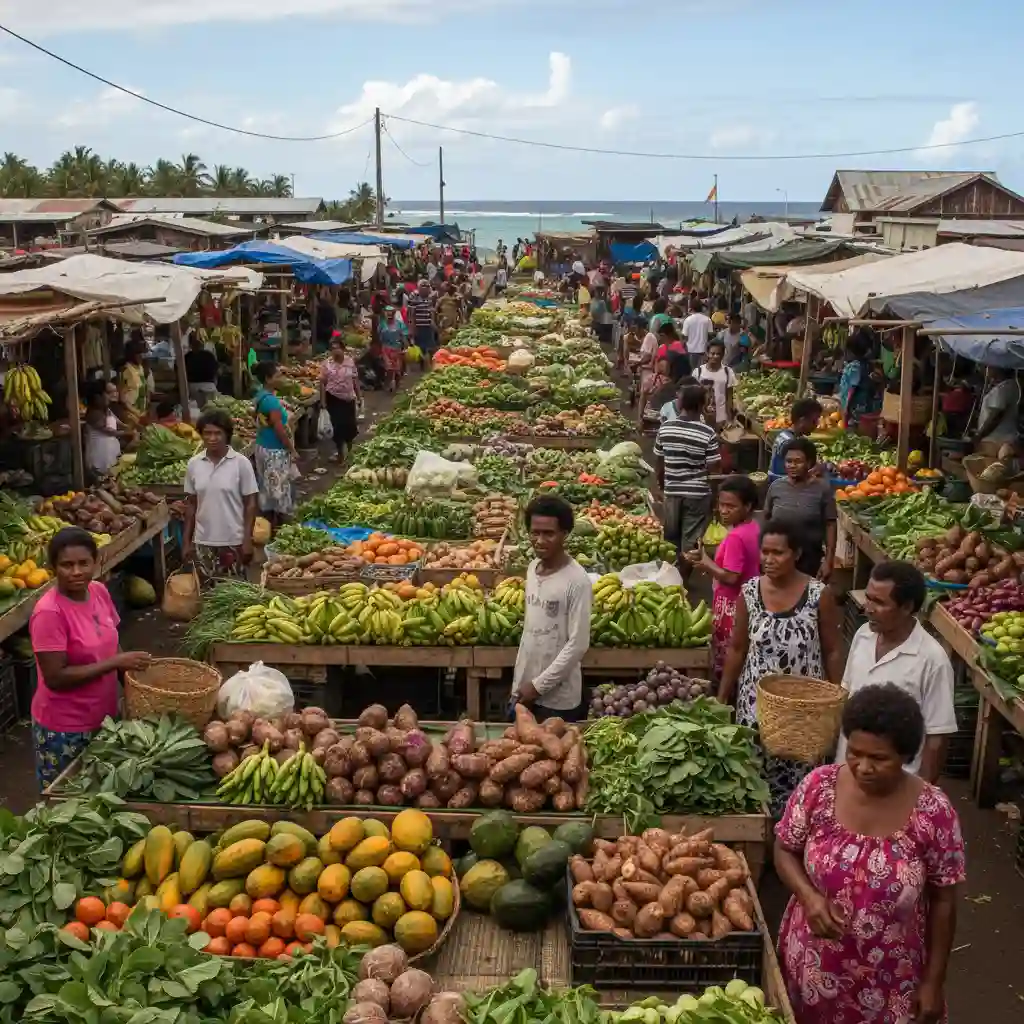
Counting Your Way Through Vanuatu: Numbers in Bislama
Understanding numbers in Bislama is immensely practical for various situations, from negotiating prices at the market to confirming bus fares or simply understanding quantities. While many people will use English numbers with tourists, having a grasp of Bislama numerals adds another layer of local engagement and helps prevent misunderstandings, especially in less tourist-frequented areas. The Bislama counting system is quite straightforward, often retaining English roots with a distinct pronunciation.
Basic Bislama Numbers (1-10)
Learning the first ten numbers is an excellent starting point and forms the basis for understanding larger figures. You’ll notice the similarities to English, making them relatively easy to remember for Kiwi travelers.
- Wan: One
- Tu: Two
- Tri: Three
- Fo: Four
- Faef: Five
- Sikis: Six
- Seven: Seven
- Eit: Eight
- Naen: Nine
- Ten: Ten
Counting Beyond Ten
For numbers beyond ten, Bislama generally follows a logical pattern similar to English, where you combine the ‘ten’ with the subsequent digit. This makes higher numbers accessible once you know the basics.
- Ten wan: Eleven (literally ‘ten one’)
- Ten tu: Twelve (ten two)
- Ten tri: Thirteen (ten three)
- …and so on up to ‘Ten naen’ for nineteen.
- Tuenti: Twenty
- Tuenti wan: Twenty-one
- Teti: Thirty
- Foti: Forty
- Fifti: Fifty
- Hondred: Hundred
- Taosen: Thousand
For example, if a vendor tells you a coconut costs ‘wan hondred vatu’, you’ll know it’s 100 Vatu. If a bus fare is ‘tu hondred’, you’ll understand it’s 200. This knowledge builds confidence and reduces reliance on gestures or assumptions when handling transactions, making your financial interactions smoother and more transparent during your Vanuatu travel.
Beyond Phrases: Local Communication Tips and Cultural Nuances
While mastering Bislama phrases is beneficial, true cultural immersion involves understanding the unwritten rules of communication and social etiquette. Ni-Vanuatu culture is rich in warmth, respect, and a generally relaxed approach to life. Being aware of these nuances will ensure your interactions are always positive and leave a lasting impression of mutual respect and understanding.
Non-Verbal Communication and Politeness
Non-verbal cues play a significant role in Vanuatu. A genuine smile, direct eye contact (but not overly prolonged or aggressive), and a calm demeanor are highly valued. Shaking hands is a common greeting, especially between men, but a simple nod and ‘Halo’ is sufficient for most casual encounters. It’s generally considered polite to wait for an invitation before entering someone’s home or village area. Always ask permission before taking photos of people, especially children, or sacred places.
Understanding the ‘Vanuatu Time’ Concept
One of the most important cultural adjustments for many Westerners, including Kiwis, is the concept of ‘Vanuatu Time’ or ‘island time’. This refers to a more fluid and relaxed approach to punctuality and scheduling. Things may not always run exactly on schedule, and patience is a virtue. Instead of becoming frustrated, embrace the slower pace. It’s an integral part of the relaxed island lifestyle and provides an opportunity to slow down and enjoy the present moment. This doesn’t mean things won’t get done; they simply operate on a different rhythm.
Respecting Kustom (Custom)
‘Kustom’ refers to the traditional laws, beliefs, and practices that are deeply ingrained in ni-Vanuatu society. Respecting kustom is paramount. This can involve simple things like dressing modestly when visiting villages (shoulders and knees covered for women, though less strict for men unless a specific ceremony is involved), asking for permission before crossing private land, or being mindful of sacred sites. If you are unsure, observe locals or politely ask. Your willingness to learn and adapt will be greatly appreciated.
The Importance of ‘Sloslo’ (Slowly)
The Bislama word ‘sloslo’ (slowly) embodies much of the ni-Vanuatu approach to life and communication. It encourages patience, taking things one step at a time, and not rushing. When speaking, try to enunciate clearly and don’t speak too quickly. If you don’t understand something, a polite ‘Mi no save’ (I don’t understand) or ‘Yu save tok sloslo?’ (Can you speak slowly?) will be met with understanding and an effort to clarify. This relaxed pace helps ensure clearer communication and avoids misunderstandings in a cross-cultural context.

Understanding Pidgin English in Vanuatu’s Context
For New Zealanders, understanding Bislama’s relationship to Pidgin English is key to appreciating its role and accessibility. Bislama is, in essence, a form of Pidgin English that has evolved into a creole language, meaning it has native speakers and a fully developed grammatical structure, much like many other national languages. Its English roots make it somewhat familiar, yet its unique evolution gives it a distinct character.
While English remains an official language in Vanuatu, and many educated ni-Vanuatu, especially those in the tourism sector, speak it fluently, Bislama serves as the crucial bridge. It allows communication between people from different islands who might speak vastly different indigenous languages, and it unites the nation under a common linguistic banner. For a Kiwi traveler, this means that even if you struggle with full Bislama sentences, many words and phrases will resonate due to their English origin.
However, it’s important not to assume that Bislama is ‘broken English’. It is a complete language with its own logic and rules. While you might recognize words like ‘go’, ‘eat’, or ‘water’, their usage in Bislama sentences can sometimes differ from standard English. For example, ‘Mi go long Port Vila’ means ‘I am going to Port Vila’, where ‘long’ acts as a preposition similar to ‘to’ or ‘at’. Recognizing these patterns helps in deciphering and constructing basic phrases.
Embracing Bislama is about embracing Vanuatu’s identity. Relying solely on English limits your ability to engage authentically. Think of Bislama as a simplified, yet robust, version of English that has been adapted and enriched by local cultures for centuries. Your efforts to speak it, however minimal, will be seen as a gesture of goodwill and a desire to connect on a deeper level than mere tourism. It’s an open invitation to experience Vanuatu not just as a destination, but as a living, breathing culture that welcomes those who show an interest in its heart.
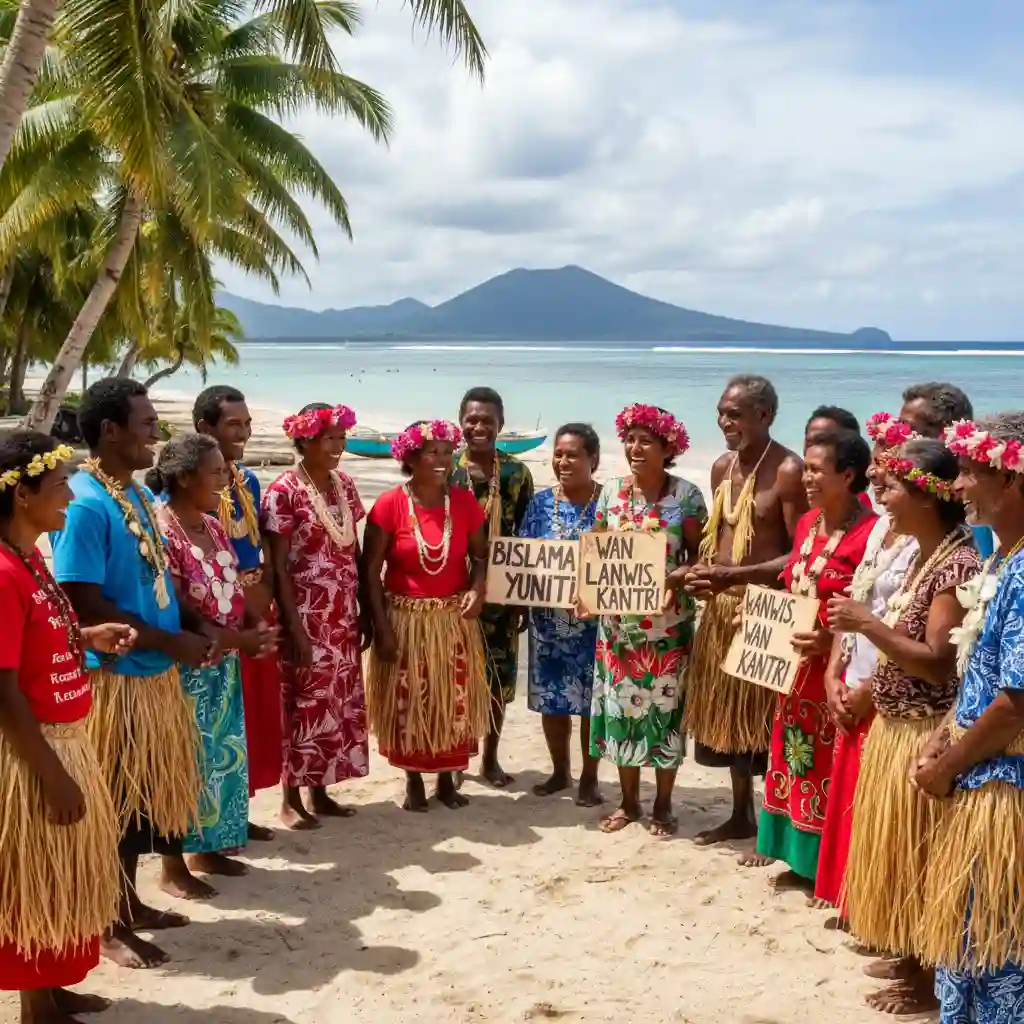
Learning basic Bislama phrases offers Kiwis an unparalleled opportunity to deepen their travel experience in Vanuatu. It’s more than just a language; it’s a key to cultural understanding, respectful interaction, and forging genuine connections with the incredibly warm and hospitable ni-Vanuatu people. From simple greetings that open doors to practical phrases for navigating markets and transport, your efforts to speak Bislama will be met with appreciation and a welcoming smile. Embrace the ‘sloslo’ pace, respect local kustom, and let these essential phrases be your guide to a truly enriching and unforgettable adventure in the heart of the South Pacific.
People Also Ask
Is Bislama hard for English speakers to learn?
For English speakers, Bislama is considered relatively easy to learn, especially basic phrases. It shares many vocabulary words with English and has a simplified grammatical structure, making it highly accessible for tourists. Pronunciation is largely phonetic, and the consistent word order aids understanding.
What are the most essential Bislama phrases for a first-time visitor?
The most essential Bislama phrases for a first-time visitor include: ‘Halo’ (Hello), ‘Tank yu’ (Thank you), ‘Plis’ (Please), ‘Sori’ (Sorry/Excuse me), ‘Gudmoning’ (Good morning), ‘Hao mas?’ (How much?), ‘Mi go long [Place]’ (I am going to [Place]), and ‘Yu orait?’ (Are you okay?).
Do people in Vanuatu speak English?
Yes, English is one of Vanuatu’s three official languages (alongside Bislama and French). Many people, especially in tourist areas, hotels, and urban centers like Port Vila and Luganville, speak English well. However, venturing into rural areas or engaging with older generations, Bislama becomes more prevalent.
How is Bislama different from other Pidgin English languages?
While Bislama shares roots with other Pidgin English languages like Tok Pisin in Papua New Guinea and Solomon Islands Pijin, it has evolved its own distinct vocabulary, grammar, and pronunciation due to unique local influences and historical development. These languages are mutually intelligible to varying degrees but are separate languages.
What is the best way to practice Bislama before my trip?
Before your trip, you can practice Bislama by using online resources such as phrasebooks, YouTube videos, or language learning apps that might offer Bislama. Focus on listening to pronunciation and trying to use the phrases aloud. Once in Vanuatu, actively engage with locals, who will appreciate your efforts.
Are there any cultural faux pas to avoid when communicating in Vanuatu?
To avoid cultural faux pas, always greet people before engaging in conversation. Be patient with ‘Vanuatu Time’. Dress modestly when visiting villages, especially for women (shoulders and knees covered). Always ask permission before taking photos of people, particularly children, or entering private property or kustom (sacred) sites. Avoid public displays of anger or frustration.