
The official languages of Vanuatu are Bislama, English, and French. While Bislama serves as the national language and primary lingua franca used in daily life, English and French are the principal languages of education, legislation, and commerce, reflecting the nation’s unique history as a joint Anglo-French Condominium.
What defines the official languages of Vanuatu?
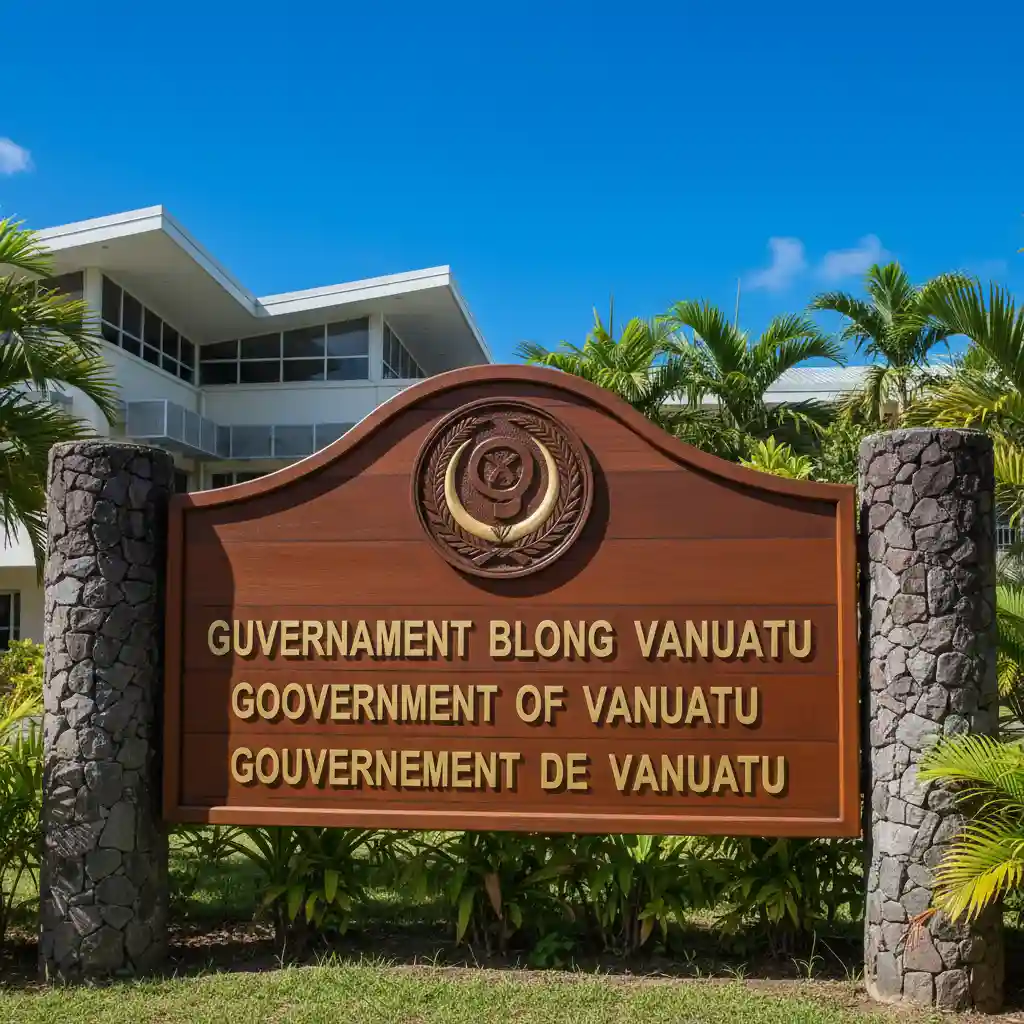
Vanuatu stands as a singular entity in the Pacific, and indeed the world, regarding its linguistic constitution. Unlike many post-colonial nations that adopted a single European language for administration, Vanuatu’s Constitution explicitly designates three official languages: Bislama, English, and French.
This trilingual status is not merely symbolic; it is deeply woven into the fabric of Ni-Vanuatu society. Article 3 of the Constitution of the Republic of Vanuatu states that the national language is Bislama, while the official languages are Bislama, English, and French. The principal languages of education are English and French.
To understand the current linguistic dynamics, one must recognize that Vanuatu has the highest density of languages per capita in the world. With over 110 indigenous vernacular languages spoken across an archipelago of 83 islands, the need for a unifying tongue was paramount. However, the retention of both English and French alongside the creole Bislama creates a complex administrative and social environment that affects everything from politics to tourism.
How did the Colonial Legacy shape language in Vanuatu?
The coexistence of English and French is the direct result of the New Hebrides Condominium, a unique colonial arrangement that lasted from 1906 until independence in 1980. Often referred to satirically as the “Pandemonium,” this government structure involved joint administration by both the United Kingdom and France.
The Two Masters
Under the Condominium, the archipelago operated two separate police forces, two health services, two currencies, and, crucially, two education systems. There was no unified colonial strategy. Instead, the British established English-medium schools, often run by Presbyterian or Anglican missionaries, while the French established French-medium schools, often run by Catholic missionaries.
This historical bifurcation created a societal divide that persists today. Citizens generally identify as either “Anglophone” or “Francophone” based on the school they attended. Historically, this linguistic identity also dictated political allegiance, with major political parties forming along linguistic lines during the struggle for independence. The Vanua’aku Pati was predominantly Anglophone, while the Union of Moderate Parties (UMP) was largely Francophone.
While the political polarization has softened in recent decades, the structural legacy remains. The administration must duplicate many efforts to satisfy the constitutional requirement of treating both colonial languages with respect, a costly endeavor for a developing nation.
How does the Education System handle English and French?
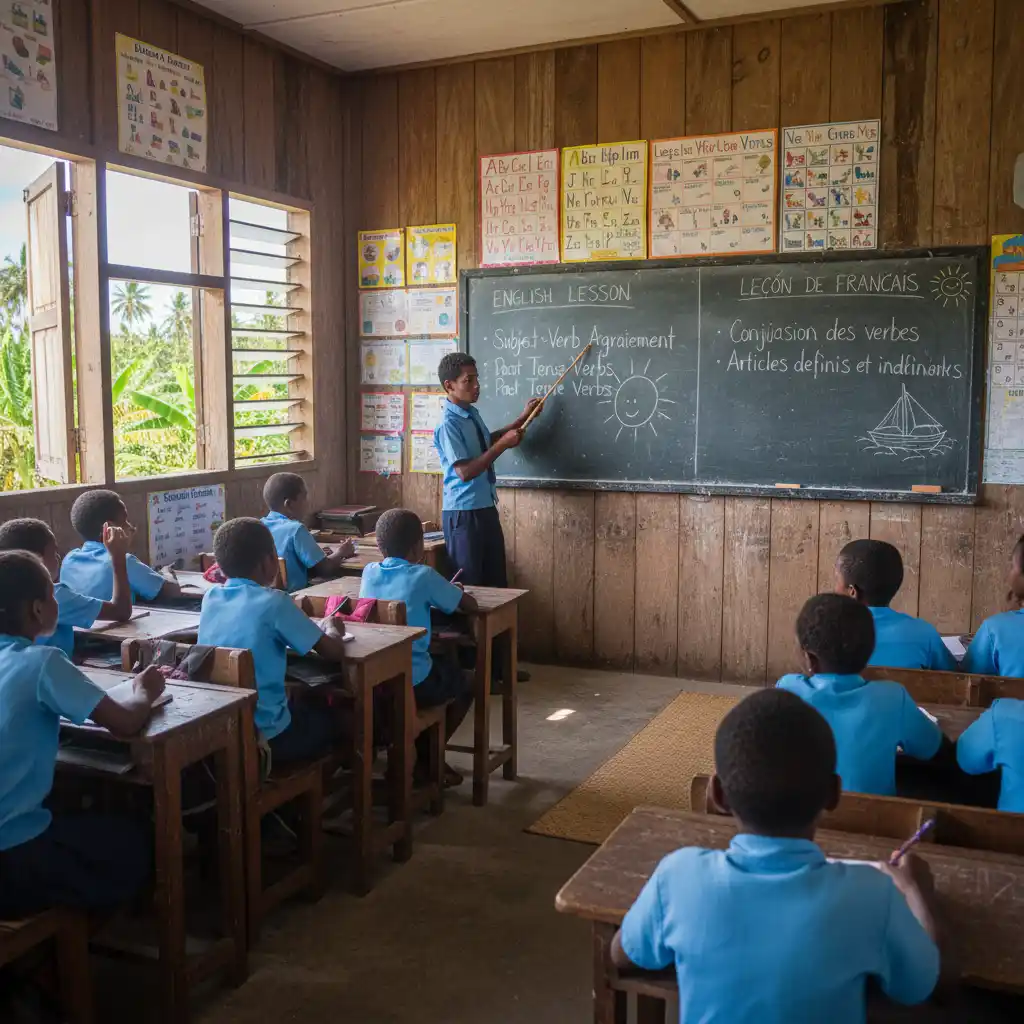
The education sector is the primary battleground where the “official languages of Vanuatu” are instilled in the younger generation. The dual system remains largely intact, meaning parents must choose early on whether their child will be educated in English or French.
The Current Curriculum
In an English-medium school, French is taught as a second language, and vice-versa. However, the depth of fluency in the second colonial language varies significantly depending on the resources of the specific school. Recent educational reforms have aimed to harmonize the curriculum so that qualifications are equivalent regardless of the language of instruction.
Higher education reflects this divide as well. The University of the South Pacific (USP), which has a major campus in Port Vila, is an English-medium institution. Conversely, the Agence Universitaire de la Francophonie (AUF) supports French-language tertiary education. This creates different pathways for graduates: Anglophones often look toward Australia, New Zealand, and other Pacific Island nations for opportunities, while Francophones may look toward New Caledonia, France, or French Polynesia.
How are languages used in Government and Law?
In the realm of governance and the judiciary, the official languages of Vanuatu are utilized to ensure fairness and constitutional compliance. However, the practical application often differs from the theoretical requirement.
Parliament and Legislation
In the Parliament of Vanuatu, debates are frequently conducted in Bislama. As the national language, it is the most effective tool for emotional expression and ensures that all Members of Parliament, regardless of their educational background, can participate fully. However, written bills and laws are drafted in English and French. The text of the law is authoritative in these European languages.
The Judicial System
The courts of Vanuatu operate with a high degree of linguistic flexibility. A defendant has the right to be heard in the language they understand best. While Bislama is common in lower courts and island tribunals, the Supreme Court and Court of Appeal conduct proceedings in English or French. Interpretation is a standard feature of the Vanuatu legal system to bridge the gap between the official languages and the indigenous vernaculars.
Local vs. International Communication
For the traveler, investor, or diplomat, understanding which language to use in specific contexts is vital. The usage of official languages in Vanuatu shifts depending on whether the context is local or international.
Tourism and Commerce
English is the dominant language of commerce and tourism, driven largely by the proximity of Australia and New Zealand, which provide the bulk of tourists and foreign investment. Most hotels, tour operators, and banks operate primarily in English. However, Port Vila boasts a sophisticated French dining scene, and French is widely spoken in hospitality settings catering to visitors from New Caledonia.
Diplomatic Relations
Vanuatu leverages its bilingual status diplomatically. It is a member of both the Commonwealth of Nations and La Francophonie. This allows the small island nation to access development aid, scholarships, and diplomatic support from both Anglosphere and Francosphere countries. This strategic neutrality is a key pillar of Vanuatu’s foreign policy.

What is the role of Bislama compared to European languages?
While English and French hold the status of “official languages of education and business,” Bislama is the heartbeat of the nation. It is an English-based creole with heavy influences from French and indigenous Melanesian grammar.
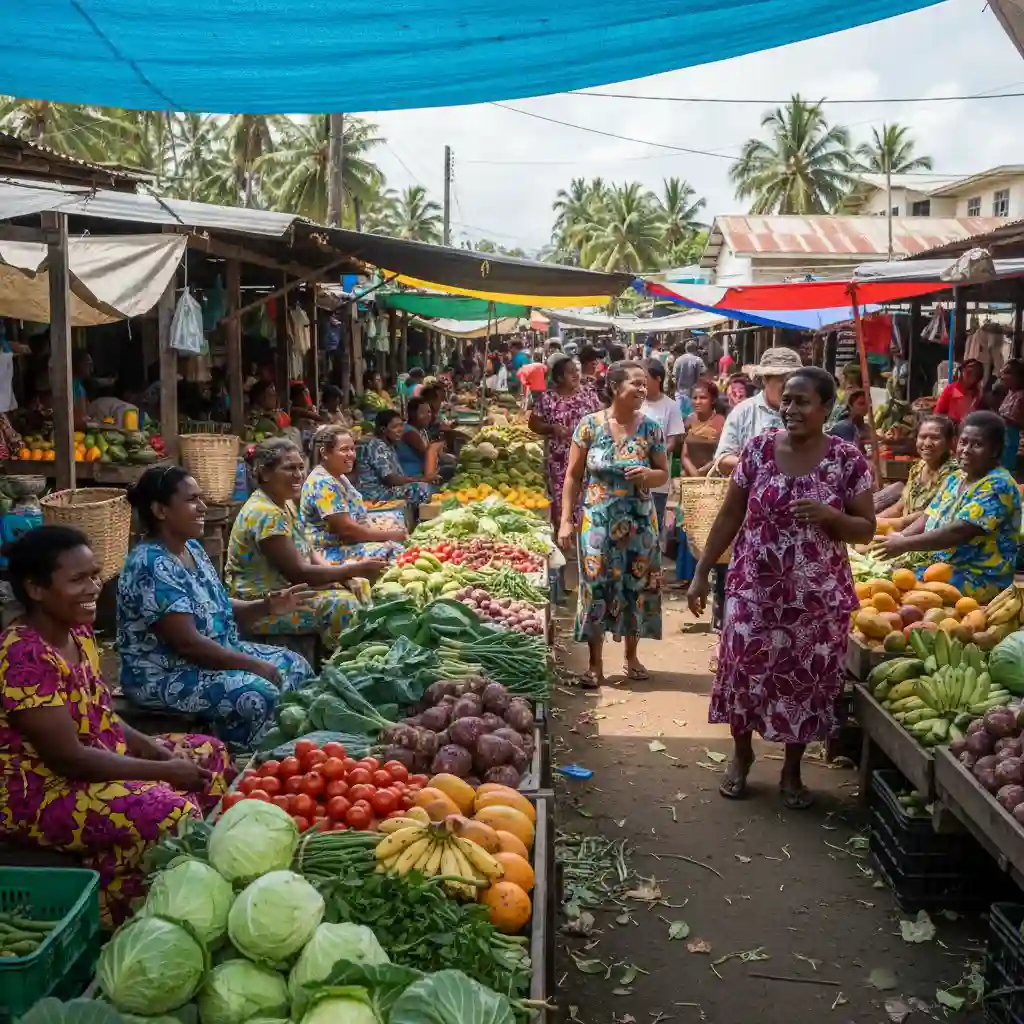
Bislama is the only language that is spoken by over 95% of the population. In a country where two villages separated by a few kilometers might speak mutually unintelligible vernacular languages, Bislama is the essential glue holding the nation together. It is the language of the market, the street, the bus, and the home for many urban families.
For visitors, learning a few phrases of Bislama (such as “Halo” for Hello or “Tankyu Tumas” for Thank you very much) is often more appreciated than fluency in English or French, as it demonstrates respect for the local culture and identity.
People Also Ask
Is Vanuatu French or English speaking?
Vanuatu is both. It is one of the few countries in the world where both English and French are official languages. However, the vast majority of the population speaks Bislama (an English-based creole) as their primary means of communication.
Do I need to speak French to visit Vanuatu?
No, you do not need to speak French. English is widely spoken in Port Vila, Luganville, and all major tourist areas. French is useful but not mandatory unless you are visiting specific Francophone communities or interacting with French businesses.
What is the national language of Vanuatu?
The national language of Vanuatu is Bislama. While English and French are “official” languages used for education and law, Bislama is the language of national identity and daily social interaction.
Why does Vanuatu have three official languages?
This is due to its history as the New Hebrides Condominium, which was jointly ruled by Britain and France. To maintain unity after independence in 1980, the Constitution adopted the languages of both colonial powers alongside Bislama.
Is Bislama similar to English?
Yes, Bislama is an English-based creole. About 90% of its vocabulary is derived from English, though the spelling is phonetic and the grammar follows Melanesian structures. English speakers can often understand basic Bislama with a little effort.
How many indigenous languages are there in Vanuatu?
Vanuatu is home to approximately 113 indigenous vernacular languages. It has the highest density of languages per capita in the world, which is why a lingua franca like Bislama is so essential.