
Vanuatu traditional food, locally known as “aelan kakae” or kastom food, is a distinct organic cuisine centered on root crops like taro, yam, and manioc. These staples are typically grated, wrapped in banana leaves, drenched in fresh coconut cream, and slow-cooked in underground earth ovens to create savory, dense cakes such as the national dish, Laplap.
For culinary travelers and cultural enthusiasts, the cuisine of Vanuatu offers a direct link to the archipelago’s ancient Melanesian heritage. Unlike many modern diets, traditional Ni-Vanuatu food remains largely organic, relying on what can be grown in the rich volcanic soil or harvested from the pristine Pacific Ocean. From the bustling markets of Port Vila to the remote villages of Tanna and Santo, food is not merely sustenance; it is a ceremonial language used to bond communities, settle disputes, and celebrate life.
What Defines Kastom Food?
In Vanuatu, the term “Kastom” refers to traditional culture, covering everything from religion and economics to art and magic. When applied to food, Kastom food refers to dishes prepared using pre-colonial methods and indigenous ingredients. This cuisine is characterized by a lack of processed sugars, oils, and artificial additives. Instead, richness is derived almost exclusively from coconut cream, and flavor comes from the natural earthiness of root vegetables, the salinity of the ocean, and the use of island cabbage.
The diet is heavily carbohydrate-based to support the energy needs of subsistence farming. However, it is also incredibly nutrient-dense. The volcanic soil of the 83 islands infuses the produce with rich minerals, making the vegetables larger and more flavorful than those found in many other parts of the world. While rice and tinned fish have entered the modern diet, they are generally considered “store food,” whereas true sustenance and cultural pride are reserved for the garden-grown staples.
What is Laplap and How is it Prepared?
If you visit Vanuatu and do not taste Laplap, you have not truly experienced the country. Laplap is the quintessential Vanuatu traditional food, serving as the national dish. It is a labor-intensive meal that represents the heart of the home and the community.
The Preparation Process
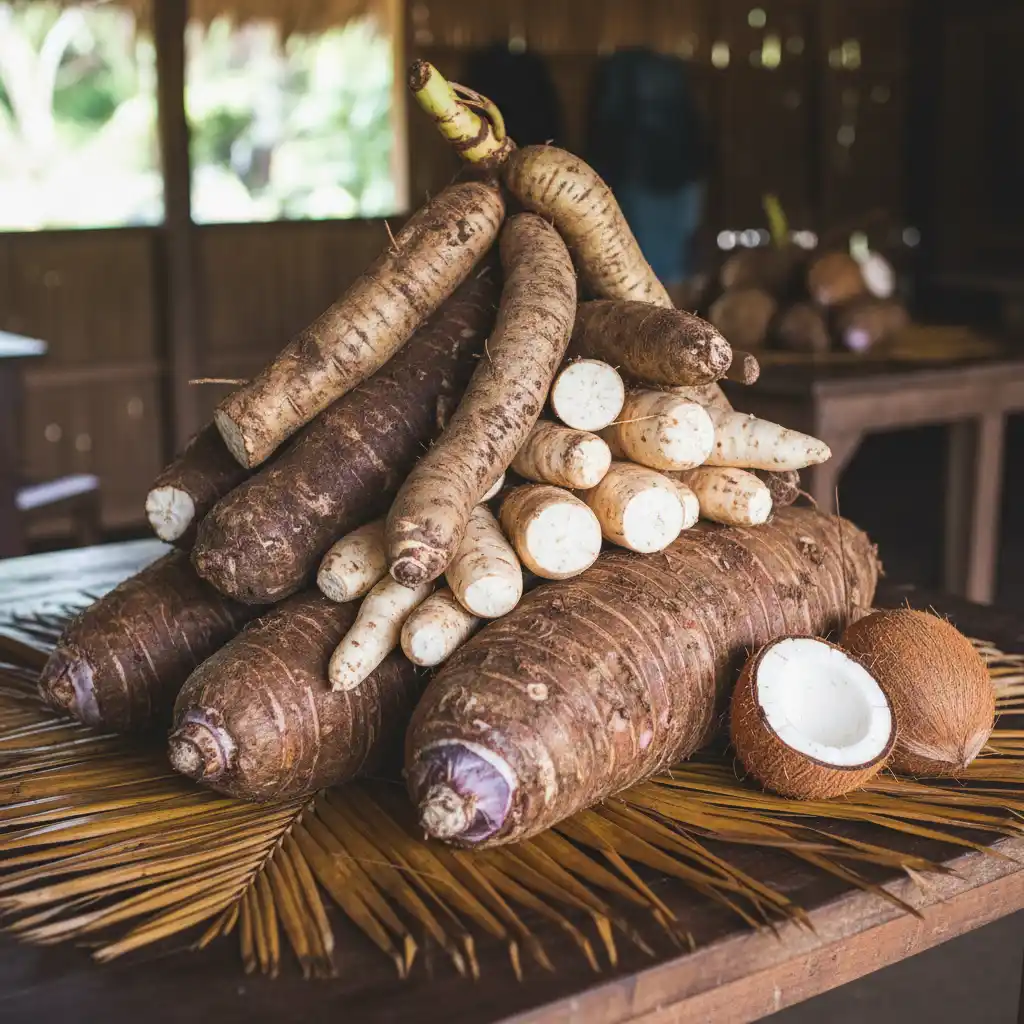
Laplap is essentially a vegetable cake. The process begins with harvesting root crops—usually manioc (cassava), taro, yam, or cooking bananas. These are peeled and grated into a coarse paste using a piece of rough coral or a perforated metal sheet. This grating process is time-consuming and often done communally.
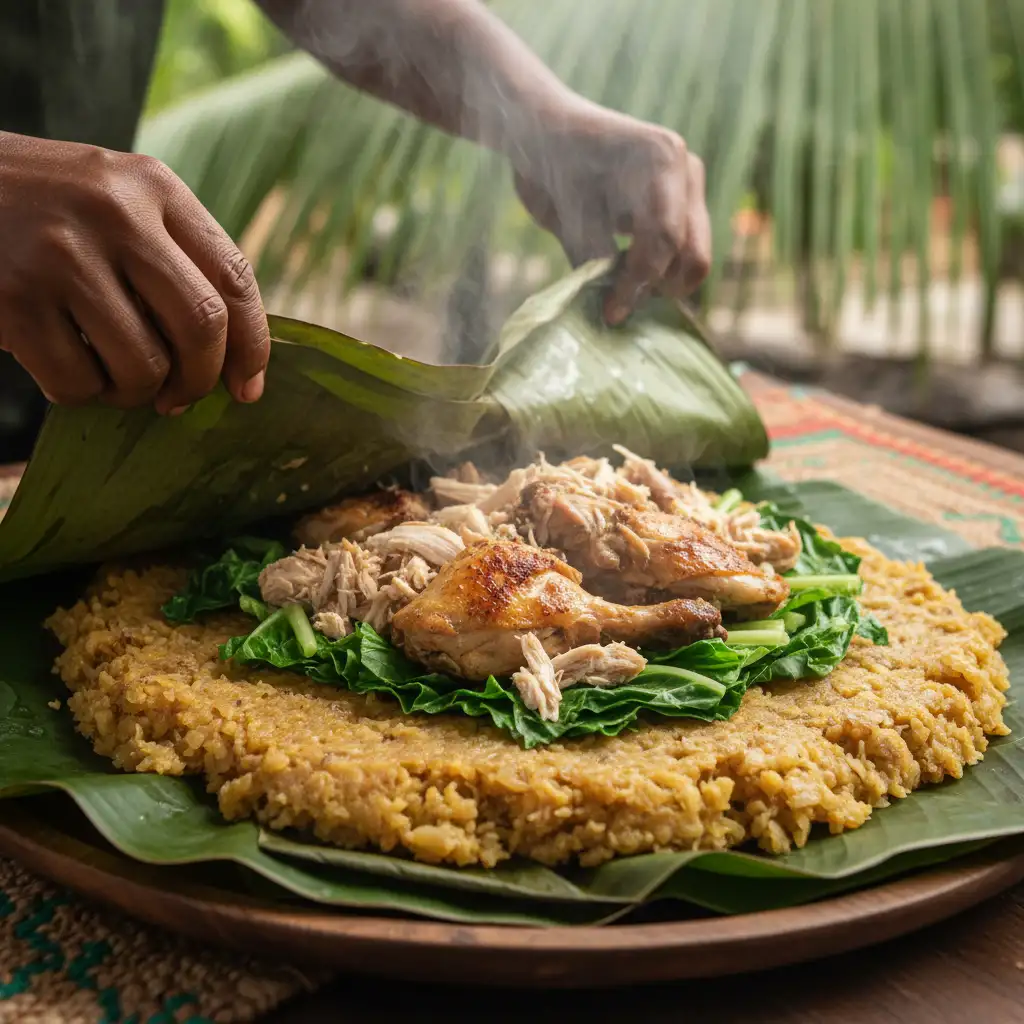
Once the paste is ready, it is spread out on softened banana leaves or wild spinach (island cabbage) leaves. The crucial ingredient, fresh coconut cream, is squeezed directly from grated coconut flesh over the paste. For special occasions, pieces of protein such as pork, chicken, flying fox, or fish are placed on top.
Cooking in the Earth Oven
The wrapped bundle is then placed into a ground oven containing hot volcanic stones. This oven is similar to the Maori hangi or the Hawaiian imu. The bundle is covered with more leaves, hot stones, and earth to seal in the heat. It bakes for several hours, allowing the coconut cream to caramelize and permeate the root vegetable paste. The result is a dense, pudding-like texture that is savory, smoky, and incredibly filling.
What Other Traditional Dishes Should You Try?
While Laplap reigns supreme, the culinary landscape of Vanuatu is diverse. Different islands have unique variations and entirely different specialties based on their local resources.
Simboro
Simboro is a lighter alternative to Laplap and is particularly popular in the Shepherd Islands. Instead of a large, flat cake, the grated root crop (often manioc or banana) is rolled into a log shape within a layer of island cabbage. These rolls are then boiled in coconut milk rather than baked in stones. The texture is softer, more dumpling-like, and the ratio of greens to starch is often higher, making it a favorite for lunch.
Tuluk
Often described as the “Vanuatu meat pie,” Tuluk is a specialty of Paama Island but is loved nationwide. It consists of amanioc dough filled with shredded pork that has been heavily seasoned with spring onions and herbs. Like Laplap, it is wrapped in leaves and baked in a stone oven. However, Tuluk is individually sized, making it a popular takeaway snack found in markets.
Nalot
Nalot is a ceremonial dish often reserved for high-ranking individuals or special events. It is made by roasting taro, breadfruit, or yam on open fire or stones, then pounding it into a smooth, heavy paste using a wooden pestle. It is visually similar to Polynesian poi but much thicker. It is served with a well of hot coconut cream in the center.
Key Ingredients in Vanuatu Cuisine
Understanding Vanuatu traditional food requires a deep dive into the specific ingredients that define the flavor profile of the archipelago.
Aelan Kabis (Island Cabbage)
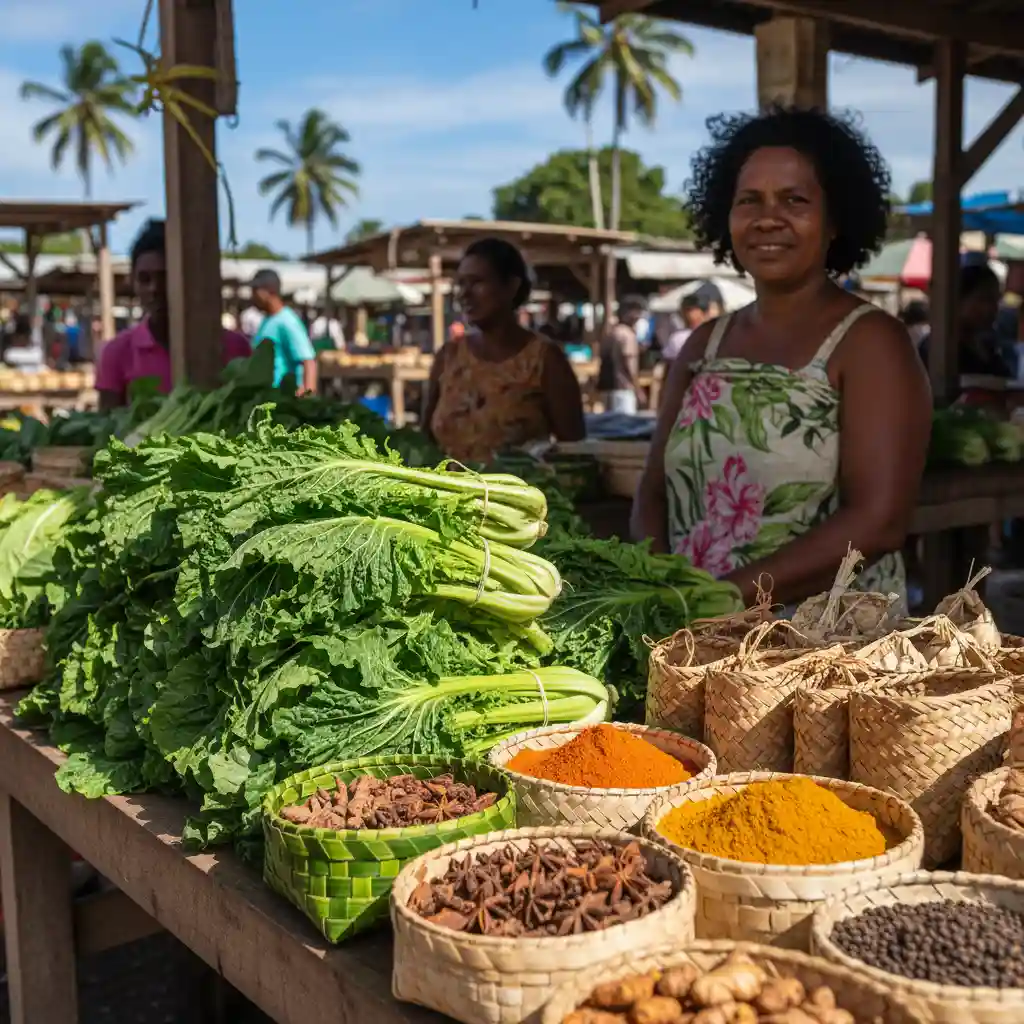
Abelmoschus manihot, known locally as Aelan Kabis, is a nutritional powerhouse. It is a leafy green vegetable with a mucilaginous texture similar to okra when cooked. It is used to wrap foods, line baking stones, or is simply boiled in coconut cream. It provides essential vitamins and iron, balancing the heavy starch of the root crops.
Coconut: The Tree of Life
No meal is complete without coconut. In Vanuatu, the coconut is used at various stages. The water from young coconuts is a beverage. The soft flesh is a snack. But the mature flesh is grated and squeezed to produce the rich cream (mit) that acts as the primary fat source for cooking. This cream is often poured over hot stones to create steam or added directly to dishes for richness.
Organic Proteins
While pork is the most prized meat, especially for ceremonies, seafood plays a massive role in coastal villages. Deep-sea snapper (poulet fish) is renowned for its taste. However, one of the most famous delicacies is the Coconut Crab. As the world’s largest land-living arthropod, it is a protected species in many areas. Travelers should only consume it during open seasons and ensure it is harvested sustainably. The crab meat has a distinct coconut flavor, derived from its diet of coconuts.
How is Food Used in Feasting and Ceremony?
In Melanesian culture, food is currency and status. You cannot discuss Vanuatu traditional food without acknowledging the “Nakamal” (meeting house) and the grade-taking ceremonies.
The Pig Killing Ceremonies
On islands like Malekula and Ambrym, status is earned through grade-taking ceremonies, which culminate in the ritual sacrifice of pigs. The tusks of these pigs are highly valued. Following the sacrifice, the meat is distributed among the village and cooked in massive earth ovens. The sharing of this food solidifies alliances and debts between families.
Food Exchange
Weddings, circumcisions, and funerals involve elaborate food exchanges. One family might present piles of giant yams (some growing up to 2 meters long) and live pigs, while the other reciprocates with mats and different food items. The presentation of the food is just as important as the taste; yams are often decorated with flowers or masks to represent spirits.
Where to Eat Local Food in Vanuatu?
Finding authentic kastom food can sometimes be a challenge for tourists staying in Western-style resorts, which often cater to international palates. However, those willing to explore will find culinary treasures.
Port Vila Central Market
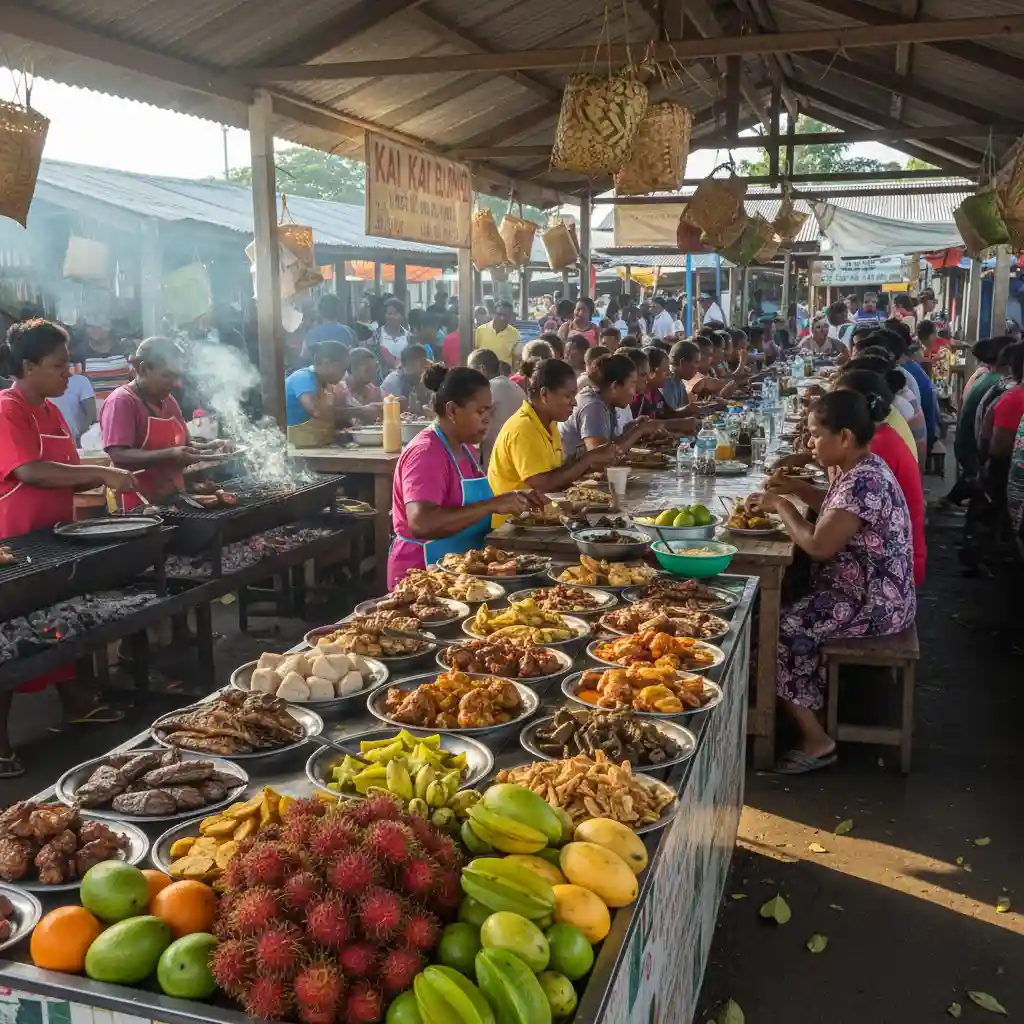
The most accessible place to try traditional food is the Port Vila Market. The rear section of the market is dedicated to food stalls run by local “Mamas.” Here, you can buy generous portions of Laplap, Simboro, and Tuluk for a very low price. The food is cooked fresh daily and gives you a chance to interact with the cooks.
Island Bungalows and Guest Houses
To taste the best earth-oven food, stay in a locally owned island bungalow. If you inform your hosts you want to try local cuisine, they will often prepare a special meal. This might involve you helping to grate the manioc or squeeze the coconut milk, turning dinner into a cooking class.
Kava Bars (Nakamals)
While primarily for drinking Kava (a sedative root drink), Nakamals always have a “wasem maot” (wash mouth) food counter. After drinking the bitter kava, locals eat small portions of food to cleanse the palate. This is often the best place to find fresh Tuluk or roasted taro in the evenings.
People Also Ask
Is Vanuatu traditional food spicy?
generally, no. Traditional Vanuatu cuisine relies on the natural flavors of the ingredients, enhanced by coconut cream and salt. Chilies are available and sometimes used in condiments, but the core dishes like Laplap are savory and creamy rather than spicy (hot).
Is it safe to eat street food in Vanuatu?
Yes, the food at the main markets (like Port Vila Market) is generally safe. The food is cooked thoroughly in high-heat earth ovens. However, as with any travel destination, ensure the food is fresh and hot, and drink bottled or boiled water.
What is the most popular drink in Vanuatu?
The most culturally significant drink is Kava, a psychoactive beverage made from the roots of the piper methysticum plant. For non-alcoholic refreshment, fresh coconut water and lime juice are ubiquitous.
Are there vegetarian options in Vanuatu cuisine?
Yes, Vanuatu is a paradise for vegetarians. The base of almost all traditional meals is root vegetables and greens. You can easily order Laplap or Simboro without meat, and the abundance of fresh tropical fruit provides ample snacking options.
How much does a traditional meal cost in Vanuatu?
Eating like a local is very affordable. A serving of Laplap at the market might cost between 200 to 500 Vatu (approx. $2 – $5 USD). Restaurant meals will be significantly more expensive.
What is the best time of year to visit for food?
Vanuatu has a tropical climate, so food is available year-round. However, the yam harvest season (usually around April to June) is a time of feasting and cultural festivals, particularly on islands like Pentecost (famous for land diving).