
Vanuatu language conservation refers to the multifaceted strategic efforts to document, revitalize, and sustain the archipelago’s 138 indigenous languages against the threats of modernization. These initiatives include incorporating vernacular instruction in primary schools, empowering local fieldworkers through the Vanuatu Cultural Centre, and utilizing digital archives to record oral histories, ensuring this unparalleled linguistic diversity survives for future generations.
Vanuatu holds the distinct title of being the most linguistically dense nation on Earth per capita. With over 130 distinct languages spoken across an archipelago of just 300,000 people, the cultural fabric of this South Pacific nation is woven with a complexity found nowhere else. However, the encroachment of global languages, urbanization, and the unifying pidgin language, Bislama, poses a significant threat to these ancestral tongues. The movement for Vanuatu language conservation is not merely an academic exercise; it is a fight for the soul of the Ni-Vanuatu identity.
The Linguistic Landscape of Vanuatu
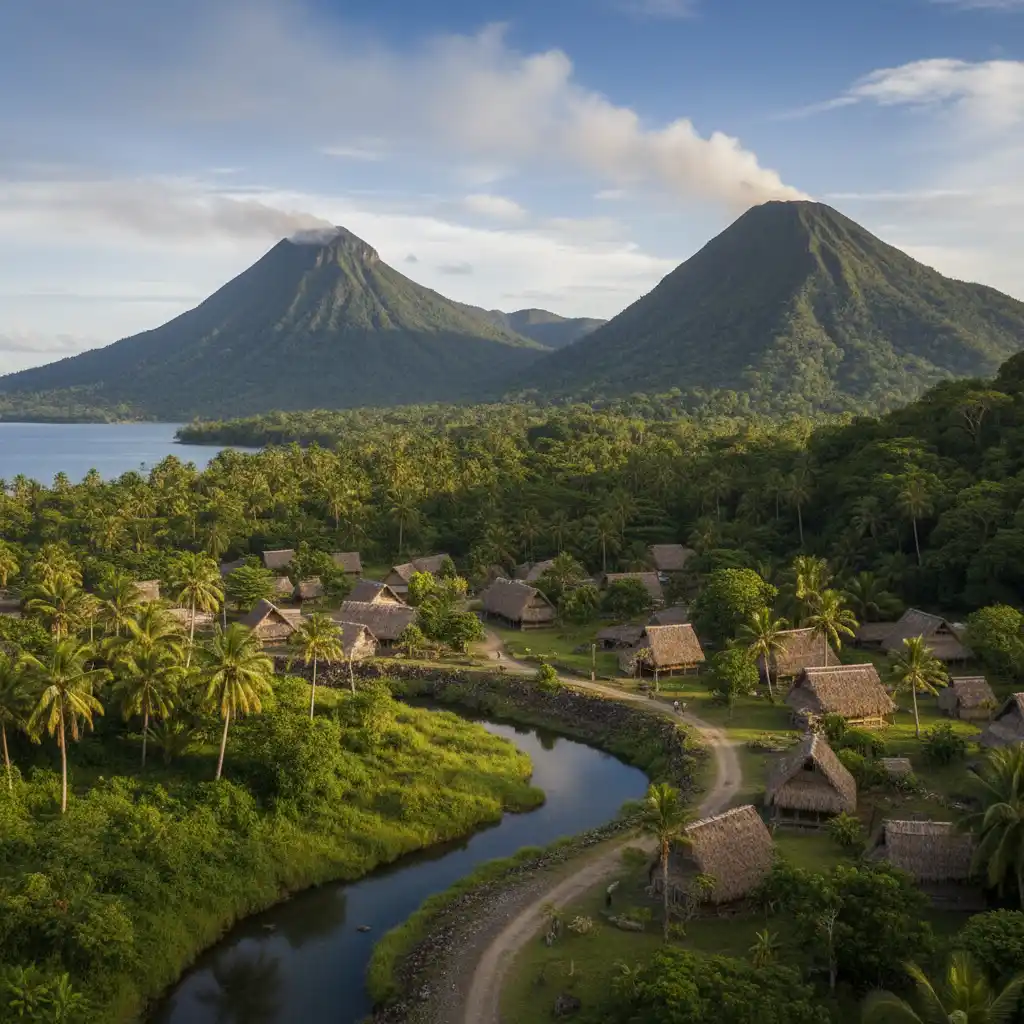
To understand the magnitude of the conservation task, one must first appreciate the scope of the diversity. In Vanuatu, it is common for villages separated by only a few kilometers or a single river to speak entirely different languages—not merely dialects, but distinct linguistic systems with unique grammars and vocabularies. This diversity evolved over three millennia of settlement, fostered by the rugged terrain of volcanic islands like Malekula, Espiritu Santo, and Pentecost.
However, many of these languages are spoken by very small populations, sometimes fewer than 500 people. In the world of linguistics, a language with such a small base of speakers is inherently vulnerable. If a single generation fails to transmit the language to the next, a millennia-old library of cultural knowledge—encompassing medicinal plant usage, navigation techniques, and spiritual genealogy—can vanish instantly. This reality drives the urgent need for robust Vanuatu language conservation strategies.
Community-Led Preservation Programs
The most effective conservation efforts in Vanuatu are those that spring from the grassroots level. External linguists can document grammar, but only the community can keep a language alive through daily use. Across the archipelago, chiefs and community leaders are recognizing that the loss of language equates to a loss of kastom (traditional culture).
The Role of Custom Schools
One of the most promising developments in Vanuatu language conservation is the rise of informal “custom schools.” unlike the government curriculum which focuses on English or French, these community gatherings are dedicated to teaching traditional skills and oral history in the local vernacular. In islands like Tanna, known for its strong adherence to tradition, these programs ensure that children learn the specific vocabulary associated with yam planting, kava ceremonies, and conflict resolution—terms that often have no direct translation in Bislama or English.
Elders as Living Libraries
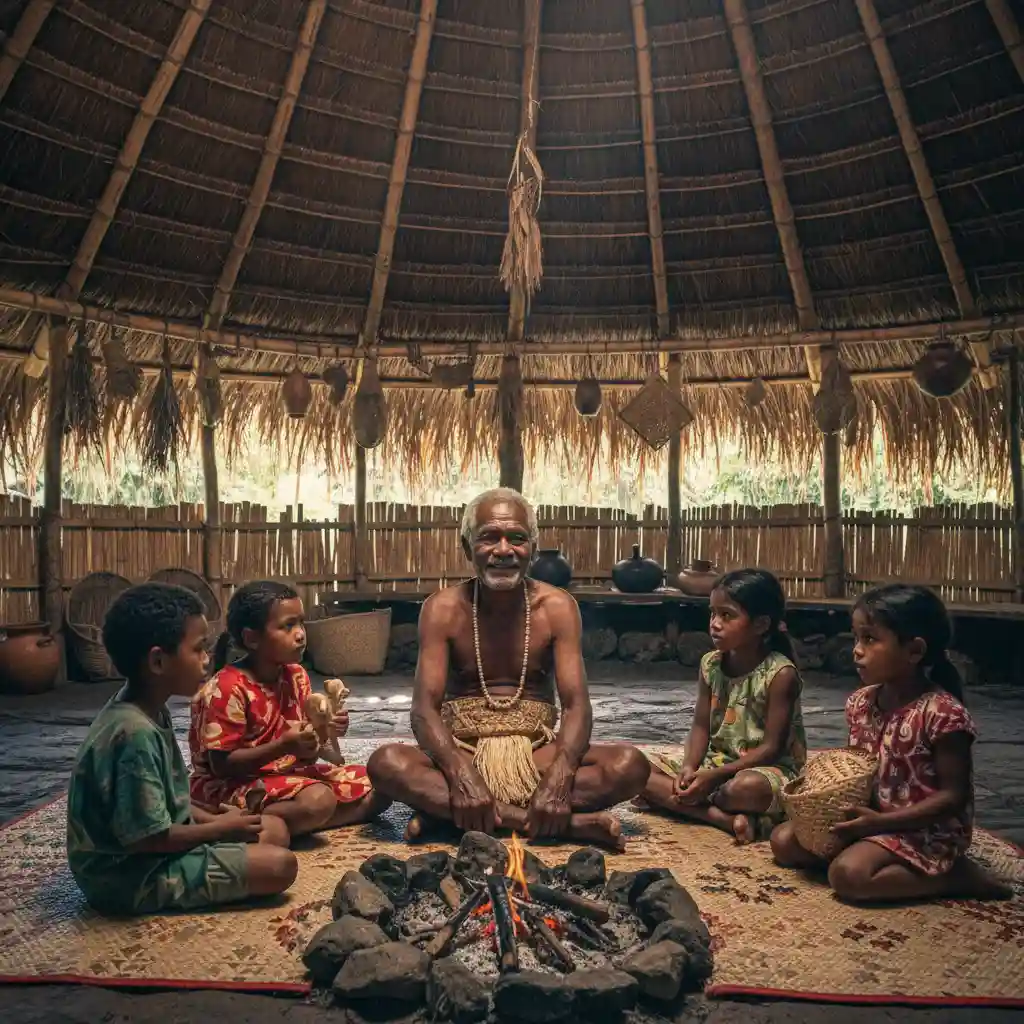
In oral cultures, elders are the repositories of history. Community programs often formalize the transfer of knowledge by scheduling “storytelling sessions” where grandparents recount myths and genealogies to the youth. These sessions serve a dual purpose: they entertain the younger generation while implicitly teaching complex linguistic structures and rare vocabulary that is falling out of daily use. By re-valuing the knowledge of the elderly, communities reinforce the prestige of their local language, combating the perception that indigenous tongues are “backward” compared to colonial languages.
Modern Documentation and Archiving
While oral transmission is vital, the fragility of memory necessitates physical and digital documentation. This is where the intersection of traditional culture and modern technology becomes critical for Vanuatu language conservation.
The Vanuatu Cultural Centre (VKS)
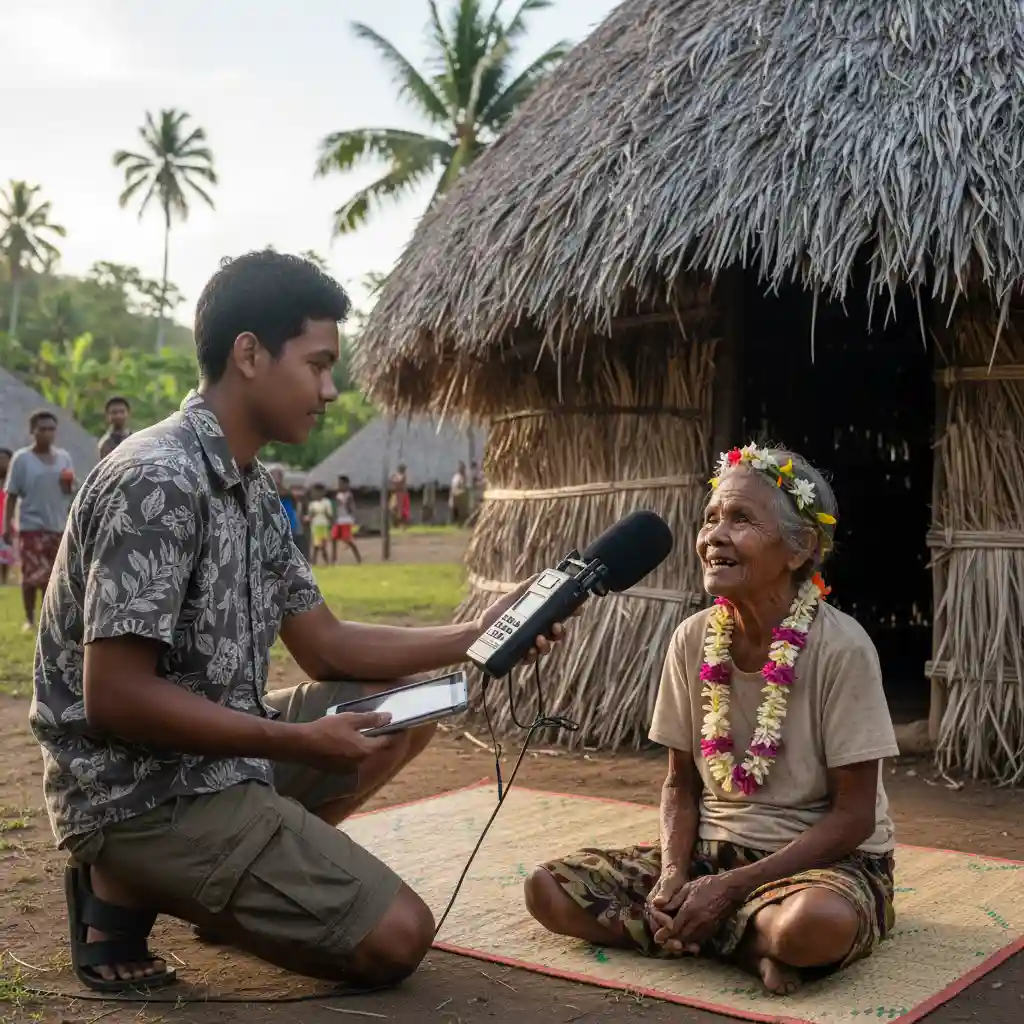
The Vanuatu Cultural Centre (Vanuatu Kaljoral Senta or VKS) stands as the pillar of these efforts. Unique in the Pacific, the VKS operates a network of volunteer “Fieldworkers” (filwoka). These are men and women selected from their own communities to document customs and languages. Because they are insiders, they have access to sacred knowledge and linguistic nuances that foreign anthropologists might miss.
The Fieldworker program trains locals in the use of audio recorders and video cameras. They return to their villages to interview the last speakers of moribund languages, recording songs, ritual speeches, and everyday conversations. This material is then archived in Port Vila, creating a permanent record that future generations can access.
Digital Archiving and Technology
In recent years, international partnerships have accelerated documentation. Projects like the Max Planck Institute’s documentation of Austronesian languages have provided high-fidelity recording equipment to Vanuatu. The goal is to create comprehensive dictionaries and grammar guides.
Furthermore, mobile technology is playing a surprising role. With the proliferation of smartphones even in remote villages, young people are beginning to text and post on social media in their vernaculars. While often mixed with Bislama, this digital usage proves that the languages can adapt to modern contexts. Some conservationists are now developing apps and digital keyboards specifically designed for Vanuatu’s unique phonetic characters, making it easier to type in indigenous tongues.
The Role of Education in Language Survival
For decades, the formal education system in Vanuatu was a tool of linguistic erasure, forcing students to speak only English or French. Today, educational policy is shifting to become a cornerstone of Vanuatu language conservation.
Vernacular Literacy Policies
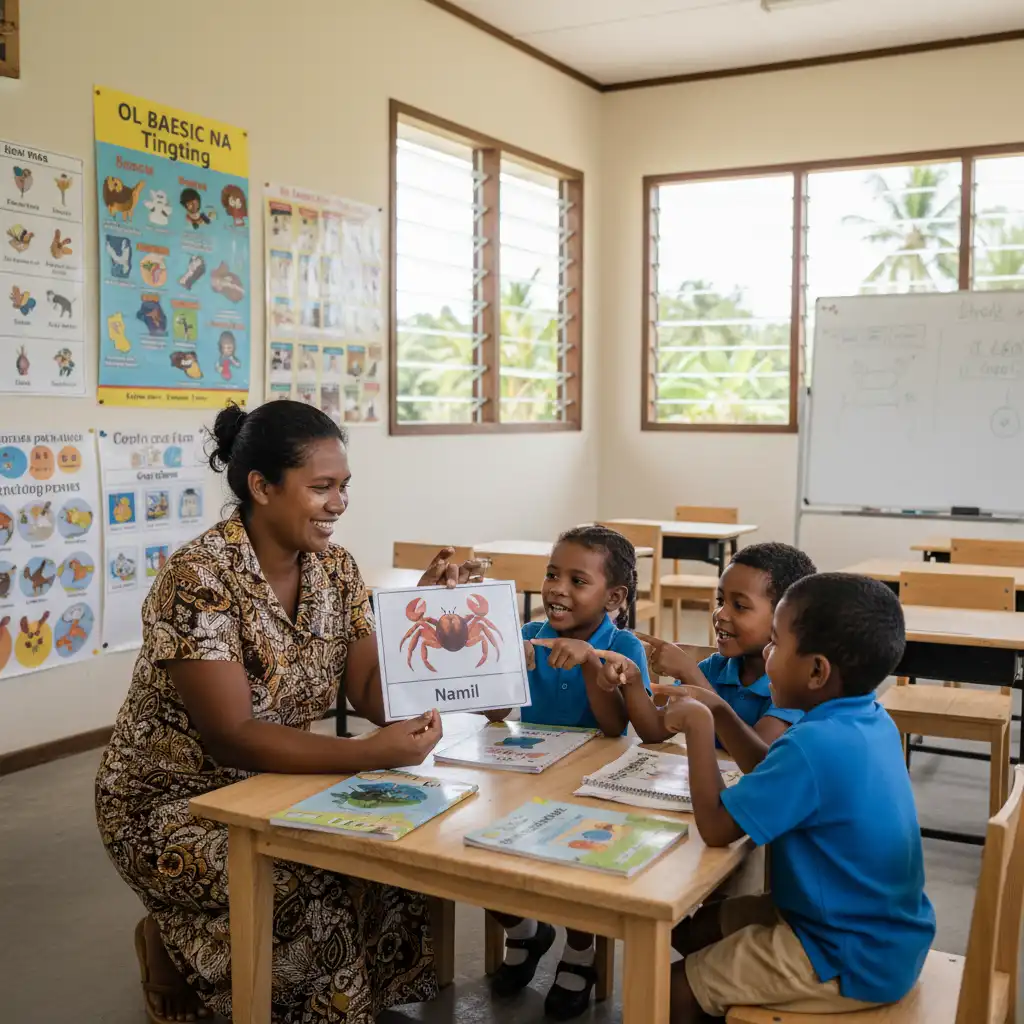
The Vanuatu Ministry of Education has recognized that children learn best when they start their education in their mother tongue. Recent policy shifts encourage the use of local vernaculars in kindergarten and the early years of primary school (Years 1-3). This approach, known as Mother Tongue-Based Multilingual Education (MTB-MLE), validates the child’s home culture and builds a strong cognitive foundation before transitioning to Bislama, English, or French.
Implementing this is logistically difficult due to the sheer number of languages and the lack of printed materials for each. However, communities are stepping up to create their own learning materials. Teachers work with elders to write simple storybooks and primers in the local language. This not only aids literacy but ensures that the first words a child learns to read are in their ancestral tongue, solidifying its importance in their developing minds.
Major Challenges to Conservation
Despite these heroic efforts, the tide of globalization is strong. Understanding the obstacles is essential for effective Vanuatu language conservation.
The Double-Edged Sword of Bislama
Bislama, the English-based creole, is the national language of Vanuatu. It is the language of commerce, politics, and national unity. While it allows a person from Efate to communicate with someone from Santo, it acts as a “killer language” for smaller vernaculars. In mixed-marriage households (where parents come from different language groups), Bislama often becomes the home language. Consequently, children grow up speaking Bislama as their first language, severing the link to their ancestral tongues.
Urbanization and Youth Migration
As young people migrate to Port Vila and Luganville for work and education, they enter a Bislama-dominant environment. Removed from the village context where the vernacular is tied to the land and custom, their fluency often atrophies. This urban drift creates a disconnect; when these youths return to their islands, they may struggle to communicate with their grandparents, leading to a breakdown in cultural transmission.
The Future of Linguistic Diversity in Vanuatu
What does the future hold for the 130+ languages of Vanuatu? The reality is complex. Some languages with very few speakers will likely fall silent in the coming decades. However, the awakening of cultural pride and the formalization of conservation efforts offer hope.
The future of Vanuatu language conservation lies in adaptation. Languages that can transition into the digital realm, that are taught in schools, and that are valued by the youth as markers of identity will survive. There is a growing movement among Ni-Vanuatu artists, musicians, and writers to produce contemporary content in their native tongues, proving that these languages are not just relics of the past, but vessels for the future.
Tourism also plays a role. By promoting “cultural tourism” where visitors are interested in learning about linguistic diversity, communities see an economic value in preserving their heritage. When a tourist asks to learn a greeting in the local dialect rather than Bislama, it reinforces the prestige of that dialect.
Ultimately, the survival of these languages depends on the will of the speakers. As long as the people of Vanuatu value their kastom, the chorus of 138 voices will continue to sing across the islands.
Frequently Asked Questions
Why is Vanuatu considered important for linguistic diversity?
Vanuatu has the highest density of languages per capita in the world. With a population of roughly 300,000 people speaking over 130 distinct languages, it offers a unique window into human linguistic evolution and cultural adaptation in isolated environments.
What is the difference between Bislama and indigenous languages?
Bislama is an English-based creole and the national lingua franca used for inter-island communication. Indigenous languages are the ancestral tongues specific to each island or village, possessing unique grammars and vocabularies unrelated to English.
How does the Vanuatu Cultural Centre help preserve languages?
The Vanuatu Cultural Centre (VKS) trains local “Fieldworkers” to document oral histories, dictionary data, and cultural customs in their own communities. They archive this data to prevent knowledge loss and support revitalization projects.
Are indigenous languages taught in Vanuatu schools?
Yes, recent educational policies support Mother Tongue-Based Multilingual Education (MTB-MLE), encouraging the use of local vernaculars for instruction in the first three years of primary education to improve literacy and cultural retention.
What is the biggest threat to Vanuatu’s languages?
The biggest threats are the dominance of Bislama (which replaces vernaculars in mixed households), urbanization (which separates youth from village elders), and the lack of written materials for smaller languages.
How can tourists support language conservation in Vanuatu?
Tourists can support conservation by showing interest in local cultures, visiting cultural villages that fund preservation, and learning basic greetings in the local vernacular of the specific island they visit, rather than relying solely on English or Bislama.