
Malekula Island travel offers an immersive journey into Vanuatu’s most culturally diverse province, known as the “Island of Custom.” Visitors can experience the ancient traditions of the Small Nambas and Big Nambas tribes, witness the sacred Nalawan Festival, explore historical cannibalism sites, and engage with authentic kastom villages in a rugged, untouched tropical setting.
Often referred to as the “wild heart” of Vanuatu, Malekula is the second-largest island in the archipelago and arguably the most culturally rich. Unlike the resort-heavy atmosphere of Efate or the accessible volcanoes of Tanna, Malekula demands a traveler’s respect and curiosity. It is a place where ancient legends intertwine with modern life, and where the “kastom” (customary law and tradition) dictates the rhythm of the villages.
Geography and Orientation: The Dog’s Shape
Geographically, Malekula is shaped remarkably like a sitting dog. This distinct shape is often used by locals to describe locations on the island—references to the “Dog’s Head” (North West), the “Neck” (Central), or the “Tail” (South) are common navigation terms. The interior is mountainous, rugged, and covered in dense rainforest, which historically isolated the tribes from one another, allowing distinct dialects and cultural practices to evolve independently. In fact, Malekula has the highest density of distinct languages per capita of any place on Earth.
For the intrepid traveler, Malekula Island travel is split primarily between the North East (serviced by Norsup Airport) and the South West (serviced by South West Bay Airport). The infrastructure is basic; roads are unsealed coral tracks, and accommodation consists almost exclusively of locally run guest houses and bungalows. This lack of commercialization is exactly what preserves the island’s authenticity.

The Cultural Divide: Big Nambas vs. Small Nambas
One cannot discuss Malekula without understanding the primary tribal distinction that governs the island’s anthropology: the Big Nambas and the Small Nambas. This terminology, introduced by early traders and missionaries, refers to the size of the namba—the woven penis sheath made from pandanus or banana leaves worn by the men.
Who are the Big Nambas?
The Big Nambas traditionally inhabit the rugged northwest of the island (the “Dog’s Head”). Historically, they were known as formidable warriors and were the last tribe in Vanuatu to be converted to Christianity. Their society is patrilineal and highly stratified, ruled by powerful chiefs whose authority was absolute. The Big Nambas wear a large, purple-dyed pandanus sheath with heavy tassels that drape down the front. Their kastom villages, such as those near Mae, offer a glimpse into a society that fiercely resisted colonization.
Who are the Small Nambas?
The Small Nambas are primarily located in the southern and central parts of Malekula. While the name suggests a lesser stature, their culture is equally complex and vibrant. They wear a smaller namba, usually just a single leaf loop. The Small Nambas are renowned for their elaborate ceremonial masks, complex headdresses, and the preservation of the unique “funerary art” where skulls of ancestors are elongated and preserved on bodies made of fern tree fibers. The Small Nambas are often considered the artistic custodians of the archipelago.
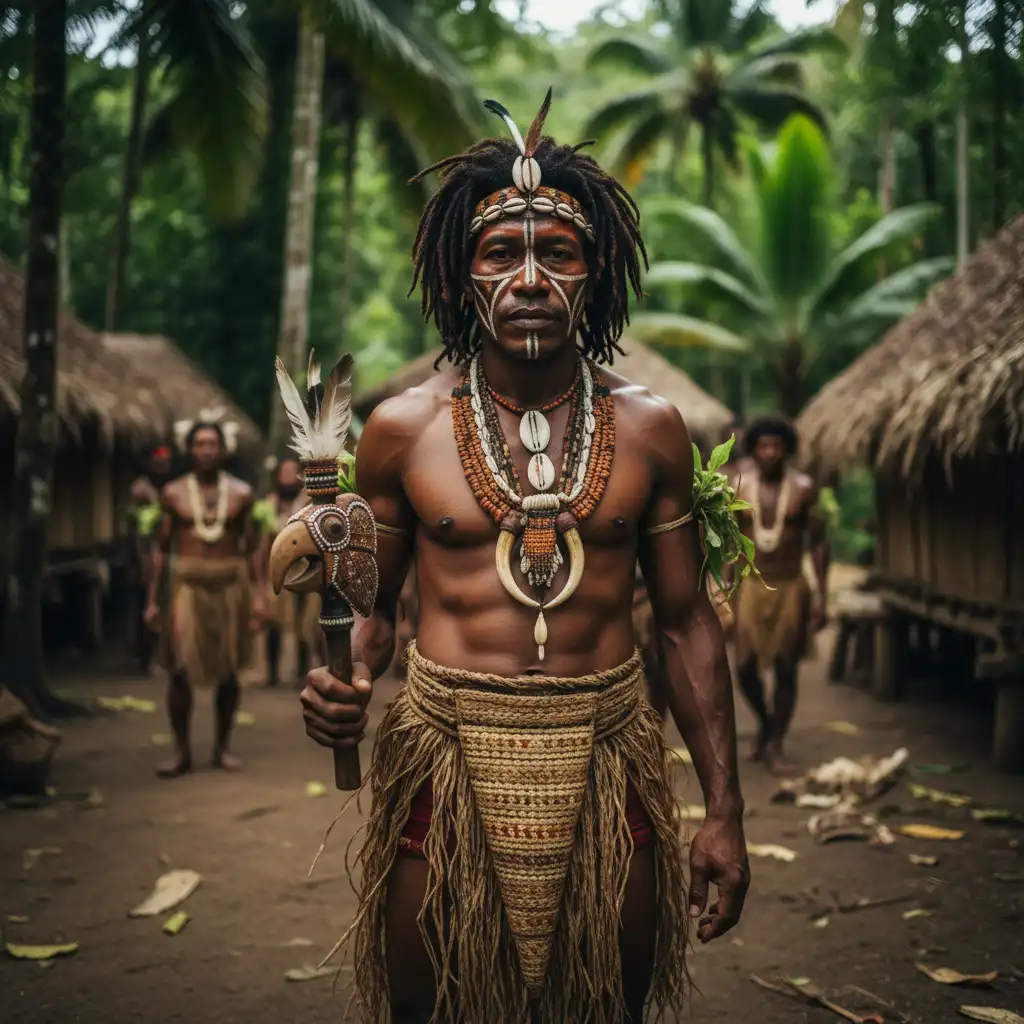
The Nalawan Festival: A Spectacle of Spirits
For travelers timing their visit, the Nalawan Festival is the pinnacle of Malekula Island travel. Unlike staged tourist shows, the Nalawan is a genuine grade-taking ceremony. In the hierarchical society of Malekula, men do not inherit status; they must earn it through the Nimangki system. This involves purchasing grades (steps up the social ladder) by sacrificing pigs—specifically pigs with curved tusks. The more curved the tusk, the higher the value.
The Nalawan Festival, typically held in South West Bay (often around Fire Beach or Lawa), is a celebration of the harvest and the worship of ancestors. It is characterized by:
- The Temes (Masks): Dancers wear terrifying and beautiful masks made from clay, spider webs, and tree fiber. These masks represent ancestral spirits and are destroyed or hidden after the ceremony, as they are believed to possess dangerous power.
- The Stomping Dance: The rhythm of the Nalawan is hypnotic. Dozens of men move in unison, stomping the earth to wake the spirits, accompanied by the deep, resonant thrum of the slit drums.
- Pig Sacrifice: While confronting for some Western tourists, the ritual sacrifice of pigs is central to the ceremony. It acts as a transaction with the spirit world to ensure prosperity and status.
Attending a Nalawan ceremony requires permission and often a small entry fee which goes directly to the village community. It is a rare privilege to witness a culture celebrating its own existence so vividly.
Echoes of the Past: History of Cannibalism
Malekula has a dark and fascinating history regarding cannibalism, which was practiced on the island as recently as the mid-20th century. It is crucial for visitors to approach this topic with historical curiosity rather than sensationalism. For the people of Malekula, cannibalism was not about diet; it was about mana (power).
Why was cannibalism practiced?
In traditional Malekulan warfare, consuming an enemy was the ultimate insult to the opposing tribe and a way to absorb the victim’s power. It was a ritualistic act deeply embedded in the warrior culture of the Big Nambas. The most famous site associated with this history is the Amel (men’s meeting house) where the bones of victims were often displayed or buried.
The Baker’s Pot Myth and Reality
While often conflated with other islands, Malekula has its own specific sites. Guides in the north will take visitors to ancient cannibal ovens—pits of stones where human flesh was cooked. You may also visit “Skull Houses” or sacred caves where the skulls of chiefs and, occasionally, victims are kept. The last recorded act of cannibalism on Malekula is generally cited to have occurred in 1969, making it a very recent memory for the elders of the tribes.
Today, the locals speak of these times openly. It is part of their history, a time of darkness before the “light” (Christianity and peace) arrived, yet they retain a deep respect for the power their warrior ancestors held.

Traditional Dance and the Tam-Tam Drums
Music in Malekula is not melodic in the Western sense; it is rhythmic and communicative. The heartbeat of the island is the Tam-Tam (slit drum). These are carved from whole breadfruit or teak logs, hollowed out through a narrow slit to create a resonant chamber. Some Tam-Tams stand vertically, reaching heights of 3 to 4 meters, carved with the faces of ancestors.
The drums were historically used to send coded messages across the valleys—announcing births, deaths, wars, or grade-taking ceremonies. Today, they provide the orchestra for the kastom dances.
The dances themselves vary by tribe. In the Small Nambas region, you will see the “Rom” dance, where dancers are covered entirely in dry banana leaves and wear conical masks. The anonymity is crucial; once the mask is on, the dancer becomes the spirit. Touching a dancer during a ceremony is strictly forbidden and historically punishable by death (now usually a heavy fine in pigs or currency).
Kastom Tours and Village Experiences
To experience Malekula, you must leave the coast and enter the villages. “Kastom Tours” are the primary tourism product of the island. These are not polished Disney-like attractions; they are visits to living communities.
What to expect on a Kastom Tour?
Most tours begin with a welcome ceremony. You will likely be greeted by the Chief or a spokesman. You may be offered a shell of kava—the narcotic root drink of the Pacific. In Malekula, kava is drunk primarily by men in the Nakamal (meeting house), though rules are relaxed for female tourists in some areas.
Popular tour locations include:
- Rano and Wala Islands: Small offshore islands on the east coast with rich history and ancient coral altars.
- Tenmaru: In the Big Nambas territory, offering hikes to defensive hill forts.
- South West Bay: Accessible only by boat or plane, this area offers the most untouched lagoon environments and Small Nambas culture.
When booking a tour, you are supporting the village economy. The money pays for school fees, medical supplies, and community infrastructure. Always ask permission before taking photos of individuals, especially the elderly.

Practical Travel Logistics
Planning a trip to Malekula requires patience and preparation. Here is how to navigate the logistics of this remote paradise.
Getting There
Air Vanuatu flies regularly from Port Vila (Efate) to Malekula. There are three airports:
1. Norsup (NUS): The main airport in the Northeast, serving the provincial center Lakatoro.
2. Lamap (LPM): In the Southeast.
3. South West Bay (SWJ): In the Southwest (grass strip).
Ensure you book the correct airport for your intended destination, as travel between them by road can take hours on rough tracks.
Accommodation
Do not expect 5-star resorts. Accommodation is in the form of “Island Bungalows.” These are simple structures, often built with local materials (natangura roofs), usually with cold showers and shared electricity (generator or solar). The luxury here is the location and the hospitality, not the thread count of the sheets. Notable options include the Malekula Holiday Villas near Lakatoro or the remote bungalows in South West Bay.
Health and Safety
Malaria is present in Malekula. Prophylactics are recommended, as is strong insect repellent. Water should be boiled or purified. In terms of personal safety, the island is very safe, and the people are incredibly hospitable. However, taboos are taken seriously. Dress modestly (shoulders and knees covered) when outside of swimming areas, and never wander into a “Tabu” area marked by namele leaves (fern leaves tied to a post).
People Also Ask
Is Malekula safe for tourists?
Yes, Malekula is very safe for tourists. The locals are friendly and welcoming. However, it is a remote island with limited medical facilities, so travel insurance and a basic first aid kit are essential. Respecting local customs (kastom) ensures a positive relationship with villagers.
How do I get from Port Vila to Malekula?
You can fly with Air Vanuatu from Port Vila to one of Malekula’s three airports: Norsup (North), Lamap (South East), or South West Bay. The flight takes approximately 45 to 60 minutes. There are also cargo ships that take passengers, but these are slow and irregular.
What is the difference between Big Nambas and Small Nambas?
The difference lies mainly in the size of the penis sheath (namba) worn by the men, their geographical location (Big Nambas in the North, Small Nambas in the South/Central), and their distinct dialects. Both groups have unique cultural rituals and artistic styles.
When is the best time to visit Malekula?
The best time to visit is during the dry season, from May to October. This is also when most cultural festivals, including the Nalawan Festival and the Malekula Arts Festival, usually take place. The wet season (November to April) can make roads impassable.
Are there cannibals in Malekula today?
No, cannibalism is no longer practiced in Malekula. It ended in the mid-to-late 20th century. However, the history of cannibalism is preserved in oral traditions and historical sites, which tourists can visit to learn about the island’s warrior past.
What should I wear when visiting villages in Malekula?
Modesty is important. Both men and women should wear clothing that covers the shoulders and knees. Swimwear is only appropriate at the beach. When attending kastom ceremonies, follow the advice of your guide regarding photography and behavior.