
Vanuatu politics after independence in 1980 has been characterized by a transition from the dominant single-party rule of the Vanua’aku Pati to a highly fragmented multi-party system. While the nation has successfully maintained democratic stability, the political landscape is defined by fluid coalition governments, frequent motions of no confidence, and a unique interplay between Anglophone and Francophone political blocs.
Since gaining sovereignty from the joint British-French Condominium, the Republic of Vanuatu has navigated a complex path of nation-building. The political environment is vibrant yet volatile, often requiring intricate negotiations to form a government. Understanding this evolution is essential for scholars, investors, and travelers seeking to comprehend the societal fabric of this Melanesian archipelago.
The Early Years: The Lini Era (1980–1991)
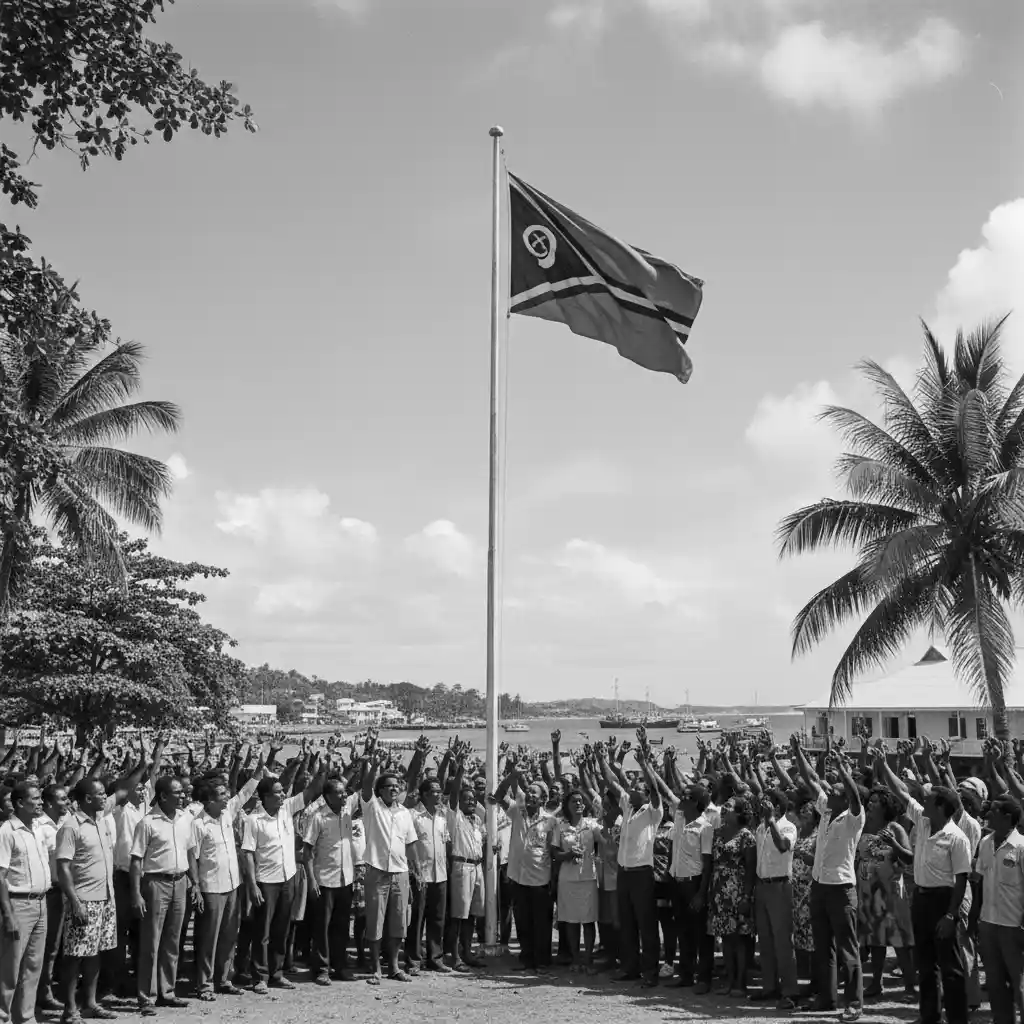
To understand vanuatu politics after independence, one must examine the foundational decade led by Father Walter Lini. Independence was achieved on July 30, 1980, ending 74 years of the Condominium rule, a unique colonial arrangement where Britain and France governed jointly. This dual heritage left a lasting cleavage in the political landscape: the division between Anglophone (English-speaking) and Francophone (French-speaking) populations.
What was Melanesian Socialism?
During the first decade, the political scene was dominated by the Vanua’aku Pati (VP), an Anglophone party led by Father Walter Lini, an Anglican priest who became the country’s first Prime Minister. Lini championed a philosophy known as “Melanesian Socialism.” This ideology sought to blend traditional Melanesian communal values with Christian principles and socialist economic policies. It emphasized self-reliance, non-alignment in foreign policy (famously flirting with Cuba and Libya, which alarmed Western powers), and the reclamation of indigenous land rights.
The dominance of the VP provided a period of relative stability, albeit one marked by the suppression of the Francophone opposition, primarily represented by the Union of Moderate Parties (UMP). The government focused heavily on nation-building, unifying a diverse archipelago of over 80 islands with distinct languages and customs into a single national identity.
The Santo Rebellion
The immediate post-independence period was also defined by the need to quell secessionist movements. The most notable was the Santo Rebellion (the Coconut War) on Espiritu Santo, led by Jimmy Stevens of the Nagriamel movement. The successful suppression of this rebellion, with the assistance of Papua New Guinean troops, solidified the central government’s authority but highlighted the fragility of the new state.
The Era of Fragmentation and Instability (1991–2004)
By the early 1990s, the monolithic control of the Vanua’aku Pati began to fracture. Internal rivalries, rather than ideological differences, became the primary driver of political change. In 1991, a split within the VP led to the ousting of Walter Lini, signaling the end of the single-party dominance era and the beginning of coalition politics.
Why did coalition governments become the norm?
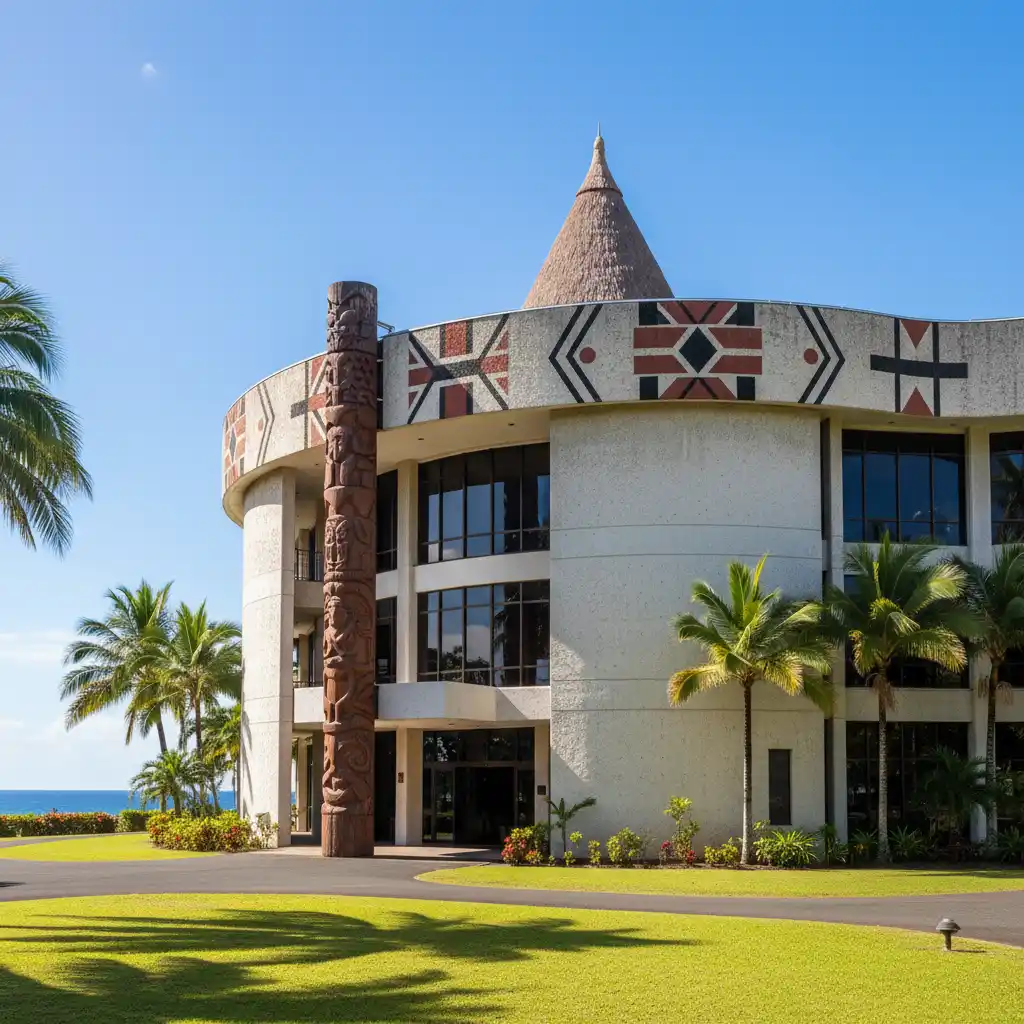
The 1991 general election resulted in a coalition government led by the Francophone UMP, with Maxime Carlot Korman as Prime Minister. This was a historic shift, marking the first time a Francophone leader held the top office. However, it also introduced a period of chronic instability.
Throughout the 1990s and early 2000s, Vanuatu politics became synonymous with the “revolving door” of Prime Ministers. Governments were frequently toppled by Motions of No Confidence (MoNC). The parliamentary system in Vanuatu allows for a simple majority to remove a Prime Minister, a mechanism that was used repeatedly as members of parliament (MPs) switched allegiances—a practice known locally as “grass-hopping.”
This volatility was driven by several factors:
- Personalities over Policy: Political alliances were often formed based on personal relationships and promises of ministerial portfolios rather than shared policy goals.
- Fragmentation: Major parties like the VP and UMP splintered into smaller factions, such as the National United Party (NUP) founded by Lini after his ouster.
- Resource Competition: In a developing economy, control of the government machinery was seen as the primary route to economic distribution for constituents.
Democratic Consolidation and Legal Resilience
Despite the frequency of government changes, vanuatu politics after independence is remarkable for its adherence to constitutional processes. Unlike other nations in the region that have experienced military coups or civil unrest, Vanuatu’s political battles have largely been fought within the halls of Parliament and the Supreme Court.
The Role of the Judiciary
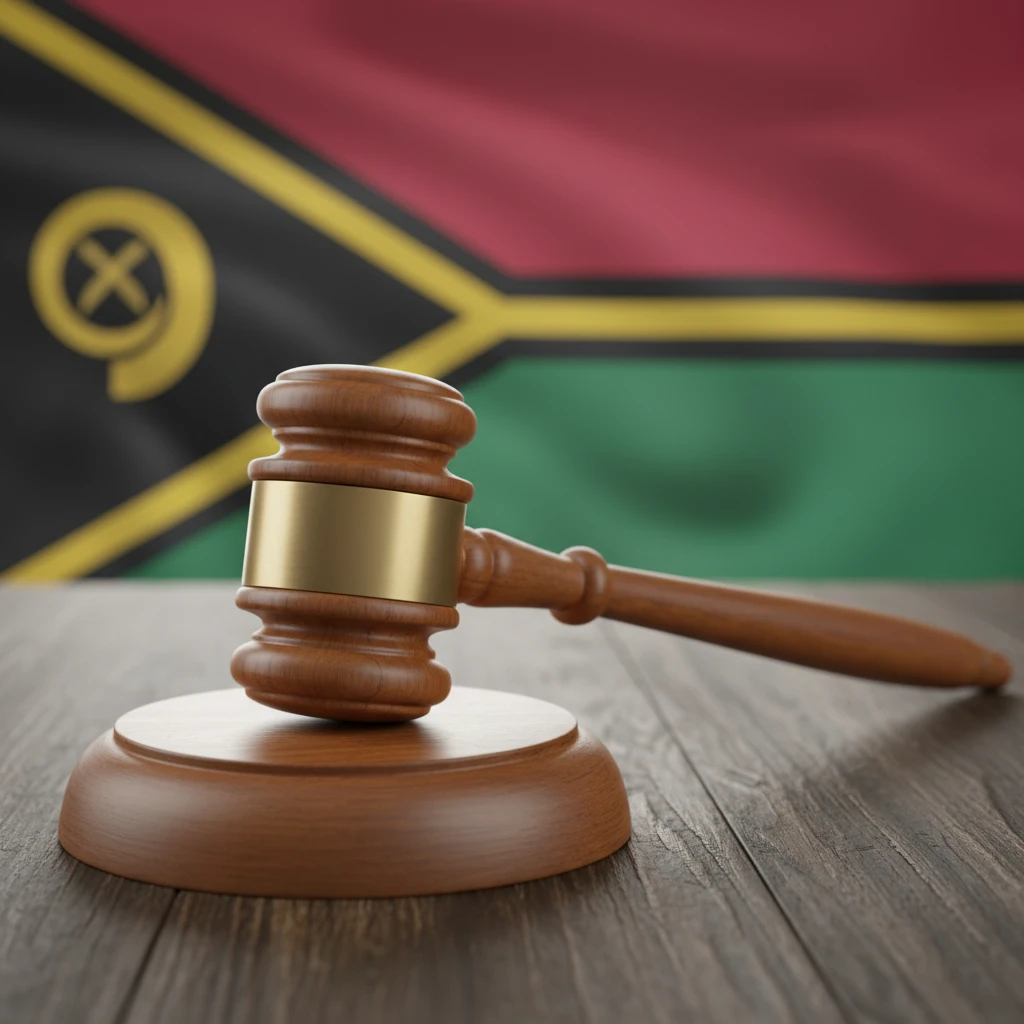
The judiciary has played a critical role in maintaining stability. The Supreme Court of Vanuatu has repeatedly intervened to interpret the constitution during political deadlocks. A defining moment occurred in 2015, when 14 MPs, including the Deputy Prime Minister, were convicted of bribery. The then-Speaker of Parliament attempted to pardon himself and the others while acting as interim President. The Supreme Court overturned these pardons, upholding the rule of law. This event, while a political crisis, ultimately demonstrated the strength and independence of Vanuatu’s legal institutions.
Electoral Reform Attempts
Recognizing that constant instability hampers economic development, there have been ongoing discussions regarding political reform. Proposed changes include regulating political parties to prevent excessive fragmentation and restricting the ability of MPs to switch sides immediately after being elected. While substantive legislative reform has been slow, the discourse indicates a maturing political consciousness.
Current Political Parties and Coalition Dynamics
Today, the political landscape is hyper-fragmented. It is rare for a single party to win enough seats to govern alone. As a result, every government is a coalition, often comprised of 4 to 6 different parties plus independent candidates.
Key Political Players
While new parties emerge frequently, several established entities remain central to the formation of any government:
- Vanua’aku Pati (VP): The oldest party, traditionally Anglophone and socialist-leaning, though more centrist today. It remains a major power broker.
- Union of Moderate Parties (UMP): The historical Francophone rival to the VP. It advocates for free enterprise and closer ties with France, though the language divide has softened over time.
- Graon mo Jastis Pati (GJP): Led by Ralph Regenvanu, this party (Land and Justice Party) has gained prominence by focusing on anti-corruption, land rights, and youth engagement. It represents a modern shift away from the traditional Anglophone/Francophone divide.
- Reunification Movement for Change (RMC): A splinter from the UMP, led by former PM Charlot Salwai, representing moderate Francophone interests.
The modern political environment is also influenced by the “Look North” policy, shifting focus towards Asia, particularly China, for infrastructure development and aid, balancing traditional ties with Australia and New Zealand.
The Role of Customary Authority
No analysis of Vanuatu politics is complete without acknowledging the Malvatumauri (National Council of Chiefs). While the political system is modeled on Western parliamentary democracy (Westminster system), the Constitution recognizes the authority of custom chiefs.
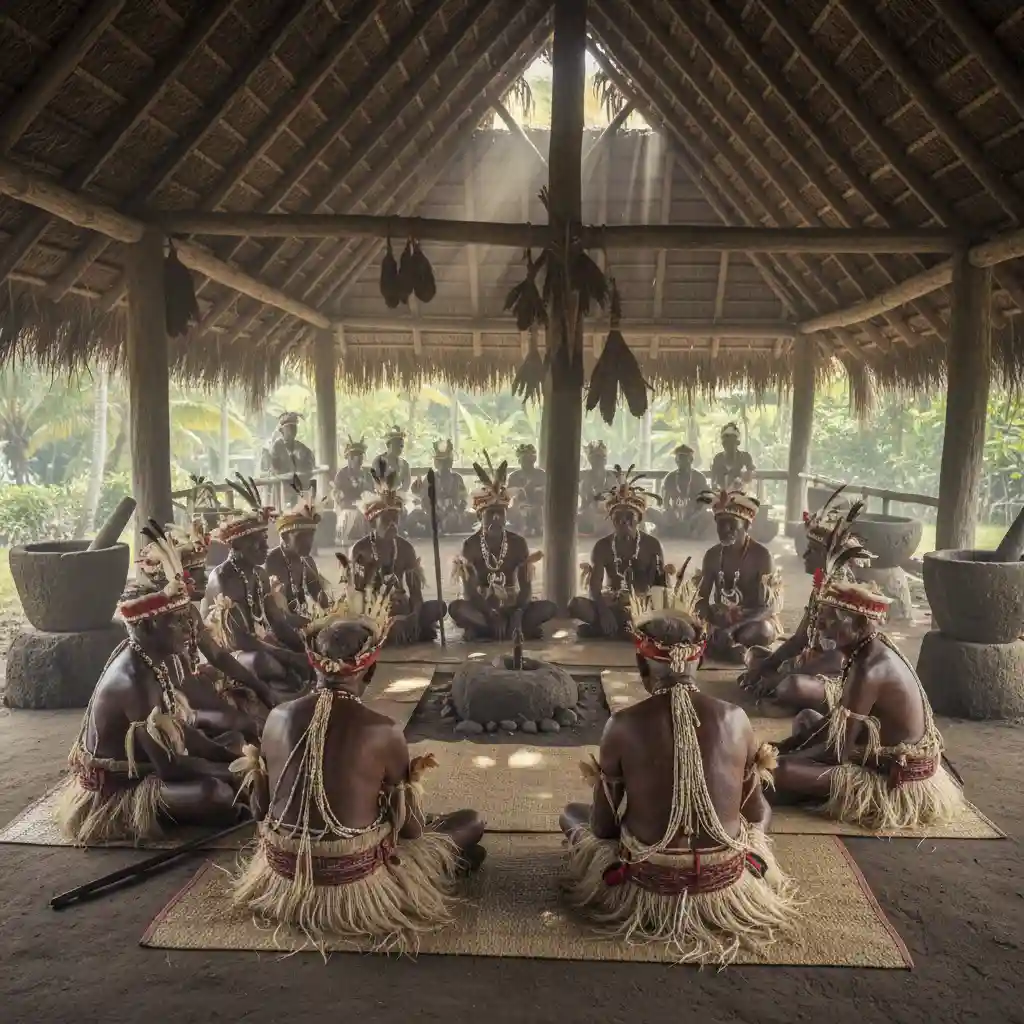
The Malvatumauri acts as an advisory body to Parliament on matters regarding land and custom. In times of severe political crisis, the Chiefs often intervene as moral authorities to mediate disputes and call for calm. This dual system—modern governance overlaid on ancient customary structures—provides a safety valve that prevents political disagreements from escalating into violence.
People Also Ask (PAA)
Who was the first Prime Minister of Vanuatu?
Father Walter Lini was the first Prime Minister of Vanuatu. He served from independence in 1980 until 1991. Lini was an Anglican priest and a key figure in the independence movement, founding the Vanua’aku Pati and promoting the ideology of Melanesian Socialism.
What type of government does Vanuatu have?
Vanuatu is a parliamentary representative democratic republic. The Prime Minister is the head of government and holds executive power, while the President is the head of state with largely ceremonial duties. The country operates under a multi-party system where coalition governments are the norm.
How often are elections held in Vanuatu?
General elections in Vanuatu are constitutionally required to be held every four years. However, elections can occur sooner if the Parliament is dissolved early by the President on the advice of the Prime Minister, usually following a political deadlock or a successful motion of no confidence.
What is the difference between Anglophone and Francophone parties in Vanuatu?
Historically, Anglophone parties (like the Vanua’aku Pati) were supported by English-speaking populations and schools, favoring ties with the UK and Australia. Francophone parties (like the UMP) were supported by French speakers, favoring ties with France. Today, this divide has blurred, and coalitions often mix parties from both backgrounds.
What was the 2015 political crisis in Vanuatu?
The 2015 crisis involved the conviction of 14 Members of Parliament for bribery. The crisis escalated when the Speaker of Parliament, acting as interim President, pardoned himself and the convicted MPs. The Supreme Court later revoked these pardons, and the MPs were imprisoned, leading to a snap election in 2016.
Does Vanuatu have a military?
Vanuatu does not have a standing military. Instead, it maintains the Vanuatu Mobile Force (VMF), which is a paramilitary wing of the Vanuatu Police Force. The VMF is responsible for external defense and domestic peacekeeping, but the country relies heavily on diplomatic neutrality.