
Ancient Vanuatu history begins approximately 3,000 years ago with the arrival of the Lapita people, skilled Austronesian navigators known for their distinctive dentate-stamped pottery. These early settlers established the first human communities in the archipelago, laying the cultural and genetic foundations for the diverse Melanesian societies found in Vanuatu today.
The history of Vanuatu, formerly known as the New Hebrides, is a testament to human ingenuity, navigational prowess, and cultural resilience. Long before European explorers charted the Pacific, the islands of Vanuatu were bustling with trade, complex social hierarchies, and a rich spiritual life. Through the lens of modern archaeology, linguistics, and oral tradition, we can reconstruct the vibrant tapestry of the pre-colonial era.
The Lapita Migration: The First Settlers
Who were the Lapita people?
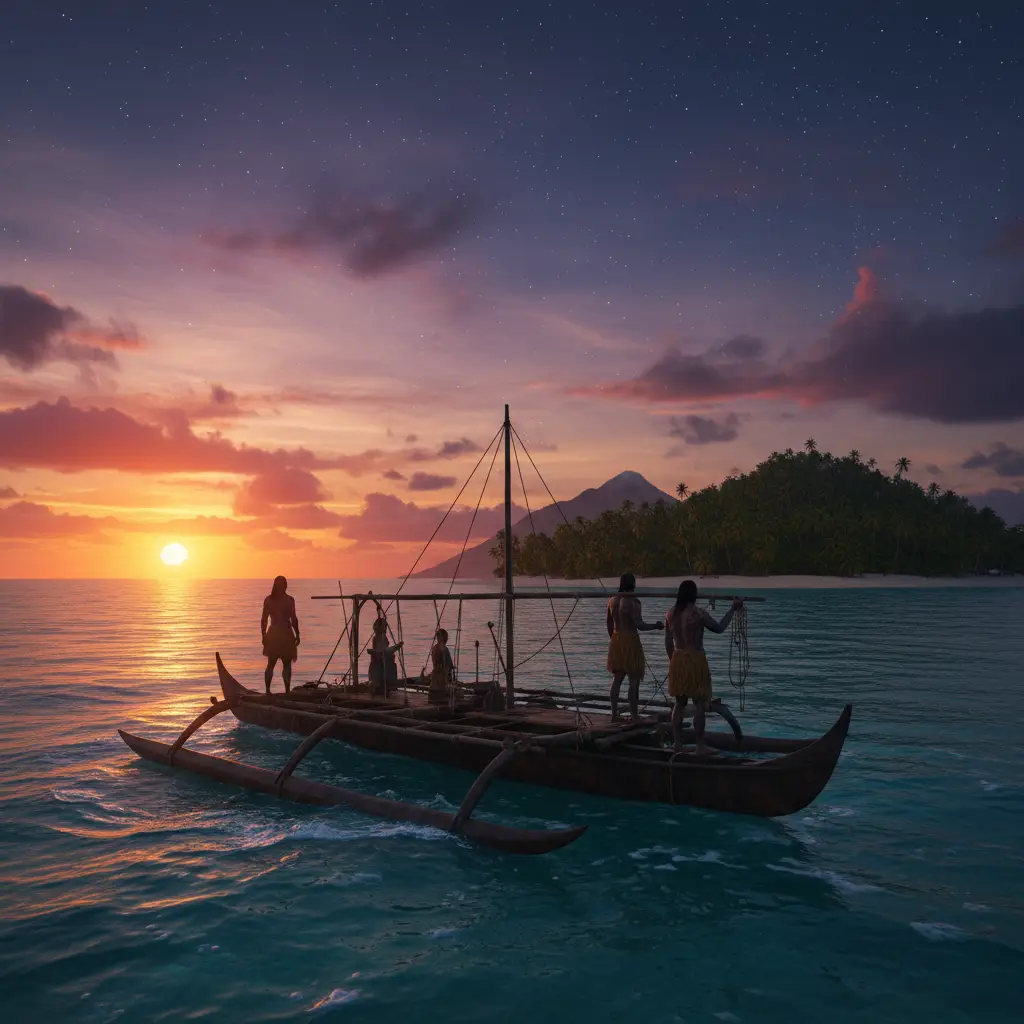
The human history of Vanuatu commences with the Lapita cultural complex. Around 1200 BC, a wave of seafarers moved out of Southeast Asia, passing through the Bismarck Archipelago near Papua New Guinea, and ventured into the vast unknown of the Remote Pacific. These people are identified by archaeologists as the Lapita, named after the site in New Caledonia where their distinctive pottery was first detailed.
The arrival of the Lapita in Vanuatu marked the first time humans set foot on these islands. Unlike the Solomon Islands or Papua New Guinea to the west, which had been inhabited for tens of thousands of years, Vanuatu was a pristine frontier. The Lapita brought with them a “transported landscape”—a complete survival kit including domesticated pigs, chickens, dogs, and crops like taro and yams. This allowed them to establish permanent settlements almost immediately upon arrival.
The Significance of Lapita Pottery
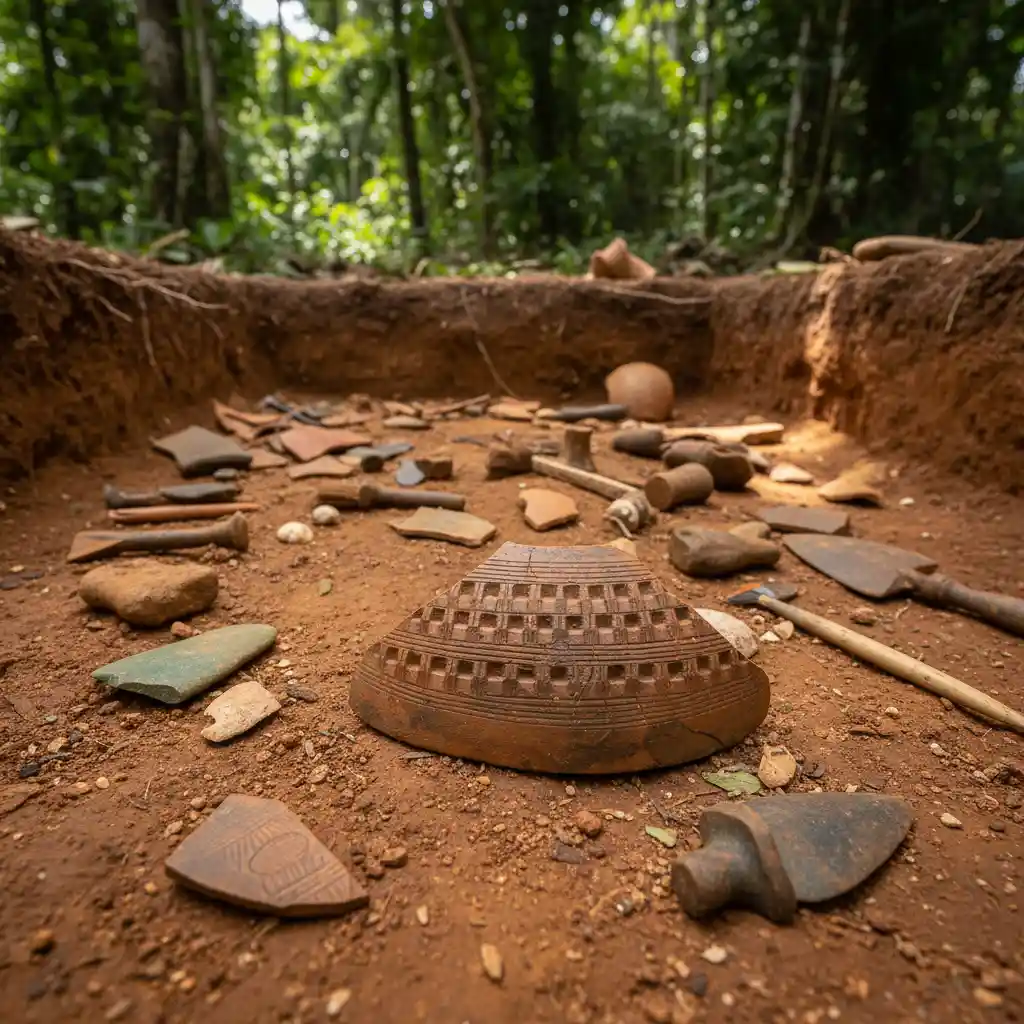
The most defining characteristic of this era is the pottery. Lapita potters created intricate vessels using a paddle-and-anvil technique, decorating them with complex geometric patterns stamped into the wet clay using dentate (tooth-like) tools. These motifs are believed to verify social relationships and clan lineages.
In Vanuatu, shards of this pottery have been found on islands ranging from Malo and Santo in the north to Efate in the center. The uniformity of these designs across thousands of kilometers of ocean suggests a highly connected society where people maintained regular contact between distant islands. However, over the centuries, the pottery styles in Vanuatu began to evolve locally, eventually transitioning into the plainware styles that characterized the later periods.
The Teouma Site: Unlocking Ancient Secrets
What makes the Teouma site globally significant?
In 2004, a serendipitous discovery on the island of Efate changed the world’s understanding of Pacific history. During quarrying operations at Teouma, workers uncovered an ancient cemetery dating back to the earliest days of the Lapita settlement, roughly 3,000 years ago. It is the oldest and largest Lapita cemetery ever found.
The Teouma site has provided an unprecedented wealth of information regarding the burial practices, diet, and genetics of the first ni-Vanuatu. Archaeologists excavated dozens of skeletons, many of which displayed a unique mortuary practice: the removal of the skull. In many cases, the skulls were removed after the body had decomposed, likely to be used in ancestor worship rituals, while the rest of the skeleton remained in the grave. In some burials, the skulls were replaced with cone shells or pottery rings, indicating a deep spiritual significance attached to the head.
Ancient DNA and the Peopling of the Pacific
The skeletons at Teouma have also been central to modern genetic studies. DNA analysis reveals that these initial settlers were genetically distinct from the Melanesian populations of Papua New Guinea at the time. They possessed ancestry primarily linked to Indigenous Taiwanese and Southeast Asian groups (Austronesian).
However, the genetic history of Vanuatu is dynamic. In the centuries following the initial settlement, there was a significant influx of Papuan males from the west. This migration blended with the original Lapita population, creating the genetic makeup of modern ni-Vanuatu people. This evidence confirms that ancient Vanuatu was not an isolated outpost but a bustling hub of migration and interaction between different cultural groups.
The Transition to Mangaasi and Cultural Diversification
How did culture evolve after the Lapita era?
Around 2,500 years ago, the distinct Lapita pottery began to disappear, replaced by a style known as Mangaasi. Named after a site on the west coast of Efate, Mangaasi pottery is characterized by incised and applied relief designs rather than the dentate stamping of the Lapita. This shift marks the beginning of the “Post-Lapita” period, where island cultures began to diverge and specialize.
During this era, the linguistic landscape of Vanuatu began to fracture. The rugged geography of the islands—dense jungles, steep volcanic peaks, and open ocean channels—encouraged isolation between communities. Over millennia, this isolation fostered the development of over 100 distinct languages, making Vanuatu one of the most linguistically dense nations on Earth relative to its population.
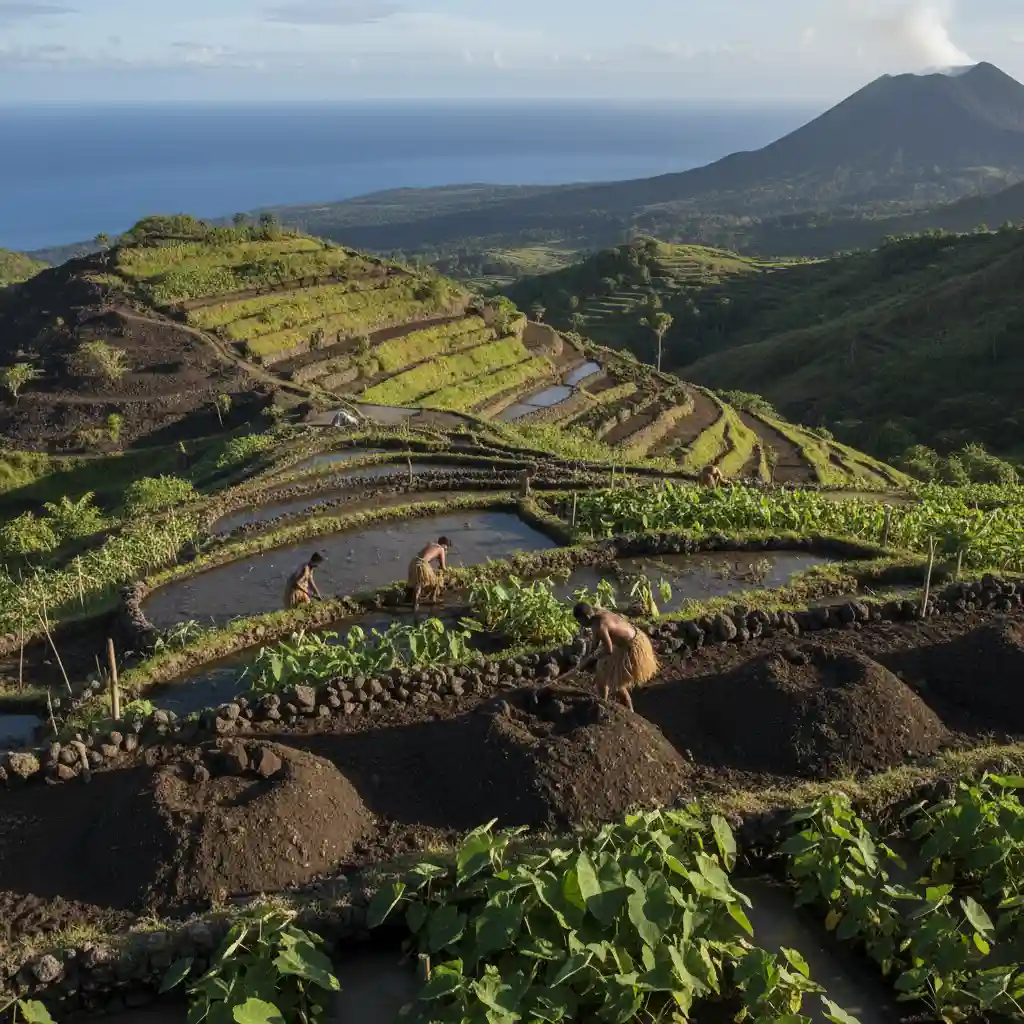
Settlement patterns also shifted. While Lapita settlements were strictly coastal (likely for easy access to canoes and reef resources), later ancient populations began to move inland. They cleared forests for swidden (slash-and-burn) agriculture, cultivating taro, yams, and bananas on the fertile volcanic slopes. This move inland necessitated new social structures to manage land rights and resources.
The Legend and Archaeology of Chief Roi Mata
Is the legend of Chief Roi Mata true?
One of the most compelling intersections of oral history and archaeology in the Pacific is the story of Chief Roi Mata. According to oral tradition, Roi Mata was a powerful paramount chief who reigned in central Vanuatu (Efate, Lelepa, and Artok islands) around the late 16th or early 17th century—the twilight of the pre-colonial era.
Legend states that Roi Mata united warring tribes and established a system of peace known as the “Naflak.” However, his reign ended in tragedy when he was poisoned by his brother. His body was taken to Artok Island (Hat Island) for burial. The oral history claimed that many of his family and supporters voluntarily sacrificed themselves to be buried with him to accompany him to the afterlife.
For centuries, locals refused to live on Artok Island, considering it tapu (sacred/forbidden). In 1967, French archaeologist José Garanger, guided by local custom owners, excavated the site identified in the legends. The results were astonishing. Garanger found a mass burial site containing the skeleton of a high-ranking male adorned with pig tusk bracelets and shell ornaments, surrounded by over 40 other skeletons. The arrangement of the bodies matched the oral descriptions of the sacrifice perfectly. This discovery resulted in Chief Roi Mata’s Domain becoming Vanuatu’s first UNESCO World Heritage site, proving that oral histories can preserve accurate historical records for centuries.
Ancient Social Structures and the Nimangki
How was ancient society organized?
Ancient Vanuatu was not a monolithic kingdom but a patchwork of independent communities, each with its own leadership structures. In the northern islands, societies were often organized around the Nimangki (graded society) system. This was a meritocratic hierarchy where men (and in some variations, women) could rise in rank by acquiring wealth—primarily in the form of pigs with curved tusks—and sponsoring lavish feasts.
The circle of the pig’s tusk was a primary symbol of power. By removing the upper canines of a male pig, the lower tusks would grow unimpeded, eventually curling back to pierce the jaw and forming a complete circle. These pigs were incredibly valuable and served as the currency of the ancient economy. A man who could breed such pigs and afford to slaughter them for the community proved his mana (spiritual power) and ability to provide.
In the southern islands, distinct from the northern Nimangki system, leadership was often hereditary, with titles passed down through bloodlines. These contrasting systems highlight the cultural diversity that evolved in the archipelago prior to European contact.
Oral Histories and Sand Drawings
How was history recorded without writing?
Before the arrival of Europeans, the people of Vanuatu did not use a written alphabet. Instead, they relied on sophisticated oral traditions and visual mnemonics to preserve their history, genealogy, and legal codes. The most visually striking of these is the tradition of Sand Drawing (Sandroing), specifically originating from the islands of Pentecost, Ambae, and Maewo.
Sand drawing is not merely artistic; it is a complex form of communication. An expert drawer uses a single continuous finger line to create a geometric grid in the sand or volcanic ash. As they draw, they recite a story, a legend, or a philosophical concept. The drawing serves as a map of the narrative. Once the story is finished, the drawing is wiped away, emphasizing the ephemeral nature of the medium and the importance of the live transmission of knowledge.
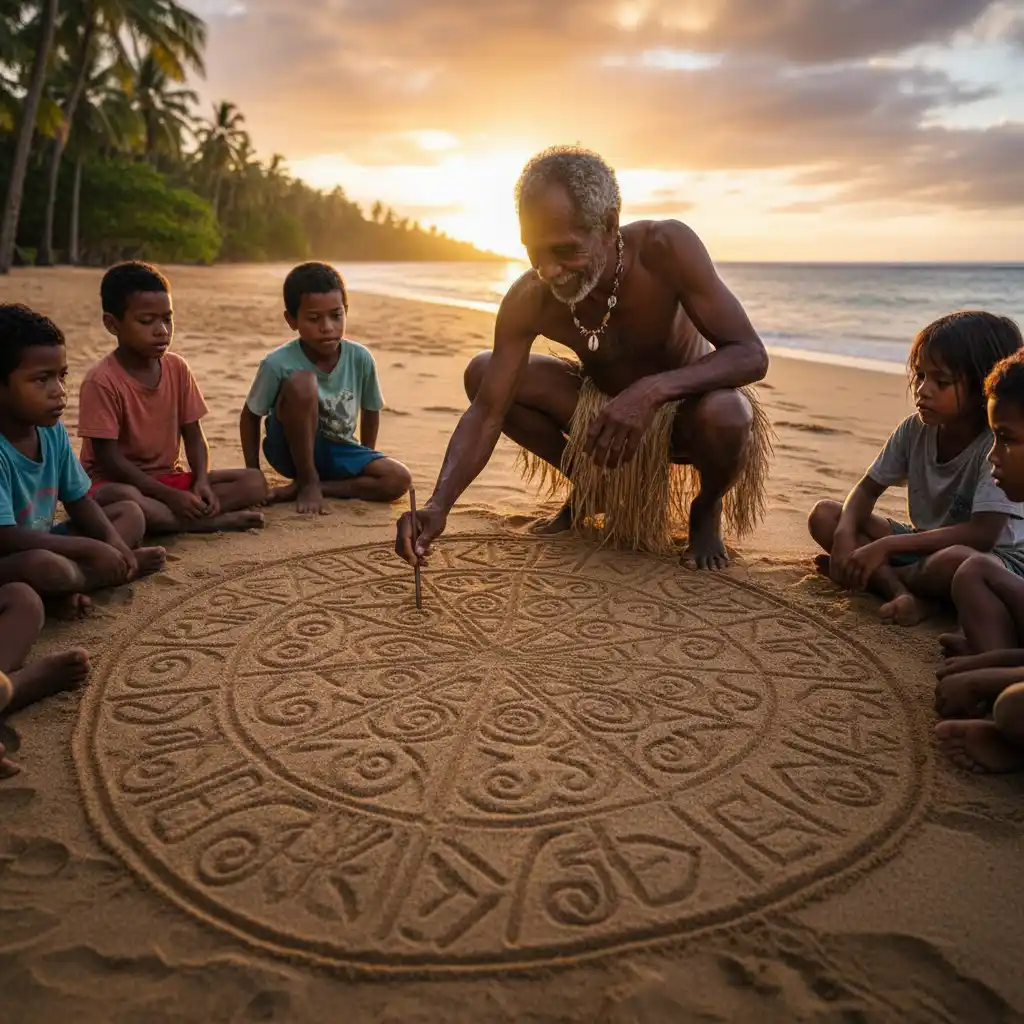
UNESCO has recognized Vanuatu Sand Drawing as a Masterpiece of the Oral and Intangible Heritage of Humanity. These drawings were used to facilitate exchange between islands with different languages, acting as a lingua franca of symbols that transcended spoken barriers.
The Legacy of the Ancients
The ancient history of Vanuatu is a narrative of exploration, adaptation, and deep spiritual connection to the land and sea. From the intrepid Lapita voyagers who navigated the vast ocean without instruments to the complex social engineers like Chief Roi Mata, the ancestors of the ni-Vanuatu people built a sophisticated civilization. Today, the archaeological sites at Teouma and the living traditions of the Nimangki and Sand Drawing stand as powerful reminders of this enduring heritage, drawing visitors and scholars alike to marvel at the depth of Vanuatu’s past.
People Also Ask
When was Vanuatu first inhabited?
Vanuatu was first inhabited approximately 3,000 years ago (around 1200-1000 BC) by the Lapita people. These Austronesian seafarers arrived from the west, likely via the Solomon Islands and Papua New Guinea, bringing with them pottery, domesticated animals, and agriculture.
What is the significance of the Lapita culture in Vanuatu?
The Lapita culture represents the founding population of Vanuatu. They are the ancestors of modern ni-Vanuatu people and are famous for their navigational skills and distinctive dentate-stamped pottery. Their arrival marks the beginning of human history in the archipelago.
Who was Chief Roi Mata?
Chief Roi Mata was a powerful 16th or 17th-century leader in central Vanuatu who united warring tribes. His life and tragic death are recorded in oral history, which was famously confirmed by archaeological excavations in 1967 that uncovered his mass burial site on Artok Island.
What is the Teouma archaeological site?
Teouma, located on Efate island, is the oldest and largest Lapita cemetery ever discovered. Dating back 3,000 years, it has provided crucial evidence regarding the burial customs (such as skull removal), diet, and genetics of the first settlers of the Pacific.
Did ancient Vanuatu have a writing system?
Ancient Vanuatu did not have a written alphabet. Instead, history and knowledge were preserved through oral traditions, songs, dances, and complex visual mnemonics like Sand Drawing (Sandroing), which is now a UNESCO Intangible Cultural Heritage.
What is the Nimangki system?
The Nimangki is a traditional graded social system found primarily in northern Vanuatu. It allows men to rise in rank and gain status by acquiring wealth (usually pigs with curved tusks) and sponsoring feasts, rather than inheriting power through birth.