
Vanuatu rites of passage are deeply rooted in kastom, marking pivotal life transitions through communal ceremonies. These events, spanning birth, coming-of-age, marriage, and death, invariably involve the exchange of symbolic wealth like pigs and woven mats, reinforcing social bonds and spiritual connections across the archipelago’s diverse tribal groups.
What are the Birth Rituals in Vanuatu Culture?
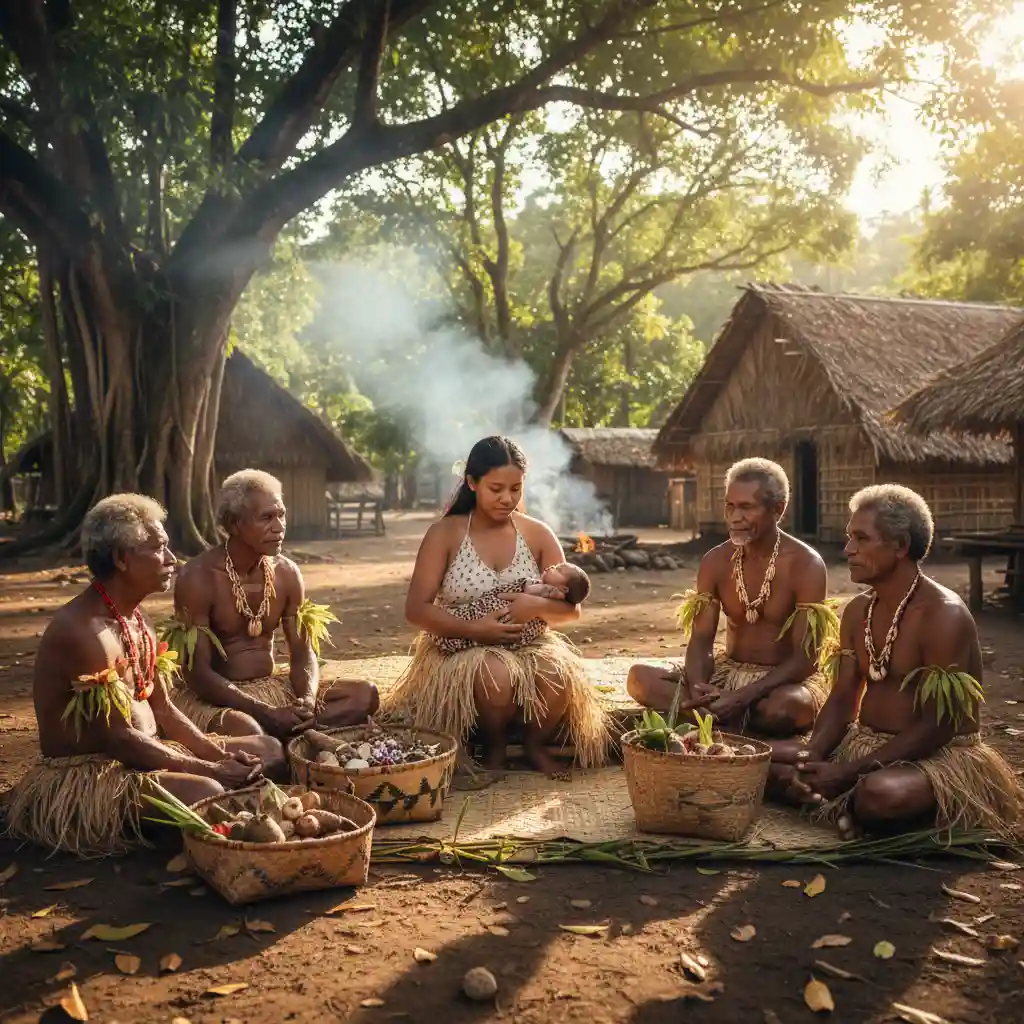
In the diverse archipelago of Vanuatu, the birth of a child is not merely a biological event but a profound expansion of the clan’s spiritual and social network. The rituals surrounding birth are designed to protect the newborn from malevolent spirits and to formally introduce the child to their ancestral lineage. While customs vary significantly across the 83 islands, the underlying principle of kastom remains consistent: the child belongs to the community as much as to the parents.
Immediately following birth, there is often a period of seclusion for the mother and child. In many traditional villages on islands like Tanna and Malekula, this period can last up to ten days. This isolation serves a dual purpose: it protects the vulnerable infant from physical infection and shields them from spiritual harm during a liminal phase where their soul is believed to be not yet fully anchored to the physical world. During this time, only female relatives are typically permitted to visit, providing care and ensuring the mother recovers her strength.
The most significant event following birth is the naming ceremony. A name in Vanuatu is not just a label; it is a title that carries the weight of history. Names are often recycled from ancestors, effectively reincarnating the spirit or character of a deceased relative. On the island of Ambae, the father’s sister (the paternal aunt) often plays a crucial role in naming the child, reinforcing the complex web of kinship obligations that will define the child’s life. This ceremony is almost always accompanied by a feast, where the father must kill a pig—the ultimate currency of value in Melanesian culture—to validate the child’s legitimacy and status within the village.
The Role of the Avunculate
A distinctive feature of Vanuatu’s social structure, which begins at birth, is the relationship between a child and their maternal uncle. In anthropology, this is known as the avunculate. The mother’s brother is often the most significant male figure in a child’s life, sometimes even more so than the biological father regarding discipline and inheritance of certain ritual rights. At the birth ceremony, the maternal uncle is presented with gifts, often including mats and yams, acknowledging his future role as the child’s mentor and protector. This exchange establishes a debt of gratitude and mutual obligation that will persist until death.
How are Coming-of-Age Ceremonies Celebrated?
The transition from childhood to adulthood is perhaps the most visually spectacular and culturally rigorous phase in Vanuatu’s rites of passage. For boys, this transition involves proving bravery, enduring pain, and acquiring the secret knowledge of the tribe. For girls, it involves rituals signifying fertility and domestic mastery. These ceremonies sever the child’s exclusive bond with the mother and integrate them into the wider hierarchy of adult society.
The Naghol: Land Diving of Pentecost
The most famous coming-of-age ritual in Vanuatu, and arguably the world, is the Naghol (land diving) practiced on Pentecost Island. While now a major tourist attraction, its roots are deeply spiritual. Occurring during the yam harvest season (April to June), young men jump from wooden towers reaching heights of 20 to 30 meters, with only tree vines tied to their ankles. This is not merely a display of testosterone; it is a ritual to bless the earth. As the diver’s shoulders brush the ground, it is believed to fertilize the soil for the coming year’s yam crop.
For a young boy, his first jump is a monumental rite of passage. He may start from the lowest platform, but the act of jumping signifies his transition into the sphere of men. Before diving, the initiate settles any disputes and airs grievances, as the jump is considered a brush with death. The successful completion of the dive washes away his childhood status, and he is reborn as a man of courage.

Circumcision and Seclusion
On islands like Tanna and Malekula, circumcision represents the definitive break from the world of women. Boys, usually between the ages of 7 and 12, are taken into the bush for a period of weeks. During this seclusion, they are circumcised—traditionally using bamboo knives, though Western medicine is increasingly common—and taught the lore of their clan, medicinal plant knowledge, and the rules of kastom. They are strictly forbidden from seeing women, including their mothers. The return to the village is marked by a massive celebration. The boys, now considered clean and initiated, are presented to the community in new attire, often covered in turmeric and coconut oil, symbolizing their rebirth.
What is the Significance of Bride Price in Vanuatu?
Marriage in Vanuatu is rarely a simple union between two individuals; it is a binding treaty between two extended families or clans. The concept of “Bride Price” is central to this rite of passage. It is crucial to understand that in the context of Vanuatu kastom, this is not a purchase of a human being. Rather, it is a compensation to the bride’s family for the loss of a productive member and a gesture of appreciation for raising her.
The negotiation of the bride price can take months. Traditionally, currency includes circle-tusked pigs (the tusks’ curvature determines value), long red woven mats (on Pentecost and Ambae), and yams. In modern times, cash is often included, but it rarely replaces the traditional items entirely. A marriage without the exchange of pigs is often considered illegitimate in the eyes of the village chiefs. On the island of Ambae, the exchange of intricate, red-dyed mats is particularly vital. These mats are women’s wealth, produced through months of labor, and their exchange validates the woman’s status in the new family.

The wedding ceremony itself is a blend of solemn exchange and joyous feasting. The bride is often physically escorted by her uncles and brothers to the groom’s village, symbolizing the transfer of responsibility. Upon arrival, the groom’s family must present the agreed-upon items. If the bride’s family feels the pigs are not of sufficient quality (e.g., the tusks are not curved enough), they may refuse to proceed until the offer is improved. This highlights the transactional nature of the alliance—it must be balanced to ensure future harmony between the clans.
How are Funeral Customs and Death Observed?
Death is viewed as the final rite of passage, a journey where the spirit transitions from the world of the living to the world of the ancestors. In Vanuatu cosmology, the dead do not leave; they remain as active participants in the community, capable of blessing or cursing the living based on how well kastom is followed. Funeral rites are therefore the most elaborate and expensive of all ceremonies, often bankrupting families to ensure the deceased is honored correctly.
The Journey to the Volcano
Beliefs regarding the afterlife vary, but a common thread, particularly in the southern islands like Tanna, is the belief that spirits travel to a specific location—often a volcano like Mount Yasur. The funeral rituals are intended to facilitate this journey. If the rituals are not performed correctly, the spirit may become an earthbound ghost, causing sickness and misfortune in the village.
Burial usually takes place within 24 hours due to the tropical climate. However, the mourning period extends far beyond. The “100 Days” is a critical concept in Vanuatu mortuary customs. Following the death, the immediate family enters a strict mourning period where they may refrain from certain foods, shaving, or socializing. This period culminates in a massive feast on the 100th day. This feast marks the end of formal mourning and the final departure of the spirit to the ancestral realm. It is at this feast that the debts of the deceased are settled, and the family distributes yams and pigs to those who assisted with the burial.

The Grade-Taking Ceremonies
On islands like Malekula and Ambrym, a man’s status in the afterlife is determined by the rank he achieved while alive. This is known as the Nimangki or grade-taking system. Throughout his life, a man ascends through various social ranks by killing pigs of increasing value and hosting feasts. At his funeral, his rank determines the elaborateness of the ceremony. A “Big Man” or Chief who has reached high grades will have a funeral attended by hundreds, with specific rhythms beaten on the tam-tams (slit drums) to announce his passing to the valleys. His skull may be preserved or modeled in clay (as seen in the famous rambaramp figures of Malekula) to serve as a vessel for his spirit, allowing the living to continue consulting him.
Modern Adaptations of Ancient Kastom
Today, Vanuatu rites of passage exist in a delicate balance between ancient tradition and modern Christianity. Missionaries arrived in the 19th century, and while they successfully introduced Christian weddings and burials, they rarely succeeded in eradicating the underlying kastom. Instead, a syncretic culture emerged. A child might be baptized in a church on Sunday, but the father will still kill a pig for the maternal uncle on Monday. A couple may have a white wedding with a veil and cake, but it will only happen after the traditional bride price of mats and pigs has been settled. This resilience of culture ensures that for the Ni-Vanuatu people, the cycle of life remains firmly anchored in the wisdom of their ancestors.
What is the bride price in Vanuatu?
The bride price is a traditional exchange where the groom’s family gives gifts to the bride’s family to validate the marriage. It typically involves tusked pigs, woven mats, yams, and increasingly, cash. It signifies appreciation for the bride’s upbringing and compensates her family for the loss of her labor.
What is the Naghol ceremony?
The Naghol, or land diving, is a fertility rite performed by men on Pentecost Island. Divers jump from tall wooden towers with vines tied to their ankles. It is a coming-of-age ritual that demonstrates bravery and is believed to ensure a bountiful yam harvest.
How do people in Vanuatu bury their dead?
Burials usually occur within 24 hours. The body is wrapped in traditional mats. The community observes a mourning period that ends with a major feast, typically around 100 days after death, to guide the spirit to the afterlife and settle social debts.
What is the role of pigs in Vanuatu culture?
Pigs, specifically those with curved tusks, are the primary form of traditional currency and wealth in Vanuatu. They are essential for all rites of passage, including paying bride price, validating chiefly status (Nimangki), and resolving disputes.
What does Kastom mean in Vanuatu?
‘Kastom’ refers to the traditional culture, laws, religions, and arts of Vanuatu. It encompasses the rules governing rites of passage, land ownership, and community structure, existing alongside modern laws and Christianity.
Are arranged marriages common in Vanuatu?
While “love matches” are becoming more common in urban areas like Port Vila, arranged marriages or unions heavily influenced by family negotiation remain common in rural areas to strengthen clan alliances and land rights.