
The New Hebrides Condominium was a unique form of colonial government established in 1906, wherein Great Britain and France exercised joint sovereignty over the archipelago now known as Vanuatu. Often referred to as the “Pandemonium,” this arrangement created separate legal systems, police forces, and public services for British and French nationals, lasting until independence in 1980.
How was the New Hebrides Condominium Established?
The formation of the New Hebrides Condominium was not born out of a desire for cooperative governance, but rather from a diplomatic stalemate between two European powers competing for influence in the South Pacific. By the late 19th century, both the British Empire and the French Third Republic had significant interests in the New Hebrides archipelago.
British missionaries, primarily Presbyterians and Anglicans, had been active in the islands for decades, establishing a moral and cultural foothold. Simultaneously, French settlers, known as colons, had begun acquiring vast tracts of land for coconut and coffee plantations, heavily supported by the administration in nearby New Caledonia. The tension between these groups threatened to escalate into open conflict.
Neither nation was willing to cede control to the other, yet neither was prepared to go to war over the remote islands. The initial attempt at a solution was the establishment of the Joint Naval Commission in 1887, charged with protecting the lives and property of French and British subjects. However, this proved ineffective as the commission lacked the authority to govern civil matters or land disputes.
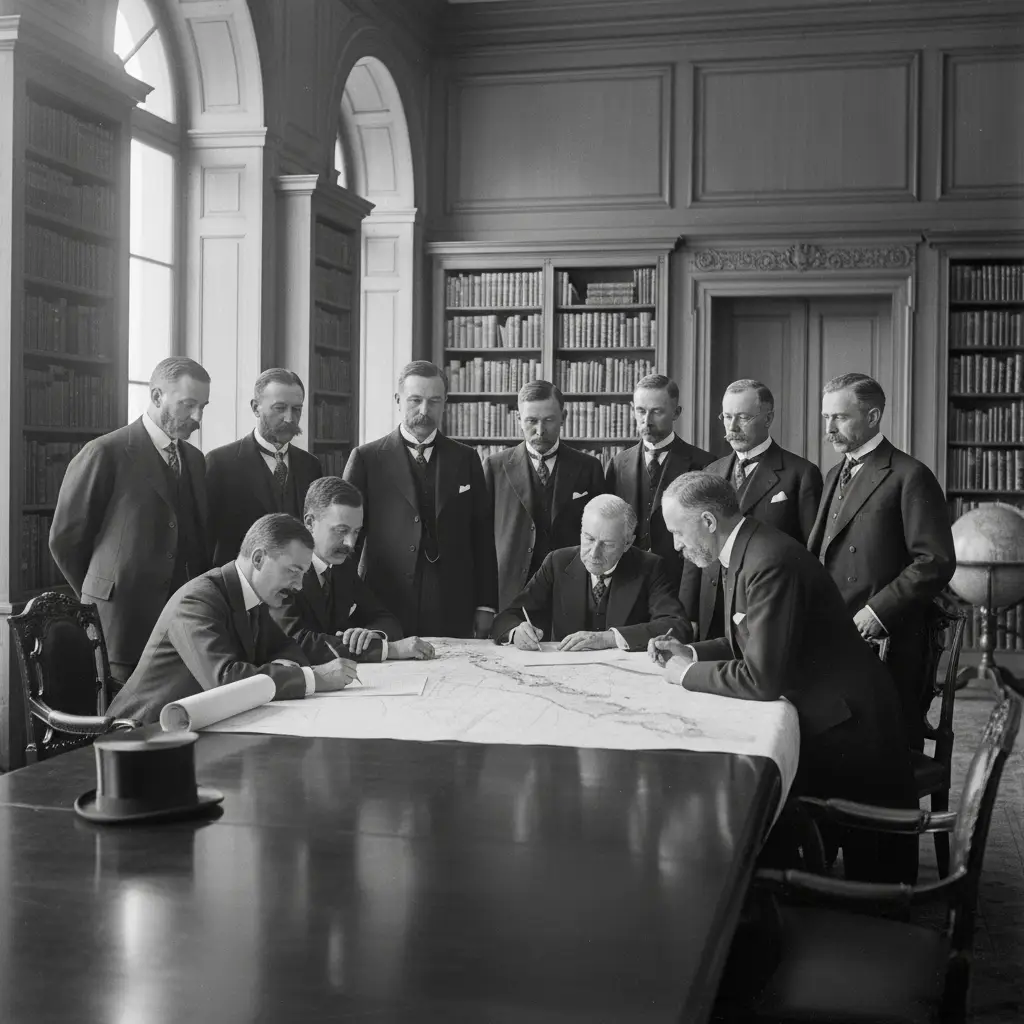
The diplomatic impasse was finally resolved—on paper, at least—with the signing of the Anglo-French Convention of 1906. This agreement formally created the Condominium, a territory of joint sovereignty. It was a compromise designed to prevent one power from dominating the other, but it inadvertently created one of the most complex and bureaucratic administrative systems in colonial history.
What was the Structure of the Dual Administration?
The administrative structure of the New Hebrides Condominium was a bureaucratic marvel that often defied logic. Unlike a standard colony with a single governor and legal framework, the New Hebrides operated under three simultaneous governments.
The Three Governments
To satisfy the requirements of joint sovereignty, the administration was divided into three distinct distinct apparatuses:
- The British National Service: Responsible for British subjects and visitors from other countries who opted to be governed by British law. It had its own Resident Commissioner, police force, and administrative staff.
- The French National Service: Responsible for French citizens and subjects. Like the British, they maintained their own Resident Commissioner, police (Gendarmerie), and civil servants.
- The Joint Administration: Responsible for services common to both populations, such as the post office, public works, customs, and the Joint Court.
The Indigenous population, the Ni-Vanuatu, were officially stateless. They were neither subjects of the British Crown nor citizens of France. Consequently, they often had no clear legal standing and could be tried under either system depending on the circumstances, though they were technically under the jurisdiction of the Joint Court for native affairs.
Why was it called the “Pandemonium”?
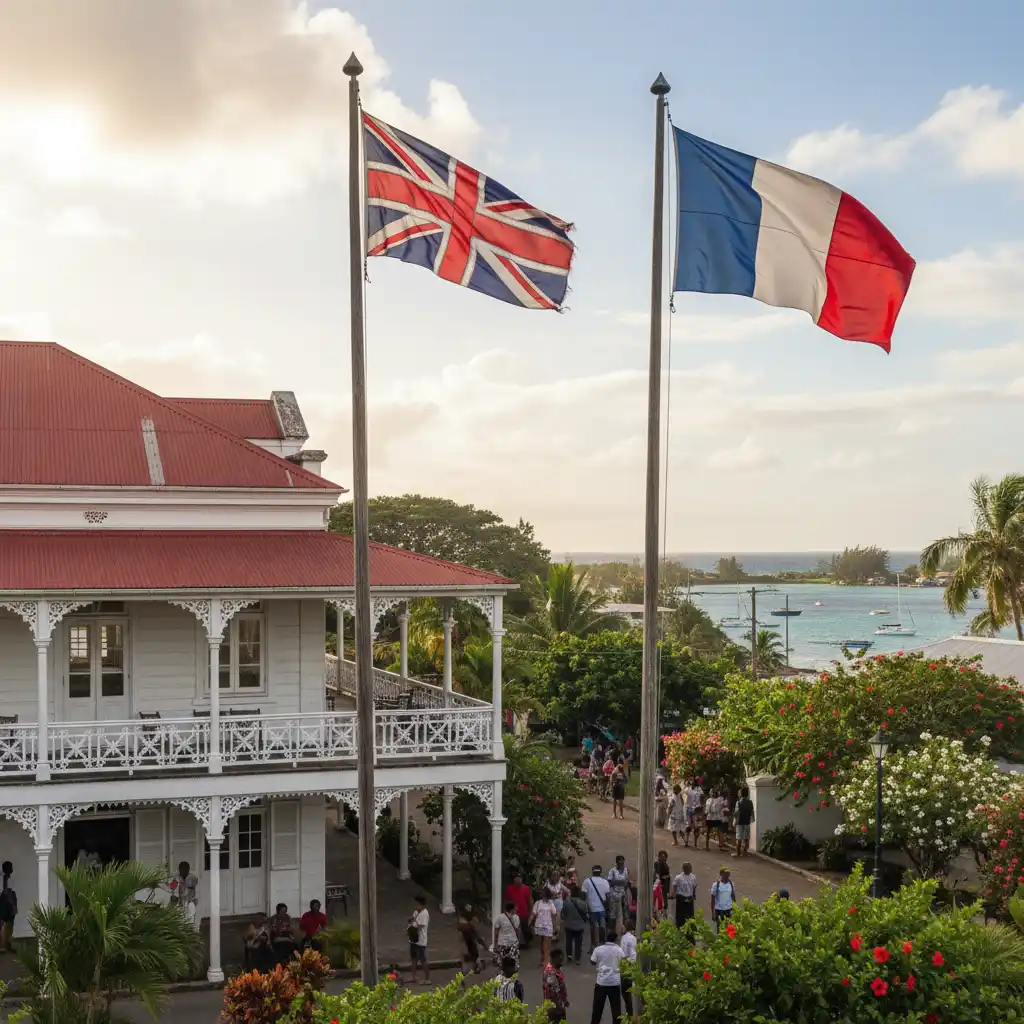
The duplication of services and the clash of legal traditions earned the New Hebrides Condominium the satirical nickname “The Pandemonium.” This moniker was well-deserved, as the day-to-day reality of the administration was often chaotic and inefficient.
The capital, Port Vila, hosted two police forces, two prison systems, two hospitals, and two education systems. The British police force followed British common law procedures, while the French Gendarmerie operated under the Napoleonic Code. This duality extended to currency; both the Australian Pound (later the Australian Dollar) and the New Hebrides Franc were legal tender. Prices in stores were often displayed in both currencies, and savvy shoppers would calculate the exchange rate daily to determine which currency offered the better deal.
The Judicial Maze
Perhaps the most emblematic feature of the Pandemonium was the Joint Court. Established to handle land disputes and cases involving both French and British nationals, the court was designed to be neutral. To achieve this, the President of the Joint Court was appointed by the King of Spain. The Public Prosecutor was appointed by the President of Switzerland, and the Registrar was Dutch.
Court proceedings were a linguistic juggling act. Arguments were heard in English and French, but the neutral President often spoke neither fluently, requiring a third layer of translation. This cumbersome process meant that land disputes could drag on for decades without resolution.
What were the Social and Economic Impacts?
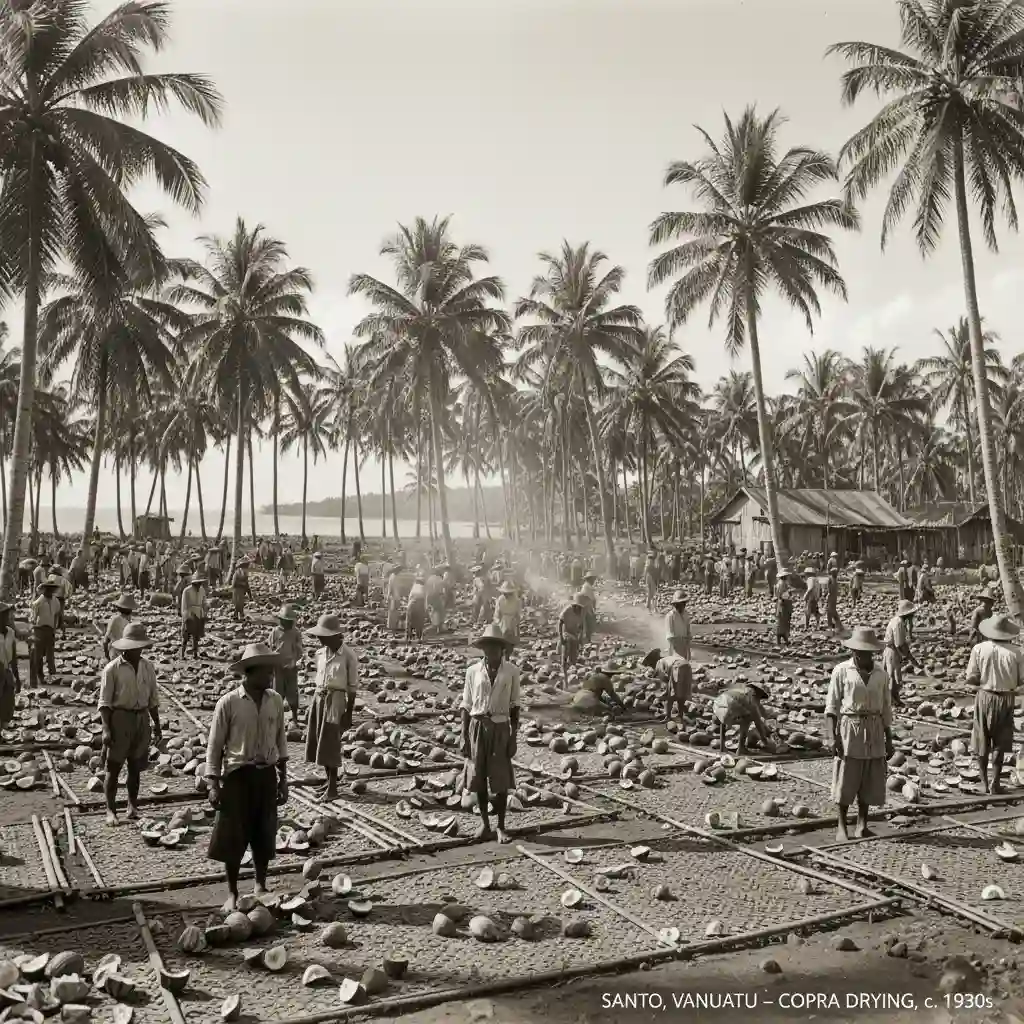
Despite the administrative chaos, the Condominium era brought significant changes to the social and economic fabric of the islands. The driving force of the colonial economy was agriculture, specifically copra (dried coconut meat), cocoa, and coffee.
The Plantation Economy
French settlers were generally more aggressive in land acquisition than their British counterparts. By the 1920s, French plantations dominated the economy. The labor for these plantations was initially sourced through the controversial practice of “blackbirding”—coercing or kidnapping islanders to work in Queensland or Fiji—but within the New Hebrides, it evolved into an internal indentured labor system.
The economic disparity between the colonizers and the Ni-Vanuatu was stark. While Port Vila developed into a quaint colonial town with European amenities, the outer islands remained largely underdeveloped, relying on subsistence agriculture and the small cash income generated from copra trading.
Missionary Influence and Education
Education was almost entirely in the hands of the churches. The British administration supported Protestant missions (Presbyterian, Anglican), which taught in English. The French administration supported Catholic missions, which taught in French. This created a linguistic and cultural divide within the Ni-Vanuatu population that persists to this day.
“Anglophone” Ni-Vanuatu tended to look toward Australia and New Zealand for higher education and trade, while “Francophone” Ni-Vanuatu looked toward New Caledonia and France. This division would later play a critical role in the political parties formed during the push for independence.
What were the Major Challenges of Governance?
The inherent inefficiency of the Condominium made responding to crises difficult. Decisions required consensus between the British and French Resident Commissioners. If they disagreed, the matter was referred to the High Commissioners in Fiji (British) and New Caledonia (French), or even back to London and Paris.
World War II and the American Arrival
The fragility of the Condominium was exposed during World War II. When France fell to Germany in 1940, the French administration in the New Hebrides was one of the first overseas territories to declare allegiance to Free France under Charles de Gaulle. However, the arrival of hundreds of thousands of American troops in 1942 transformed the archipelago.
The Americans built roads, airfields (including Bauerfield International Airport), and hospitals at a speed that baffled the slow-moving colonial administration. For the Ni-Vanuatu, seeing African-American soldiers serving in the U.S. military with better supplies and apparent equality compared to the colonial subjects sparked new ideas about race and governance. This period sowed the seeds for cargo cults, such as the John Frum movement on Tanna, and early nationalist sentiments.
How did the Condominium End?
The path to ending the Condominium was rocky, complicated by the very dual nature of its existence. By the 1970s, the “winds of change” were blowing through the Pacific. Britain, shedding its empire, was generally supportive of granting independence. France, however, fearing a domino effect that might destabilize its hold on mineral-rich New Caledonia, was reluctant.
Political Polarization
Political parties formed along the linguistic lines established by the colonial education systems. The Vanua’aku Pati (VP), led by Father Walter Lini and supported by the Anglophone population, pushed for immediate independence and land reform. Moderate and Francophone parties, often supported by French settlers and the French administration, favored a slower transition or continued association with France.
The Coconut War
Tensions culminated in 1980 with the so-called “Coconut War.” As independence approached, separatist movements emerged on the islands of Espiritu Santo and Tanna, driven by French settlers and the Nagriamel movement, who feared the centralization of power by the Vanua’aku Pati. The Condominium government, paralyzed by the disagreement between Britain (willing to intervene) and France (refusing to use force against Francophones), failed to suppress the rebellion effectively.
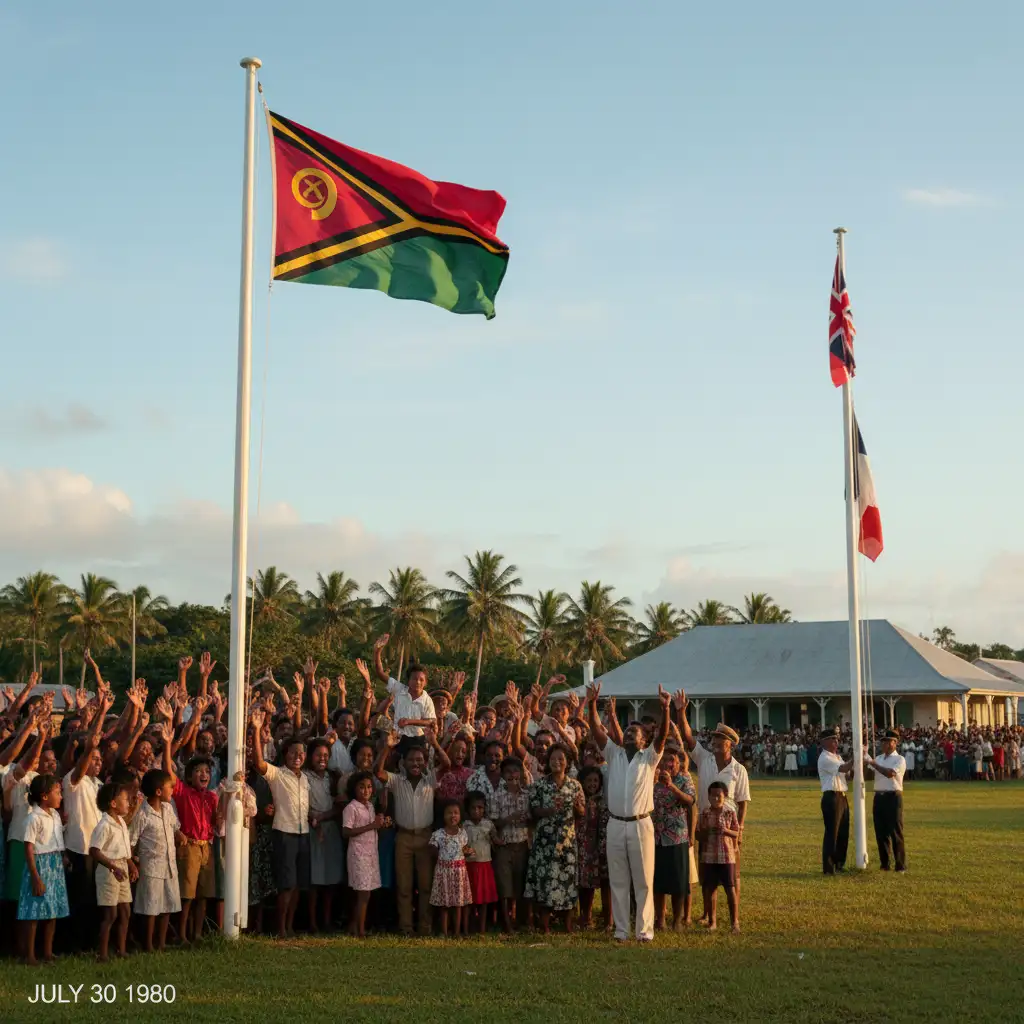
It was only after the official declaration of independence on July 30, 1980, that the new government of Vanuatu requested assistance from Papua New Guinea to quell the separatists. The Condominium officially ceased to exist, leaving behind a new nation with a complex heritage.
The Modern Legacy for Travelers
For the modern traveler visiting Vanuatu, the legacy of the New Hebrides Condominium is a fascinating cultural layer. It is one of the few places in the Pacific where you can find excellent French cuisine and wine served in a bistro, only to walk next door to a pub serving English ale.
The legal system and parliament operate in English, French, and Bislama (the pidgin language that evolved to bridge the gap). Travelers will notice that signboards, official documents, and schools still reflect this dual heritage. Understanding the “Pandemonium” provides a deeper appreciation for the resilience of the Ni-Vanuatu people, who navigated two colonial masters to forge a unique national identity.
What countries governed the New Hebrides Condominium?
The New Hebrides Condominium was governed jointly by the United Kingdom and France. This dual administration was established in 1906 and lasted until 1980.
Why was the New Hebrides called the Pandemonium?
It was nicknamed the “Pandemonium” due to the chaotic nature of having two separate legal systems, police forces, currencies, and prison systems operating simultaneously in the same territory.
When did the New Hebrides gain independence?
The New Hebrides gained independence on July 30, 1980, and was renamed the Republic of Vanuatu.
What currency was used during the Condominium era?
Both the Australian Pound (later Australian Dollar) and the New Hebrides Franc were legal tender. French currency was also widely circulated, and shops often accepted both.
What was the Coconut War?
The Coconut War was a brief separatist conflict that occurred on the island of Espiritu Santo just before and after Vanuatu’s independence in 1980, involving French settlers and traditional landowners opposing the new central government.
Did the Ni-Vanuatu have citizenship during the Condominium?
Generally, no. The indigenous Ni-Vanuatu were officially stateless. They were not citizens of Britain or France, though they could be tried under the laws of either power depending on the situation.