
Bislama is the constitutionally declared national language of Vanuatu, serving as the primary lingua franca that bridges the communication gap between over 100 distinct indigenous language groups. Unlike English or French, which are official languages for education and commerce, Bislama represents the unique cultural soul, post-colonial resilience, and unified identity of the ni-Vanuatu people.
Introduction: The Voice of the Archipelago
In the South Pacific nation of Vanuatu, language is more than a tool for communication; it is the very fabric of social cohesion. With a population of roughly 300,000 people spread across 83 volcanic islands, Vanuatu holds the distinction of having the highest density of languages per capita in the world. Amidst this dazzling linguistic diversity, the bislama national language stands as the singular unifying force that binds the nation together.
To understand Vanuatu is to understand Bislama. It is not merely a broken form of English, as early colonial observers might have dismissed it, but a fully developed Creole with a distinct Melanesian grammar and a lexical base derived largely from English. It is the language of the marketplace in Port Vila, the language of debate in the Nakamal (meeting house), and the language of the national anthem, “Yumi, Yumi, Yumi.”
Why is Bislama Considered a Unifying Force?
The geography of Vanuatu presents a significant barrier to national unity. The archipelago stretches over 1,300 kilometers of ocean, and historically, isolation between islands—and even between valleys on the same island—resulted in the evolution of over 113 distinct vernacular languages. Without a common tongue, a citizen from Tanna would be unable to communicate with a citizen from Espiritu Santo.
Bislama fills this void. It is the first language for many urban ni-Vanuatu growing up in Port Vila and Luganville, and the second language for nearly everyone else in the rural areas. It democratizes communication, allowing for a horizontal exchange of ideas that bypasses the elitism often associated with the mastery of “metropolitan” languages like English or French.
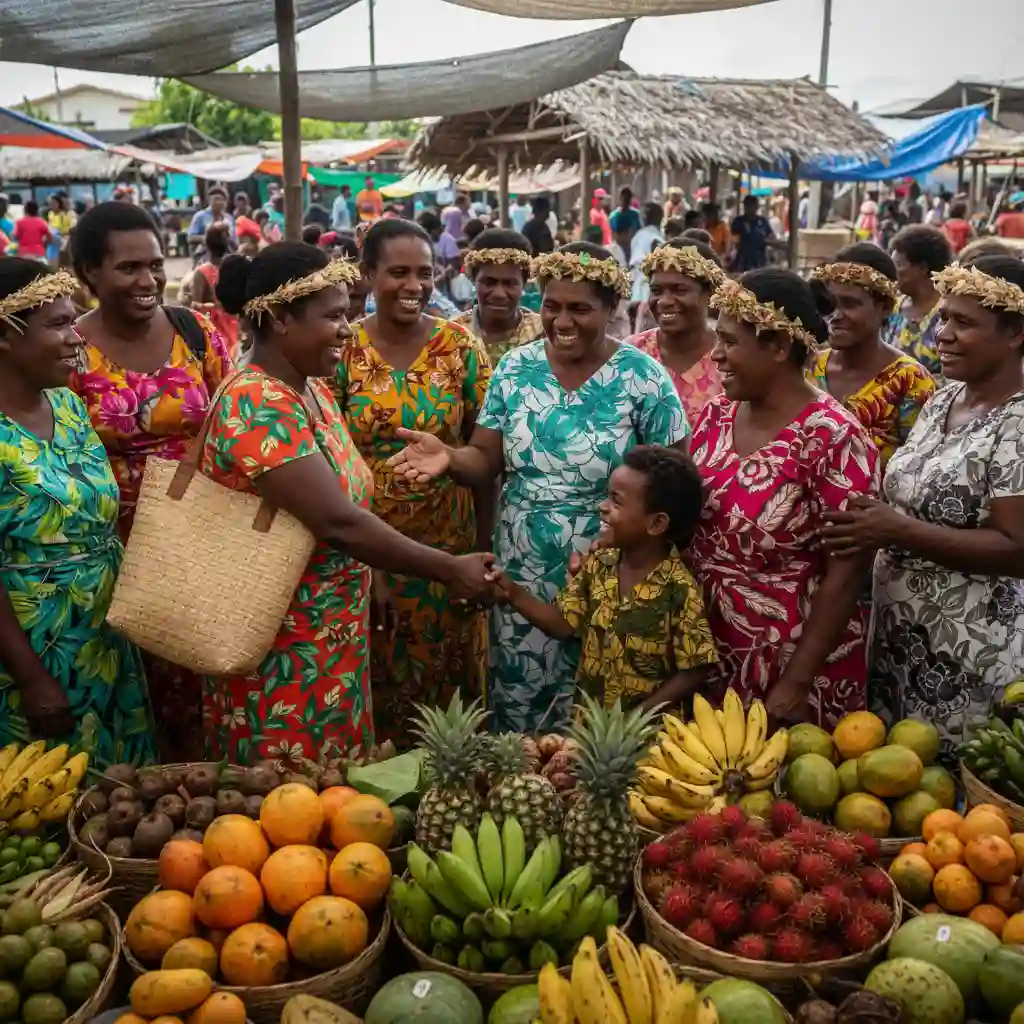
In the context of the bislama national language, unity does not imply uniformity. Bislama allows the ni-Vanuatu to retain their custom (kastom) and local vernaculars while participating in a broader national dialogue. It acts as a bridge, not a bulldozer, facilitating trade, governance, and social interaction without erasing the tribal identities that define the archipelago.
What are the Origins of Bislama?
The history of Bislama is inextricably linked to the painful history of “Blackbirding” in the 19th century. During this period, thousands of ni-Vanuatu and other Pacific Islanders were recruited—often through deception or force—to work on sugar plantations in Queensland (Australia) and Fiji. Thrown together in labor camps with no common language, these workers developed a simplified pidgin English to communicate with overseers and, crucially, with one another.
When these laborers eventually returned to the New Hebrides (now Vanuatu), they brought this pidgin with them. Over generations, it stabilized and expanded. The vocabulary remained predominantly English (about 90-95%), but the grammar shifted to reflect Melanesian thought patterns and syntax. For example, the inclusive and exclusive pronouns found in local vernaculars (distinguishing between “we including you” and “we excluding you”) were incorporated into Bislama as yumi and mifala.
This evolution transformed Bislama from a rudimentary trade language into a creole capable of expressing complex emotional, political, and spiritual concepts. The word “Bislama” itself derives from the Beach-la-Mar (sea cucumber) trade, highlighting its early commercial roots before it blossomed into a symbol of identity.
How Did Bislama Shape Post-Independence Identity?
Prior to independence in 1980, Vanuatu was known as the New Hebrides and was governed by a unique and often chaotic Anglo-French Condominium. This dual colonial structure created a deep divide in society: citizens were educated in either English or French schools, creating separate Anglophone and Francophone elites who often viewed each other with suspicion.
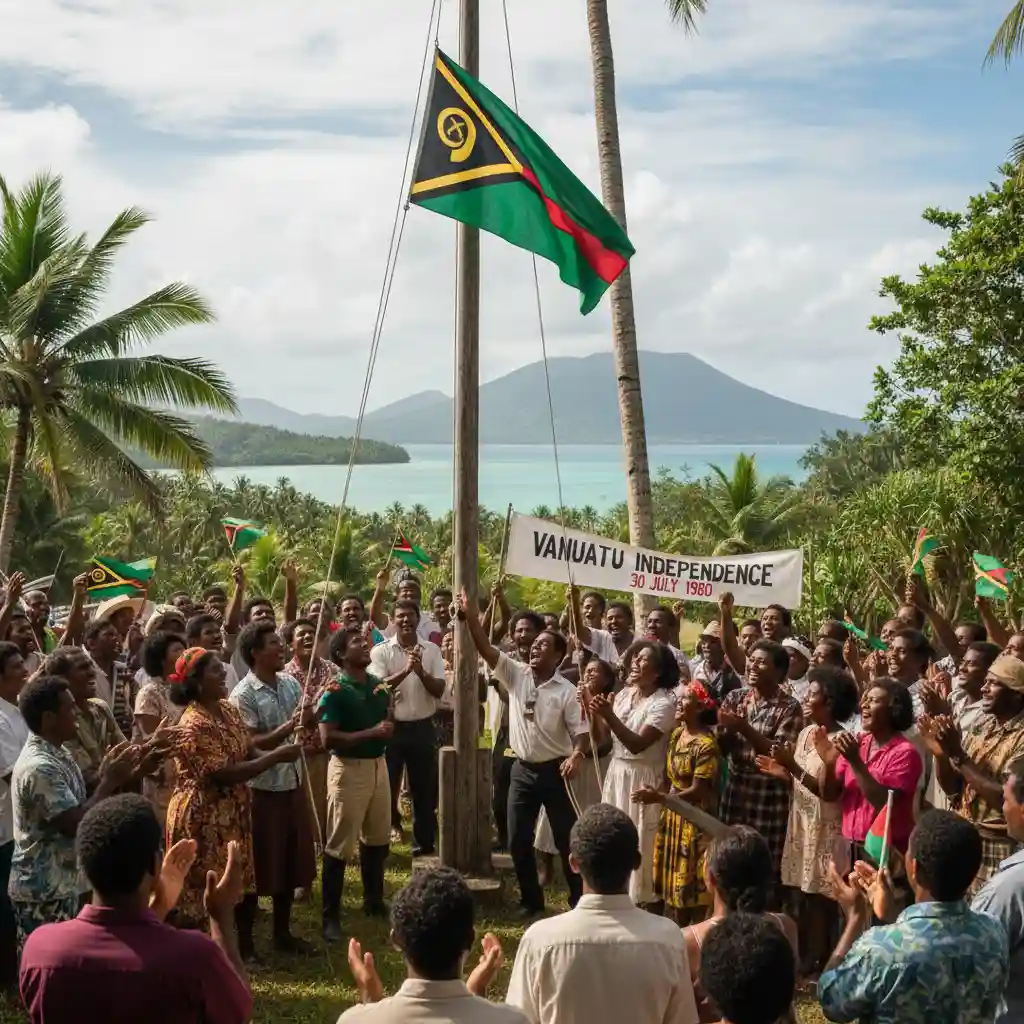
As the independence movement gained momentum in the 1970s, led by figures like Father Walter Lini, Bislama emerged as the language of liberation. It was the only neutral ground—a language that belonged to neither the British nor the French, but to the people themselves. It became the medium of political rallies and the vehicle for the message of freedom.
The Constitutional Status
The 1980 Constitution of Vanuatu formally cemented this role. Article 3 declares:
“The national language of the Republic is Bislama. The official languages are Bislama, English and French. The principal languages of education are English and French.”
This distinction is critical. While English and French are “official” and used for administration and education, only Bislama is the “national” language. This elevates it to a symbol of sovereignty. It is the language of parliamentary debate (though laws must be written in English and French), and it is the language of the judicial system’s lower courts.
Bislama as a Vehicle for Cultural Expression
Today, the bislama national language is the primary vessel for contemporary ni-Vanuatu culture. It has adapted to describe modern realities while retaining the respectful nuances of island life. In music, the famous “String Band” genre often utilizes Bislama lyrics to tell stories of love, heartbreak, and island life. Reggae artists in Vanuatu perform almost exclusively in Bislama, using the language to critique corruption or call for social justice.
Perhaps the most significant cultural institution is the Wan Smolbag Theatre. Starting as a small amateur troupe, it has grown into a major NGO that uses drama to educate the public on issues like reproductive health, governance, and environmental conservation. They perform in Bislama because it is the only way to ensure the message resonates emotionally with audiences from the capital city to the remotest villages.

Linguistic Creativity
Bislama is renowned for its descriptive nature. Where English might use a single specialized word, Bislama often uses a descriptive phrase that paints a picture. For example, a “piano” might be described humorously in older pidgin forms, but modern Bislama has streamlined many terms. However, the metaphorical capacity remains strong. The term for “violence” is often related to faet (fight), but nuances of social conflict are expressed through rich idioms involving nature and the body.
What are the Challenges for Language Diversity?
Despite its vital role in unity, the dominance of Bislama presents a paradox. Conservationists and linguists worry that as Bislama becomes more ubiquitous, it may erode the indigenous vernaculars. In urban centers, inter-island marriages are common. A couple from different islands will speak Bislama to each other, and their children will likely grow up speaking Bislama as their first language (L1 speakers), potentially losing the ancestral tongues of their parents.
This phenomenon creates a linguistic shift where Bislama moves from being a second language (lingua franca) to a primary language (creole). While this strengthens national identity, it threatens the linguistic biodiversity that makes Vanuatu unique. Elders in rural communities often lament that younger generations mix Bislama into their vernacular speech, leading to a gradual loss of complex traditional vocabulary related to botany, navigation, and ritual.
The Education Debate
Another challenge lies in the education sector. Historically, Bislama was banned in classrooms to force proficiency in English or French. However, educational outcomes were often poor because children were learning in languages they did not understand. Recent educational reforms have aimed to introduce vernacular education in early years, but the sheer number of languages makes this logistically difficult. Bislama is often proposed as a bridge language in schools, but this remains a contentious policy issue, balancing the need for global competitiveness (English/French) with cognitive development and national pride (Bislama).

Bislama in the Digital Age
The internet has propelled the bislama national language into a new era of standardization and proliferation. Social media platforms, particularly Facebook, are dominated by Bislama content. This written usage is forcing an informal standardization of spelling, which has historically been inconsistent due to the lack of a widely enforced orthography.
Mobile phones have been a game-changer. The ability to text in Bislama has cemented its status as the language of intimacy and immediacy. Furthermore, disaster response—crucial in a nation prone to cyclones and earthquakes—relies heavily on Bislama broadcasts via radio and SMS to disseminate life-saving information quickly and clearly.
Conclusion: The Future of the National Tongue
Bislama is more than a linguistic compromise; it is a triumph of adaptation. It transformed the language of the oppressor into the language of the liberator. As Vanuatu navigates the 21st century, the role of Bislama in national identity remains central. It is the glue that holds the nation together, ensuring that despite the vast ocean distances and tribal differences, the people remain wan pipol (one people).
For the traveler or the cultural enthusiast, learning a few phrases of Bislama is the ultimate sign of respect. It unlocks smiles, opens doors, and offers a glimpse into the resilient heart of the Melanesian spirit. While English and French connect Vanuatu to the world, Bislama connects Vanuatu to itself.
People Also Ask
Is Bislama the same as English?
No, Bislama is a distinct Creole language. While approximately 95% of its vocabulary is derived from English, its grammar and syntax are fundamentally Melanesian. It has its own rules, structure, and cultural nuances that differ significantly from standard English.
How many people speak Bislama?
Bislama is spoken by the vast majority of Vanuatu’s population, which is approximately 300,000 people. It serves as the primary language for urban dwellers and a second language for rural populations who speak indigenous vernaculars.
What is the origin of the word Bislama?
The word “Bislama” comes from the French word “bêche-de-mer” (sea cucumber). In the 19th century, the trade of sea cucumbers was a major industry, and the pidgin English used during this trade eventually evolved into the language known today as Bislama.
Can I visit Vanuatu speaking only English?
Yes, you can visit Vanuatu speaking only English. English is one of the official languages and is widely spoken in tourist areas, hotels, and businesses. However, learning basic Bislama is appreciated and helps in rural areas.
How do you say “Hello” in Bislama?
The common greeting in Bislama is “Halo.” To ask “How are you?”, you would say “Olsem wanem?” (literally “Like what?”). A common response is “Mi gud” (I am good).
Is Bislama taught in schools?
Historically, Bislama was not taught in schools, with English and French taking precedence. However, recent educational reforms have encouraged the use of vernaculars in early education, and Bislama is increasingly recognized as a vital tool for literacy and instruction.