
Vanuatu traditional leadership, deeply rooted in custom (kastom), forms the bedrock of governance and social order throughout the archipelago. Chiefs, guided by ancient protocols and communal consensus, play an indispensable role in maintaining peace, resolving disputes, and preserving cultural heritage, complementing the modern parliamentary system and ensuring the continuity of Ni-Vanuatu identity.
For New Zealand travellers planning an enriching visit to Vanuatu, understanding the profound influence of traditional leadership is not merely a matter of cultural curiosity; it is essential for respectful engagement and a deeper appreciation of this vibrant South Pacific nation. The dual system of governance, where traditional chiefs operate alongside elected officials, is a unique aspect of Vanuatu’s identity, shaping everything from local community life to national policy. This guide delves into the intricate world of Vanuatu’s traditional chiefs, exploring their roles, their systems of governance, and the custom laws that underpin their authority, offering valuable insights for anyone wishing to connect authentically with the local culture.
What is the Role of the National Council of Chiefs in Vanuatu?
The National Council of Chiefs, known locally as Malvatumauri, serves as the paramount traditional institution in Vanuatu, constitutionally mandated to deliberate on matters of custom and tradition and advise the government on all issues relating to Ni-Vanuatu culture and language. Its role is to ensure that modern legislative frameworks and national policies are harmonised with the rich tapestry of customary practices that define the nation.
Malvatumauri is not merely an advisory body; it is a living symbol of Vanuatu’s commitment to preserving its cultural heritage while navigating the complexities of modern nationhood. Established under Chapter 5 of the Constitution of the Republic of Vanuatu, it represents the collective wisdom and authority of chiefs from across all six provinces, providing a unified voice for traditional governance at the national level. This ensures that the diverse customs of Vanuatu’s many islands are represented and respected within the national discourse. The Council acts as a vital bridge between the grassroots community and the central government, helping to maintain social cohesion and cultural identity in a rapidly changing world. Its deliberations often touch upon land ownership, customary marriages, dispute resolution, and the perpetuation of traditional knowledge, all critical components of Ni-Vanuatu life. Understanding Malvatumauri is key to grasping the unique socio-political landscape of Vanuatu.

The Structure and Authority of Malvatumauri
Malvatumauri comprises a president and vice-presidents, with members drawn from regional councils of chiefs. These regional councils, in turn, are made up of village chiefs, creating a hierarchical yet deeply interconnected system that ensures representation from the grassroots to the national level. The selection process for chiefs, while varying slightly between islands, generally involves traditional protocols, lineage, and demonstrated leadership qualities within their communities. This structure grants Malvatumauri significant moral and customary authority, even if its legal powers are primarily advisory. Its pronouncements carry immense weight within Ni-Vanuatu society, often influencing public opinion and government decisions. The President of Malvatumauri is a highly respected figure, embodying the traditional values and aspirations of the nation. The Council convenes regularly to discuss issues pertinent to custom, land, and culture, playing an active role in shaping the national identity and ensuring that development initiatives are culturally appropriate and sustainable. This intricate system is a testament to the enduring strength of Vanuatu’s traditional leadership.
Bridging Traditional Values and Modern Governance
One of Malvatumauri’s most crucial functions is to act as a cultural guardian, ensuring that the country’s development trajectory remains aligned with its unique heritage. In a nation where over 80% of the population lives in rural areas and relies heavily on customary land tenure, the advice of traditional leaders on matters such as land reform, resource management, and social justice is invaluable. The Council often mediates between traditional practices and modern legal requirements, striving for a harmonious coexistence. For instance, when new laws are drafted concerning land or family matters, Malvatumauri’s input is sought to prevent cultural discord and ensure acceptance at the community level. This delicate balance ensures that Vanuatu can embrace progress without sacrificing the foundational principles that define its people. Its existence underscores a national philosophy that respects the past while building for the future, offering a model for other nations grappling with similar challenges of modernisation and cultural preservation. The collaborative spirit between Malvatumauri and the national government is a hallmark of Vanuatu’s distinctive governance.
How Does Custom Law Intersect with Modern Legal Frameworks in Vanuatu?
Custom law, known as kastom, is an integral and constitutionally recognised component of Vanuatu’s legal system, coexisting alongside common law and civil law, and is primarily applied in local communities to resolve disputes, manage land, and regulate social conduct in accordance with ancient traditions. It provides a flexible and context-sensitive framework for justice and order, particularly in rural areas where its authority is deeply respected.
Vanuatu operates under a fascinating pluralistic legal system, a legacy of its Anglo-French colonial past, which uniquely incorporates indigenous custom law. Article 95(1) of the Constitution explicitly states that custom law shall be applied as part of the law of Vanuatu. This means that kastom is not merely an informal practice; it holds legal standing, particularly in matters that do not conflict with the Constitution or written statutes. While modern courts handle criminal cases, serious civil disputes, and matters involving government agencies, many everyday conflicts—such as land boundaries, customary marriages, minor thefts, and family disagreements—are first addressed and resolved through traditional chief systems and kastom. This dual system often proves more accessible and culturally appropriate for rural communities, where formal legal institutions can be distant and intimidating. The ability to adapt kastom to specific island traditions highlights its flexibility and deep connection to the local populace, fostering a sense of ownership and legitimacy in the justice process. For visitors, understanding this intricate legal tapestry helps in appreciating the nuanced social fabric of the country.
Understanding the Principles of Kastom
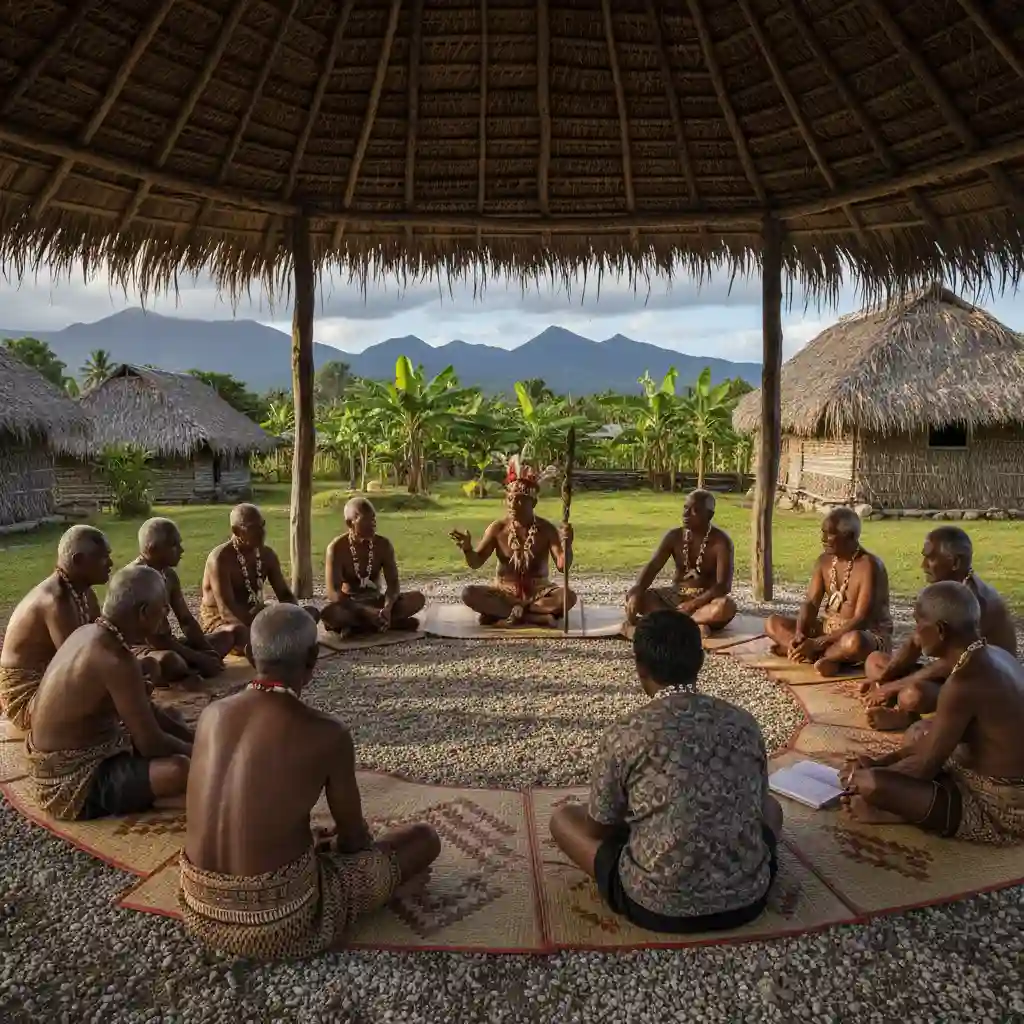
Kastom is not a codified set of laws like Western legal systems; rather, it is a dynamic body of traditions, norms, values, and practices passed down through generations. Its principles are orally transmitted and often vary from island to island, and even from village to village, reflecting the immense cultural diversity of Vanuatu. Common themes include respect for elders, communal harmony, restitution over punishment, and the importance of collective well-being. Land, in particular, is central to kastom, viewed not as individual property but as a communal asset managed by chiefs for the benefit of all. The emphasis is often on restoring balance and harmony within the community rather than strictly assigning blame. This restorative justice approach contrasts sharply with retributive Western legal systems, aiming to heal rifts and ensure future cooperation. Understanding these core principles is vital for appreciating how justice is perceived and administered in much of Vanuatu, and for visitors, it highlights the importance of cultural sensitivity when interacting with local communities. The fluidity of kastom allows it to adapt to evolving social needs while maintaining its core tenets.
Challenges and Harmonisation in a Dual System
While the coexistence of kastom and modern law offers many benefits, it also presents challenges. Issues can arise when customary practices conflict with human rights principles enshrined in the Constitution or international conventions, particularly concerning gender equality or children’s rights. Efforts are continually made to harmonise these systems, ensuring that kastom remains relevant and fair in contemporary Vanuatu. Judges in the formal court system are often required to consider customary law in their rulings, especially in civil cases, but they must also ensure that such applications do not contravene fundamental constitutional rights. Workshops and dialogues between chiefs, legal professionals, and government officials are common, aiming to bridge understandings and resolve potential discrepancies. The goal is not to eradicate kastom, but to strengthen its capacity to deliver justice and maintain social order in a way that is compatible with national and international legal standards. This ongoing process reflects Vanuatu’s commitment to self-determination and cultural integrity in the face of globalisation, making it a fascinating case study in legal pluralism.
What is the Significance of Village Leadership in Ni-Vanuatu Society?
Village leadership, embodied by local chiefs, is the most immediate and influential form of traditional authority in Vanuatu, serving as the primary arbiter of local disputes, guardian of customs, and facilitator of community development, thereby ensuring social cohesion and the preservation of cultural identity at the grassroots level. Their presence is fundamental to the daily functioning and spiritual well-being of the village.
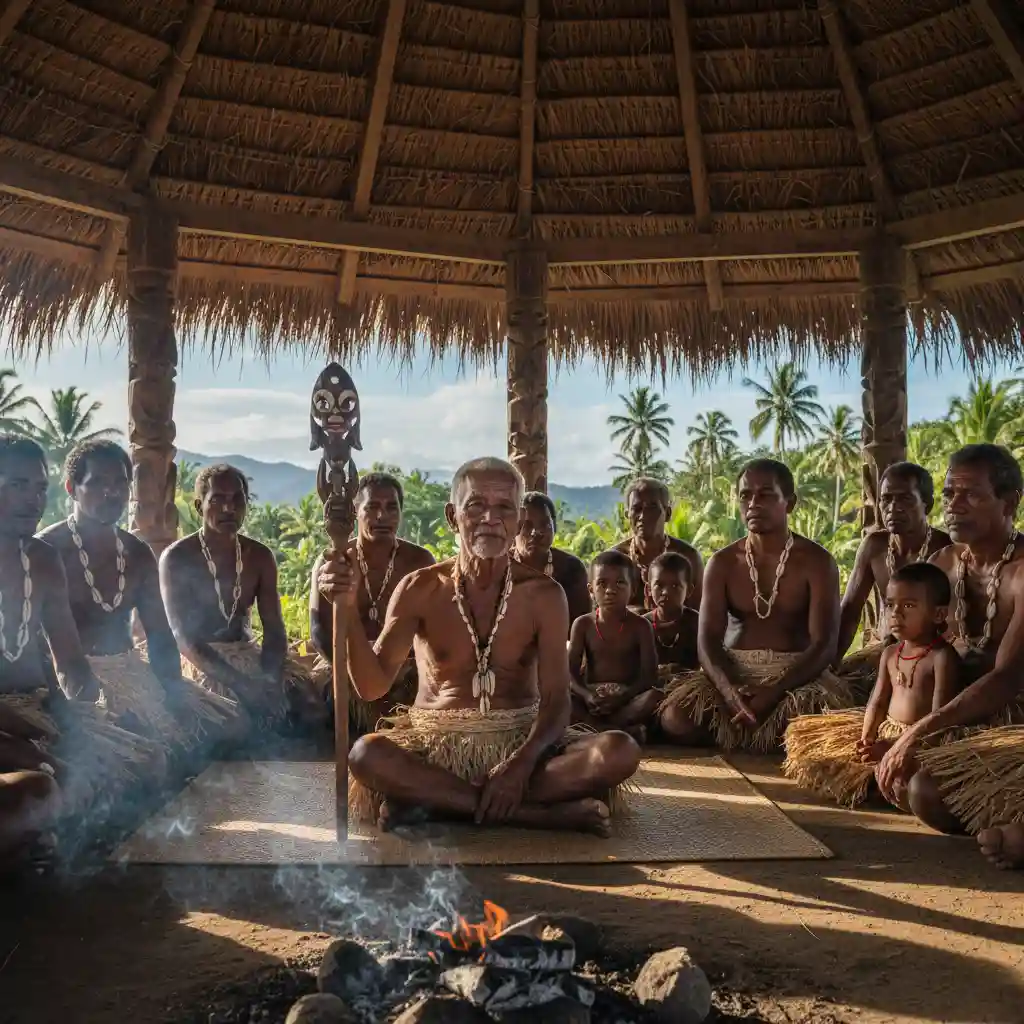
At the heart of every Ni-Vanuatu community is the village chief, or a council of chiefs, whose authority is deeply respected and integral to daily life. Unlike the national body, village chiefs are directly involved in the minutiae of community affairs, making decisions that affect families and individuals. Their power is often derived from a combination of hereditary lineage, achieved status through traditional ceremonies (like the ‘grade-taking’ system in some areas), wisdom, and proven ability to lead and resolve conflicts. They are seen as living repositories of custom and tradition, responsible for ensuring that age-old practices are maintained and passed on to younger generations. The chief’s nakamal (meeting house) often serves as the focal point for village gatherings, discussions, and kava ceremonies, symbolising the communal spirit and the chief’s central role in fostering unity. Visitors to Vanuatu will often encounter chiefs in this setting, underscoring their prominence in local social structures. Engaging with village chiefs offers invaluable insight into the authentic culture and respectful etiquette of Vanuatu.
Daily Responsibilities of a Village Chief
The responsibilities of a village chief are extensive and multifaceted, encompassing judicial, administrative, and ceremonial duties. On a daily basis, chiefs are involved in settling land disputes, mediating family quarrels, overseeing customary ceremonies such as weddings and funerals, and regulating the use of communal resources like water sources and fishing grounds. They play a crucial role in maintaining peace and order, often preventing minor disagreements from escalating into serious conflicts. Furthermore, chiefs are responsible for mobilising their communities for development projects, whether it’s building a new school, maintaining roads, or organising disaster relief efforts. They are also custodians of traditional knowledge, including oral histories, songs, dances, and medicinal practices, ensuring these vital aspects of culture endure. This hands-on leadership ensures that decisions are made with the community’s best interests at heart, reflecting a deep understanding of local context and needs. The chief’s ability to balance various duties effectively is critical for the welfare and stability of their village.
The Chief as Guardian of Culture and Community Welfare
Beyond their administrative roles, village chiefs are profound guardians of Ni-Vanuatu culture and the welfare of their people. They embody the cultural values of respect, reciprocity, and communal responsibility. In many communities, the chief is responsible for initiating young people into adulthood through traditional rites and teaching them about their cultural heritage. They also play a vital role in protecting the environment, often enforcing customary laws related to conservation and sustainable resource management. This holistic approach to leadership ensures that the village thrives not just economically, but also culturally and spiritually. Their authority is often reinforced by spiritual beliefs and a deep connection to the land and ancestors, further solidifying their position as moral compasses for their communities. For travellers, observing and respecting the chief’s authority is a sign of profound cultural appreciation, recognising their pivotal role in upholding the unique way of life in Vanuatu. This deep-seated respect ensures the continuity of kastom and a harmonious social order.
How Are Decisions Made Through Traditional Governance Systems in Vanuatu?
Decisions within Vanuatu’s traditional governance systems are predominantly made through consensus-based approaches, involving extensive community dialogue and the guidance of chiefs and elders, ensuring that all voices are heard and collective agreement is reached before action is taken. This process prioritises communal harmony and long-term stability over individual interests or swift resolutions.
The traditional decision-making process in Vanuatu is a testament to the country’s communal values. It typically involves lengthy discussions, often held in the nakamal, where chiefs, elders, and community members openly debate issues until a consensus, or something close to it, is reached. This process, often referred to as ‘faena’ or ‘meeting’, is not about voting or majority rule; it’s about respectful dialogue, listening to different perspectives, and finding a solution that everyone can accept, or at least live with. The chief’s role is not to dictate but to facilitate, guide, and ultimately summarise the collective wisdom of the community. This method ensures that decisions are robust, locally appropriate, and have the full support of the people, thereby increasing compliance and fostering social cohesion. It also provides a vital mechanism for conflict resolution, allowing grievances to be aired and addressed within a culturally sensitive framework. This patient and inclusive approach distinguishes Vanuatu’s traditional governance from more individualistic Western models, highlighting a profound commitment to communal well-being and shared responsibility.
The Importance of Consensus and Community Dialogue
Achieving consensus is paramount in traditional Ni-Vanuatu decision-making. This often means that discussions can be time-consuming, as every voice is given an opportunity to speak, and dissenting opinions are carefully considered. The process values patience and deep listening, reflecting the belief that wise decisions emerge from thorough deliberation and collective input. Chiefs are skilled facilitators, adept at navigating complex social dynamics and guiding discussions towards a harmonious outcome. The aim is to avoid division and ensure that the chosen path reflects the collective will, reinforcing community solidarity. This communal dialogue extends beyond just formal meetings; it permeates daily interactions, fostering an environment where ideas are shared freely and respectfully. For those observing or participating, it is a powerful demonstration of democracy in its most traditional form, where the emphasis is on unity and mutual understanding. This dedication to consensus ensures that decisions are not only made but are truly owned by the community, promoting enduring stability and cooperation.
Resolving Disputes Through Traditional Means
When conflicts arise, traditional governance systems provide established mechanisms for resolution that aim for reconciliation and restitution rather than punitive measures. Disputes over land, property, marriage, or minor offences are typically brought before the village chief or a council of elders. These traditional courts operate based on kastom, using mediation, negotiation, and public discussion to arrive at a resolution that restores harmony within the community. Unlike modern courts, the focus is less on legal precedent and more on the specific circumstances, relationships between the parties, and the long-term well-being of the village. Restitution, often in the form of pigs, kava, or other customary valuables, is a common outcome, designed to compensate the wronged party and symbolically ‘mend’ the social fabric. This approach underlines the value placed on maintaining strong community ties and preventing prolonged animosity. The chiefs act as respected arbiters, whose judgments are usually accepted without question, reflecting their deep understanding of local dynamics and the trust placed in their wisdom. This system provides a culturally appropriate and effective way to manage and resolve conflicts, reinforcing the authority of traditional leadership.
Why is Respecting Traditional Authority Crucial for Visitors to Vanuatu?
Respecting traditional authority in Vanuatu is crucial for visitors as it demonstrates cultural sensitivity, ensures harmonious interactions with local communities, and contributes to the preservation of indigenous customs and social order, thereby enriching the visitor’s experience and fostering positive relationships between tourists and Ni-Vanuatu people. It reflects an understanding of the nation’s unique dual governance structure.
For New Zealand travellers, showing respect for Vanuatu’s traditional authority is not just good manners; it is a fundamental aspect of responsible and enriching tourism. The chiefs and elders are the pillars of their communities, and acknowledging their position demonstrates a deep appreciation for Ni-Vanuatu culture and values. Disregarding traditional protocols can inadvertently cause offense, disrupt community harmony, and reflect poorly on visitors. By understanding and adhering to local customs, travellers can foster positive relationships, gain deeper insights into the culture, and ensure their presence is welcomed. This respect extends to simple gestures like asking for permission before entering sacred sites or villages, dressing modestly, and participating respectfully in customary ceremonies like kava. Embracing this cultural etiquette opens doors to authentic experiences, allowing visitors to connect with the local people on a more profound level than simply being an observer. It underscores a commitment to respectful engagement and sustainable tourism, leaving a positive legacy. This mindful approach creates memorable and meaningful interactions for both visitors and hosts.
Practical Tips for Engaging with Chiefs and Elders
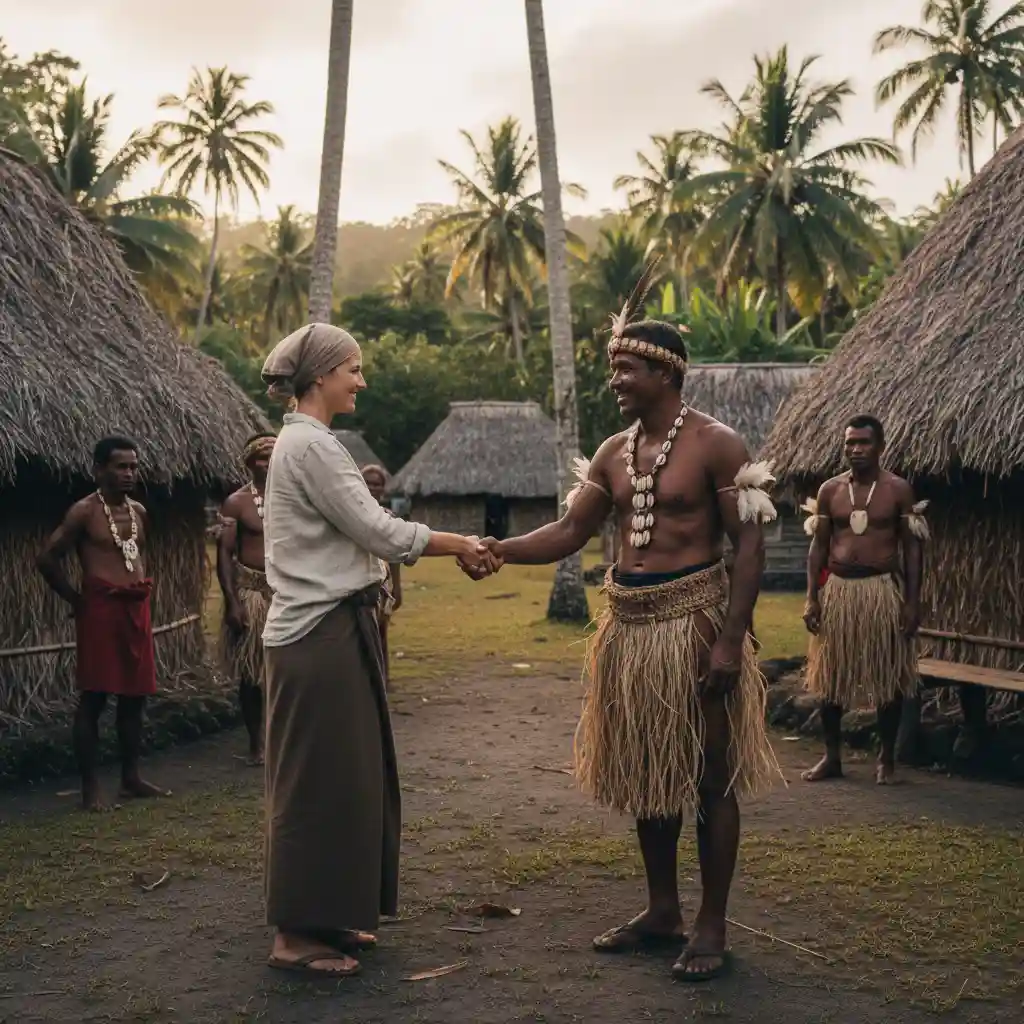
When visiting a village or encountering a chief or elder, a few practical tips can significantly enhance your interaction. Always seek permission before entering a village, especially if it’s not a designated tourist site; your tour operator or local guide will usually facilitate this. Dress modestly, covering shoulders and knees, particularly for women, as a sign of respect. When meeting a chief, it is customary to offer a small gift, known as a ‘kastom present,’ such as kava roots, tobacco, or a small sum of money, symbolising respect and goodwill. Always address chiefs with politeness and deference, allowing them to initiate conversation. If invited to a kava ceremony, observe the local etiquette, which often involves sitting on the ground and following the lead of your hosts. Avoid pointing with your finger; instead, use an open hand or nod. Remember that silence can be a sign of respect, and rushing conversations is generally ill-advised. These simple acts of cultural awareness go a long way in building rapport and demonstrating genuine interest in the local way of life, ensuring a positive and memorable experience for everyone involved. Your actions contribute directly to the perception of visitors in Vanuatu.
The Lasting Impact of Cultural Appreciation
The act of respecting traditional authority and engaging thoughtfully with local customs has a lasting positive impact beyond individual interactions. It reinforces the value of kastom for the Ni-Vanuatu people, contributing to its continued preservation in the face of external influences. Responsible tourism, underpinned by cultural appreciation, empowers communities, supports local economies, and ensures that the unique cultural tapestry of Vanuatu remains vibrant for future generations. When visitors demonstrate respect, it encourages local communities to share their traditions more openly, creating a richer and more authentic experience for everyone. This positive cycle helps in debunking stereotypes, fostering mutual understanding, and promoting Vanuatu as a destination that values its heritage deeply. For New Zealand travellers, leaving Vanuatu with a deeper understanding and appreciation for its traditional governance and the role of its chiefs is not just a holiday souvenir; it’s a contribution to global cultural harmony and a testament to the power of respectful cross-cultural exchange. Such experiences are transformative, leaving a profound impression long after the journey ends.
The intricate system of traditional leadership in Vanuatu, from the national Malvatumauri to the local village chiefs, is a living testament to the resilience and richness of Ni-Vanuatu culture. For any New Zealand traveller, understanding and respecting this deep-rooted governance structure is fundamental to experiencing the true essence of this enchanting archipelago. By acknowledging the authority of chiefs, appreciating custom law, and engaging with communities through a lens of respect and humility, visitors can forge meaningful connections and contribute positively to the preservation of Vanuatu’s unique identity. This journey into the heart of traditional governance offers not just insights into a different way of life, but also a profound lesson in cultural harmony and the enduring power of community.
People Also Ask
What is the Malvatumauri in Vanuatu?
The Malvatumauri is the National Council of Chiefs in Vanuatu, a constitutionally recognised body that advises the government on all matters pertaining to custom, tradition, and language, ensuring the preservation of Ni-Vanuatu cultural heritage.
How is custom law applied in Vanuatu?
Custom law, or kastom, is applied in Vanuatu primarily at the local community level to resolve disputes, manage land, and regulate social conduct. It coexists with modern statutory law and is often invoked in cases where traditional practices are relevant.
What is the role of a village chief in Vanuatu?
A village chief in Vanuatu acts as the primary local authority, responsible for maintaining peace, settling disputes, facilitating community development, presiding over traditional ceremonies, and safeguarding the cultural integrity of their village.
Is it necessary to get permission before visiting a Vanuatu village?
Yes, it is highly recommended and customary to seek permission before entering a Vanuatu village, especially if it’s not a designated tourist area. This shows respect for local authority and ensures a welcoming experience. Your tour guide can usually assist with this.
What are some respectful gestures for visitors to Vanuatu?
Respectful gestures include dressing modestly (covering shoulders and knees), offering a small customary gift when meeting a chief, asking for permission, avoiding pointing with fingers, and observing local etiquette during kava ceremonies or village gatherings.
Do chiefs in Vanuatu have legal power?
While the National Council of Chiefs primarily holds advisory power, local chiefs possess significant customary and social authority. Their decisions in custom law matters are widely respected and often informally binding within their communities, complementing the formal legal system.