
Vanuatu’s traditional dances and ceremonies are profound expressions of a vibrant Melanesian culture, serving as vital conduits for community cohesion, spiritual connection, and the transmission of ancient knowledge. These rituals, ranging from the breathtaking Nagol land diving to the intricate Toka dances and the preserved customs of Fanla village, offer unparalleled insights into the islands’ deep-rooted heritage, embodying historical narratives, social structures, and existential philosophies.
What is Nagol Land Diving?
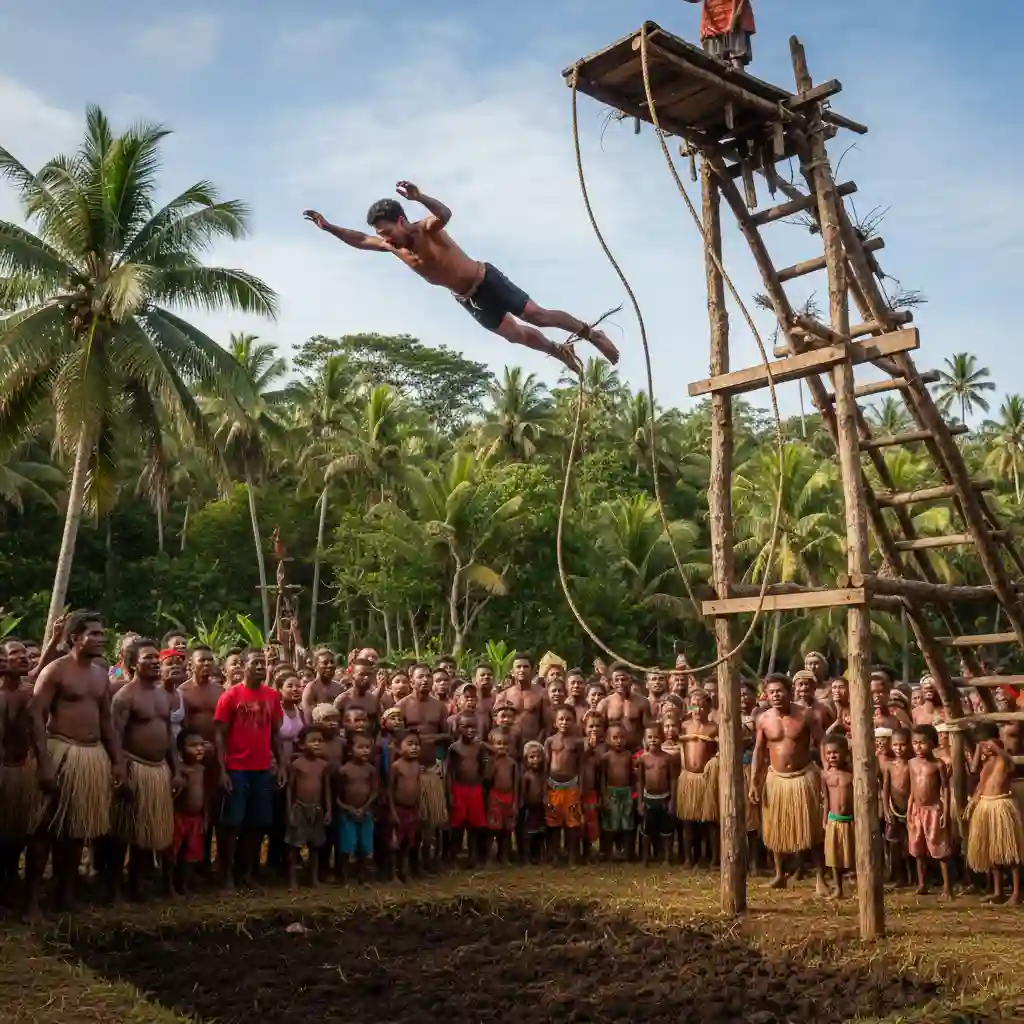
Nagol, often referred to as land diving or Gol, is an ancient ritual performed exclusively by men on Pentecost Island, Vanuatu. It involves leaping from a tall wooden tower with vines tied to their ankles, plummeting towards the ground. This breathtaking ceremony is not merely a spectacle but a profoundly sacred annual harvest ritual, typically performed between April and June, signifying a plea for a bountiful yam harvest and a rite of passage for young men.
The Ancient Origins of Nagol
The origins of Nagol are deeply embedded in Vanuatu’s oral traditions, tracing back to a legend known as the “Myth of the Land Diver.” This tale recounts a woman who, fleeing an abusive husband, climbed a banyan tree and tied vines to her ankles. When her husband followed, she jumped, surviving the fall because of the vines, while he, unaware of her trick, jumped to his death. The men of Pentecost, upon discovering her cleverness, adopted this act, transforming it into a test of courage and a symbol of their strength and masculinity, intertwined with agricultural cycles and community well-being. Over centuries, the ceremony evolved from a raw act of survival into a highly structured ritual, with meticulously constructed towers and carefully selected vines.
The Ritual and Its Symbolism
Each year, villagers from southern Pentecost meticulously construct wooden towers, some reaching heights of up to 30 metres. These intricate structures are built without modern tools, relying solely on traditional knowledge passed down through generations. The jumpers, ranging from young boys undergoing initiation to experienced elders, wear minimal traditional attire. The length of the vine is crucial, carefully measured to ensure the diver’s head barely brushes the softened earth, symbolising the touching of the yam to the soil to bless the harvest. The act itself is a powerful display of bravery, a symbolic death and rebirth, ensuring the fertility of the land and the vitality of the community. It is a profound act of self-sacrifice and a testament to the community’s interdependence with the land and its spiritual forces.
Experiencing Nagol as a Visitor
For visitors from New Zealand and beyond, witnessing Nagol is an extraordinary privilege and a profound cultural immersion. The ceremony is a seasonal event, typically held on Saturdays during the harvest season (April to June), with strict protocols for observers. Access is often challenging, requiring careful planning and respect for local customs. Tourists are usually positioned at a safe distance, allowing them to absorb the sounds, the atmosphere, and the sheer bravery of the jumpers. This encounter with a living ancient tradition provides a unique window into the resilient culture of Vanuatu, offering a deep appreciation for the customs that define the islanders’ identity and their relationship with the natural world.
What is the Toka Dance?
The Toka dance is a monumental traditional ceremony of celebration, alliance, and wealth distribution, predominantly found among the semi-nomadic peoples of Tanna Island, Vanuatu. Unlike the singular annual event of Nagol, Toka is an elaborate and often multi-day festival, involving hundreds of dancers from allied communities. It signifies the culmination of months, sometimes years, of preparation, symbolising peace, prosperity, and the strengthening of inter-tribal bonds through the exchange of gifts, most notably pigs and kava.
Social and Cultural Significance of Toka
The Toka dance is far more than just a dance; it is a complex social institution that underpins the fabric of Tannese society. It serves as a public declaration of alliances between clans, reaffirming kinship ties and obligations. The exchange of wealth, particularly the ritualistic slaughter and distribution of hundreds of pigs, is central to the ceremony, demonstrating prestige and generosity. The preparations involve extensive gardening to feed the participants, intricate costume making, and the cultivation of kava, which plays a significant ceremonial role. Through these acts, communities re-establish social order, resolve disputes, and ensure future cooperation, making Toka an essential mechanism for maintaining peace and stability on Tanna.
The Rhythmic Heart of Tanna
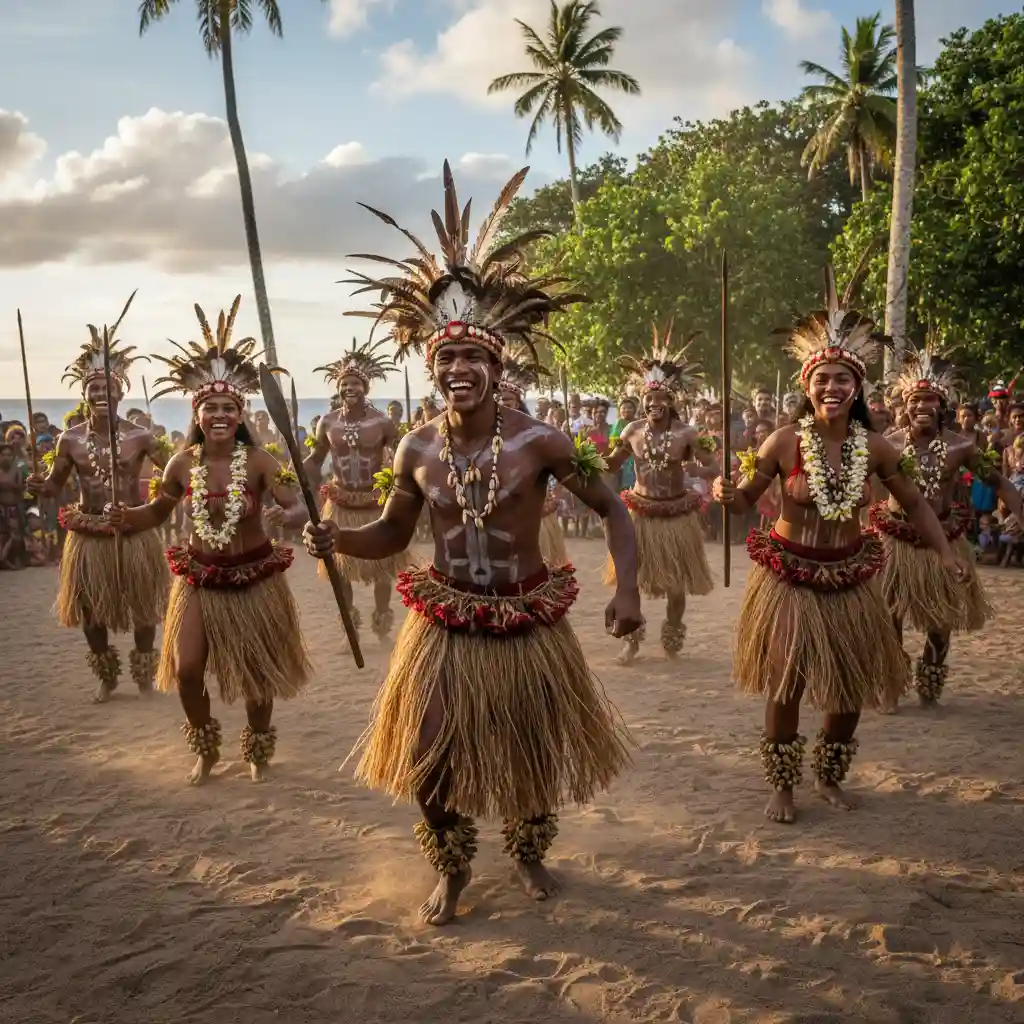
The Toka dance is characterised by its distinctive rhythmic patterns, intricate footwork, and vibrant traditional costumes. Dancers, adorned with colourful body paint, feathers, shells, and woven skirts, move in hypnotic unison, forming large concentric circles. The rhythm is provided by traditional drums, chants, and the rhythmic stamping of feet, creating an immersive auditory and visual experience that can last for days and nights. Each step, each chant, and each movement tells a story, often recounting ancestral legends, heroic deeds, or important social messages. The energy is palpable, a collective effervescence that unites participants in a shared cultural experience, cementing their identity and heritage. For visitors, observing a Toka dance is an unforgettable journey into the heart of Tannese custom, a testament to the enduring power of community and tradition.
What Makes Fanla Village Unique?
Fanla Village, nestled deep in the mountainous interior of North Ambrym, Vanuatu, stands as one of the archipelago’s most culturally intact communities, largely untouched by external influences. Renowned for its rigorous preservation of ancient Kastom (customary law and tradition), Fanla is a living museum, offering a rare glimpse into a pre-colonial Melanesian way of life. The village is unique for its commitment to maintaining traditional practices, particularly its complex grade-taking ceremonies and the enduring significance of its sacred Nakamal (customary meeting house).
Preserving Ancient Traditions in Fanla
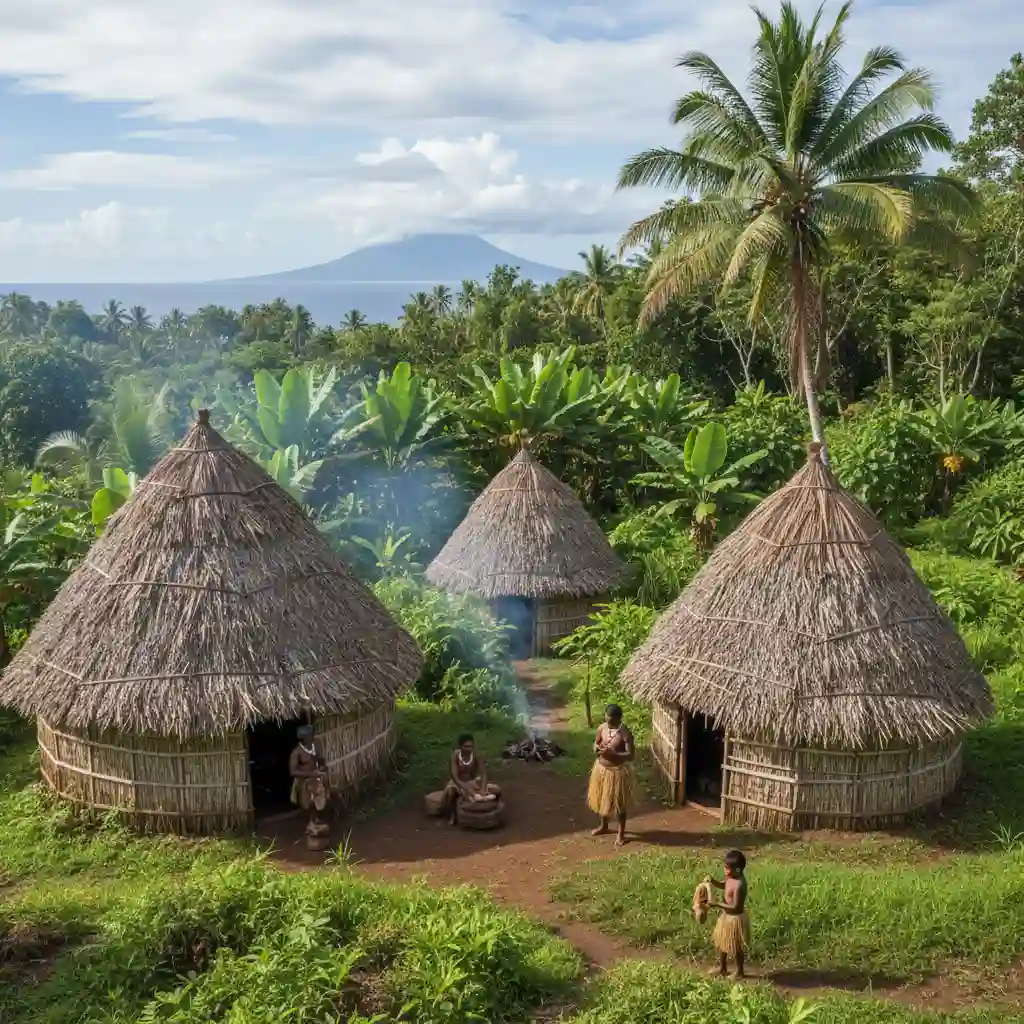
The isolation of Fanla, combined with a fierce determination to safeguard their heritage, has allowed its inhabitants to maintain a remarkable degree of cultural purity. Unlike many coastal communities that have experienced greater exposure to Westernisation, Fanla has consciously chosen to limit external influences, preserving their distinct language, ancient rituals, and traditional social structures. The village adheres strictly to Kastom, guiding every aspect of daily life, from land ownership and dispute resolution to artistic expression and spiritual beliefs. This commitment ensures that traditions, which might be fading elsewhere, remain vibrant and central to the community’s identity, providing a continuous link to their ancestral past.
The Role of Custom in Daily Life in Fanla
In Fanla, Kastom is not merely a set of historical practices but a dynamic, living system that informs every decision and interaction. The Nakamal serves as the spiritual and political heart of the village, where men gather to consume kava, discuss community affairs, and perform sacred rituals. The complex grade-taking ceremonies, involving pig sacrifices and elaborate dances, are pivotal for achieving social status and spiritual advancement. These ceremonies are deeply ingrained in the life cycle of individuals and the community, reinforcing social hierarchies and responsibilities. Visitors to Fanla are granted an extraordinary opportunity to witness a society where tradition is not a relic of the past but a guiding force for the present and future, offering profound insights into the integrity and resilience of Vanuatu’s diverse cultures.
Melanesian Dance Forms in Vanuatu
Vanuatu, as a vibrant part of Melanesia, is a kaleidoscope of diverse cultural expressions, with dance being one of its most prominent art forms. While Nagol, Toka, and the customs of Fanla represent specific, significant traditions, they are part of a much broader spectrum of Melanesian dance forms found throughout the archipelago. These dances, though varied in their specific movements, attire, and accompanying rituals, share common threads that speak to the shared cultural heritage of the region, yet each island and community maintains its unique interpretation.
Diversity in Unity: A Kaleidoscope of Movement
Across Vanuatu’s 83 islands, thousands of distinct cultural groups have developed unique dance forms, each reflecting local history, spiritual beliefs, and social structures. From the powerful stomping dances of the Banks and Torres Islands to the intricate mask dances of Malekula and Ambrym, the sheer diversity is astounding. Many dances are linked to specific ceremonies such as initiation rites, marriages, funerals, or harvest festivals. The movements are often highly symbolic, imitating animals, natural phenomena, or the actions of ancestors, transmitting complex narratives and moral lessons without words. This rich tapestry of movement underscores the dynamic nature of Vanuatu’s cultural landscape, where innovation and tradition constantly intertwine.

Instruments and Accompaniment
The rhythmic foundation for most Melanesian dances in Vanuatu is provided by a variety of traditional instruments. Slit drums, known locally as tam-tams, are perhaps the most iconic, especially in Ambrym, where their deep, resonating tones can carry for miles. These carved wooden drums, often featuring ancestral faces, are played with mallets, creating complex polyrhythms that dictate the pace and mood of the dance. Other instruments include bamboo flutes, shell trumpets, rattles made from nuts or seeds worn on ankles and wrists, and the powerful human voice through chanting and singing. The collective soundscape is integral to the immersive experience, guiding the dancers and evoking the spiritual essence of the performance.
The Storytelling Power of Dance
In a culture where literacy was traditionally oral, dance became a vital medium for storytelling and the preservation of historical and mythological narratives. Each dance is a living archive, recounting ancestral journeys, heroic battles, the creation myths of islands, or the everyday challenges and triumphs of community life. Through choreographed movements, symbolic gestures, and specific vocalizations, dancers embody characters and events, making the past tangible and relevant to the present. This storytelling power ensures that critical knowledge and cultural values are passed down through generations, reinforcing a shared identity and a collective memory. For visitors, understanding these narratives transforms a beautiful performance into a profound educational experience, deepening their appreciation for Vanuatu’s rich oral traditions.
The Enduring Ritual Significance of Vanuatu’s Ceremonies
Beyond their visual appeal and historical depth, Vanuatu’s traditional dances and ceremonies hold profound ritual significance that continues to shape the lives of its people. These are not mere performances but sacred acts, meticulously observed to maintain balance between the physical and spiritual worlds, to ensure community well-being, and to reinforce cultural identity. The core essence of these rituals lies in their power to connect the living with their ancestors, to affirm social structures, and to educate new generations in the ways of Kastom.
Connecting with Ancestors and Spirits
Many traditional ceremonies in Vanuatu are deeply rooted in animistic beliefs, where the spiritual realm is intricately woven with the physical. Dances and rituals often serve as conduits for communicating with ancestors, deities, and nature spirits. Through specific chants, offerings, and trance-inducing movements, participants seek blessings, guidance, or protection. The Nagol, for instance, is a direct plea to the earth for fertility, while grade-taking ceremonies on Ambrym involve invoking powerful spirits to elevate social status. This spiritual connection is not abstract; it is a palpable force that gives meaning and purpose to the rituals, reinforcing the Ni-Vanuatu people’s profound respect for their heritage and the unseen forces that govern their world.
Community, Identity, and Education
Vanuatu’s traditional dances and ceremonies are powerful mechanisms for forging and reinforcing community identity. They are collective endeavors, requiring participation from every member of society, from children learning the basic steps to elders overseeing complex rituals. These shared experiences build strong social bonds, instilling a sense of belonging and collective responsibility. Furthermore, they are vital educational platforms. Through observation and direct participation, younger generations learn about their history, their moral codes, and the intricate social protocols that govern their lives. This intergenerational transmission of knowledge ensures the continuity of Kastom, preparing children to inherit and uphold the cultural legacy of their ancestors.
The Future of Tradition and Tourism
In an increasingly globalised world, the future of Vanuatu’s traditional ceremonies faces both challenges and opportunities. While external influences, such as modern education and economic pressures, can sometimes threaten the continuity of custom, the growing interest from responsible tourism offers a pathway for preservation. By carefully managing access and ensuring that benefits directly support local communities and their cultural practices, tourism can provide economic incentives for safeguarding these invaluable traditions. This delicate balance allows for cultural sharing without exploitation, ensuring that Nagol, Toka, Fanla’s customs, and countless other rituals continue to thrive as living testaments to Vanuatu’s extraordinary cultural richness for generations to come.
Visiting Vanuatu: Respecting Custom
For New Zealand travellers considering a journey to Vanuatu, engaging with its traditional dances and ceremonies offers an unparalleled depth of experience. However, it is crucial to approach these encounters with utmost respect and sensitivity. Vanuatu’s culture is a living, evolving entity, and maintaining the integrity of its customs is paramount. Responsible tourism plays a vital role in ensuring that these traditions continue to flourish for future generations, benefiting both visitors and local communities alike.
Guidelines for Responsible Tourism
When planning to witness traditional ceremonies like Nagol, Toka, or visiting villages like Fanla, adhering to local etiquette is essential. Always seek guidance from local tour operators or village chiefs regarding appropriate dress codes, photography permissions, and general behaviour. Modest clothing is usually required, and asking before taking photos or videos is crucial, as some rituals or individuals may be considered sacred. Financial contributions, when appropriate, should be directed in ways that genuinely support the community and the preservation of their custom. Engaging with locals respectfully, listening to their stories, and showing genuine interest in their way of life will not only enrich your experience but also contribute positively to the sustainability of Vanuatu’s extraordinary cultural heritage.
People Also Ask
What is the significance of the Nagol land diving ceremony?
The Nagol land diving ceremony is an annual harvest ritual performed by men on Pentecost Island, Vanuatu, primarily to ensure a bountiful yam harvest. It is also a significant rite of passage for young men, demonstrating their bravery and connecting them to ancestral legends and the fertility of the land.
Where can I see the Toka dance in Vanuatu?
The Toka dance is a major traditional ceremony on Tanna Island, Vanuatu. It’s a complex, multi-day event involving many allied communities, often taking months or years of preparation. Visitors typically need to inquire with local guides or tour operators on Tanna to learn about upcoming Toka events, as they are not scheduled for tourist convenience but for specific cultural reasons.
Is Fanla Village a real place, and can tourists visit it?
Yes, Fanla Village is a real, culturally intact community located in the interior of North Ambrym, Vanuatu. It is renowned for strictly preserving ancient Kastom. Tourists can visit Fanla, but access is carefully managed by the villagers to protect their traditions. Visits usually require a local guide and adherence to strict customary protocols.
What are the typical costumes for traditional Vanuatu dances?
Traditional Vanuatu dance costumes are incredibly diverse, often made from natural materials like woven grass skirts, leaves, feathers (especially bird of paradise), shells, and intricate body paint derived from natural pigments. Specific designs and materials vary significantly between islands and the type of dance or ceremony being performed.
How does kava relate to Vanuatu’s traditional ceremonies?
Kava, a non-alcoholic drink made from the root of a pepper plant, plays a significant and sacred role in many Vanuatu traditional ceremonies, particularly in Nakamals (customary meeting houses). It is consumed by men during discussions, rituals, and grade-taking ceremonies, fostering a sense of community, respect, and facilitating communication with the spiritual realm.
What is Kastom in Vanuatu, and why is it important?
Kastom refers to the traditional customs, laws, beliefs, and practices that govern much of life in Vanuatu. It is vital because it provides the framework for social order, land ownership, dispute resolution, cultural identity, and spiritual connection. Adherence to Kastom ensures the preservation of Vanuatu’s unique cultural heritage and community cohesion.