
Vanuatu’s history is defined by ancient Lapita heritage, a unique Anglo-French Condominium rule known as the ‘Pandemonium,’ and a transition to independence in 1980. Its modern governance is a representative parliamentary democracy that uniquely integrates traditional Melanesian ‘kastom’ through the Malvatumauri National Council of Chiefs, balancing executive power with cultural preservation.
The Republic of Vanuatu, formerly known as the New Hebrides, presents one of the most complex political evolutions in the Pacific. From its origins as a settlement for the seafaring Lapita people to its status as the only country in the world to be governed simultaneously by two colonial powers, Vanuatu’s story is one of resilience. Today, its government stands as a testament to the successful fusion of Westminster-style democracy and deep-rooted tribal customs.
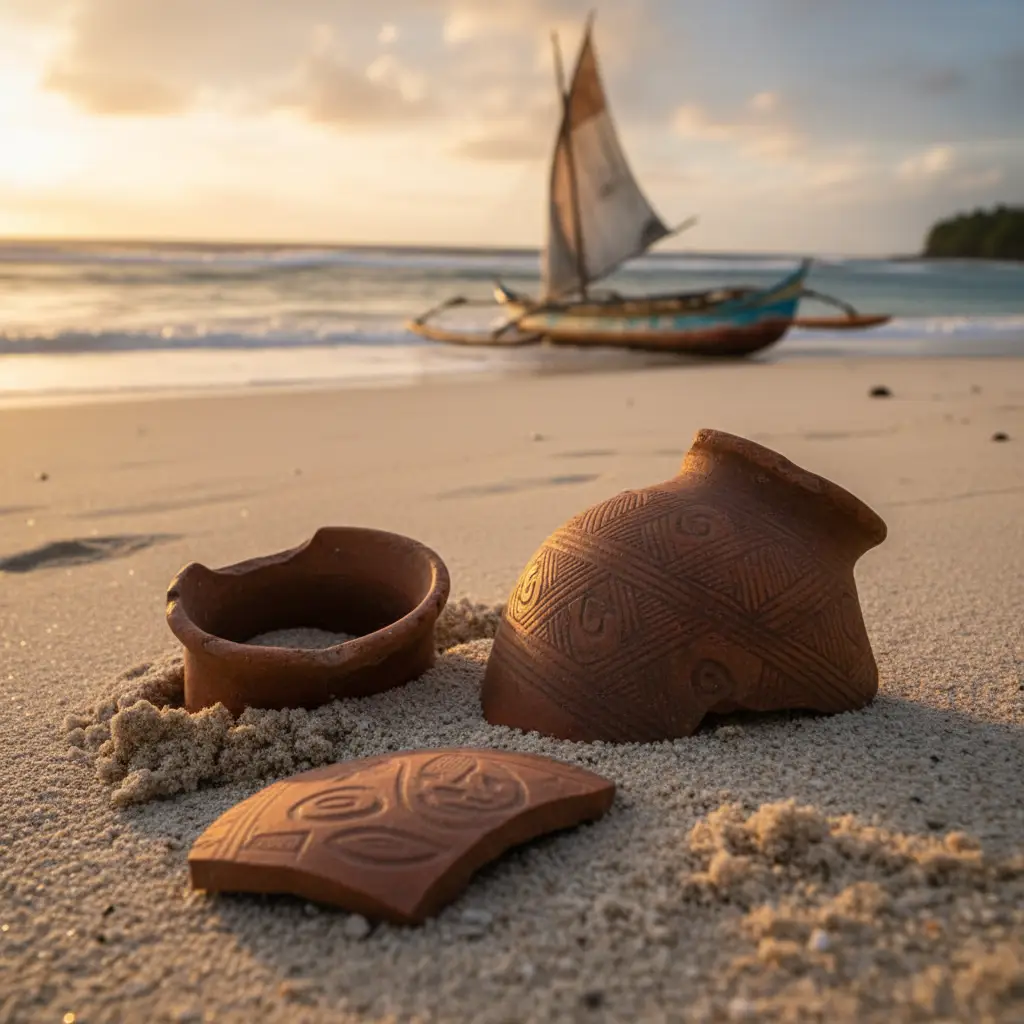
Pre-colonial History: The Lapita & Custom Governance
Long before European maps designated the archipelago as the New Hebrides, the islands were a thriving hub of Melanesian culture. Archaeological evidence dates human settlement in Vanuatu to approximately 3,000 years ago, associated with the Lapita culture. These master navigators arrived from Southeast Asia, bringing with them distinctive pottery, domesticated animals, and complex social structures.
What was traditional governance like before colonization?
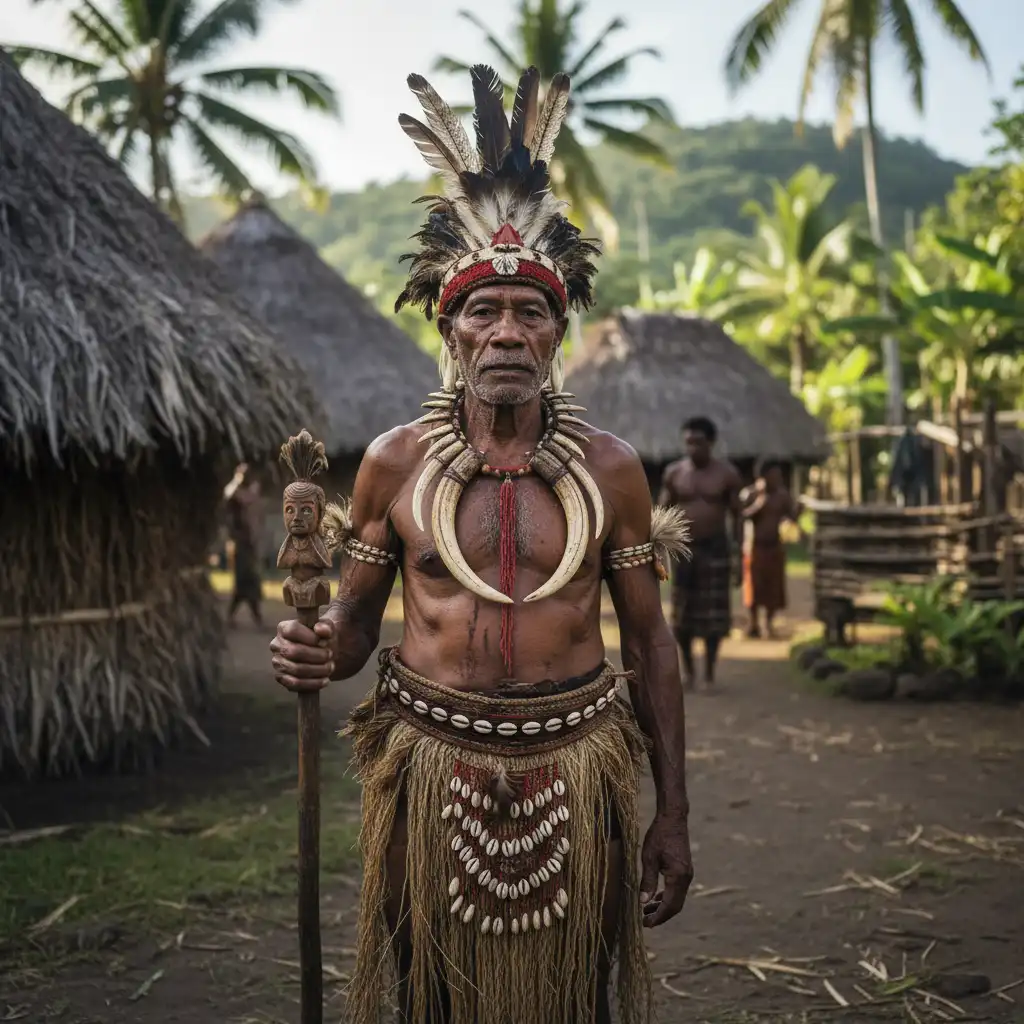
Before centralized government existed, Vanuatu was governed by a highly decentralized system of chieftainship and ‘kastom’ (custom). Governance was not monolithic; it varied significantly between islands and even between villages. In the northern islands, societies were often graded, where men (and sometimes women) could rise through ranks by acquiring wealth, primarily in the form of pigs with curved tusks, and hosting lavish feasts. This system, known as the Nimangki, ensured that leaders were those who could demonstrate resourcefulness and redistribution of wealth.
In the central and southern islands, leadership was often hereditary, with the title of chief passed down through bloodlines. Despite these differences, the binding force across the archipelago was an unwritten code of civil and criminal law rooted in spiritual beliefs and community consensus. Disputes were resolved through mediation, compensation, and restorative justice rather than punitive incarceration, a philosophy that still influences the modern legal system.
One of the most significant figures from this era was Roy Mata, a powerful 13th-century chief who united various tribes in the central islands. His grave, now a UNESCO World Heritage site, serves as a poignant reminder of the sophisticated political organization that existed centuries before European arrival.
European Contact and the Sandalwood Trade
The first recorded European contact occurred in 1606 when the Portuguese explorer Pedro Fernández de Quirós, sailing for the Spanish Crown, arrived at Espiritu Santo. Believing he had found the great southern continent, he named it La Austrialia del Espiritu Santo. However, the settlement was short-lived due to hostility and disease, and Europeans did not return in significant numbers for another 160 years.
In 1768, Louis Antoine de Bougainville rediscovered the islands, and in 1774, Captain James Cook charted the group, naming them the New Hebrides—a name that would persist until 1980. Cook’s detailed maps opened the door for whalers and traders, fundamentally altering the trajectory of the islands.
The Impact of Blackbirding
The 19th century brought two major waves of disruption: the sandalwood trade and “blackbirding.” When sandalwood was discovered on Erromango in 1825, a rush of traders ensued, often leading to violent skirmishes with local populations. Following the depletion of sandalwood, a darker chapter began in the 1860s. Blackbirding involved the recruitment—often through deception or kidnapping—of Ni-Vanuatu laborers to work on sugar plantations in Queensland (Australia) and Fiji. It is estimated that over 40,000 Ni-Vanuatu were taken during this period. This depopulation destabilized traditional social structures and created a deep-seated mistrust of foreign intervention that fueled later independence movements.
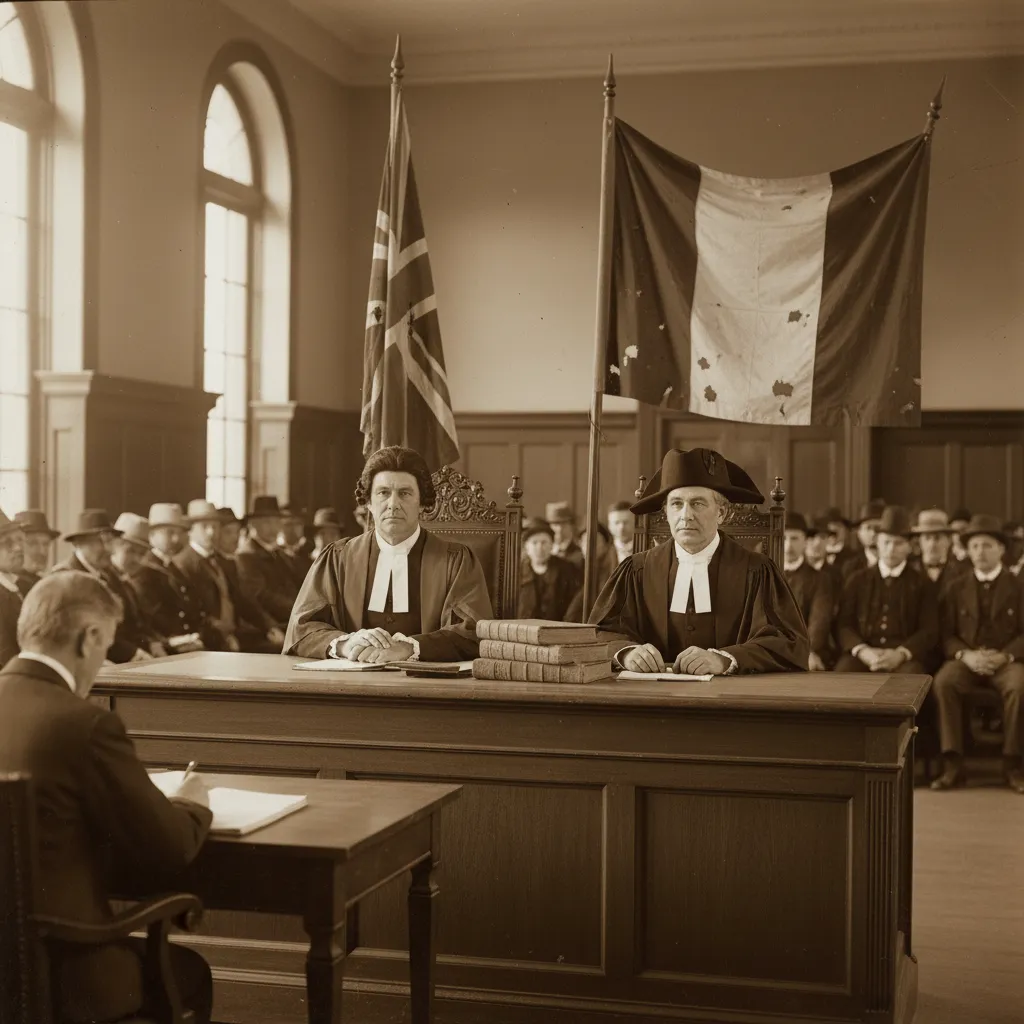
The Anglo-French Condominium: A Political Anomaly
Perhaps the most bizarre chapter in Vanuatu’s governance history is the Condominium. By the late 19th century, both British and French planters had established significant interests in the New Hebrides. Neither nation wanted to cede control to the other, yet neither wanted the burden of sole administration. The solution was the Anglo-French Condominium, established in 1906.
What was the “Pandemonium”?
The Condominium was a unique form of dual government where Britain and France ruled jointly. In practice, it was often referred to as the “Pandemonium” due to its bureaucratic duplication and inefficiency. The territory had:
- Two police forces (one British, one French).
- Two health services.
- Two education systems.
- Three court systems: one for British nationals, one for French nationals, and a Joint Court for native affairs and land disputes.
- Two currencies circulating simultaneously.
Ni-Vanuatu people were technically stateless. They were not citizens of either Britain or France and could not travel abroad with a passport. If a crime was committed, the applicable law depended on the nationality of the victim or perpetrator, creating a legal quagmire. While the French administration encouraged land acquisition and assimilation, the British preferred a more hands-off approach, focusing on trade and missionary work. This dual colonization created a linguistic and political divide—Anglophone versus Francophone—that persists in Vanuatu’s political landscape today.
The Road to Independence and the Coconut War
The drive for independence accelerated in the 1970s, driven by land alienation issues. Indigenous Ni-Vanuatu saw their ancestral lands being sold to foreign speculators, sparking the formation of political parties. The New Hebrides National Party, later renamed the Vanua’aku Pati (VP), was founded by Father Walter Lini, an Anglican priest. The VP pushed for immediate independence and the return of alienated land.
In contrast, Francophone parties and the Nagriamel movement, led by Jimmy Stevens on Espiritu Santo, favored a slower transition or a decentralized federal system. Stevens, a charismatic leader, allied with French planters and the Phoenix Foundation, a libertarian group from the US, leading to the brief but tense “Coconut War” in 1980.
How was the Coconut War resolved?
Just weeks before the scheduled independence in July 1980, Jimmy Stevens declared the independence of the island of Espiritu Santo as the “Republic of Vemerana.” The British and French colonial troops were reluctant to intervene forcibly. Upon independence on July 30, 1980, the new Prime Minister, Walter Lini, requested assistance from Papua New Guinea. The PNG Kumul Force arrived, and the rebellion was quelled quickly with minimal casualties. This cemented the authority of the new central government and marked the birth of the Republic of Vanuatu.
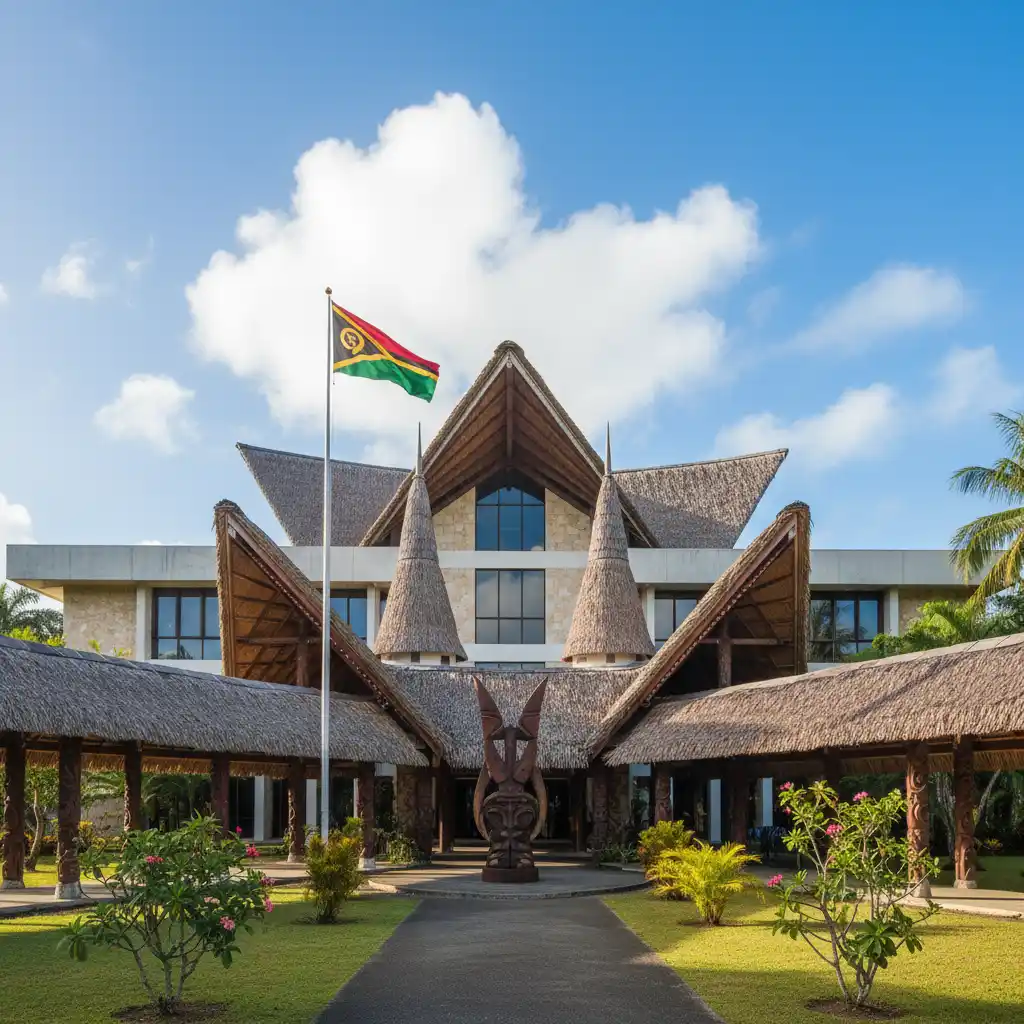
Modern Political System and Governance
Since 1980, Vanuatu has operated as a unitary parliamentary republic. The political framework is defined by the Constitution, which declares the supreme law of the land.
The Executive and Legislative Branches
The Parliament: Vanuatu has a unicameral (single-chamber) Parliament with 52 members elected by popular vote to serve four-year terms. The electoral system often results in coalition governments, as it is rare for a single political party to win an absolute majority. This has led to a dynamic, albeit sometimes unstable, political environment where votes of no confidence are common.
The Prime Minister: The head of government is the Prime Minister, who is elected by the Parliament from among its members. The PM appoints the Council of Ministers (cabinet) and holds the executive power to run the country.
The President: The head of state is the President, currently a largely ceremonial role similar to the Governor-General in Commonwealth realms. The President is elected by an electoral college consisting of Parliament members and the presidents of the six provincial councils. The President serves a five-year term and acts as a symbol of national unity.
The Judiciary
The legal system is based on English common law and French civil law, a legacy of the Condominium. The Supreme Court is the highest court, headed by a Chief Justice. However, the Constitution also mandates that the judiciary must take customary law into account when resolving disputes, provided it does not conflict with the Constitution.
The Malvatumauri: Integrating Kastom
Vanuatu is unique in how formally it integrates traditional leadership into the modern state. The Malvatumauri National Council of Chiefs is a constitutional body composed of custom chiefs elected by their peers.
What is the function of the Malvatumauri?
The Malvatumauri advises the government on all matters concerning Ni-Vanuatu culture and language. While they do not have legislative power to pass laws, the Parliament is required to consult them on any bill relating to land tenure or custom. This ensures that modernization does not erode the fundamental cultural identity of the nation. In rural areas, village chiefs continue to handle the majority of minor disputes, maintaining peace through traditional reconciliation ceremonies involving kava and exchange of mats or pigs.
Key Historical Figures
Understanding Vanuatu’s governance requires knowing the architects of its freedom and the leaders of its movements.
Father Walter Lini (1942–1999)
Known as the “Father of Independence,” Walter Lini was the first Prime Minister of Vanuatu. An Anglican priest, he formulated the doctrine of “Melanesian Socialism,” which sought to blend traditional communal values with modern socialism and Christian ethics. He was instrumental in navigating the country through the difficult transition from the Condominium to sovereignty.
Jimmy Stevens (1920s–1994)
Leader of the Nagriamel movement, Stevens was a controversial but pivotal figure. He championed the rights of Ni-Vanuatu against land alienation but later led the Vemerana rebellion. His movement highlighted the deep divides between the central government and the specific needs of individual islands, a tension that still influences decentralization debates today.
Barak Sope
A prominent political figure and former Prime Minister, Sope was a staunch advocate for indigenous land rights and often took a more radical stance against foreign influence compared to his peers. His career illustrates the volatile nature of Vanuatu’s coalition politics.
Frequently Asked Questions (People Also Ask)
What type of government does Vanuatu have?
Vanuatu is a representative parliamentary democracy with a unitary republic structure. The head of government is the Prime Minister, who holds executive power, while the head of state is the President, who holds a largely ceremonial role. The system also formally recognizes traditional chiefs through the Malvatumauri Council.
When did Vanuatu gain independence?
Vanuatu gained independence on July 30, 1980. Prior to this, it was known as the New Hebrides and was governed jointly by the United Kingdom and France under the Anglo-French Condominium from 1906 until 1980.
What was the Anglo-French Condominium?
The Anglo-French Condominium was a unique colonial arrangement established in 1906 where Britain and France jointly administered the New Hebrides. It resulted in duplicated services (two police forces, two education systems) and was often jokingly referred to as the “Pandemonium” due to its inefficiency.
What is the role of the Malvatumauri Council of Chiefs?
The Malvatumauri National Council of Chiefs is a constitutional body that advises the government on matters regarding custom and tradition. They play a crucial role in preserving Ni-Vanuatu culture, particularly in matters involving land tenure and customary law.
Who was the first Prime Minister of Vanuatu?
Father Walter Lini was the first Prime Minister of Vanuatu. He was a key figure in the independence movement and served as Prime Minister from 1980 to 1991. He is widely regarded as the father of the nation.
What legal system does Vanuatu use?
Vanuatu uses a mixed legal system that combines English common law, French civil law, and customary law. The Constitution dictates that British and French laws in effect at the time of independence continue to apply unless revoked by Parliament, provided they are compatible with local custom.