
A comprehensive Vanuatu islands guide navigates the 83-island South Pacific archipelago, categorizing destinations by their unique offerings: Efate for urban amenities and waterfalls, Espiritu Santo for world-class diving and blue holes, Tanna for accessible volcanic activity, and Malekula for deep cultural immersion. This resource assists travelers in planning complex itineraries across these diverse volcanic and coral islands.
Efate & Port Vila: The Gateway to the Archipelago
For the vast majority of international travelers, Efate is the point of entry and the economic engine of Vanuatu. Home to the capital, Port Vila, this island offers a blend of Melanesian culture and cosmopolitan amenities. Unlike the more remote outer islands, Efate provides a paved ring road that encircles the island, making it the most accessible destination for those with limited time.
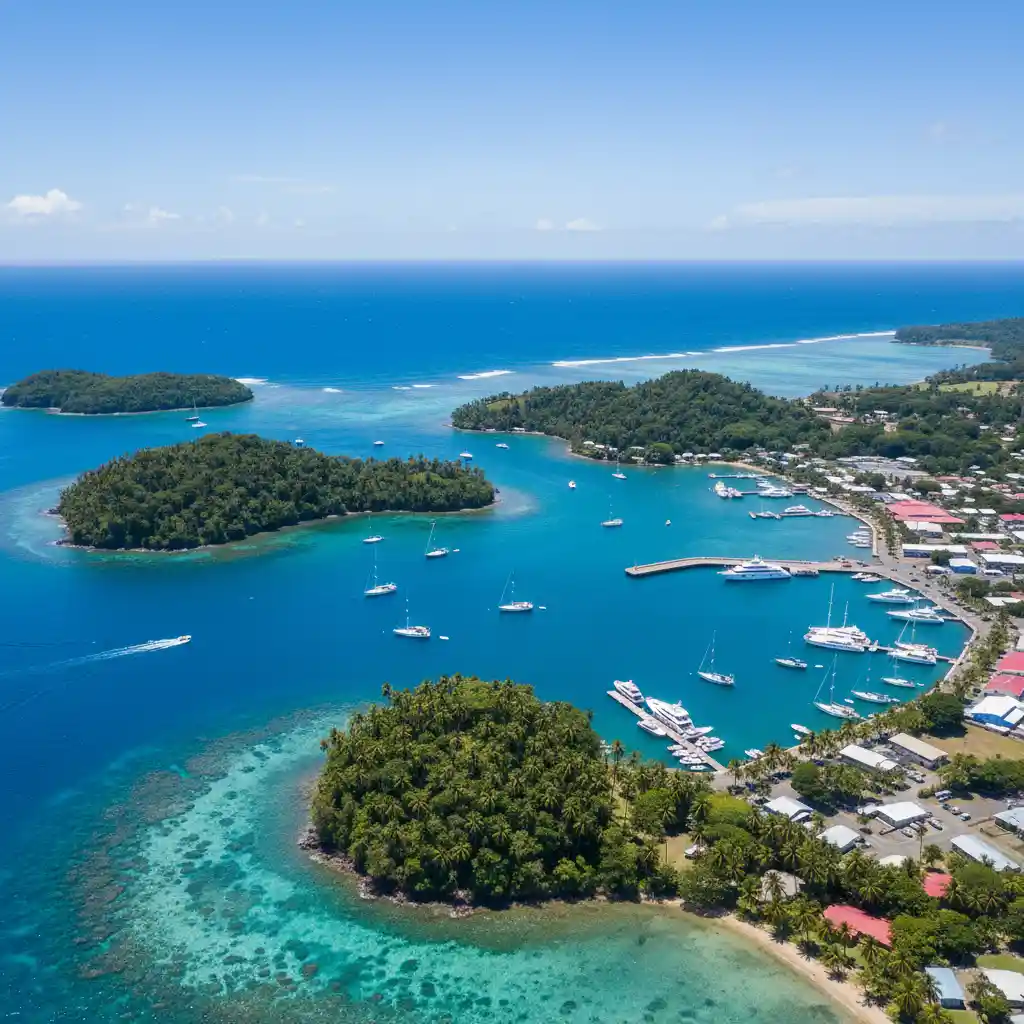
What makes Port Vila unique?
Port Vila is situated on a natural harbor that is breathtakingly beautiful. It serves as the culinary capital of the country, featuring a fusion of French, Asian, and Melanesian cuisines. The central market is a hub of activity where locals sell organic produce 24 hours a day from Monday to Saturday. Key sites include the National Museum of Vanuatu, which houses ancient artifacts and explains the complex history of the New Hebrides Condominium.
Exploring Beyond the Capital
Leaving the capital, the Havannah Coast on the north side of Efate offers sheltered waters perfect for day cruises. The Mele Cascades, a series of terraced waterfalls leading to a natural swimming pool, remains one of the most popular day trips. For history enthusiasts, the island is dotted with WWII relics, as Efate served as a major base for Allied forces. The Blue Lagoon, located on the eastern side, is a mix of fresh and salt water that creates a vibrant, milky-blue swimming hole surrounded by banyan trees.
Espiritu Santo: Wrecks, Reefs, and Blue Holes
Espiritu Santo, often referred to simply as “Santo,” is the largest island in the archipelago and arguably the most geographically diverse. It is a destination that demands at least four to five days to explore properly. The island is defined by its towering mountain ranges to the west and its pristine, flat coastlines to the east.
Why is Santo a world-class diving destination?
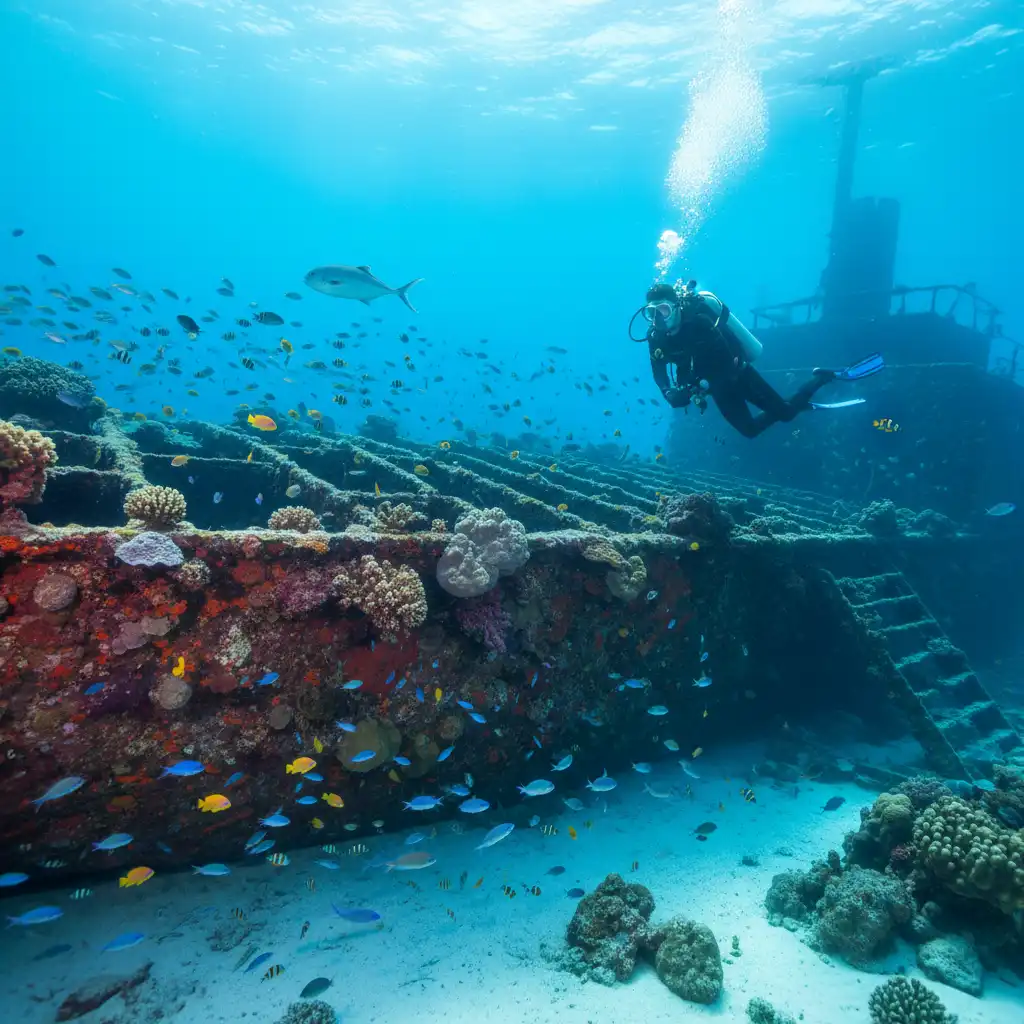
Santo is home to the SS President Coolidge, one of the largest and most accessible wreck dives in the world. This luxury liner turned troopship sank in 1942 after hitting a friendly mine. Today, divers can explore the engine room, the dining saloon, and see the famous “The Lady” ceramic figure. Nearby, Million Dollar Point offers a surreal snorkeling experience where the US military dumped tons of equipment—bulldozers, cranes, and trucks—into the ocean after the war.
The Phenomenon of the Blue Holes
Geologically, Santo is famous for its blue holes. Rainwater filters through the limestone bedrock and resurfaces as crystal-clear, sapphire-blue springs. The Nanda Blue Hole, Matevulu Blue Hole, and Riri Blue Hole are the most prominent. These freshwater springs are surrounded by dense rainforest, creating a serene, almost prehistoric atmosphere. Furthermore, Champagne Beach, located on the northeast coast, consistently ranks among the best beaches globally due to its powdery white sand and the volcanic gas vents that make the water fizz at low tide.
Tanna Island: The Forge of Fire
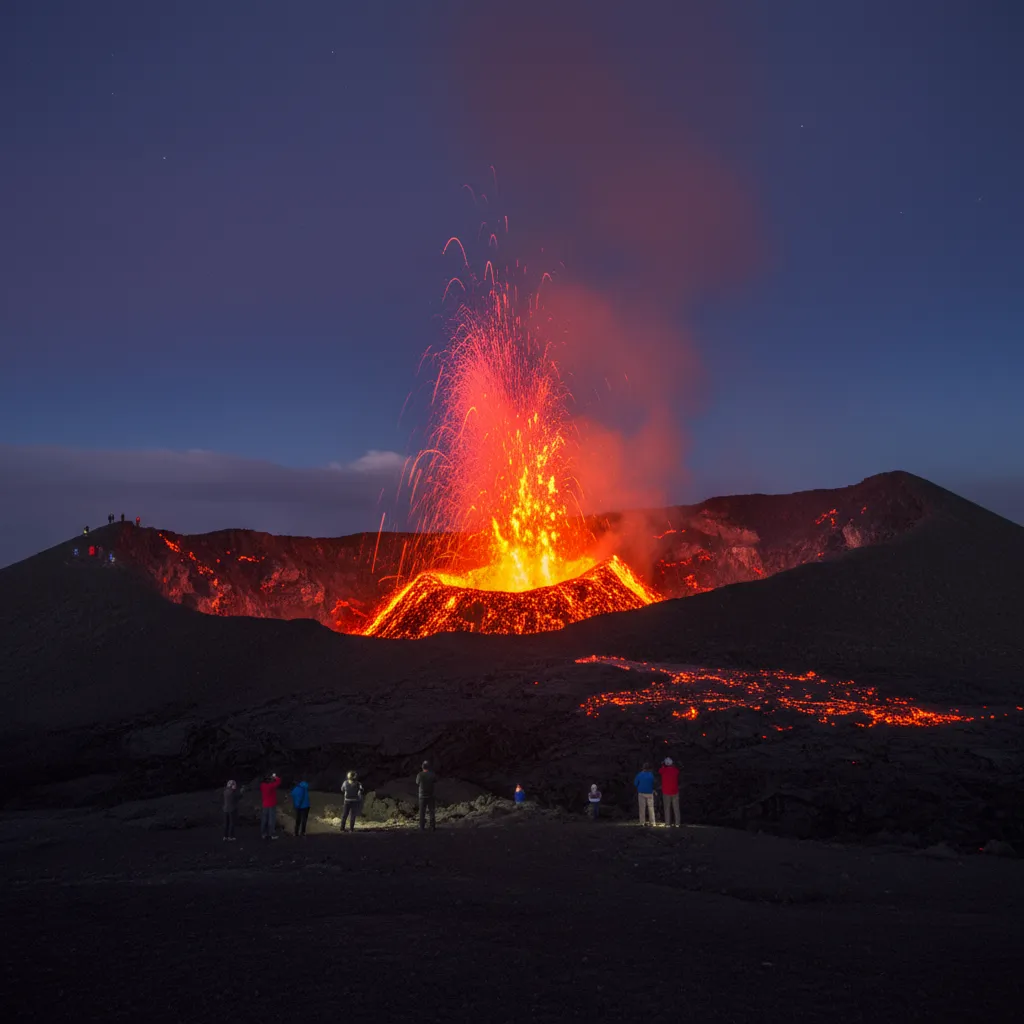
Tanna is an island of raw energy. It is here that the earth creates new land, and ancient customs (Kastom) are preserved with fierce pride. Tanna is best known for Mount Yasur, one of the world’s most accessible active volcanoes. Unlike other volcanoes that require arduous multi-day treks, Mt. Yasur can be accessed via a 4WD vehicle to within 150 meters of the crater rim.
How to visit Mount Yasur safely?
Visitors typically ascend in the late afternoon to witness the volcano’s activity during twilight and into the night. Standing on the rim, you can feel the shockwaves and see magma exploding into the sky. It is a visceral reminder of the Pacific Ring of Fire’s power. Safety is monitored by local guides who track seismic activity levels; access is restricted if the activity level rises above a certain threshold.
The Blue Cave and Custom Villages
Beyond the volcano, Tanna offers the Blue Cave, a sea cave accessible only by swimming underwater through a short passage (or by boat at very low tide). Inside, a hole in the cave ceiling illuminates the water in a brilliant blue hue. Tanna is also the home of the John Frum movement, a cargo cult that worships an American WWII figure, and deeply traditional villages like Yakel, where residents live a lifestyle largely unchanged for centuries, rejecting modern amenities in favor of Kastom.
Malekula: The Cultural Heartland
Malekula is the second-largest island and is shaped like a sitting dog. It is known as the island of custom and cannibalism—though the latter is purely historical. Malekula is linguistically diverse, with over 30 distinct languages spoken on this single island. It is the destination for anthropologists and travelers seeking deep cultural immersion rather than resort luxury.
Who are the Big Nambas and Small Nambas?
The island is culturally divided between the Big Nambas in the north and the Small Nambas in the central and southern regions. The terms refer to the size of the namba (penis sheath) worn by the men during traditional ceremonies. Visiting these tribes involves trekking into the interior, where visitors are welcomed with elaborate dances, history telling, and demonstrations of sand drawing—a UNESCO-recognized intangible cultural heritage. The sand drawings are complex geometric patterns used to communicate stories and rituals.
Pentecost: The Land Diving Ritual
Pentecost Island is world-famous for the Nagol, or land diving, which is the precursor to modern bungee jumping. This ritual is not a tourist show but a yam harvest fertility ceremony that takes place annually between April and June.
When is the best time to see Land Diving?
Timing is critical for Pentecost. The vines used for the jump are only supple enough during the yam harvest season (April to June). Men build towering wooden structures, bind vines to their ankles, and jump from heights of 20 to 30 meters. The goal is for their shoulders to graze the earth, blessing the soil for a good harvest. Travelers must book well in advance, as accommodation on Pentecost is limited to basic guesthouses and the influx of visitors during the Nagol season is high.

Ambrym, Banks, & The Outer Islands
For the intrepid explorer, the guide to Vanuatu extends to the ‘Black Island’ of Ambrym and the northern Banks and Torres groups. Ambrym is renowned for its black magic sorcery and its two active volcanoes, Marum and Benbow. The landscape here is stark, featuring vast ash plains that resemble the surface of the moon.
Further north, the Banks Islands offer a tropical paradise that sees very few tourists. Vanua Lava and Gaua are the main islands here. Gaua features a crater lake with a waterfall flowing directly out of it. These islands are difficult to reach, often requiring charter flights or irregular shipping vessels, but they offer the ultimate castaway experience.
Travel Logistics & Planning
Successfully navigating the Vanuatu islands requires understanding the local infrastructure. While Efate and Santo have reliable roads and electricity, the outer islands often rely on solar power and have unsealed tracks.
Inter-Island Transport
Air Vanuatu is the domestic carrier connecting the islands. Flights to major hubs like Tanna and Santo are frequent, but flights to smaller islands like Malekula or the Banks group may only occur once or twice a week. It is highly recommended to purchase a “Vanuatu Air Pass” if you are flying internationally with the national carrier, as this provides significant discounts on domestic legs.
Currency and Communication
The currency is the Vatu (VUV). While credit cards are accepted in Port Vila and Luganville (Santo), cash is king in the outer islands. There are no ATMs on islands like Pentecost or Ambrym, so travelers must withdraw sufficient cash in the capital before departing. Telecommunications have improved significantly, with Digicel and Vodafone providing 3G/4G coverage in many villages, though remote areas remain off the grid.
People Also Ask
What is the best month to visit Vanuatu?
The best time to visit Vanuatu is during the dry season, from April to October. The weather is cooler and less humid. This also coincides with the land diving season on Pentecost (April-June).
Is Vanuatu safe for tourists?
Yes, Vanuatu is generally very safe. The crime rate is low, and the locals are known for their friendliness. However, standard precautions regarding personal belongings should be taken in Port Vila, and travelers should be aware of natural hazards like currents and volcanic activity.
Do I need a visa for Vanuatu?
Citizens of many countries, including the UK, USA, Australia, and EU member states, are exempt from visa requirements for stays up to 30 or 90 days (depending on the country) for tourism purposes. Always check the latest immigration rules before travel.
What language is spoken in Vanuatu?
There are three official languages: Bislama (an English-based creole), English, and French. Additionally, there are over 113 distinct indigenous languages spoken across the archipelago.
Can you drink the tap water in Vanuatu?
Tap water is generally safe to drink in Port Vila and Luganville, but it is recommended to drink bottled or boiled water in rural areas and outer islands to avoid stomach upsets.
How many days do you need in Vanuatu?
A minimum of 7 to 10 days is recommended. This allows enough time to explore Efate and at least one outer island like Tanna or Santo. For a comprehensive tour including Malekula or Pentecost, 14 to 21 days is ideal.