
A comprehensive Vanuatu travel guide provides essential logistics for navigating this South Pacific archipelago, including visa requirements, currency tips, and inter-island transport advice. It outlines strategic itineraries for key islands like Efate, Espiritu Santo, and Tanna, helping travelers budget effectively while booking unique experiences such as active volcano tours and blue hole swimming.
Vanuatu remains one of the South Pacific’s most untouched treasures, offering a raw and authentic experience that stands in stark contrast to the highly commercialized tourism of its neighbors. Whether you are a diver seeking World War II wrecks, an adventurer looking to stand on the rim of an active volcano, or a couple seeking a secluded luxury escape, planning your journey requires detailed logistical knowledge. This guide serves as your central hub for booking, planning, and executing the perfect Vanuatu itinerary.
Why Choose Vanuatu Over Fiji or Bali?
While Bali offers budget-friendly nightlife and Fiji provides polished resort bubbles, Vanuatu occupies a unique niche: accessible adventure steeped in ancient culture. The decision to visit Vanuatu is often driven by a desire for “Kastom” (traditional culture) and uncrowded natural wonders.
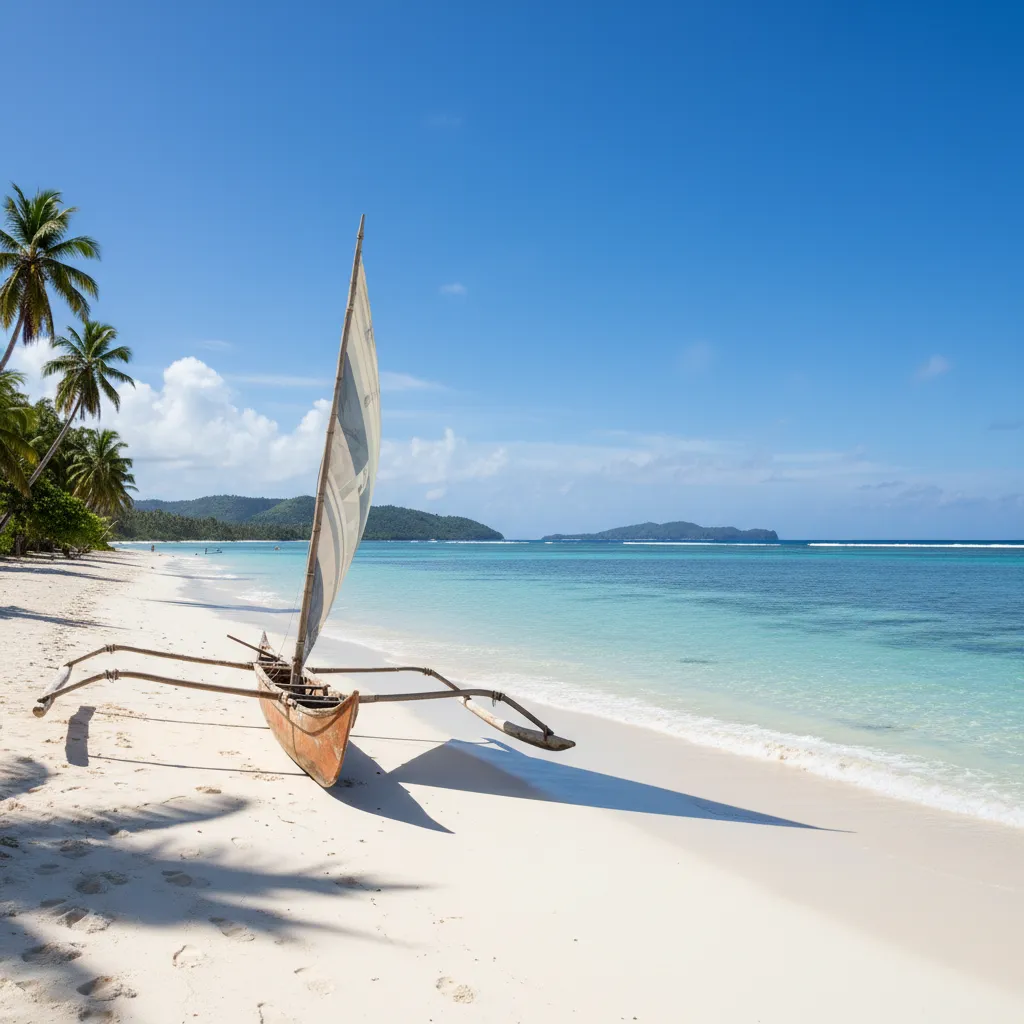
The “Raw” Factor
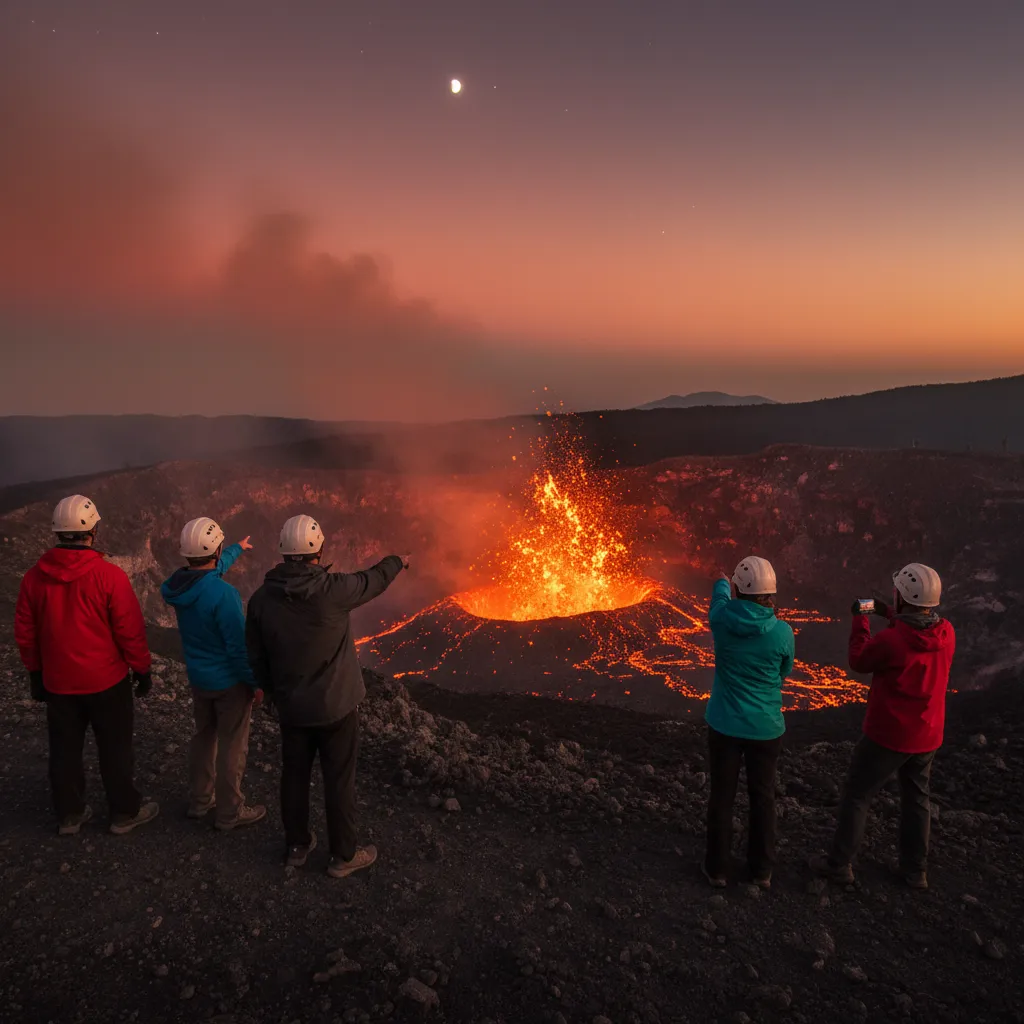
Unlike Bali, where traffic congestion is the norm, Vanuatu offers open roads and remote villages where electricity is scarce but hospitality is abundant. In comparison to Fiji, where tourists often stay within the confines of Denarau, Vanuatu encourages exploration. You can hike up Mount Yasur on Tanna Island to watch lava explode just meters away—an experience heavily restricted or impossible in other destinations.
Ecological Diversity
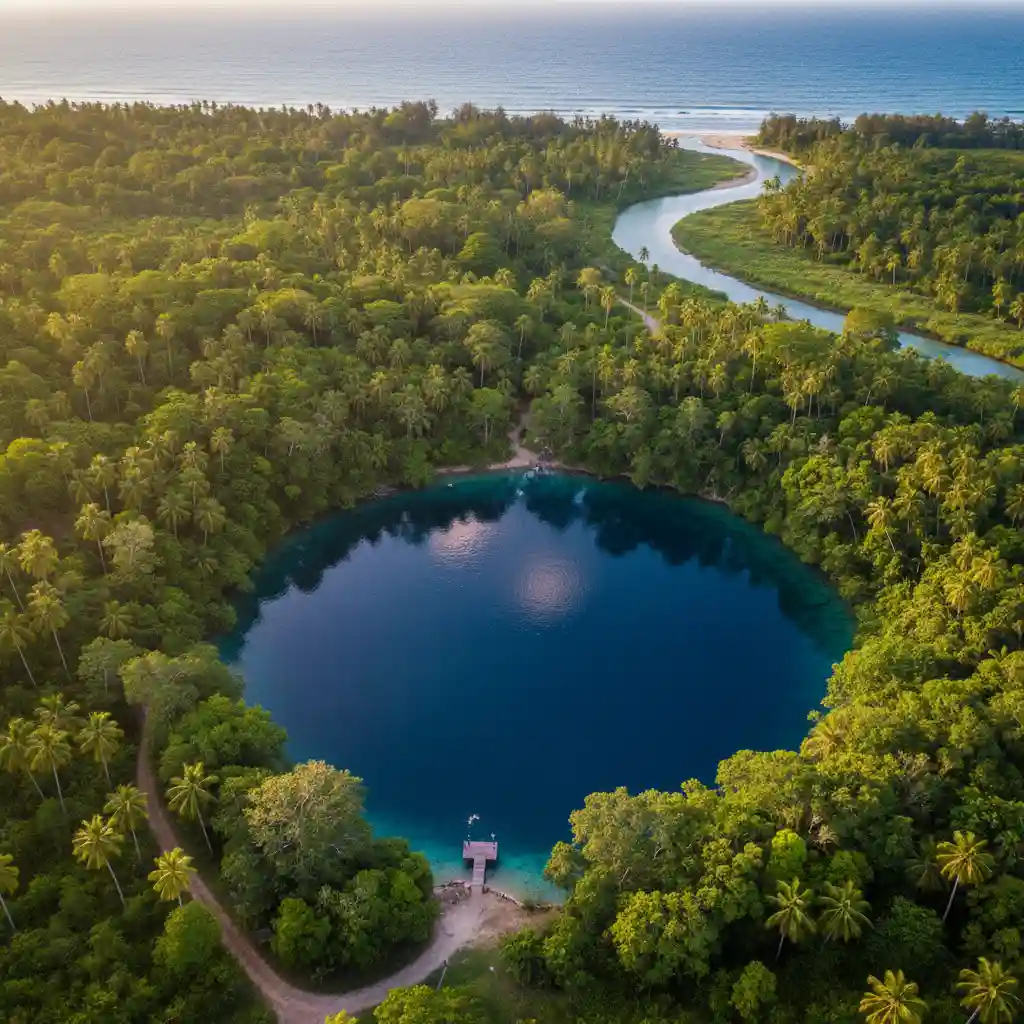
Vanuatu is an archipelago of 83 islands, each with distinct geology. Efate features lush rainforests and waterfalls; Espiritu Santo is famous for its crystal-clear freshwater Blue Holes and white sand beaches like Champagne Beach; Tanna offers volcanic ash plains and hot springs. This diversity allows for a multi-faceted trip that feels like visiting three different countries in one.
Quick Start Guide: Visa, Currency, and Connectivity
Successful travel planning hinges on handling the boring logistics first. Here is exactly what you need to know before booking your flights.
Visa Requirements
For citizens of the Commonwealth (including Australia, New Zealand, and the UK), the EU, and the USA, Vanuatu grants a Visitor Visa on Arrival. This is typically valid for 30 days.
- Requirement: Your passport must be valid for at least six months beyond your intended stay.
- Proof of Onward Travel: You must present a confirmed return or onward ticket.
- Cost: There is generally no fee for the visitor visa for these nationalities, though rules can change, so always check the latest immigration updates.
Currency and Cash Management
The local currency is the Vanuatu Vatu (VUV).
- Exchange Rate: Roughly 100 VUV = $0.85 USD or $1.30 AUD (rates fluctuate).
- Cash is King: While resorts and supermarkets in Port Vila (Efate) and Luganville (Santo) accept credit cards (usually with a 3-5% surcharge), cash is mandatory for markets, village tours, local transport (buses), and outer islands.
- ATMs: Available in Port Vila and Luganville. Withdraw sufficient cash before heading to Tanna or smaller islands.
SIM Cards and Wi-Fi
Do not rely on hotel Wi-Fi alone if you need constant connectivity. The two main providers are Vodafone and Digicel. Digicel generally offers superior coverage in remote areas and outer islands. You can purchase a tourist SIM card at the arrival hall in Bauerfield International Airport (VLI).
Getting There and Inter-Island Transport
International Flights
Most travelers arrive via Bauerfield International Airport (VLI) in Port Vila.
- From Australia: Direct flights are available from Sydney, Brisbane, and Melbourne via Virgin Australia, Jetstar, and Air Vanuatu (subject to operational status).
- From New Zealand: Air New Zealand and Air Vanuatu operate flights from Auckland.
- From Fiji: Fiji Airways connects Nadi to Port Vila, making a dual-destination trip easy.
Inter-Island Travel
Traveling between islands requires planning. Air Vanuatu has historically been the sole domestic carrier, but reliability can vary. It is crucial to build “buffer days” into your itinerary to account for potential flight delays or cancellations. Ferries exist but are long, infrequent, and geared more towards cargo than tourism.
The Big Three: Efate, Santo, and Tanna
To maximize your trip, focus on these three primary islands. Attempting more than this in a standard two-week vacation often leads to burnout.
1. Efate: The Hub
Best for: Dining, waterfalls, and accessibility.
Efate is home to the capital, Port Vila. It is the most developed island and the entry point for international travelers.
- Mele Cascades: A series of stunning waterfalls you can hike up and swim in.
- Blue Lagoon: A popular swimming spot with rope swings, mixing fresh and salt water.
- Hideaway Island: Famous for the world’s only underwater post office.
- Dining: Port Vila is the culinary capital, offering French-influenced cuisine and fresh seafood.
2. Espiritu Santo: The Natural Wonder
Best for: Diving, beaches, and blue holes.
Santo is larger than Efate but far less developed. It feels wild and prehistoric.
- Champagne Beach: Frequently voted one of the best beaches in the world due to its powdery sand.
- Blue Holes: Nanda, Matevulu, and Riri Blue Holes are natural limestone springs with impossibly clear blue water.
- SS President Coolidge: One of the world’s most accessible and largest wreck dives.
- Millennium Cave: A rigorous trekking and canyoning adventure for the fit traveler.
3. Tanna: The Adventure
Best for: Volcanoes and authentic culture.
Tanna is raw and rugged. Infrastructure is basic, but the experiences are world-class.
- Mount Yasur: One of the world’s most accessible active volcanoes. You can drive almost to the rim and walk the rest to peer into the crater.
- Blue Cave: A stunning sea cave accessible by boat and a short underwater swim.
- Kastom Villages: Experience traditional life in villages like Yakel, where modern influences are rejected in favor of ancient ways.
Vanuatu Budget Calculator & Costs
Is Vanuatu expensive? It can be. While local produce is cheap, imported goods and fuel are pricey. Use this breakdown to estimate your daily spend (excluding international flights).
Budget Traveler (Backpacker)
Daily Cost: $80 – $120 USD / day
- Accommodation: Guesthouses or bungalows ($40-$60/night).
- Food: Markets and local takeaways (Lap Lap, Tuluk).
- Transport: Public minibuses (marked with ‘B’ on number plates).
- Activities: Free beaches, self-guided hikes.
Mid-Range Traveler
Daily Cost: $200 – $300 USD / day
- Accommodation: 3-star resorts or boutique hotels ($120-$180/night).
- Food: Mix of resort dining and local cafes.
- Transport: Car rental for a few days, taxis.
- Activities: Guided tours (Mele Cascades entry, Blue Hole entry fees).
Luxury Traveler
Daily Cost: $500+ USD / day
- Accommodation: Private island resorts or luxury villas ($350+/night).
- Food: Fine dining in Port Vila, lobster dinners.
- Transport: Private drivers, charter flights.
- Activities: Private boat charters, scuba diving packages, scenic flights.
Strategic Itinerary Planners
The “Taste of Vanuatu” (7 Days)
Focus purely on Efate to minimize travel time and maximize relaxation.
- Day 1-3: Port Vila base. Visit Mele Cascades, Hideaway Island, and the markets.
- Day 4: Round Island Tour (rent a car or hire a driver). Stop at Blue Lagoon and Survivor Beach.
- Day 5-6: Havannah Harbour (North Efate) for luxury dining and snorkeling.
- Day 7: Departure.
The “Volcano & Beach” (10 Days)
Combine Efate and Tanna.
- Day 1-3: Efate (Port Vila highlights).
- Day 4: Fly to Tanna. Stay near the volcano.
- Day 5: Mount Yasur Twilight Tour.
- Day 6: Blue Cave tour or Black Magic Village.
- Day 7: Fly back to Efate.
- Day 8-9: Relax at a resort in Pango or Erakor Lagoon.
- Day 10: Departure.
The “Ultimate Archipelago” (14 Days)
The holy trinity: Efate, Santo, and Tanna.
- Day 1-3: Efate (Acclimatization and logistics).
- Day 4: Fly to Tanna.
- Day 5-6: Tanna adventures (Volcano, Kastom village).
- Day 7: Fly to Santo (likely connecting via Port Vila).
- Day 8: Luganville and Million Dollar Point.
- Day 9: East Coast Road Trip (Champagne Beach, Blue Holes).
- Day 10: Diving the Coolidge or kayaking the Riri River.
- Day 11-12: Relax at Port Olry.
- Day 13: Fly back to Efate.
- Day 14: Departure.
Best Time to Visit & Seasonal Events
Vanuatu has a tropical climate with two distinct seasons.
- Dry Season (April to October): The most popular time to visit. Temperatures are comfortable (20°C – 28°C), humidity is lower, and rainfall is minimal. This is peak season, so book accommodation in advance.
- Wet Season (November to March): It is hotter, more humid, and prone to tropical cyclones. However, the scenery is incredibly lush, and prices are lower.
Key Festivals
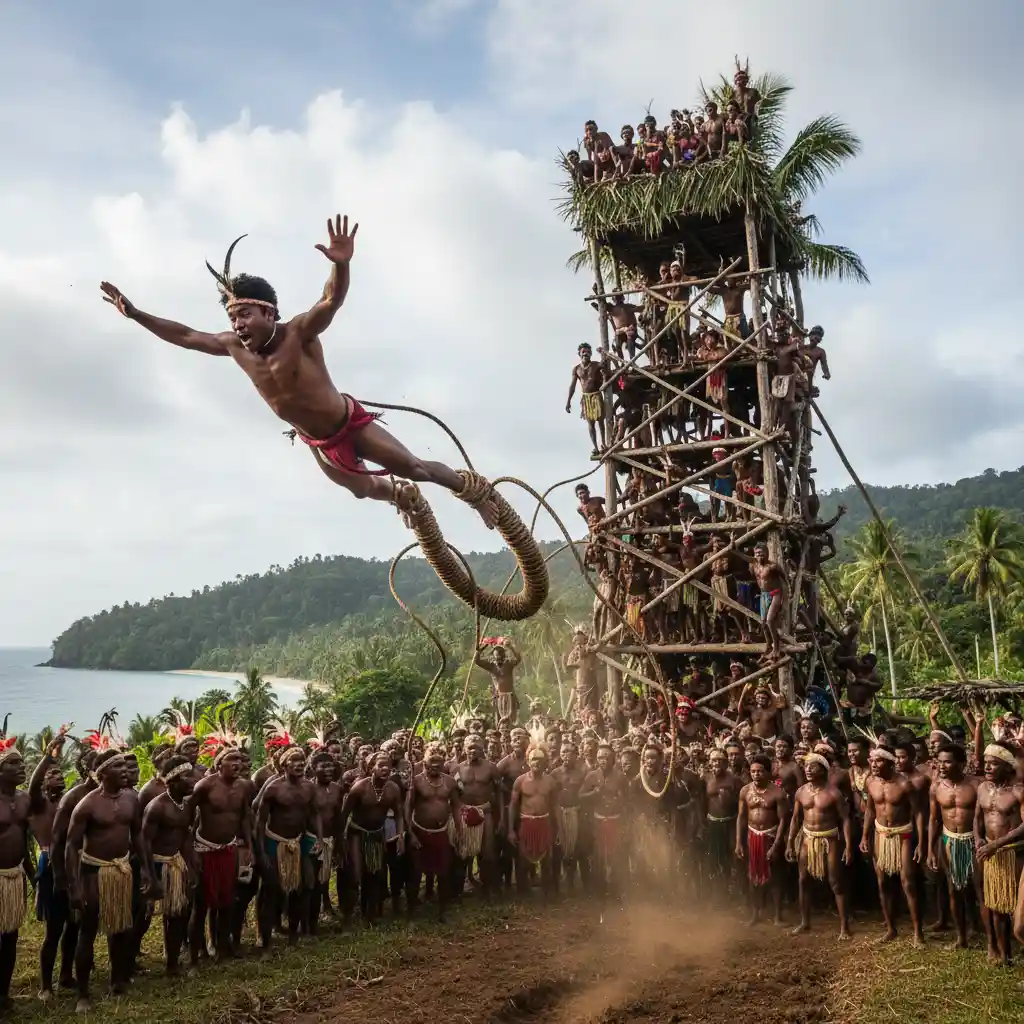
- Naghol Land Diving (April – June): Held on Pentecost Island. This is the precursor to modern bungee jumping, where men jump from tall wooden towers with vines attached to their ankles. It is a spectacular cultural event.
- Tok Tok Vanuatu (August): A major trade show and cultural festival in Port Vila.
Packing, Health, and Safety Essentials
Health & Medical
Malaria is present in Vanuatu, particularly on outer islands like Santo, Tanna, and Pentecost. Port Vila is generally considered low risk, but precautions are necessary.
- Medication: Consult a travel doctor about anti-malarial medication before you go.
- Water: Tap water is generally safe in Port Vila, but bottled or filtered water is recommended elsewhere.
- Insurance: Comprehensive travel insurance that covers medical evacuation is non-negotiable. Medical facilities in Port Vila are basic, and serious issues require evacuation to Australia or New Zealand.
Packing List
- Reef Shoes: Essential for coral beaches and rocky waterfalls.
- Snorkel Gear: While tours provide them, having your own mask ensures a better fit.
- Modest Clothing: When visiting villages, dress modestly (cover shoulders and knees) out of respect for local culture.
- Insect Repellent: High DEET content is recommended.
Frequently Asked Questions
Is Vanuatu safe for tourists?
Yes, Vanuatu is generally very safe. The crime rate is low, and the locals are known for being incredibly friendly. However, petty theft can occur, so lock your valuables away. The biggest risks are usually environmental (sunburn, coral cuts, or currents).
Do I need a visa for Vanuatu?
Citizens from the USA, UK, EU, Australia, and New Zealand generally receive a visitor visa on arrival for stays up to 30 days. You must have a return ticket and a passport valid for 6 months.
What is the best currency to take to Vanuatu?
Australian Dollars (AUD) are the easiest to exchange. However, you should exchange them for Vanuatu Vatu (VUV) upon arrival. While some places accept AUD, the exchange rate offered by vendors will be poor.
Can you drink the tap water in Vanuatu?
In Port Vila, the tap water is treated and generally safe to drink, though many tourists prefer bottled water to be safe. On outer islands like Tanna and Santo, you should strictly drink bottled or boiled water.
How many days do I need in Vanuatu?
A minimum of 7 days is required to see Efate properly. If you want to visit Tanna (Volcano) or Santo (Blue Holes), aim for 10 to 14 days to account for travel time and flight schedules.
Is Vanuatu expensive to visit?
Compared to Southeast Asia, yes. Costs are similar to Australia or New Zealand for food and accommodation. However, you can manage costs by staying in bungalows, using local buses, and eating at local markets.