
Do I need a Vanuatu visa for tourists?
Most international travelers, including citizens of the Commonwealth, European Union, and the United States, do not require a pre-arranged visa for stays of up to 30 days. Instead, they are granted a Visitor Permit upon arrival at the airport, provided they hold a passport valid for six months and a confirmed onward ticket.
Vanuatu, an archipelago of 83 islands in the South Pacific, maintains a welcoming immigration policy designed to encourage tourism and international exchange. For the vast majority of vacationers, entering Vanuatu is a seamless process characterized by minimal bureaucracy. However, strict adherence to document validity and biosecurity laws is enforced without exception. This comprehensive guide serves as the definitive resource for navigating the vanuatu visa for tourists requirements, ensuring your arrival at Bauerfield International Airport is as tranquil as the islands themselves.
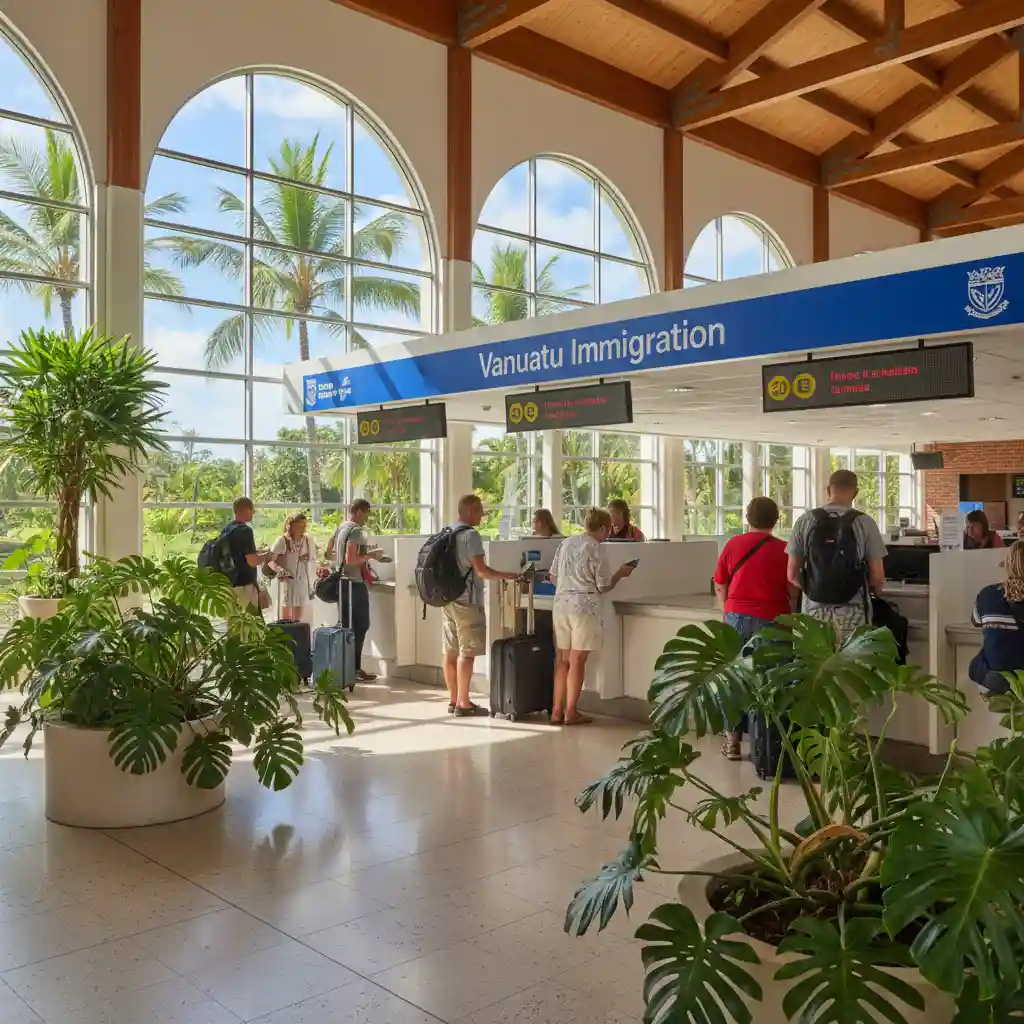
Visa-Exempt Countries & Jurisdictions
The Republic of Vanuatu has established bilateral agreements with over 120 countries, allowing their citizens to enter without applying for a visa beforehand. Upon landing, eligible travelers are issued a “Visitor Permit” stamped directly into their passport. This permit is free of charge and typically valid for 30 days.
Commonwealth Nations
Citizens of most Commonwealth countries are exempt from pre-arrival visa requirements. This includes, but is not limited to:
- Australia
- New Zealand
- United Kingdom
- Canada
- Singapore
- Malaysia
Given the proximity of Australia and New Zealand, citizens from these nations make up the bulk of Vanuatu’s tourism. It is crucial to note that while the visa is not required, the 30-day limit is strictly monitored.
The Schengen Area & European Union
Travelers holding passports from European Union member states and Schengen Area countries are granted visa-free entry. This facilitates long-haul tourism from Europe. Whether you are arriving from France, Germany, Italy, or Scandinavia, you fall under the exemption category for short-term tourism stays.
Other Major Exempt Nations
In addition to the Commonwealth and EU, citizens of the United States, Japan, South Korea, Philippines, and China (for diplomatic/service passports, though regular tourists often receive on-arrival privileges depending on current bilateral status—always check the latest embassy data) generally receive the Visitor Permit on arrival.
Mandatory Travel Documents for All Tourists
Regardless of whether you are from a visa-exempt country or require a pre-arranged visa, every traveler must present specific documentation to the Immigration Officer at the port of entry. Failure to produce these documents is the primary reason for denied entry.
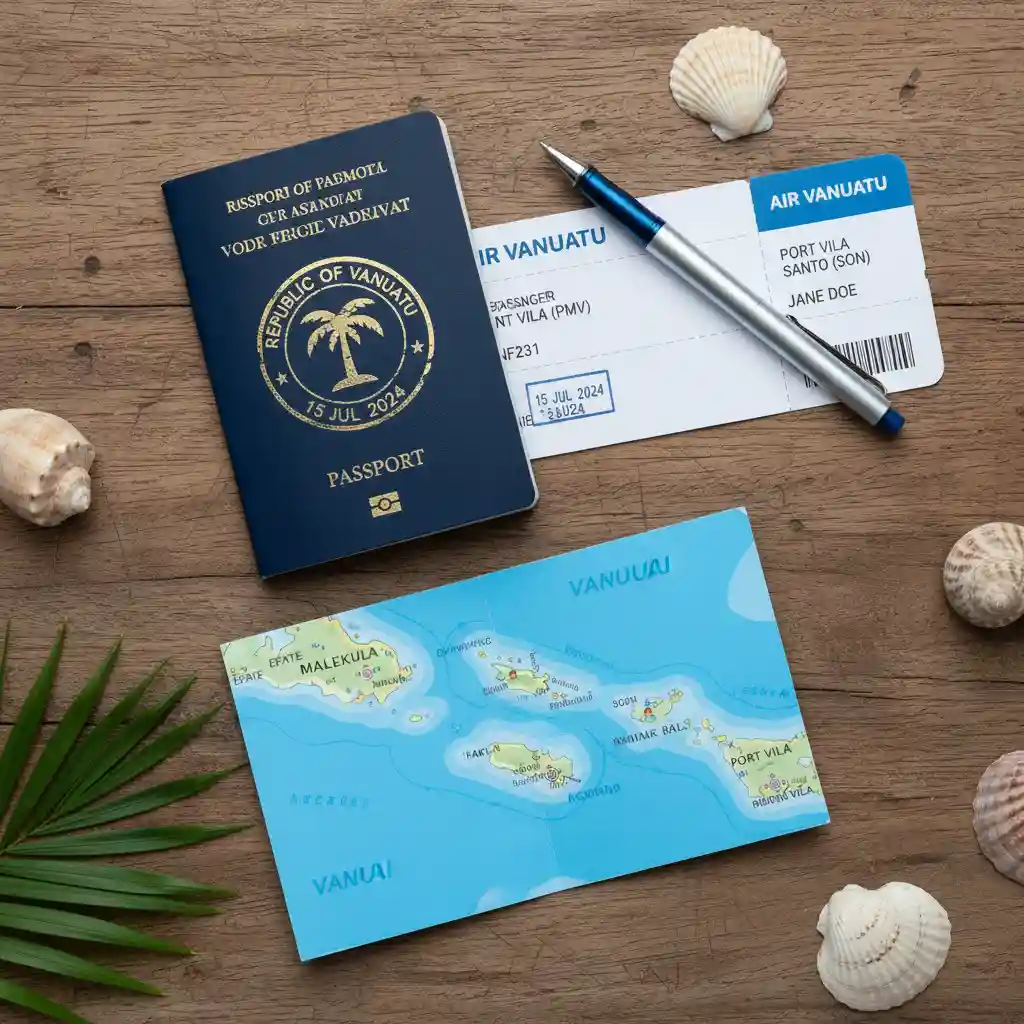
1. Passport Validity (The 6-Month Rule)
Your passport must be valid for at least six months beyond your intended date of arrival in Vanuatu. This is a non-negotiable rule. Airlines will deny boarding at your point of origin if your passport expires within this window. Ensure your passport has at least two blank pages for the entry and exit stamps.
2. Proof of Onward or Return Travel
You must present a confirmed ticket showing your departure from Vanuatu within the 30-day period (or the period of your visa). Immigration officials need to see that you do not intend to remain in the country illegally. A standby ticket is generally not accepted; it must be a confirmed booking.
3. Proof of Sufficient Funds
While rarely scrutinized in detail for established tourists, officers reserve the right to ask for proof that you can support yourself during your stay. This can be in the form of cash, credit cards, or bank statements. This is particularly relevant for backpackers or those on one-way itineraries.
4. Confirmed Accommodation
You should be able to provide the name and address of the resort, hotel, or guesthouse where you will be staying. If staying with friends or family, a letter of invitation from the host is recommended.
Visa Application Process (Non-Exempt Countries)
If you are a citizen of a country that is not on the exemption list (often termed “Category B” countries), you must apply for a visa before you travel. This process has been modernized but requires diligence.
Step 1: Determine Your Status
Contact the nearest Vanuatu Consulate or High Commission to confirm your status. Alternatively, the Vanuatu Immigration Services website provides an updated list of non-exempt countries.
Step 2: Submit the Application Form
You must complete the Non-Exempt Visa Application form (Form 1-0). This can often be done via email or mail through the nearest diplomatic mission. You will need to provide:
- Certified copy of your passport bio-page.
- Two recent passport-sized photos.
- Copy of your travel itinerary/flight bookings.
- Proof of accommodation.
- Application fee payment receipt.
Step 3: Processing Time
Allow at least 10 to 14 working days for processing. Do not book non-refundable flights until your visa has been approved. Once approved, you will receive a visa authorization letter which you must print and present to the airline and immigration upon arrival.

Extending Your Stay in Vanuatu
Many visitors fall in love with the island lifestyle and wish to extend their stay beyond the initial 30 days. Fortunately, this is possible for legitimate tourists.
To extend your vanuatu visa for tourists (Visitor Permit), you must visit the Immigration Office in Port Vila (Efate) or Luganville (Espiritu Santo) before your current permit expires. You can apply for an extension of up to four months in total.
Requirements for Extension:
- Completed extension application form.
- Your valid passport.
- Two recent passport photos.
- Evidence of funds to support the extended stay.
- A confirmed change of flight date for departure.
- Payment of the extension fee (approx. 6,000 Vatu for the first extension, increasing for subsequent months).
Biosecurity & Customs: What Not to Bring
Vanuatu takes biosecurity extremely seriously to protect its unique ecosystem and agriculture from pests and diseases. The entry requirements for goods are as strict as the visa rules.
Upon arrival, all luggage is X-rayed. You must declare all food, plant material, and animal products. Failure to declare these items can result in an on-the-spot fine of 1,000,000 Vatu (approx. $9,000 USD) or imprisonment.
Prohibited or Restricted Items:
- Fresh fruits and vegetables.
- Home-cooked meals.
- Seeds and nuts.
- Meat and dairy products.
- Camping gear showing traces of soil/dirt (must be cleaned thoroughly).
Duty-free allowances are standard: 2.5 liters of spirits or wine, and 250 cigarettes (or 250g of tobacco) for travelers over 18 years old.

COVID-19 & Health Entry Rules
As of late 2023 and moving into 2024, Vanuatu has lifted most pandemic-era travel restrictions. However, health protocols can change at short notice.
Current COVID-19 Status
Travelers are no longer required to present a negative COVID-19 test or proof of vaccination to enter Vanuatu. Quarantine requirements have also been removed for general tourists. However, if you display symptoms upon arrival, health officials may request a rapid test.
General Health Requirements
Malaria: Vanuatu is a malaria-risk zone, particularly in the outer islands. While not an entry requirement, it is highly recommended to consult a travel doctor regarding prophylaxis before travel. Dengue fever is also present, making mosquito repellent an essential packing item.
Yellow Fever: If you are arriving from a country with a risk of Yellow Fever transmission (parts of Africa and South America), you must present a valid Yellow Fever Vaccination Certificate. Without this, you may be denied entry or quarantined.
Frequently Asked Questions
How much does a tourist visa cost for Vanuatu?
For citizens of visa-exempt countries (like Australia, NZ, UK, USA, EU), the Visitor Permit issued on arrival is free of charge. If you require a pre-arranged visa, fees apply and vary by consulate, typically around $30-$50 USD.
Can US citizens go to Vanuatu without a visa?
Yes, US citizens can enter Vanuatu without a pre-arranged visa for stays of up to 30 days. You will receive a Visitor Permit on arrival, provided you have a return ticket and a passport valid for 6 months.
What happens if I overstay my visa in Vanuatu?
Overstaying is a serious offense. You will be liable for a fine for every day you have overstayed, and you may be detained or deported. It can also affect your ability to re-enter Vanuatu or travel to other countries in the future.
Do I need a departure tax for Vanuatu?
Departure tax is usually included in your international airline ticket price. However, it is advisable to check with your airline. If not included, a fee of 3,000 VT is payable at the airport.
Is Vanuatu safe for tourists?
Vanuatu is generally very safe for tourists with low crime rates. The main risks are natural hazards (cyclones, earthquakes) and health risks like mosquito-borne diseases. Standard travel precautions regarding personal belongings apply.
Can I work on a tourist visa in Vanuatu?
No. Employment of any kind, whether paid or unpaid, is strictly prohibited on a Visitor Permit. If you wish to work, you must apply for a Work Permit and Residency Visa through the Department of Labour and Immigration Service.