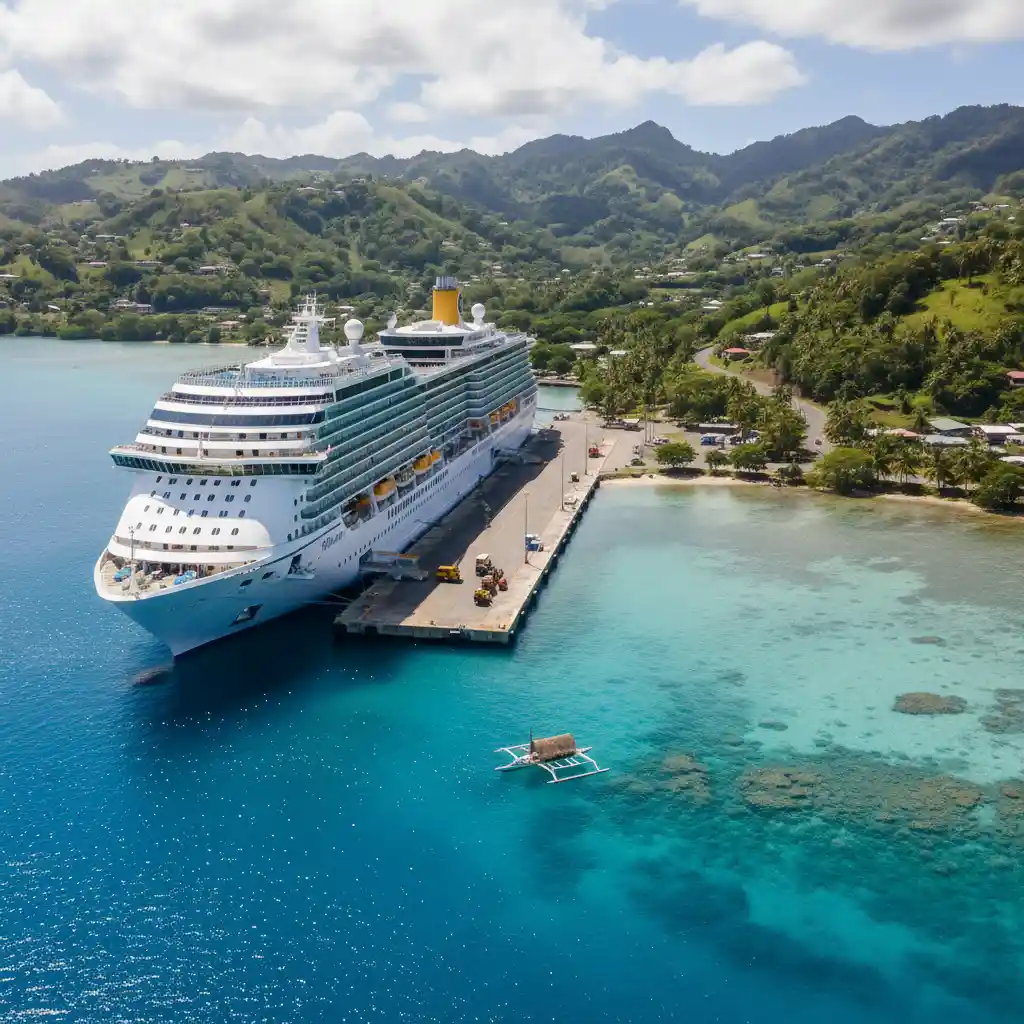
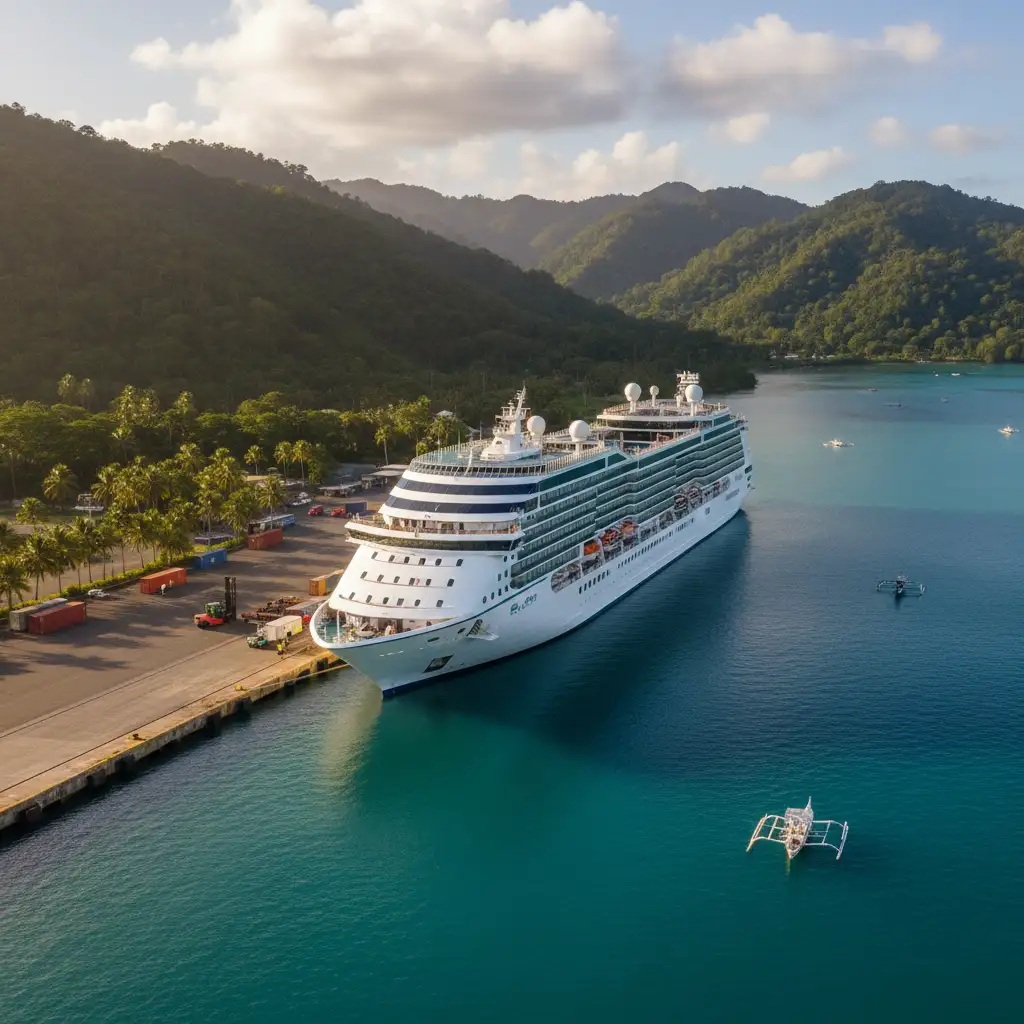
Vanuatu cruise transport encompasses the network of taxis, public minibuses, and water vessels used by passengers to explore Port Vila and Luganville. Most cruisers utilize ‘T’ plated taxis for direct routes or ‘B’ plated minibuses for affordable local travel. Reliable transport ensures easy access to beaches, markets, and cultural attractions during short port stays.
Vanuatu Taxi Rates and Identification
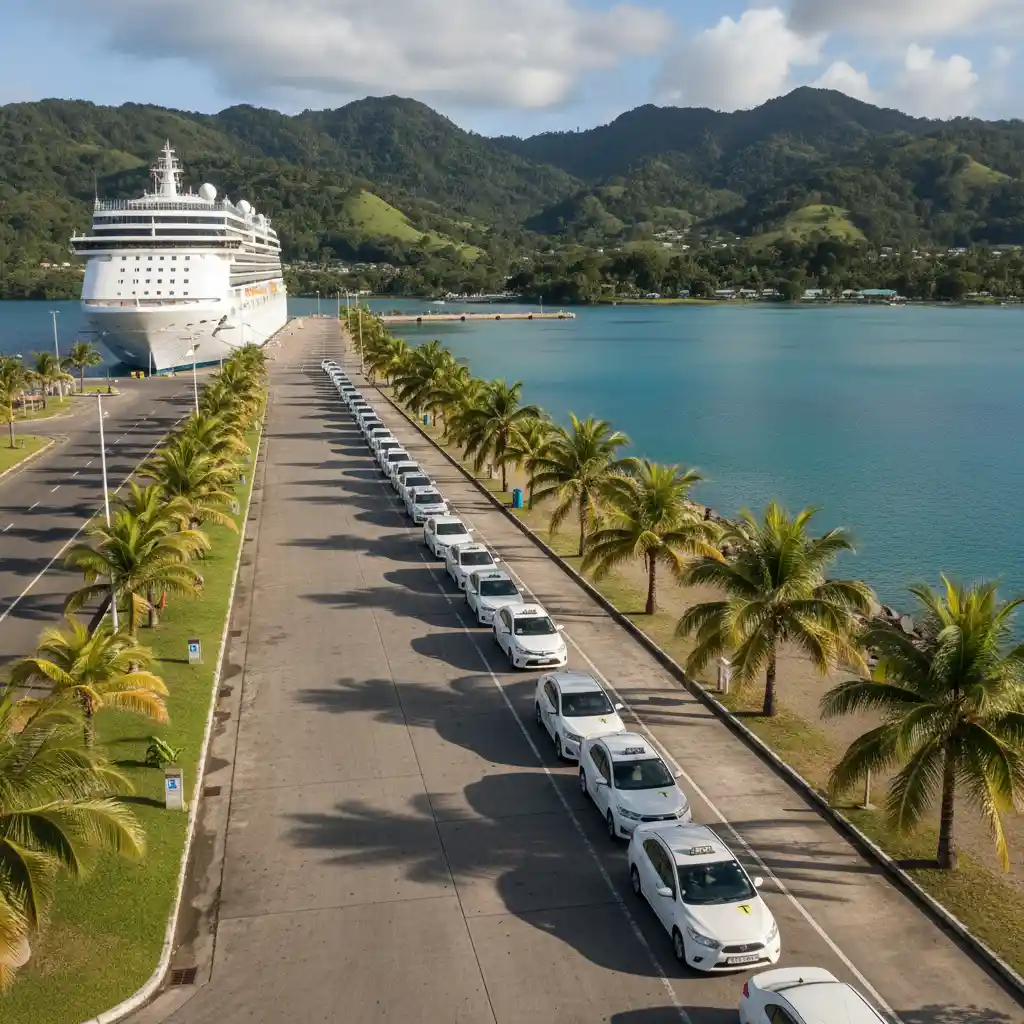
For many Australian and New Zealand cruisers arriving at the Port Vila Lapetasi International Wharf, taxis are the most convenient and direct method of transport. In Vanuatu, official taxis are easily identifiable by the letter ‘T’ at the start of their registration plate. These vehicles range from older sedans to modern SUVs, but all must adhere to specific licensing regulations.
How much do taxis cost in Port Vila?
Unlike many Western countries, taxis in Vanuatu do not typically use meters. Instead, rates are generally fixed based on the destination or the duration of the hire. For cruise passengers, a standard trip from the Main Wharf to the Port Vila town center (Independence Park or the Mama’s Market) typically costs between 1,000 and 1,500 Vatu (approximately $12–$18 AUD). It is vital to agree on the price with the driver before the vehicle departs to avoid any misunderstandings.
Hourly Hire and Custom Tours
High-value segments often prefer hiring a taxi for the entire duration of their port stay. This allows for a bespoke itinerary, including stops at the Mele Cascades, Blue Lagoon, or the Vanuatu Cultural Centre. Hourly rates for a dedicated taxi usually start around 3,000 to 4,000 Vatu per hour. When opting for this service, ensure you clarify whether the price includes waiting time at attractions. Drivers in Vanuatu are famously friendly and often act as informal tour guides, providing local insights that you won’t find in brochures.
Understanding the Local Bus System (The ‘B’ Buses)
The most authentic and cost-effective way to navigate Port Vila is the local minibus system. These vans are ubiquitous and are identified by a ‘B’ on their license plate. Unlike traditional city buses with fixed routes and schedules, Vanuatu’s ‘B’ buses operate on a point-to-point basis, essentially functioning as a shared taxi service.

How to Hail and Use a Bus
To catch a bus, simply stand by the side of the road and wave your hand down when you see a van with a ‘B’ plate. When the driver stops, tell them where you want to go. If they are already heading in that direction with other passengers, they will invite you in. If your destination is in the opposite direction, they may decline, and you simply wait for the next one. This system is incredibly efficient, with buses passing every few minutes in high-traffic areas.
Standard Bus Fares
The standard fare for a trip within the Port Vila town limits is 150 Vatu per person (roughly $2 AUD). If you are traveling further afield—for instance, out to the 777 Duty Free or specific resorts on the Pango Peninsula—the fare may increase to 200 or 300 Vatu. It is customary to pay the driver in Vatu as you exit the vehicle. While some drivers may accept Australian Dollars, the exchange rate offered will be poor, and you will receive change in Vatu, so carrying local currency is highly recommended.
Water Taxis and Coastal Transfers
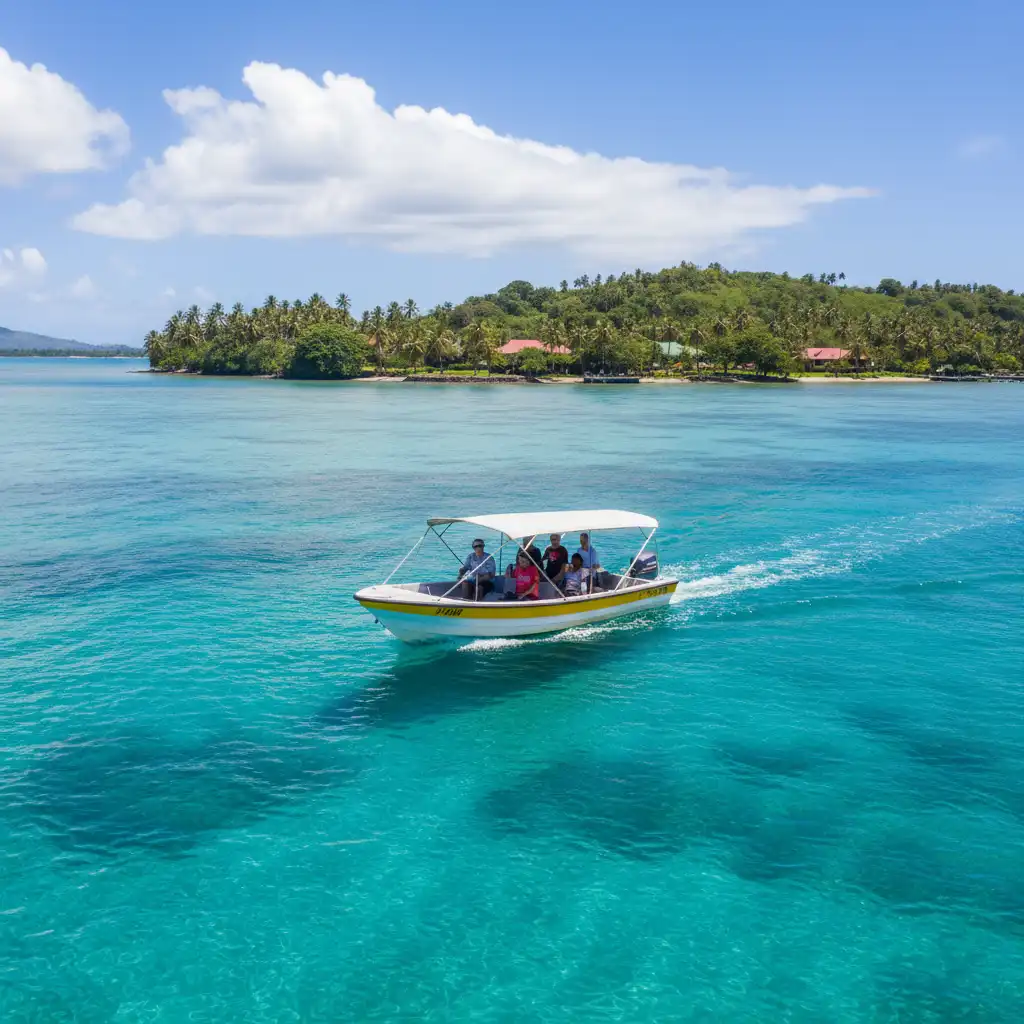
Given that Port Vila is built around a stunning natural harbor, some of the best attractions are reached by water. Water taxis are a staple of Vanuatu cruise transport, providing quick access to island resorts and snorkeling spots that are otherwise inaccessible by road.
Accessing Iririki and Hideaway Island
The most common water taxi route for cruisers is the short hop from the seafront (near the fruit market) to Iririki Island Resort. This service is often free for resort guests or those with a day pass. For those heading to the famous Underwater Post Office at Hideaway Island, a dedicated ferry operates from the Mele beach area. Small, independent water taxis also operate within the harbor; these can be chartered for scenic tours of the coastline or to reach specific waterfront restaurants like The Boatyard or Waterfront Bar & Grill.
Private Charters for High-Value Travelers
For AU/NZ travelers seeking a premium experience, private charters and pre-booked transfers offer the highest level of comfort and reliability. These services often utilize air-conditioned late-model SUVs or luxury sprinters, providing a sanctuary from the tropical heat.
Pre-Booking Benefits
By pre-booking a private driver, you eliminate the need to negotiate fares upon arrival. Companies like Atmosphere Vanuatu or local boutique tour operators provide meet-and-greet services directly at the wharf. This is particularly beneficial for families with small children or travelers with mobility issues, as vehicles can be requested with specific features like child seats or ramp access. Private charters typically range from $150 to $300 AUD for a full-day excursion, depending on the vehicle type and group size.

Safety Tips and Best Practices
Vanuatu is widely regarded as one of the safest destinations in the South Pacific, but exercising standard travel precautions is always wise. When it comes to transport, your safety and experience depend on following a few local norms.
Vetting Your Driver
Always ensure the vehicle has the correct ‘T’ or ‘B’ plates. Official drivers are registered with the Public Land Transport Authority (PLTA). If a driver does not have a visible ID or the vehicle looks poorly maintained, it is perfectly acceptable to wait for another option. For female solo travelers, the ‘B’ buses are generally very safe as they are shared public spaces, but it is best to avoid traveling to remote areas alone late in the evening.
Currency and Payments
While the ‘big’ shops in Port Vila accept credit cards, the transport system is almost entirely cash-based. Before leaving the wharf area, use an ATM or a currency exchange booth to get Vatu. Having small denominations (100, 200, and 500 Vatu notes) is essential for bus travel, as drivers often struggle to provide change for large 5,000 Vatu notes.
Transport in Luganville (Espiritu Santo)
If your cruise itinerary includes a stop in Luganville, the transport landscape is slightly different. Luganville is smaller and more laid-back than Port Vila, but the ‘T’ and ‘B’ system still applies. The town is essentially one long main street, making it very easy to navigate.
Getting to Champagne Beach and Blue Holes
The most popular destinations in Santo, such as Champagne Beach or the Nanda Blue Hole, are located a significant distance from the wharf (often a 45-60 minute drive). For these trips, it is highly recommended to book a return taxi or join a pre-arranged shore excursion. Because mobile coverage can be spotty in rural Santo, you should never take a one-way taxi to a remote beach without arranging a specific pickup time for your return, as you may find yourself stranded without a way to call for a ride.
The Walkability Factor
In Port Vila, the walk from the Main Wharf to the town center is approximately 3 kilometers. While walkable, the road is dusty and can be extremely hot. Most cruisers find that the small investment in a bus or taxi fare is well worth the comfort, allowing them to save their energy for exploring the markets and attractions. In Luganville, the wharf is also a bit of a distance from the main shops, so transport is generally required for all but the most avid walkers.
Summary of Transport Options
To maximize your time in Vanuatu, consider a hybrid approach. Use a taxi for time-sensitive movements, such as getting to a specific restaurant reservation or a pre-booked tour. Use the ‘B’ buses for a fun, cultural experience when you are just wandering between the town center and the wharf. Finally, embrace the water taxis for a different perspective of these beautiful islands. By understanding the local system, you can explore Vanuatu with confidence, ensuring your cruise stop is both memorable and stress-free.
Is it safe to take a bus in Port Vila?
Yes, the ‘B’ buses are a safe, common, and reliable way for tourists to get around. They are used daily by locals and expats alike. Just ensure the plate starts with ‘B’ and you have local Vatu for the fare.
Do taxis in Vanuatu take credit cards?
No, the vast majority of taxis and buses in Vanuatu are cash-only. You should withdraw Vatu at the wharf or in town to pay for your transport.
How do I know if a taxi is official?
Official taxis in Vanuatu always have a license plate starting with the letter ‘T’. If the plate starts with any other letter, it is a private vehicle and not licensed for public transport.
Can I walk from the Port Vila cruise terminal to town?
It is possible (about 30-40 minutes), but not recommended due to the heat, humidity, and lack of consistent sidewalks. A bus costs only 150 Vatu and is much more comfortable.
Are there Uber or Lyft services in Vanuatu?
No, rideshare apps like Uber or Lyft do not operate in Vanuatu. You will need to rely on local taxis, buses, or pre-arranged private transfers.
How much should I pay for a full day taxi hire?
A full-day hire (approx. 6-8 hours) typically costs between 12,000 and 18,000 Vatu ($150-$220 AUD), depending on the distance covered and the size of the vehicle.