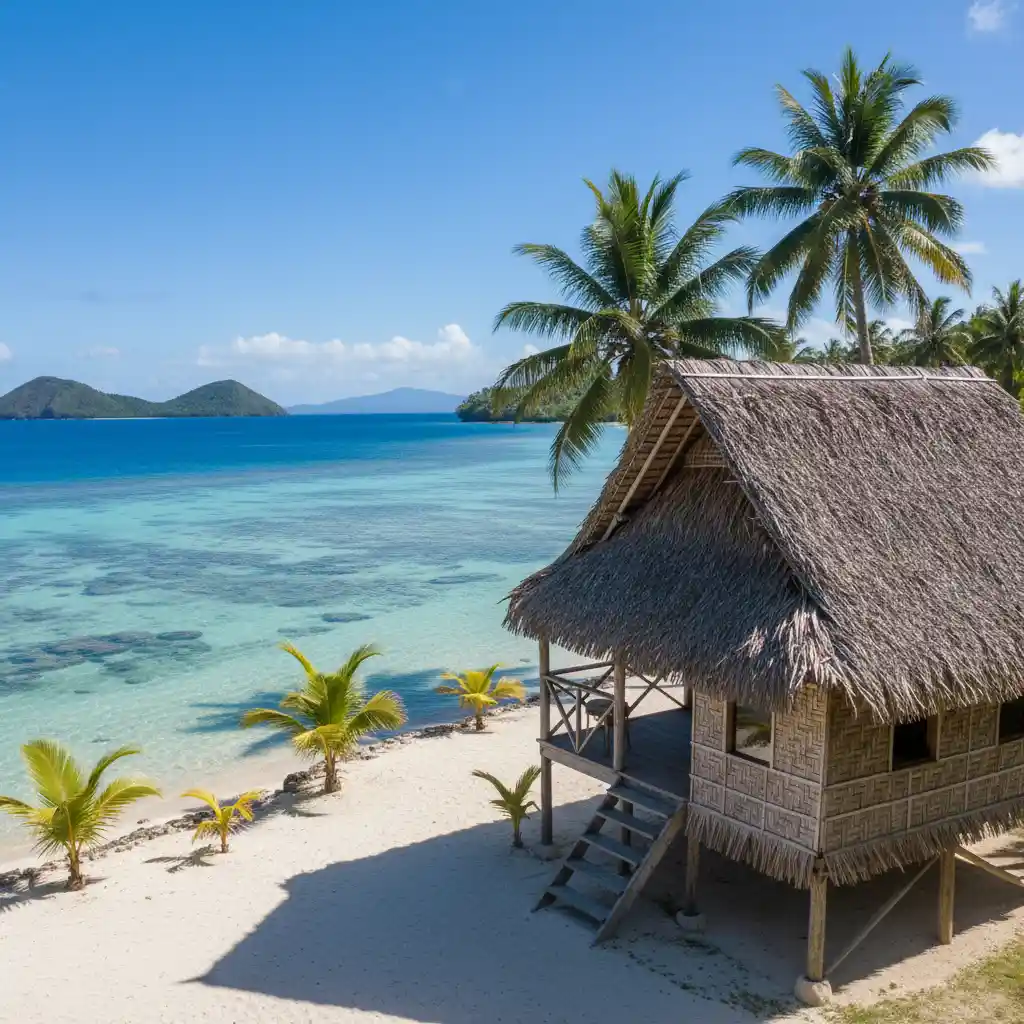
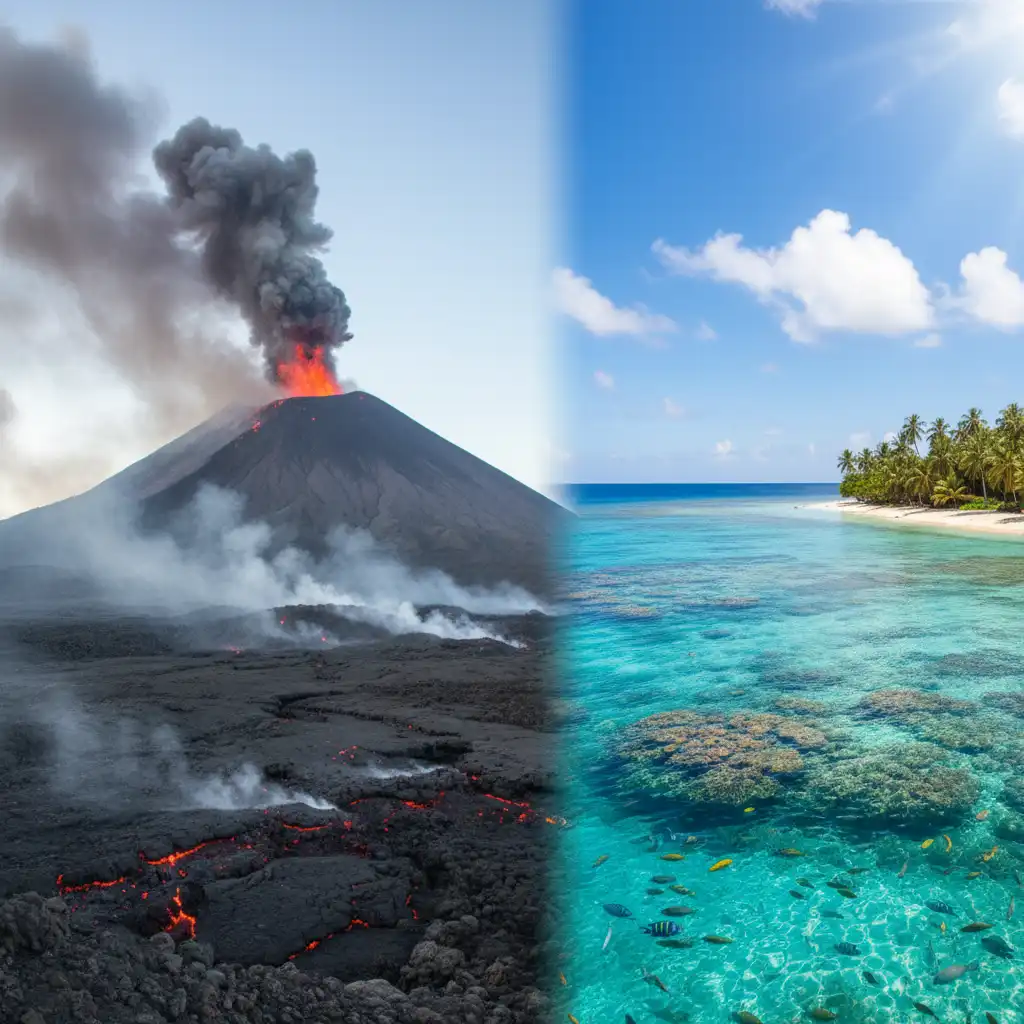
Vanuatu offers a rugged, authentic island adventure with English-friendly locals and active volcanoes, making it ideal for eco-tourists and thrill-seekers. In contrast, New Caledonia provides a sophisticated “Paris of the Pacific” experience with polished infrastructure, French gastronomy, and vast UNESCO lagoons, better suiting luxury travelers seeking comfort alongside natural beauty.
Choosing between Vanuatu vs New Caledonia is often a dilemma for travelers seeking the ultimate South Pacific getaway. Both archipelagos offer stunning turquoise waters, rich Melanesian culture, and warm climates, yet they deliver vastly different vacation experiences. Your choice ultimately depends on whether you prefer the raw, unpolished magic of volcanic islands or the refined, cosmopolitan blend of French elegance and tropical relaxation.
This comprehensive guide breaks down the critical differences—from language barriers and dining to adventure levels and flight accessibility—to help you book the trip that aligns perfectly with your travel style.
Which Destination Suits Your Travel Style?
When comparing Vanuatu vs New Caledonia, the primary distinction lies in the “vibe” of the infrastructure and cultural presentation. These neighbors share a geography but have diverged significantly due to their colonial histories and economic development.
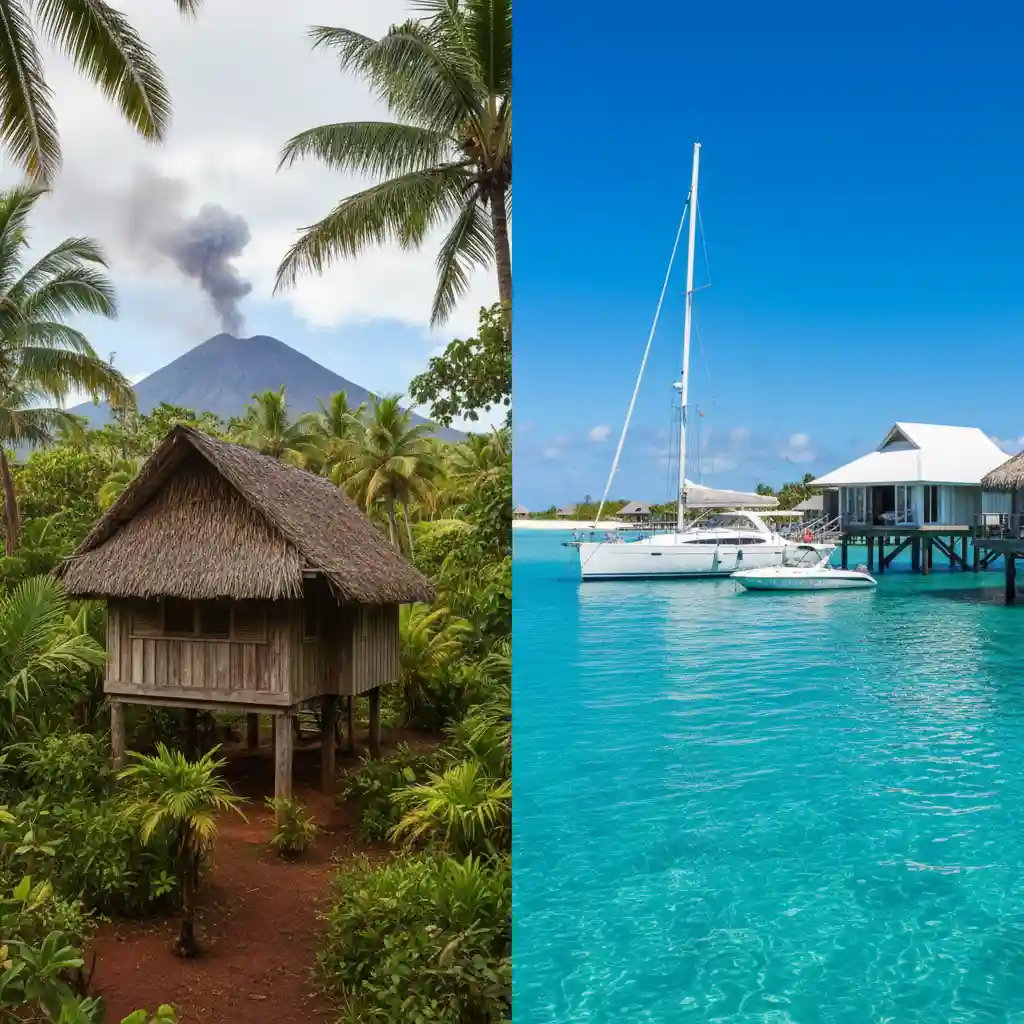
Vanuatu: The Raw Adventure
Vanuatu is the land of smiles and untouched beauty. It feels wilder, more traditional, and less commercialized. If your dream holiday involves standing on the rim of an active volcano, diving into freshwater blue holes deep in the jungle, or staying in a locally-made bungalow where electricity might be intermittent, Vanuatu is your destination. It appeals to:
- Eco-tourists: Those who want to minimize their footprint and engage with local village life.
- Divers: Home to the SS President Coolidge, one of the world’s most accessible wreck dives.
- Families seeking culture: Kids can learn about tribal life without the distractions of modern cities.
New Caledonia: The French Pacific
New Caledonia, specifically the main island of Grande Terre, feels like a slice of the French Riviera transported to the tropics. The roads are paved and well-maintained, the supermarkets are stocked with French cheese and wine, and the capital, Noumea, boasts high-end boutiques. It appeals to:
- Luxury Travelers: Those who want 5-star resorts like Le Méridien or Hilton with full amenities.
- Foodies: Travelers who want to eat authentic French pastries for breakfast and fresh mahi-mahi for dinner.
- Couples: The Isle of Pines is frequently cited as one of the most romantic spots on earth.
How Do Language Barriers Differ Between Vanuatu and New Caledonia?
For English-speaking tourists, the language barrier is a significant factor in the Vanuatu vs New Caledonia decision-making process.
Vanuatu: English-Friendly and Bislama
Vanuatu is an easier transition for English speakers. The country has three official languages: English, French, and Bislama (a pidgin language). Because Vanuatu was jointly administered by Britain and France (the Condominium), English is widely spoken, especially in Port Vila, Espiritu Santo, and Tanna. You will rarely struggle to communicate with hotel staff, tour guides, or taxi drivers.
Pro Tip: Learning a few words of Bislama, such as “Halo” (Hello) or “Tangkyu” (Thank you), goes a long way in building rapport with the incredibly friendly locals.
New Caledonia: Parlez-vous Français?
New Caledonia is an overseas territory of France, and French is the dominant language. While staff at major hotels and tourist hubs in Noumea speak English, it is far less common in rural areas or smaller shops. Menus, road signs, and information boards are often exclusively in French.
This adds a layer of exotic charm for some, but it can be a logistical hurdle for others. If you are renting a car and driving up the coast of Grande Terre, having a translation app or a basic grasp of French phrases is highly recommended. The cultural immersion is deeper here; you truly feel like you are in France, just with palm trees.
Which Offers Better Food and Dining Experiences?
The culinary landscape is where the divergence between these two nations becomes most apparent. Are you looking for organic island feasting or Michelin-standard gastronomy?
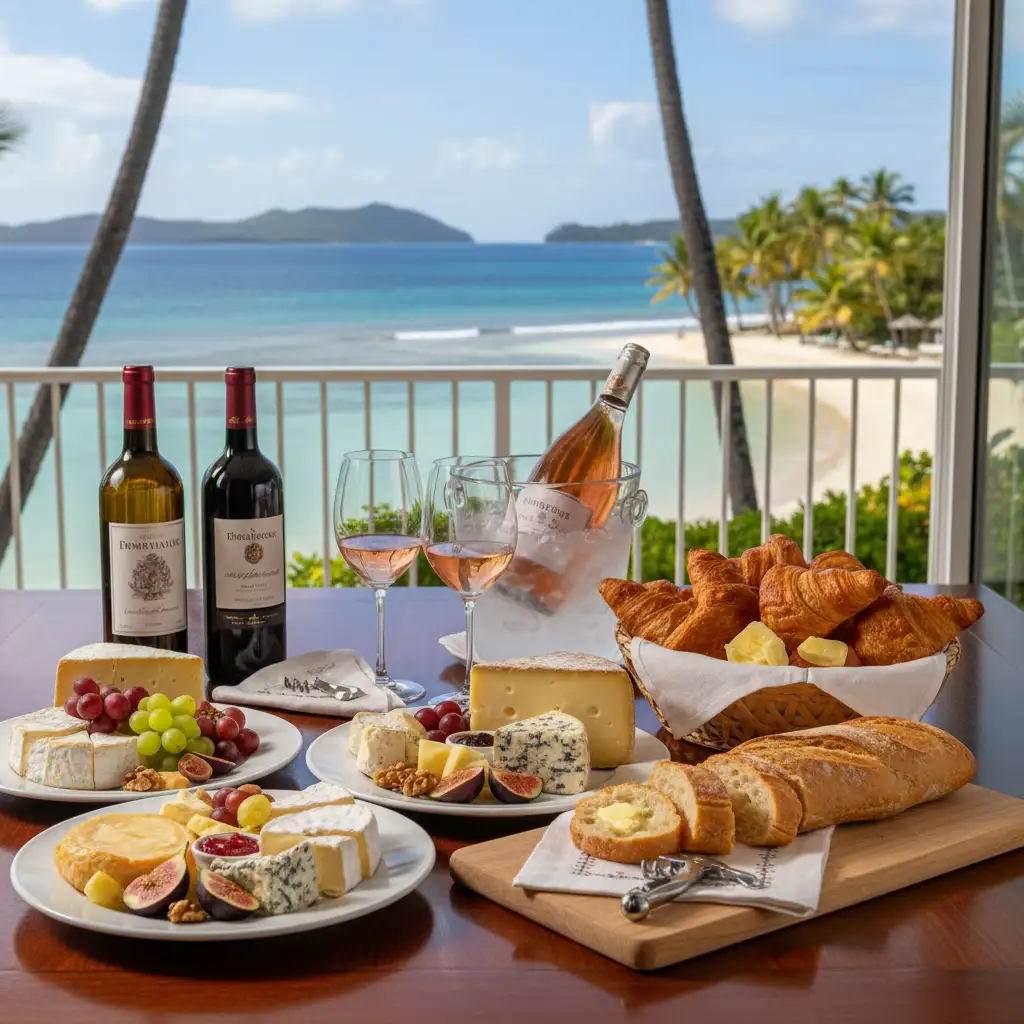
Dining in New Caledonia
New Caledonia is the undisputed culinary capital of the South Pacific. In Noumea, you can find authentic boulangeries selling baguettes that rival Paris. The dining scene is sophisticated, featuring a fusion of French techniques and Melanesian ingredients.
- Must-Try: Bougna (a traditional Kanak dish wrapped in banana leaves), venison sausage, and imported French wines.
- Experience: Dining over the water at L’Escapade or enjoying a sunset aperitif at Baie des Citrons.
Dining in Vanuatu
Food in Vanuatu is simpler, heartier, and incredibly fresh. The focus is on “organic”—not as a marketing buzzword, but because that is simply how food is grown there. The beef in Vanuatu (Santo Beef) is world-renowned for its quality.
- Must-Try: Laplap (the national dish made from grated root vegetables and coconut cream), Santo beef steaks, and fresh lobster sold cheaply at markets.
- Experience: Eating at the Port Vila markets or a barefoot barbecue on the beach. While there are fine dining options in Port Vila, the charm lies in the fresh produce markets.
Adventure vs. Infrastructure: What Can You Expect?
This section is critical for managing expectations. The level of infrastructure dictates the type of adventure you will have.
Vanuatu: The Ring of Fire Experience
Vanuatu sits on the Pacific Ring of Fire. Its geography is dramatic and active. The infrastructure outside of Port Vila is basic. Roads can be riddled with potholes, and inter-island travel often requires small prop planes or boats.
However, this lack of polish allows for raw adventure:
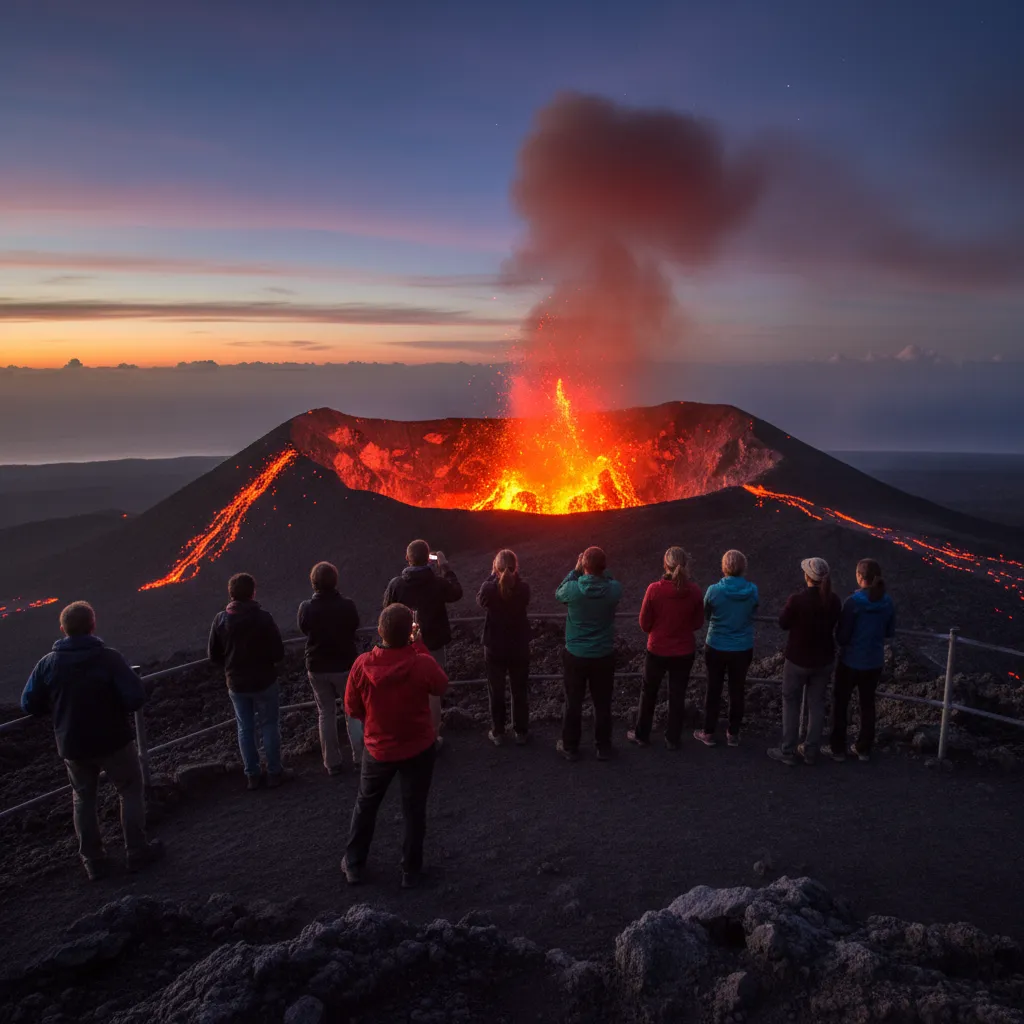
- Mount Yasur (Tanna Island): One of the world’s most accessible active volcanoes. You can stand on the rim and watch lava explode just meters away. This is a bucket-list experience New Caledonia cannot match.
- Land Diving (Pentecost): If you visit between April and June, you can witness the Naghol, the precursor to bungee jumping.
- Millennium Cave (Santo): A grueling but rewarding trek through jungles and caves that requires a reasonable level of fitness.
New Caledonia: The World’s Largest Lagoon
New Caledonia offers adventure with a safety net. The infrastructure is First World. The roads are excellent for self-drive holidays, hospitals are European standard, and public transport in the city is reliable.
The adventure here is marine-focused:
- The Lagoon: New Caledonia boasts the world’s largest enclosed lagoon, a UNESCO World Heritage site. It is teeming with life, perfect for snorkeling, kite surfing, and sailing in safety.
- Hiking the Great South: The landscape changes to red earth (reminiscent of the Australian outback) meeting blue water. The Blue River Provincial Park offers marked trails and kayaking.
Beaches and Marine Life: The Blue Holes vs. The Lagoon
Both destinations have world-class beaches, but the topography creates different swimming experiences.
Vanuatu’s Blue Holes and Champagne Beach
Espiritu Santo in Vanuatu is home to Champagne Beach, often voted one of the best beaches in the world due to its powdery white sand and volcanic gas vents that make the water fizz at low tide. However, Vanuatu’s unique selling point is its Blue Holes. These are freshwater springs filtered through limestone, creating crystal-clear, electric blue swimming holes surrounded by dense jungle. They are magical and unlike anything in New Caledonia.
New Caledonia’s Isle of Pines
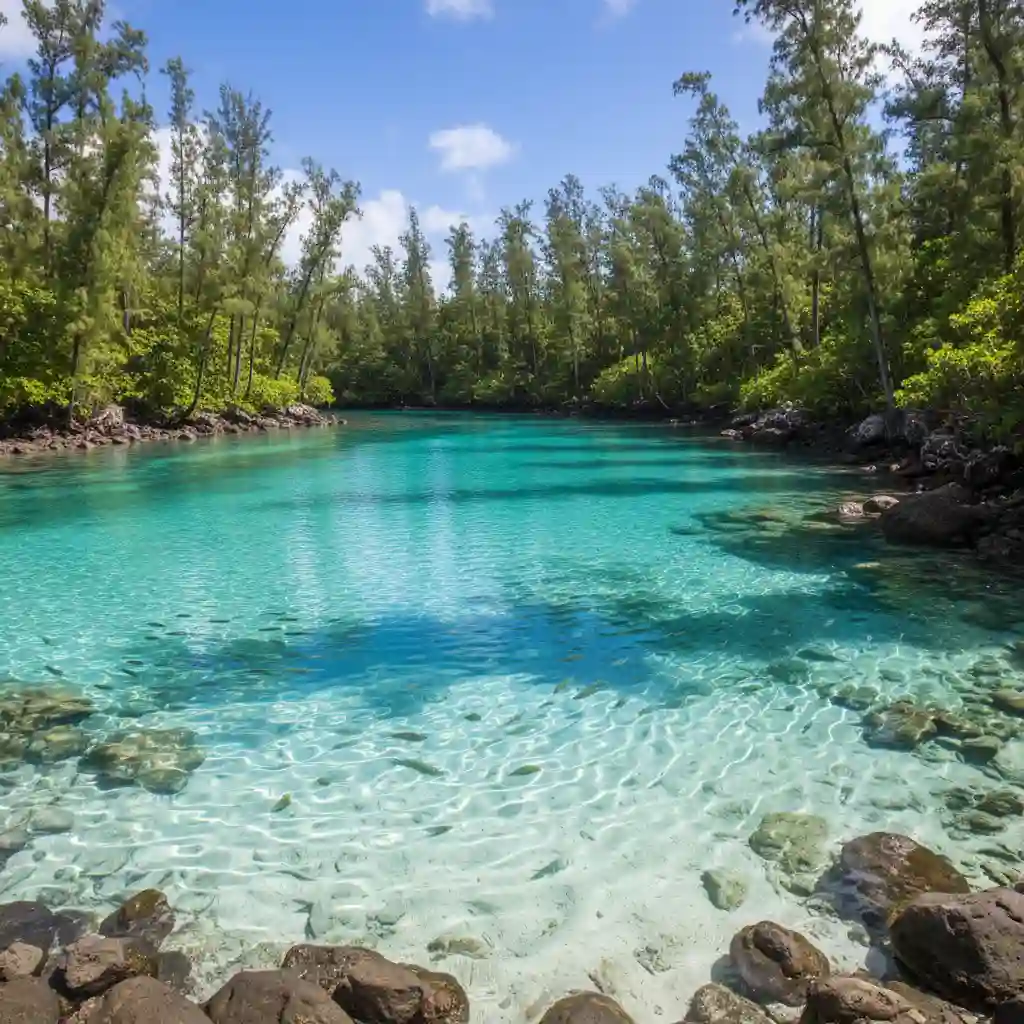
New Caledonia counters with the Isle of Pines (Île des Pins). Known as the “Jewel of the Pacific,” it features tall Araucaria pines lining white sandy bays. The natural swimming pool (Piscine Naturelle) in Oro Bay is a natural aquarium separated from the ocean by a coral reef, offering some of the safest and most spectacular snorkeling in the region.
How Accessible Are Flights and Transport?
Accessibility is a major factor for commercial travelers and families.
Vanuatu (VLI):
Flights land at Bauerfield International Airport in Port Vila. Major connections come from Brisbane, Sydney, Melbourne, and Auckland via Air Vanuatu (subject to operational status) or Virgin Australia/Qantas. Getting to outer islands like Tanna or Santo requires domestic flights which can be pricey and subject to “island time” delays.
New Caledonia (NOU):
Flights land at La Tontouta International Airport, which is about 45 minutes from Noumea. Aircalin offers full-service flights from major Australian and New Zealand cities, as well as direct flights from Japan. The flight experience is generally more modern. Domestic flights to the Loyalty Islands or Isle of Pines are reliable but should be booked well in advance during peak seasons.
Cost Comparison: Is Vanuatu Cheaper than New Caledonia?
Is New Caledonia expensive? Generally, yes. Is Vanuatu cheap? Not necessarily.
The Cost of New Caledonia
New Caledonia uses the Pacific Franc (XPF), which is pegged to the Euro. This means prices for food, accommodation, and activities are comparable to Europe. A simple lunch can cost $25-$35 USD. However, the quality matches the price. You pay for high-standard amenities, reliable electricity, and polished service.
The Cost of Vanuatu
Vanuatu uses the Vatu (VUV). While generally cheaper than New Caledonia, it is not a budget destination like Southeast Asia. Resorts in Port Vila charge international rates. However, you can save significantly in Vanuatu by eating at local markets, taking local minibuses (which are very cheap), and staying in bungalows rather than resorts. Alcohol and imported goods are expensive in both destinations.
Final Verdict: Which Should You Choose?
Choose Vanuatu if:
You crave adventure, want to interact with a vibrant living culture, wish to see active volcanoes, and prefer a relaxed, English-speaking environment where things happen on “island time.” It is perfect for the traveler who wants stories to tell.
Choose New Caledonia if:
You want a blend of European sophistication and tropical relaxation. If you appreciate fine wine, good roads, reliable infrastructure, and stunning lagoons without the “rough edges” of developing nations, this is your paradise.
People Also Ask
Is it safe to travel to Vanuatu vs New Caledonia?
Both destinations are generally safe for tourists. Vanuatu has a low crime rate, though petty theft can occur in Port Vila. New Caledonia is also safe, though political unrest can occasionally occur; it is always wise to check current travel advisories. The main safety concern in Vanuatu is natural hazards (volcanoes/cyclones), while in New Caledonia, it is standard urban safety.
Which island has better beaches, Vanuatu or New Caledonia?
It depends on your preference. New Caledonia (Isle of Pines) offers manicured, postcard-perfect white sands with calm lagoon waters. Vanuatu (Champagne Beach) offers wilder, untouched beaches backed by jungle. For snorkeling right off the beach, New Caledonia often wins; for seclusion, Vanuatu wins.
Do I need a visa for Vanuatu or New Caledonia?
For many Western passports (including Australia, NZ, US, UK, and EU), both destinations offer visa-free entry for short tourist stays (usually up to 30 or 90 days). However, New Caledonia is strictly French territory, so EU citizens have right of entry, while others must meet Schengen-style border rules.
What is the best time of year to visit Vanuatu vs New Caledonia?
Both have similar climates. The dry season (May to October) is the best time to visit both, with lower humidity and pleasant temperatures (20°C – 26°C). November to April is the wet/cyclone season, which can be hot and humid, though travel is still possible.
Can I use Australian Dollars or US Dollars in Vanuatu and New Caledonia?
In Vanuatu, Australian dollars are widely accepted in Port Vila shops and by taxi drivers, though you will get change in Vatu. In New Caledonia, you generally must use Pacific Francs (XPF). Credit cards are widely accepted in New Caledonia, less so in rural Vanuatu.
Which destination is better for families?
New Caledonia is often easier for families with young children due to better medical facilities, supermarkets for supplies, and calm lagoon beaches. Vanuatu is fantastic for families with older children (8+) who can appreciate the culture, snorkeling, and adventure activities like waterfalls.