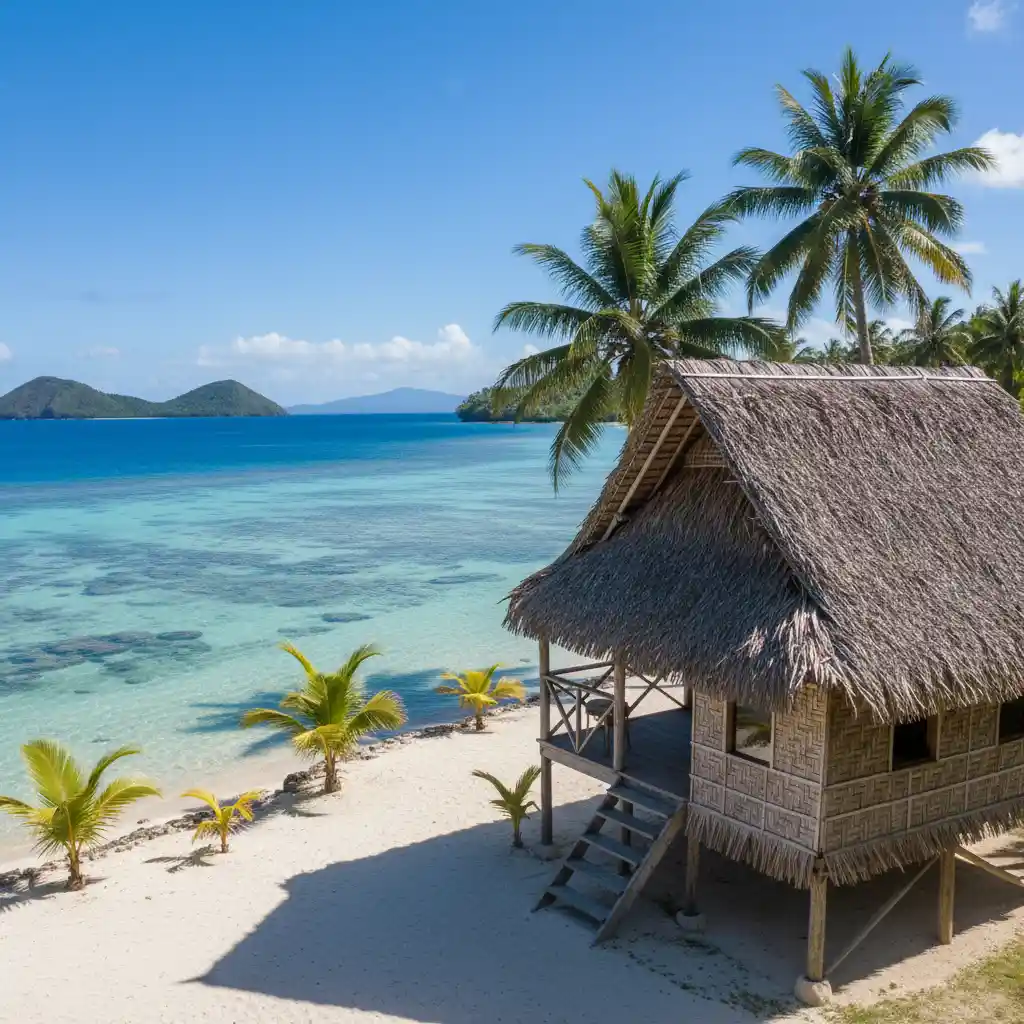
Santo’s Blue Holes are natural limestone filtration pools located along the east coast of Espiritu Santo, Vanuatu. Fed by freshwater springs rising through underground caverns, these geological wonders—most notably Matevulu, Riri, and Nanda—are famous for their iridescent sapphire water and exceptional visibility. They are situated approximately 20 to 30 minutes north of Luganville via the East Coast Road.
Espiritu Santo, the largest island in the Vanuatu archipelago, is a destination that feels almost prehistoric in its untouched beauty. While Champagne Beach and the SS President Coolidge wreck draw thousands of divers and sun-seekers annually, it is the island’s freshwater blue holes that offer a truly surreal experience. These hidden jewels, tucked within the dense tropical rainforest, provide a stark, cooling contrast to the humid jungle air.
Planning a trip to these swimming spots requires a bit of logistical know-how. Unlike manicured resorts, these are natural attractions often managed by local families on customary land. Understanding the geography, the entry fees (which are strictly cash-only), and the best modes of transport is essential for a seamless adventure. This guide serves as your comprehensive resource for navigating the blue holes of Vanuatu.
Blue Holes Vanuatu Map: Understanding the Geography
When searching for a blue holes Vanuatu map, it is helpful to visualize the layout of Espiritu Santo. The island’s main infrastructure runs primarily along the southeast coast. Luganville, the capital and main entry point, sits at the bottom. As you drive north along the fully sealed East Coast Road, you will encounter the three most famous blue holes in a specific order.
The geological formation of these pools is fascinating. Santo is largely comprised of uplifted coral limestone. Rainwater filters through this porous rock, stripping away impurities and emerging as crystal-clear freshwater springs. The intense blue color is a result of the water’s depth and purity, which absorbs red light and reflects blue.
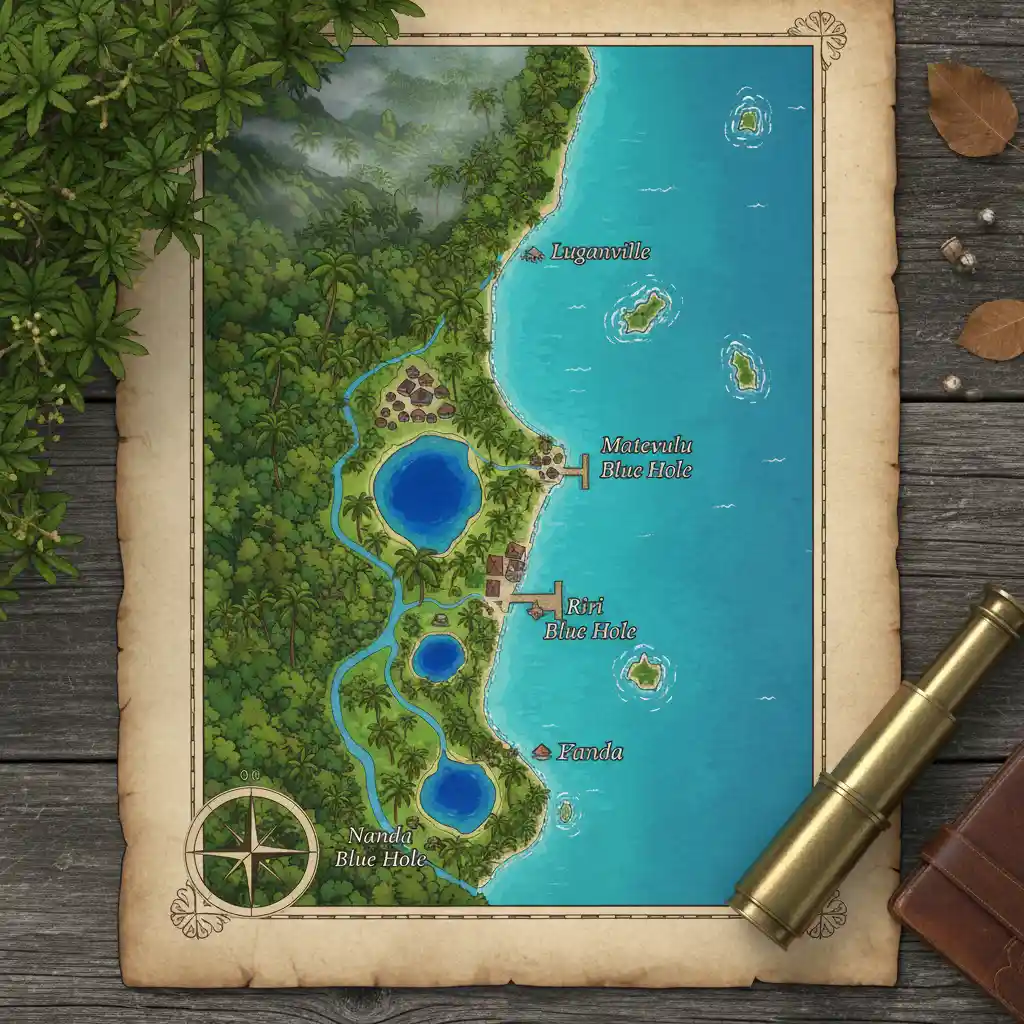
Here is the geographical sequence from Luganville heading North:
- Riri Blue Hole: Approximately 20 minutes from town. Accessible via road or a scenic river canoe trip.
- Matevulu Blue Hole: Located just a few minutes north of Riri. It is the largest of the three and features a long river access point.
- Nanda (Jackie’s) Blue Hole: Situated further north, about 30-35 minutes from Luganville. It is often cited as the clearest and most manicured of the three.
The Top 3 Must-Visit Blue Holes
While there are smaller, unnamed springs scattered across the island, three specific sites have been developed for tourism. Each offers a distinct atmosphere and experience.
1. Riri Blue Hole: The Jungle Sanctuary
Riri is arguably the most atmospheric of the trio. The water here is an intense, milky turquoise rather than a deep sapphire, giving it an ethereal glow. The surrounding vegetation is dense, with vines hanging low over the water, creating a canopy that feels intimate and secluded.
Riri is famous for its concrete platforms and diving boards, but the real draw is the arrival experience. Taking a traditional outrigger canoe up the Riri River builds anticipation as the brackish water slowly transitions into the stunning blue of the spring.
2. Matevulu Blue Hole: The Adventure Playground
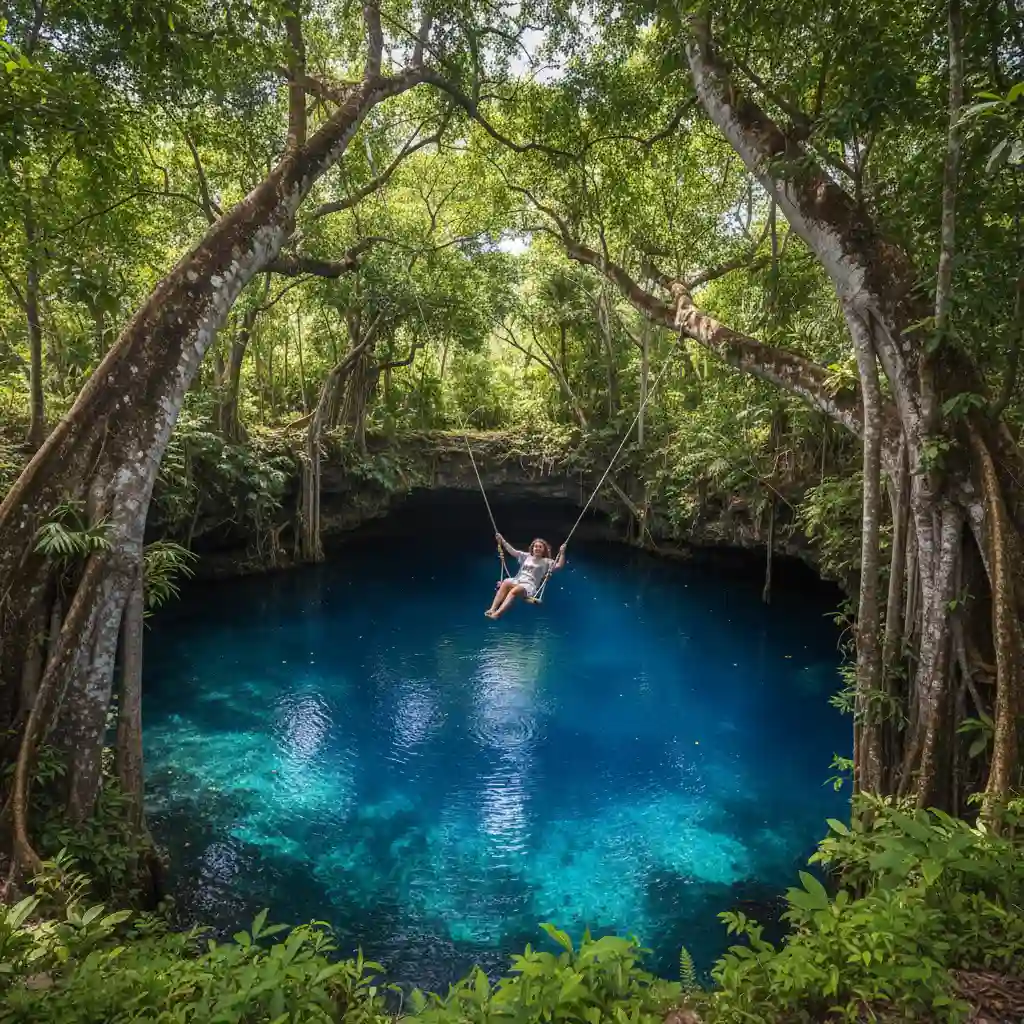
Matevulu is the largest and most open of the blue holes. Because of its size, it rarely feels crowded, even when tour groups arrive. The setting is grand, surrounded by massive banyan trees and lush ferns.
The centerpiece of Matevulu is the massive rope swing tied to an ancient banyan tree. It requires a climb up the tree’s gnarled roots to reach the platform, followed by an exhilarating swing out over the center of the deep blue pool. This spot is a favorite for thrill-seekers and provides excellent opportunities for action photography.
3. Nanda (Jackie’s) Blue Hole: The Aquarium
Nanda Blue Hole, often referred to as Jackie’s, is privately owned and meticulously maintained. Unlike the wilder feel of Matevulu or Riri, Nanda feels like a natural swimming pool. The owners have built boardwalks, bungalows, and a cafe area with manicured lawns.
The water clarity at Nanda is unrivaled. It is deeper than it looks, and the visibility is so high that you can see every fish and rock formation on the bottom from the surface. It is the best location for snorkeling, as it hosts a variety of freshwater fish that are accustomed to swimmers.
Entry Fees and Cash Requirements
One of the most critical tips for visiting Santo’s blue holes is to carry sufficient cash (Vatu). These attractions are located on customary land and are operated by local families or small communities. Credit card facilities are non-existent at the entry gates, and ATMs are only available in Luganville.
Current Price Estimates (Subject to Change):
- Riri Blue Hole: 1,000 VT per person (approx. $10 USD/AUD) if arriving by car. If you take the canoe tour, the price is usually higher, around 2,000 VT to 2,500 VT, which includes the paddling service.
- Matevulu Blue Hole: 1,000 VT per person.
- Nanda Blue Hole: 1,000 VT to 1,500 VT per person. Nanda often charges slightly more due to the infrastructure (boardwalks, bar, toilets) provided.
Pro Tip: Always carry small denominations (200 VT and 1,000 VT notes). The gatekeepers often do not have large amounts of change for 10,000 VT notes. Additionally, if you plan to buy a coconut or a local beer at the small stalls sometimes set up nearby, you will need extra cash.
How to Get There: Taxi vs. Kayak
Reaching the blue holes is part of the adventure. Your choice of transport depends on your budget, your desire for physical activity, and how much time you have.
Option 1: Taxi or Private Driver
Hiring a driver for the day is the most convenient way to see multiple blue holes. You can arrange a taxi from Luganville to take you to all three. The driver will typically wait for you at each location.
- Pros: Air-conditioned comfort, flexible schedule, local knowledge from the driver.
- Cons: More expensive (approx. 8,000 – 12,000 VT for a half-day hire).
- Best For: Families, groups, or those with limited time.
Option 2: Kayak or Canoe Access
For Riri and Matevulu, approaching via the water is a magical experience. You can launch kayaks from the ocean side (near the bridge crossings on the East Coast Road) and paddle upstream.
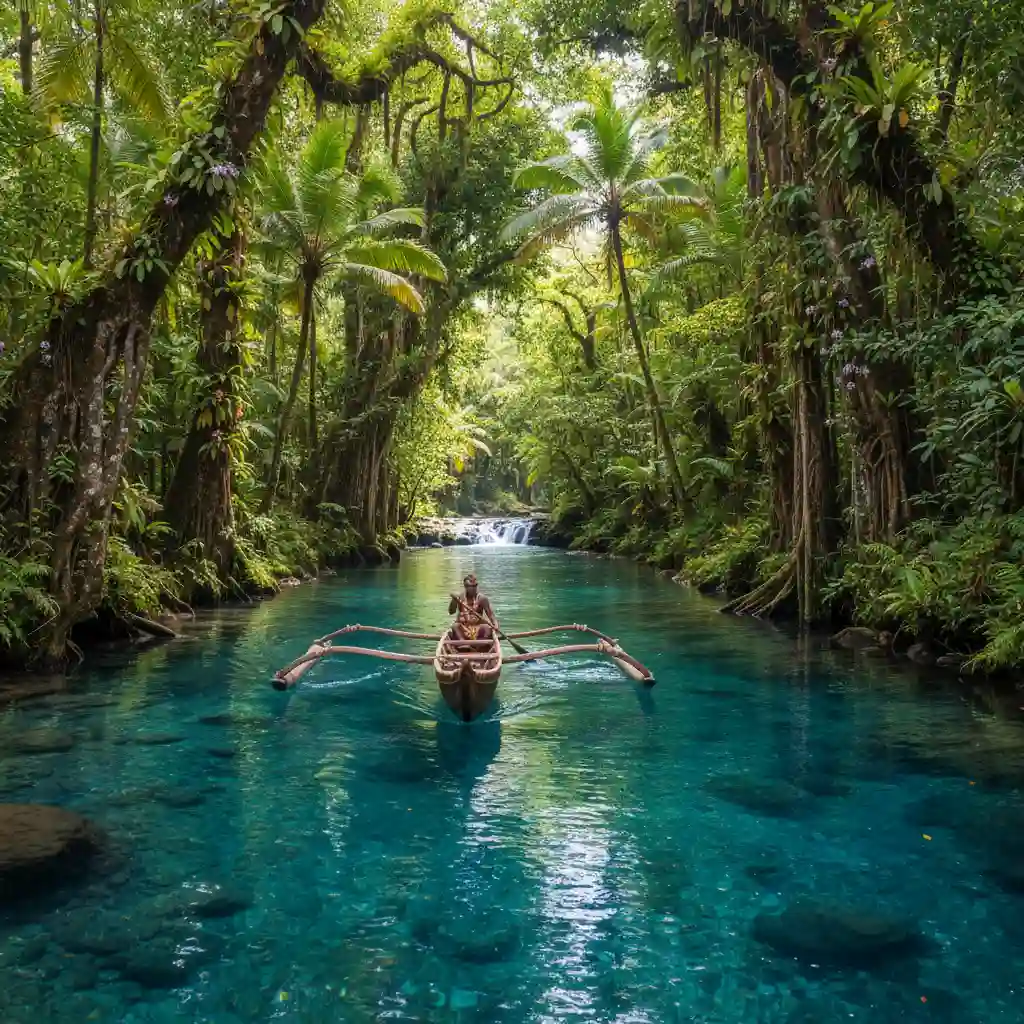
The Riri River Canoe: At the mouth of the Riri River (near the road bridge), locals offer a chauffeur-driven outrigger canoe service. You sit in the canoe while a local guide paddles you gently upstream for about 30 minutes. The silence of the jungle, broken only by the sound of the paddle and bird calls, makes this the superior way to arrive at Riri.
Kayaking to Matevulu: If you are staying at a resort nearby (like Turtle Bay Lodge or Oyster Island), you can often rent kayaks and paddle across the bay and up the Matevulu River. This is a longer paddle (45-60 minutes) but very rewarding. You will pass the abandoned airstrip from WWII before entering the winding blue river.
Best Time to Visit for Photography
To capture the iconic electric blue color, lighting is everything. The blue hue is dependent on sunlight penetrating the water. Without direct sun, the water can look darker and less vibrant.
The Golden Window: 10:00 AM to 2:00 PM
The sun needs to be high in the sky to illuminate the depths of the pools. If you arrive too early (before 9:00 AM) or too late (after 3:30 PM), the high jungle canopy will cast long shadows over the water, significantly reducing the visibility and the intensity of the blue color.
Avoiding the Crowds
Cruise ships dock in Luganville frequently. On cruise ship days, the blue holes can become swamped with hundreds of tourists between 10:00 AM and 2:00 PM. To get the best photos without people in the background:
- Check the cruise ship schedule for Luganville before you plan your day.
- On non-cruise days, 11:00 AM is perfect.
- On cruise days, try to arrive exactly at 9:00 AM to get an hour of peace before the buses arrive, or wait until 3:00 PM when they head back to the ship (though the light will be fading).
Essential Packing List
A trip to the blue holes is a rustic experience. Amenities are basic (usually just a changing shed and a drop toilet), so you need to come prepared.
- Reef-Safe Sunscreen & Insect Repellent: The jungle is full of mosquitoes. Apply repellent after your swim, not before, to keep the water pure. Use biodegradable sunscreen to protect the limestone ecosystem.
- Reef Shoes: The edges of the pools can be rocky and slippery. Climbing out of the water often involves navigating wet tree roots or concrete steps covered in moss.
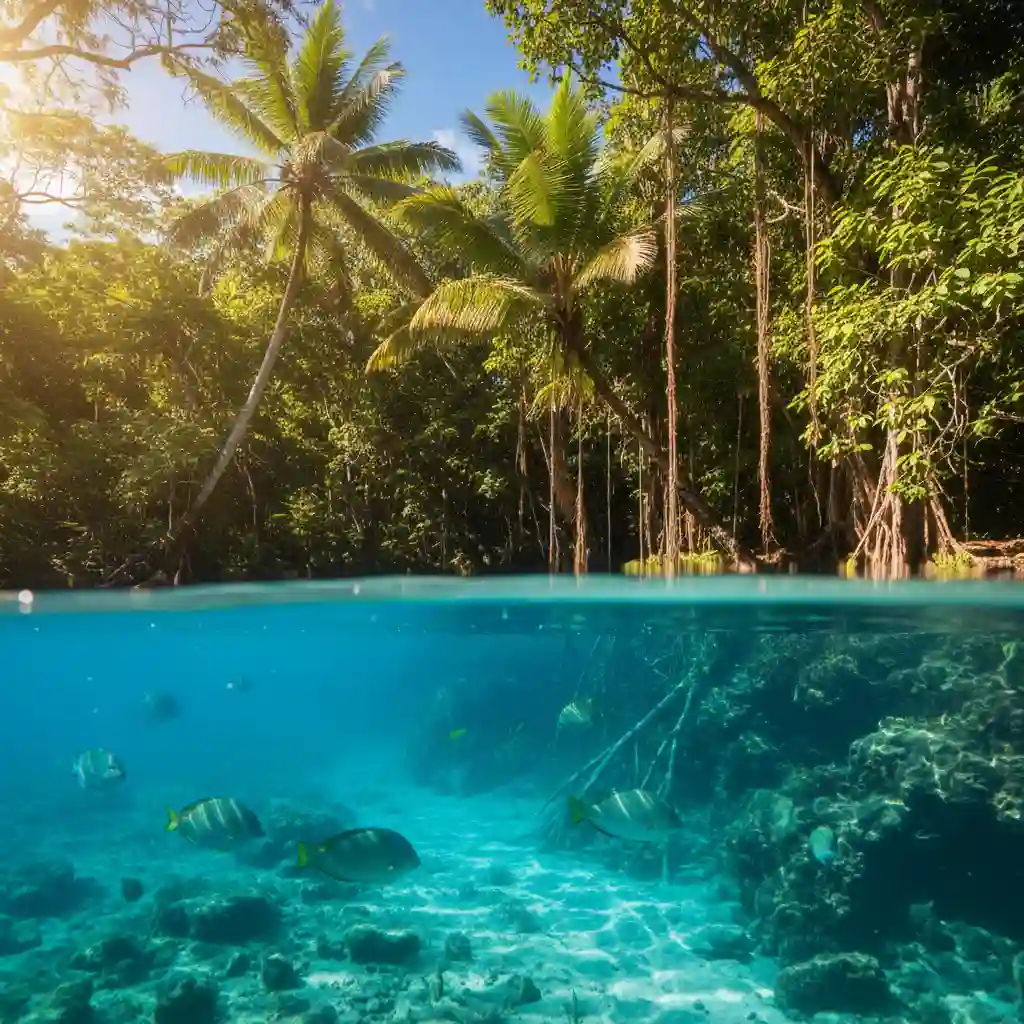
- Snorkel Gear: While you can swim without it, a mask is essential to appreciate the underwater topography and the freshwater fish.
- Dry Bag: If you are kayaking or canoeing, a waterproof bag for your camera and phone is non-negotiable.
- Towel and Change of Clothes: The drive back to town can be chilly if you are wet, especially in the back of an open-air taxi truck.
Frequently Asked Questions
Are there crocodiles in the blue holes in Vanuatu?
No, there are no crocodiles in the blue holes or the rivers leading to them in Espiritu Santo. The water is fresh and safe for swimming. The only wildlife you will encounter are small freshwater fish and perhaps some prawns.
Can you drink the water in the blue holes?
While the water is fresh spring water and appears incredibly clean, it is generally not recommended to drink it directly, especially further downstream where swimmers are present. Stick to bottled water to avoid any potential stomach issues.
How deep are the blue holes in Santo?
The depth varies significantly. Nanda Blue Hole is roughly 4 to 13 meters deep in places. Matevulu is quite deep in the center, exceeding 15 meters, which makes it safe for the rope swing. Riri varies but has deep channels suitable for diving.
Do I need to book in advance to visit?
No booking is required for general entry. You simply show up and pay the entry fee at the gate. However, if you want a guided tour or a specific driver for the day, it is best to arrange that a day in advance through your hotel.
Is there food available at the blue holes?
Nanda Blue Hole often has a small cafe serving drinks and snacks. Matevulu and Riri generally do not have food vendors, although sometimes locals sell coconuts or papaya nearby. It is highly recommended to bring your own water and snacks.
Why is the water so blue?
The water is filtered through limestone underground, which removes particulate matter. The extreme clarity allows the water to absorb the red end of the light spectrum rapidly, while the blue light is scattered and reflected back to your eyes. The dissolved calcium carbonate also contributes to the unique turquoise hue.